CNN, MS NOW, and Politico have filed a joint federal lawsuit against the Trump administration following an unprecedented decision by President Donald Trump to strip the three news organizations of their White House press credentials. The legal challenge, submitted to the U.S. District Court for the District of Columbia on Monday, argues that the blanket ban constitutes a direct and unconstitutional violation of the First Amendment, amounting to textbook viewpoint-based discrimination.
The lawsuit seeks an immediate emergency injunction to restore access for the targeted reporters, who were blocked from entering White House grounds over the weekend. The legal action names President Trump alongside three high-ranking administration officials: White House Chief of Staff Susie Wiles, White House Spokesperson Steven Cheung, and Secret Service Chief Sean Curran. The case has been assigned to U.S. District Judge Timothy Kelly, a federal judge appointed during Trump’s first term who famously ruled in favor of CNN during a similar press-access dispute in 2018.
The escalation underscores a rapidly deteriorating relationship between the executive branch and major independent news organizations. As the legal battle unfolds, it raises profound constitutional questions regarding the scope of executive authority over federal property, the rights of the institutional press, and the boundaries of government transparency in the modern era.
The Immediate Catalyst and Weekend Fallout
The dispute ignited late last week when President Trump announced via social media platform Truth Social that his administration was barring CNN, MS NOW, and Politico from the White House complex. The president defended the move by characterizing the outlets as propagators of "fake news" that pose a threat to national democracy.
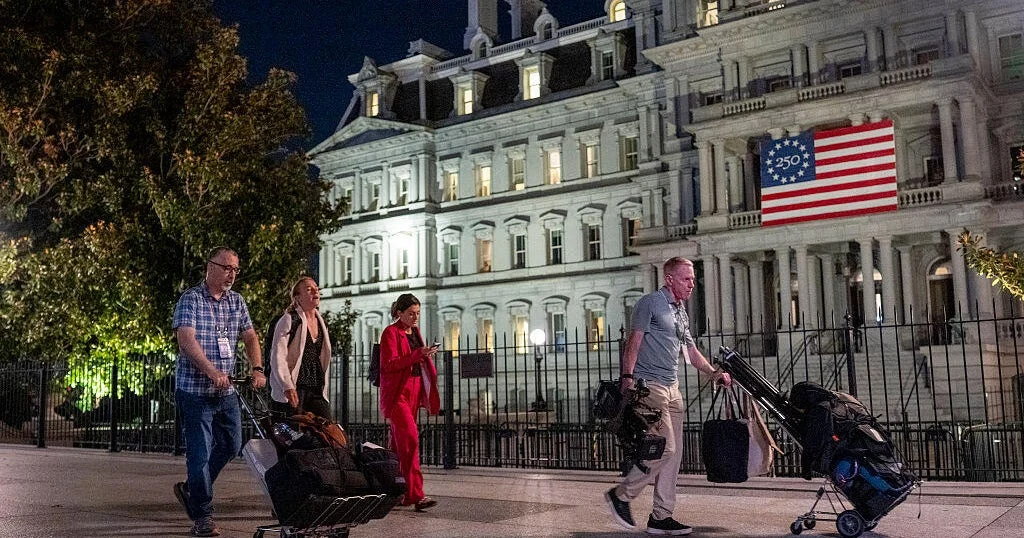
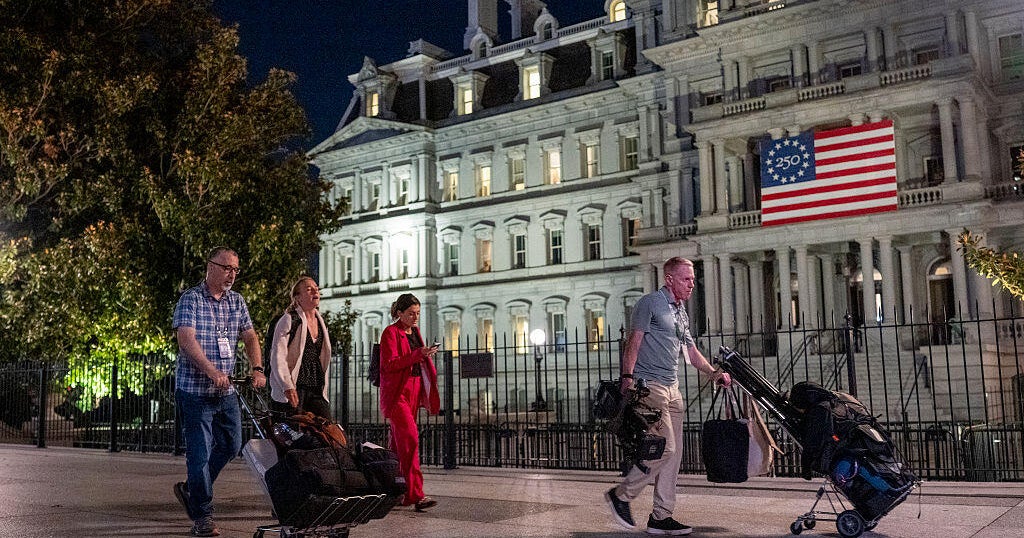
By Saturday morning, the enforcement of the ban was swift. Reporters and production staff representing the three organizations arrived at the White House gates only to discover that their security credentials and press passes had been systematically deactivated.
The immediate logistical impacts were felt almost instantly within the structures of the White House Press Corps. Under normal operational standards, television networks rotate through a designated "pool" system to cover the president’s daily movements, travel, and public engagements, sharing footage and reporting with the broader media ecosystem. Because CNN was scheduled to lead the television pool rotation on Monday, the enforcement of the ban resulted in a historic vacuum: for the first time in modern presidential history, no domestic television network pool team was permitted to travel alongside the sitting president.
In public statements following the announcement, President Trump asserted that the timing of the ban was not tied to any single news report or isolated journalistic misstep. Instead, he framed the decision as a broad policy initiative aimed at protecting what he termed "the people’s house" from being utilized by entities lacking in journalistic credibility.
"I don’t think somebody should be allowed to come and write fake stories. They’re fake news. And they have no credibility," Trump told reporters. "Now, if they want to write them, that’s fine, but I don’t have to let them into my — into the people’s house."
Legal Arguments and Constitutional Core
The joint legal motion filed by CNN, MS NOW, and Politico pulls no punches, describing the administration’s action as an existential threat to freedom of the press.
"There could not be a more direct assault on the First Amendment," the legal filing states. "Presidents from the earliest days of the Republic have disagreed with and complained about the tenor and content of press coverage of their administrations. But never before has a president sought to permanently ban major news gathering organizations from the White House simply because he dislikes their reporting."
Legal experts specializing in constitutional law and First Amendment jurisprudence have largely rallied around the news organizations’ central premise. Bruce Brown, president of the Reporters Committee for Freedom of the Press, labeled the administration’s decree as "flatly unconstitutional." He emphasized that singling out specific media outlets for exclusion based on the perceived negativity or ideological slant of their coverage constitutes textbook viewpoint discrimination, a category of government suppression that historically faces an exceptionally high bar for survival under constitutional scrutiny.
The lawsuit focuses heavily on the protections guaranteed by the First Amendment, arguing that while the executive branch maintains broad discretionary power over property management and security protocols, it cannot wield those administrative powers to penalize speech or suppress critical reporting. Furthermore, the legal team highlights potential violations of due process guarantees under the Fifth Amendment, noting that the abrupt revocation of long-standing press credentials occurred without a formal hearing, transparent criteria, or an established appeals process.
Precedents and Judicial History
The assignment of the case to U.S. District Judge Timothy Kelly introduces an interesting historical parallel. During President Trump’s first term in office, Judge Kelly presided over a high-profile legal battle involving CNN correspondent Jim Acosta. In that instance, the White House revoked Acosta’s press pass following a contentious exchange during a televised press conference.
CNN sued the Trump administration, and Judge Kelly ultimately ruled in the network’s favor. The court found that the White House had violated Acosta’s Fifth Amendment due process rights by stripping his credentials without adequate notice or an opportunity to respond. Rather than testing the limits of executive power on appeal, the first Trump administration complied with the order and restored Acosta’s press pass.
However, the legal landscape surrounding press access has evolved through subsequent litigation during both the first and second terms. Notably, the administration previously clashed with The Associated Press after the wire service declined to adopt executive terminology regarding the renaming of the Gulf of Mexico to the "Gulf of America." In that dispute, the White House blocked AP reporters from attending specific events in restricted spaces such as the Oval Office and Air Force One.
While a federal district court initially ruled that the AP’s access must be fully restored, a federal appeals court ultimately permitted the ban to take effect in part. The appellate ruling established a nuanced distinction: while the executive branch cannot bar journalists from spaces that are "generally open to the press"—such as the traditional James S. Brady Press Briefing Room—based on viewpoint, it retains greater latitude to regulate access to highly secure, restricted environments like the Oval Office or presidential aircraft, where participation is historically limited to a tightly vetted subset of the press corps.
Legal analysts note that the current lawsuit filed by CNN, MS NOW, and Politico tests the boundaries of that appellate distinction. Unlike the targeted, space-specific restrictions applied to the AP, the new executive order imposes a total, sweeping ban on the physical presence of the affected organizations across all common press areas within the White House complex.
Escalating Friction Across Federal Agencies
The conflict at the White House is not an isolated incident; it forms part of a broader pattern of strained relations between the current administration and the journalistic community across multiple federal departments.
Last year, the Department of Defense implemented a stringent set of regulations governing journalists stationed at the Pentagon. The policy mandated that reporters with daily access sign agreements acknowledging that the "solicitation" of sensitive or classified information could be classified as a security risk, potentially resulting in immediate expulsion from the building.
The policy triggered a fierce institutional pushback. Major news networks—including CBS News, ABC News, NBC News, Fox News, and CNN—collectively refused to sign the directive and withdrew their full-time reporters from the Pentagon press bullpen. Although a federal judge subsequently struck down portions of the rules as unconstitutional violations of the First Amendment, the Defense Department adjusted its tactical approach, instituting a mandatory escort policy that requires journalists on Pentagon grounds to be accompanied by government personnel at all times. An appellate court later allowed that escort policy to remain in place while deeper legal challenges proceeded through the judicial pipeline.
These cumulative actions reflect a concerted strategy by executive branch agencies to recalibrate the terms of engagement with the media, favoring direct digital communication, selective access, and stricter controls over traditional institutional journalism.
Official Responses and Counterarguments
Defenders of the administration maintain that the president possesses inherent constitutional and executive privileges regarding property control, national security, and the management of executive branch facilities. From this perspective, White House press credentials do not constitute a permanent property right or an unconditional entitlement, but rather a revocable privilege granted at the discretion of the executive branch.
Administration officials argue that the modern media environment has shifted away from traditional objective reporting toward polarized commentary, giving the executive branch legitimate grounds to re-evaluate which institutions are granted physical access to the inner workings of the West Wing.
In subsequent social media posts following the initial announcement, President Trump doubled down on his rhetorical posture, writing that his actions were directed solely at what he labeled dishonest media entities. "The White House is not instituting an assault on the Free Press, something which I cherish," Trump posted. "It is instituting an assault on the FAKE NEWS, something that has grown like Cancer in our beloved United States of America." In a separate post, he added, "FAKE NEWS IS A THREAT TO DEMOCRACY, and I will do whatever is necessary to make sure that the U.S.A. thrives."
Broader Impact and Implications
As the legal proceedings before Judge Kelly accelerate, the implications of the case extend far beyond the day-to-day operations of the three affected news organizations.
A ruling in favor of the news outlets would reinforce long-standing constitutional precedents protecting the institutional press from political retaliation, reaffirming that access to public forums cannot be weaponized to punish critical coverage. Conversely, a legal victory for the administration could significantly expand executive authority, establishing a precedent that allows future administrations to selectively exclude news organizations based on editorial viewpoint or content disputes.
For the American public and the global press corps, the outcome of the lawsuit will serve as a critical benchmark for the health of government transparency and the practical application of First Amendment protections in an increasingly polarized political environment. The federal court is expected to review the initial motions for an emergency injunction in the coming days, setting the stage for what promises to be one of the most significant press freedom battles of the decade.