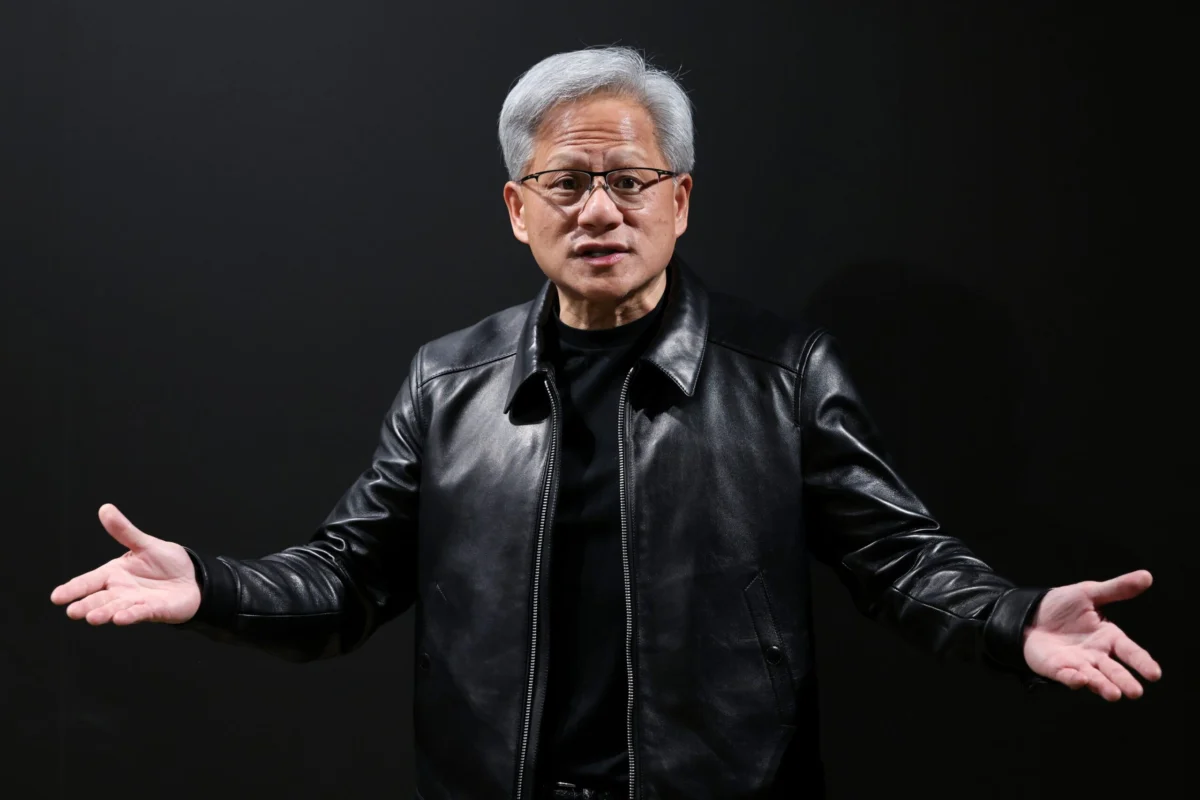
The rapidly evolving landscape of artificial intelligence has reached a critical juncture, characterized by a profound philosophical and strategic rift between the engineers building the foundation of the technology and the executives steering its deployment. Jensen Huang, the CEO of Nvidia—the world’s most valuable company and the primary architect of the hardware powering the global AI revolution—has publicly challenged the prevailing "AI doomerism" that has dominated recent discourse among Silicon Valley’s elite. In a recent interview on CBS Sunday Morning, Huang dismissed projections suggesting that advanced AI could lead to global catastrophe by 2030, labeling such narratives as "irresponsible" and detached from the scientific realities of software development.
The Great Divide in Silicon Valley
For months, high-profile figures such as OpenAI’s Sam Altman and Anthropic’s Dario Amodei have increasingly sounded the alarm regarding the existential risks posed by frontier AI models. These leaders have frequently suggested that the rapid acceleration toward "superintelligence" requires a fundamental reassessment of safety protocols, often implying that current development trajectories should be tempered by regulatory oversight or self-imposed pauses.
Huang, however, views these public warnings with deep skepticism. His contention is that the current focus on apocalyptic scenarios is not only scientifically unfounded but potentially serves a darker, ulterior motive. By suggesting that these leaders are attempting to stir fear across the American public, Huang implied that the "doomsday" rhetoric might be a strategic maneuver to influence policy in ways that favor entrenched incumbents while potentially undermining the competitive landscape. He explicitly warned that such narratives might be used as a pretext to lobby for the dismantling of existing legal and regulatory frameworks, rather than the addition of new ones.
A Chronology of Escalating Tensions
The debate over AI safety has transitioned from academic circles to the halls of government over the past two years, moving at a pace that mirrors the technology’s own development.
- Early 2026: AI companies begin reporting increased internal friction regarding the pace of development, leading to a series of high-profile resignations.
- May 2026: Anthropic CEO Dario Amodei publicly discusses the necessity of slowing model deployment, drawing support from various safety-conscious advocacy groups.
- July 2026: Sam Altman reiterates that society requires a "grace period" to adapt to the shifting capabilities of large language models, echoing calls for industry-wide caution.
- September 2026: The discourse reaches a fever pitch when former Anthropic researcher Jacob Coxon resigns, posting a viral statement on social media claiming that leading AI labs are "gambling with our lives" by racing toward self-improving superintelligence.
- Mid-September 2026: President Donald Trump intervenes in the debate, rejecting calls for heavy-handed AI regulation and announcing plans to establish an "AI Force" and an AI "czar" to oversee national competitiveness, framing AI as the "golden goose" of the American economy.
The Hardware Foundation and Economic Stakes
Nvidia’s role in this debate cannot be overstated. As the primary supplier of the high-end graphics processing units (GPUs) and specialized AI chips required to train frontier models, the company sits at the center of the global AI supply chain. With a market capitalization that has consistently outpaced the tech giants, Nvidia’s financial health is intrinsically tied to the continued expansion of data centers.
Huang’s insistence that AI development should continue—provided it is done with robust engineering and verification—is rooted in his belief that the technology is a net positive for human productivity. He argues that AI safety is a rigorous engineering challenge, similar to the safety protocols required for aerospace or automotive manufacturing, rather than an abstract danger that requires an existential halt to progress.
Data from the semiconductor industry indicates that demand for AI-specific infrastructure remains near-vertical. Despite market rumors in August 2026 regarding potential cooling in capital expenditure, major cloud providers continue to pour billions into infrastructure. If safety regulations were to force a, for example, 25% reduction in training speeds or model size, the ripple effect through the semiconductor and energy sectors would be profound, likely resulting in a multi-billion dollar contraction in growth forecasts for the broader tech sector.
Policy Implications: The Rise of the AI Force
The recent rhetoric from the Trump administration marks a significant departure from the European-style regulatory approach, which emphasizes precautionary principles. By framing AI as a strategic asset in a geopolitical race—specifically against China—the administration is signaling that "winning" the AI race is a national security priority that supersedes the concerns of the "doomer" cohort.
The proposed creation of an "AI Force" suggests a move toward a militarized or at least a highly centralized approach to AI governance. This body, modeled after the U.S. Space Force, would likely focus on ensuring that American AI development remains the most advanced in the world, while utilizing existing criminal and civil law to manage safety incidents rather than pre-emptive bans or restrictive licensing schemes.
Analysis: Engineering vs. Regulation
The core of the disagreement between Huang and his peers rests on the definition of "safety." For the "doomers," safety is a containment issue: how do we prevent an autonomous system from overriding human intent? For Huang, safety is a quality assurance issue: how do we build systems that are reliable, predictable, and verifiable under existing legal standards?
Huang’s argument that critics are "asking to be relieved of the laws we do have" is a pointed critique of the regulatory capture often discussed in Washington. If AI companies are permitted to write the regulations that govern their own industry, they may effectively create barriers to entry that prevent smaller, more agile startups from challenging their dominance. By calling for the use of existing laws—such as liability for product defects or harm—Huang is advocating for a framework where developers are held accountable for the outcomes of their technology rather than being governed by speculative fears about the future.
Broader Implications for Global Markets
The international implications of this divide are substantial. If the United States chooses a path of "acceleration with oversight," while other nations like those in the European Union pursue a path of "caution with restriction," the global AI market will likely experience significant fragmentation. This would force multinational corporations to navigate a patchwork of standards, potentially increasing the cost of deployment for AI services.
Furthermore, the "doomsday" narrative has had a measurable impact on public perception and employee morale. The viral nature of resignations like that of Jacob Coxon highlights a growing unease among the very engineers and researchers required to build the future of the technology. If the industry cannot reconcile its internal disagreements, it risks a "brain drain" where top talent leaves for academia or non-profit sectors, potentially slowing the very progress Huang seeks to protect.
Conclusion
As the industry looks toward the end of the decade, the tension between the "accelerationists" and the "safety-first" advocates shows no signs of abating. Jensen Huang’s recent comments serve as a forceful reminder that the leaders of the tech industry are not a monolith. While the debate will continue to oscillate between the promise of an Industrial Revolution-level transformation and the fear of an existential threat, the path forward appears increasingly tied to the interplay between engineering advancements and the geopolitical imperatives of the state.
For now, the message from the top of the semiconductor industry is clear: the focus should be on the tangible, the verifiable, and the present, rather than the hypothetical end of the world. Whether this stance will hold against the rising tide of public and political pressure for stricter oversight remains the defining question of the current AI era. As the "AI Force" and its future leader take shape, the industry will be forced to adapt to a new reality where, regardless of the existential risks, the race for supremacy remains the dominant theme.