The Evolution of the Monster Anthology
The Monster franchise, which debuted with the meteoric success of The Jeffrey Dahmer Story in 2022, established a specific narrative template for Netflix. By dedicating long-form seasons to singular, complex criminal figures, Murphy and Brennan have created a platform that transcends traditional documentary storytelling. The series is characterized by high production values, intensive character studies, and a focus on the societal conditions that allowed these figures to operate.
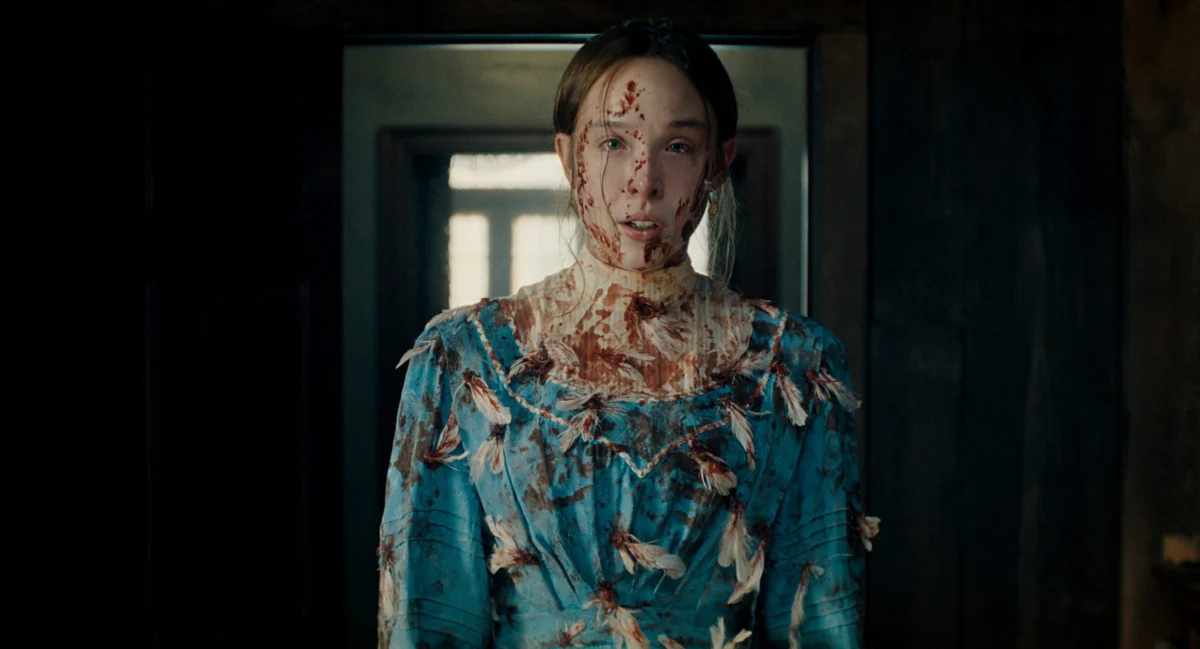
Season 4’s focus on Lizzie Borden represents a notable departure from the contemporary serial killers of the 20th century featured in previous seasons. Borden, who was accused and subsequently acquitted of the brutal murders of her father and stepmother, remains one of the most polarizing figures in American legal history. By selecting a 19th-century subject, the creative team has broadened the scope of what constitutes a "monster" within their anthology, suggesting that the series is moving toward a more expansive definition of true crime that encompasses historical folklore and systemic societal failure.
Current Status and Renewal Projections
As of late 2026, Netflix has yet to officially greenlight a fifth season of the series. This is consistent with the streaming platform’s standard operational procedure, which prioritizes performance metrics—such as completion rates, subscriber acquisition, and cultural penetration—before committing to subsequent production cycles.
However, the internal ambition for the project is clear. In recent discussions with trade publications, including The Hollywood Reporter, showrunner Ian Brennan confirmed that the creative team envisions a long-term trajectory for the anthology. "Ryan and I both said we want to do 10 of them," Brennan stated, indicating that the creative framework is designed to accommodate a decade of installments. Given the critical and commercial momentum of the series, a renewal for a fifth season is widely anticipated by industry insiders, contingent only upon the sustained viewership of the current Lizzie Borden arc.
The Selection Process for Future Subjects
Selecting the next subject is an exhaustive, iterative process for Murphy and Brennan. The creators utilize a "shortlist" methodology, constantly toggling between various candidates to determine who can carry the narrative weight required for an 8-to-10-hour season.
The primary criterion for a subject is, as Brennan describes it, the capacity for deep psychological exploration. The team avoids subjects that do not offer a clear sociological perspective. For example, the exclusion of Ted Bundy as a potential subject stems from the creators’ belief that his narrative fails to ask profound questions about the society that produced him. The goal is not merely to recount a series of violent acts, but to utilize the subject as a lens through which to view the era, the legal failures, and the cultural biases of the time.
One figure currently excluded from active development is Luigi Mangione. While Murphy acknowledged in a 2025 Variety interview that Mangione occupies a "maybe one day" file, the creators have ultimately found the narrative to be too "esoteric" and currently lacking the broader cultural resonance required for the Monster format. The challenge, according to the creative team, is identifying stories that are both compelling and sufficiently understood by the public to sustain a multi-episode engagement.
The "Easter Egg" Strategy and Narrative Clues
There is significant audience interest in whether each season contains hidden markers pointing toward the next. However, the showrunners have clarified that the Lizzie Borden season does not contain a formal teaser or clue regarding the next subject.
This contrasts with earlier seasons. In the inaugural season covering Jeffrey Dahmer, subtle references to other infamous figures, such as John Wayne Gacy, were integrated into the narrative. Brennan clarified that while these inclusions were intentional, they did not necessarily function as a road map for future seasons at the time they were filmed. These elements often serve to ground the characters in their respective historical contexts, illustrating that these figures existed within a shared, dark ecosystem of criminal history.
Chronology of the Monster Franchise
To understand the trajectory of the series, one must look at the progression of its subjects:
- 2022: The Jeffrey Dahmer Story – Focused on the systemic failures of the Milwaukee police and the racial dynamics of the 1980s and 90s.
- 2024: The Lyle and Erik Menéndez Story – Explored the intersection of trauma, family dynamics, and the sensationalization of 1990s media.
- 2026: The Lizzie Borden Story – Investigated the 19th-century origins of the "true crime" spectacle and the limitations of 1890s legal proceedings.
Each season has functioned as a distinct chapter in the American psyche, moving backward in time and across different strata of society. This chronological non-linearity suggests that the creative team is not confined to a specific era, but rather to the concept of the "monstrous" as it evolves alongside societal norms.
Societal Implications and Critical Analysis
The success of the Monster series highlights a broader cultural shift in how society consumes true crime. Critics often debate the ethics of dramatizing real-life tragedies, particularly when survivors or the families of victims are involved. However, the commercial demand for these narratives remains high. By focusing on the "why" rather than the "how," Murphy and Brennan have managed to navigate some of these ethical complexities by centering the narrative on themes of institutional failure and the fallibility of the legal system.
The shift toward historical figures like Lizzie Borden allows the series to maintain its relevance while distancing itself from the more recent, raw wounds associated with contemporary cases. This pivot is a tactical maneuver that likely ensures the longevity of the series. As the creators look toward a potential 10-season run, the ability to pivot between eras—from the Gilded Age to the late 20th century—provides the show with a versatility that few other scripted anthologies possess.
Looking Toward Season 5
While no official announcement has been made regarding the subject of season five, the creative criteria remain consistent. The subject must be a figure whose actions are not only well-documented but whose life story serves as an indictment or an illustration of a broader societal problem.
The industry expectation is that Netflix will monitor the reception of the Lizzie Borden season through the remainder of 2026. If the series maintains its position in the global Top 10 rankings, a production timeline for a fifth season could be fast-tracked for late 2027 or early 2028. For now, the "exhaustive list" held by Murphy and Brennan remains a closely guarded secret, as they continue to weigh the viability of various historical and contemporary figures against their own rigorous standards for deep-dive storytelling.
As the franchise continues to evolve, the primary takeaway for viewers is that the Monster anthology is no longer a show about serial killers, but rather a show about the darker intersections of history, law, and human nature. Whether the next subject is a forgotten historical figure or a more recognizable modern villain, the series has cemented its place as a cornerstone of Netflix’s prestige television output, driven by a commitment to long-form, character-driven narratives that challenge the audience to look beyond the headlines.