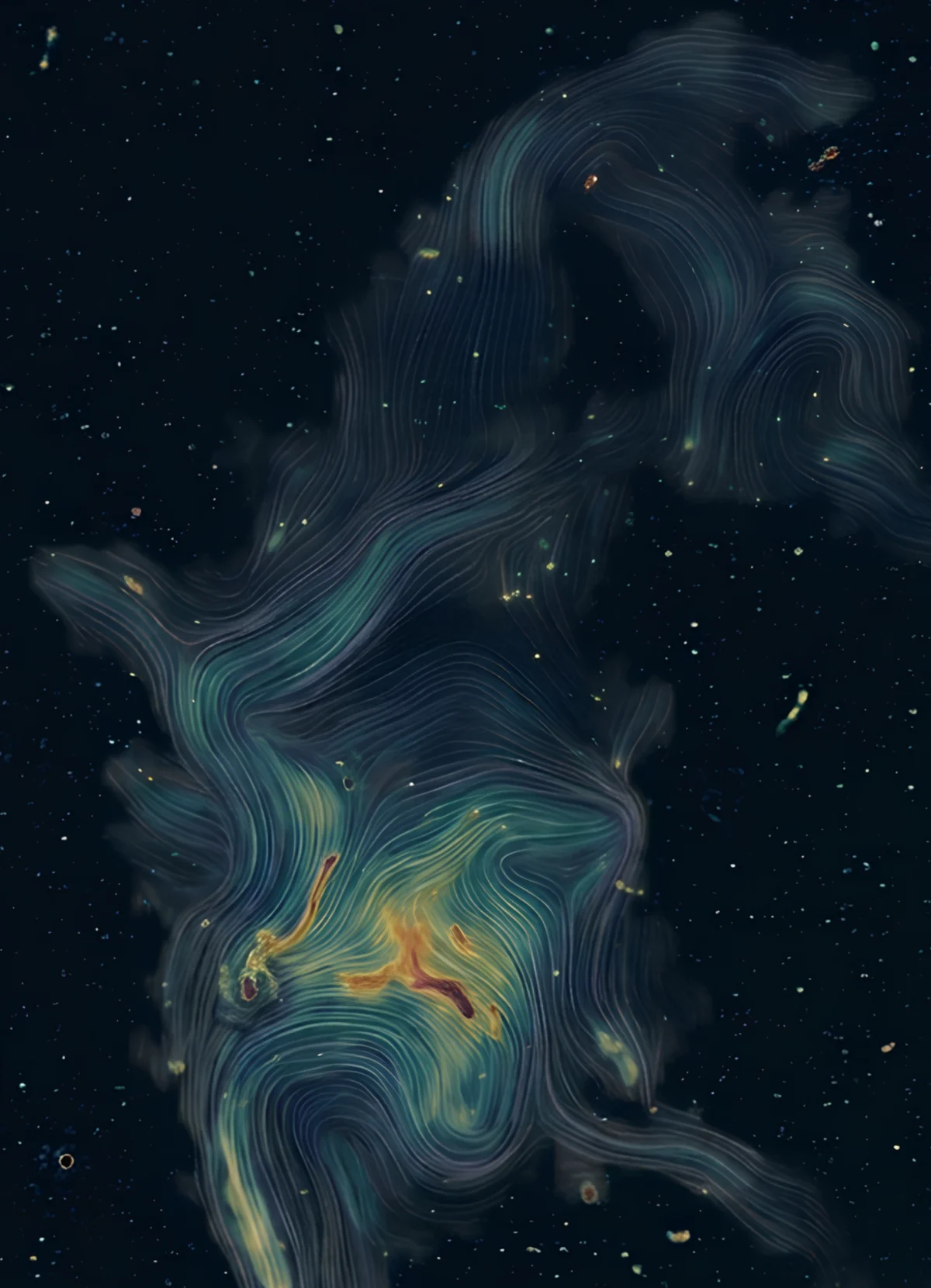
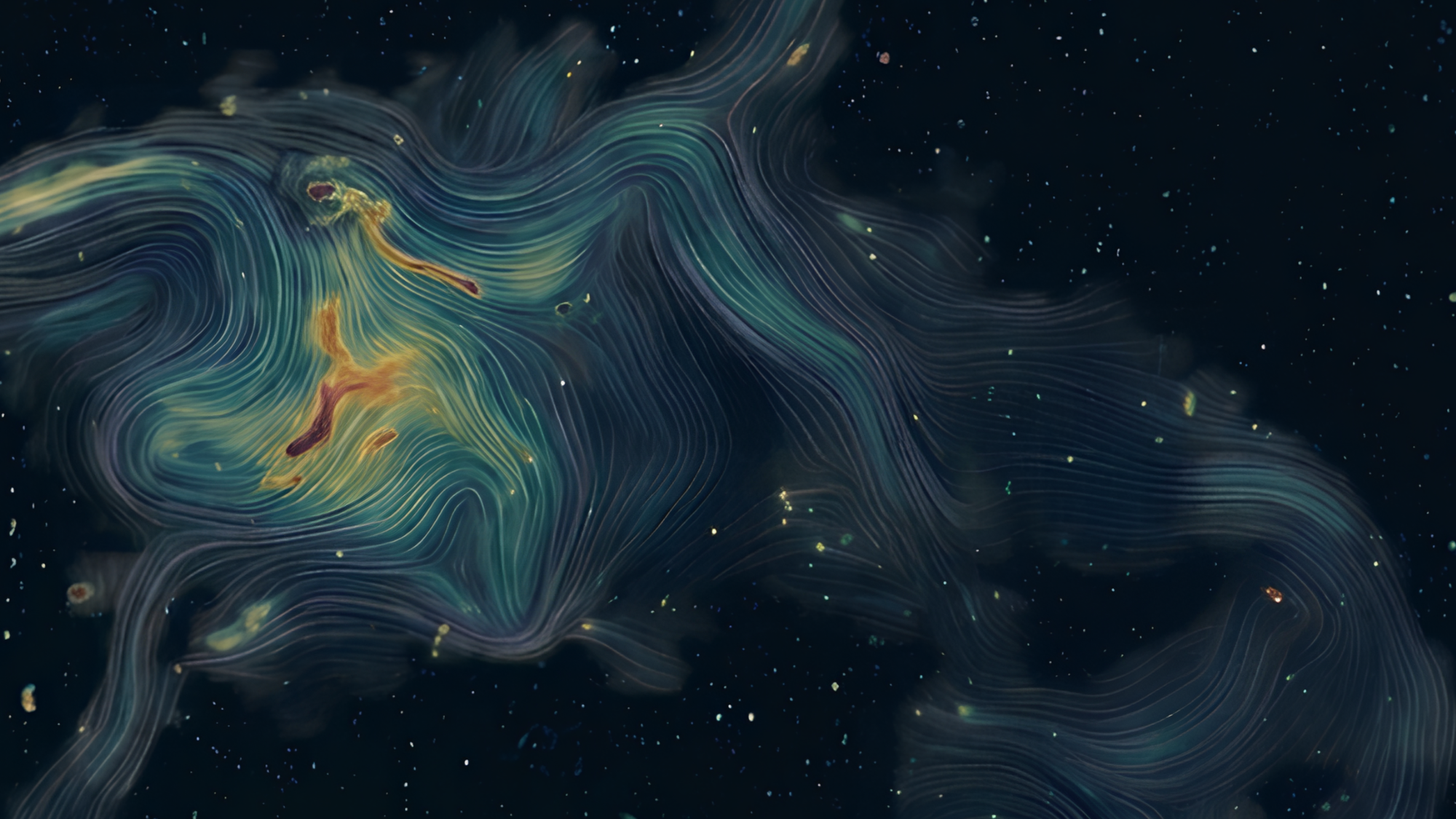
For the first time in astronomical history, scientists have successfully mapped the intricate and sprawling magnetic field of an entire galaxy cluster, extending from its energetic core to its vast outer reaches. This groundbreaking achievement, made possible by the most sensitive radio observations ever conducted of the galaxy cluster Abell 2255, offers an unprecedented glimpse into the invisible forces that shape the largest structures in our universe. Located approximately one billion light-years away, Abell 2255 has long been a subject of intense study due to its complex radio emissions, but this latest research, utilizing the European LOFAR (Low Frequency Array) radio telescope, has unlocked a new dimension of understanding.
The diffuse radio emissions emanating from Abell 2255 are a tell-tale sign of energetic particles, specifically electrons, hurtling at speeds approaching that of light, or relativistic speeds. These particles interact with the magnetic fields present within the cluster’s galaxies, producing the radio waves we observe. By treating Abell 2255 as a cosmic laboratory, astronomers are not only probing the origins and evolution of magnetic fields on grand scales but also gaining crucial insights into the dynamics of the superheated gas that permeates these colossal structures. This, in turn, promises to illuminate the very architecture of the universe’s most massive conglomerations.
A Deep Dive into Cosmic Magnetism
The LOFAR Galaxy Cluster Ultra-Deep Field project, an ambitious initiative to push the boundaries of radio astronomy, was instrumental in this discovery. The research team dedicated an astonishing 224 hours to collecting radio image data from Abell 2255. This extensive observation period revealed a crucial detail: the large-scale magnetic fields within Abell 2255, which spans several million light-years, are not randomly distributed. Instead, they appear to be intricately organized and influenced by the chaotic motion of gas that occurred during the cluster’s formation.
"Obtaining very sensitive images of galaxy clusters at radio wavelengths is crucial to understanding how electrons are accelerated to relativistic speeds and magnetic fields are amplified on large cosmic scales," explained Andrea Botteon, the team leader and an astronomer at the Italian National Institute for Astrophysics (INAF). In a statement released by the research team, Botteon elaborated on the challenges inherent in such studies. "The complexity of these studies is due to the elusiveness of the radio signal from electrons moving in very weak magnetic fields. We believe that the mechanism that ‘turns on’ these gigantic radio emissions is linked to the formation process of galaxy clusters."
The team’s innovative approach involved combining these unprecedentedly deep radio observations with a novel data analysis technique. This combination was the key to reconstructing the shape and distribution of the magnetic field within Abell 2255 for the very first time, moving beyond theoretical models to direct observational evidence.
Tracing the Invisible Threads: Magnetic Field Morphology
The detailed analysis of the reconstructed magnetic field revealed striking patterns. In certain regions of the cluster, the magnetic field lines were observed to be remarkably coherent, stretching radially outwards along extended radio emissions. This suggests a significant degree of organization, hinting at a deeper underlying process.
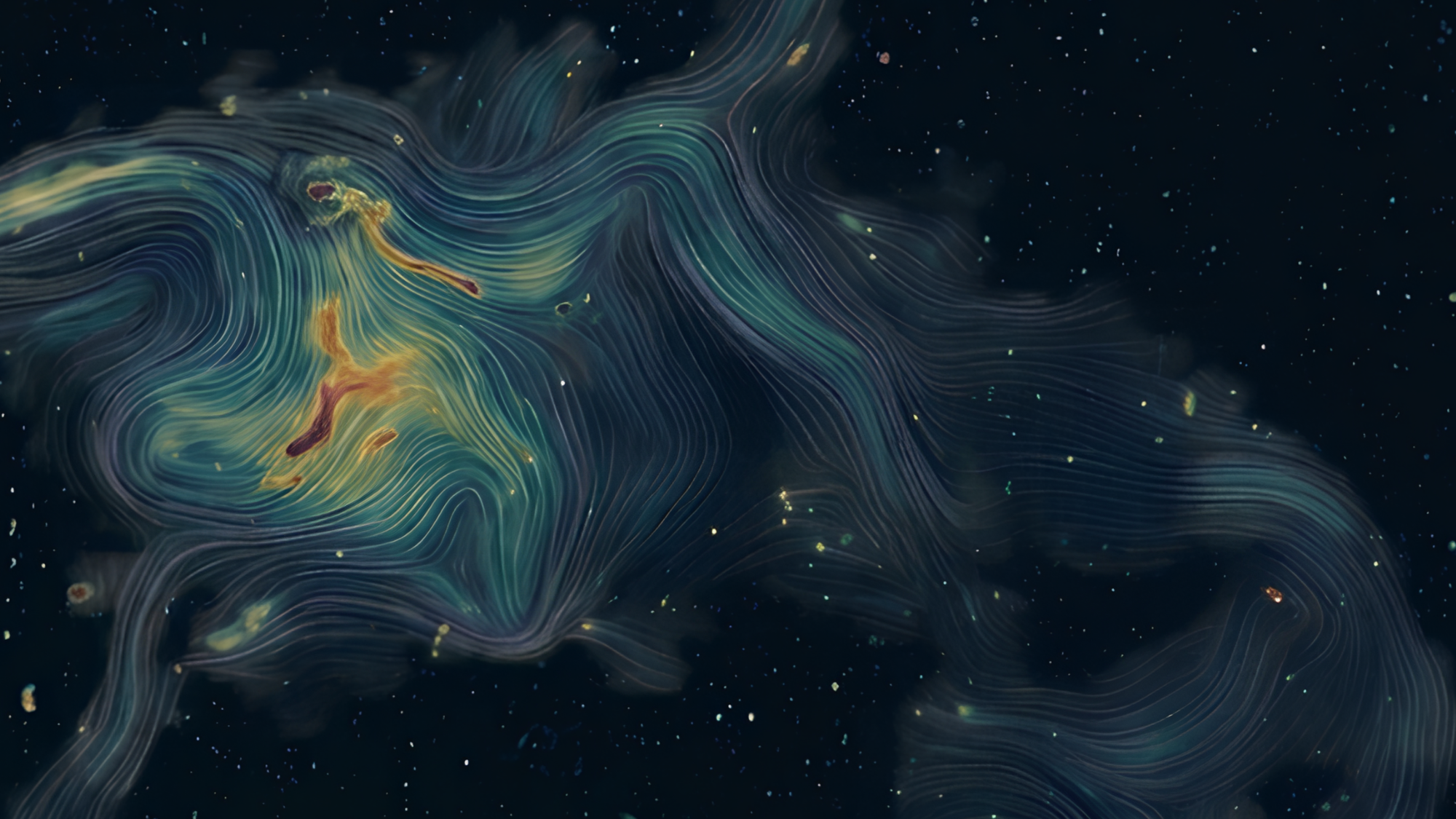
In stark contrast, in areas dominated by shock waves – powerful disturbances that propagate through the hot gas within galaxy clusters – the magnetic fields were found to be oriented tangentially to the shock fronts. This difference in orientation, between the radial alignment in some regions and the tangential alignment near shock waves, provides compelling evidence that the magnetic fields within Abell 2255 are not static but are actively shaped by the very dynamics that drive the growth and evolution of galaxy clusters.
"The coherence of the magnetic field lines observed in some regions of the cluster suggests that the morphology of the field is intimately linked to the dynamics of the gas in which it resides, where it can be ‘stretched’ or ‘compressed’ by the motions associated with the formation of the cluster itself," Botteon further elaborated. This implies that the immense gravitational forces and gas movements involved in accreting matter and building up these colossal structures also play a pivotal role in sculpting the magnetic fields that permeate them.
Implications for Cosmic Structure Formation
This discovery marks a significant milestone, offering the first direct observational proof that the mechanisms responsible for the growth of galaxies and the formation of the largest cosmic structures also dictate the configuration of their magnetic fields. For decades, the role of magnetic fields in galaxy clusters has been a subject of theoretical debate and indirect inference. Now, with this detailed map of Abell 2255’s magnetic field, scientists have a tangible dataset to test and refine their models.
The implications of this finding are far-reaching. Magnetic fields are not merely passive byproducts of cosmic evolution; they are active participants that can influence the behavior of charged particles, the dynamics of gas, and potentially even the rate at which stars form within galaxies. Understanding how these fields are generated and organized on cluster scales is therefore fundamental to comprehending the complete picture of cosmic structure formation.
The LOFAR Advantage: Pushing Observational Limits
The success of this research is inextricably linked to the capabilities of the LOFAR telescope. LOFAR, an international collaboration, is designed to observe the universe at very low radio frequencies, a spectral window that is often obscured by terrestrial radio interference and the Earth’s ionosphere. By employing a network of hundreds of antennas spread across Europe, LOFAR can achieve unprecedented sensitivity and resolution, making it ideally suited for detecting the faint radio signals from the most distant and diffuse cosmic phenomena.
The LOFAR Galaxy Cluster Ultra-Deep Field project specifically aimed to observe a selection of nearby galaxy clusters for extended periods, pushing the limits of radio observation to uncover subtle details previously hidden from view. The 224 hours of observation time dedicated to Abell 2255 represent a significant investment in astronomical data acquisition, underscoring the scientific community’s commitment to unraveling the mysteries of galaxy clusters.
A Timeline of Discovery
The journey to mapping Abell 2255’s magnetic field began with the initial recognition of its complex radio emissions, a phenomenon observed over many years. However, the critical phase of deep observation using LOFAR commenced as part of the dedicated Galaxy Cluster Ultra-Deep Field project.
- Past Decades: Abell 2255 identified as a complex source of diffuse radio emissions, hinting at the presence of relativistic particles and magnetic fields. Early radio telescopes provided initial, less detailed observations.
- Recent Years: The LOFAR telescope, with its advanced capabilities for low-frequency radio astronomy, becomes a key instrument for deep cluster observations.
- LOFAR Galaxy Cluster Ultra-Deep Field Project Initiation: The project is launched with the specific goal of obtaining highly sensitive, long-duration observations of nearby galaxy clusters.
- 224 Hours of Observation: The team dedicates an extensive period to observing Abell 2255 with LOFAR, collecting a massive dataset.
- Innovative Data Analysis: Researchers develop and apply novel techniques to process and interpret the LOFAR data, enabling the reconstruction of magnetic field structures.
- Publication Announcement: The findings are accepted for publication in the peer-reviewed journal Astronomy & Astrophysics, with a pre-peer-reviewed version made available on the arXiv repository, signaling the culmination of years of effort.
The Role of Relativistic Electrons and Shock Waves
The study highlights the interplay between relativistic electrons, magnetic fields, and shock waves. Relativistic electrons, accelerated to near light-speed through processes not yet fully understood, are crucial for producing the radio emission. The energy of these electrons and the strength of the magnetic fields they interact with determine the intensity and spectrum of the observed radio waves.
Shock waves, on the other hand, are thought to be generated during the violent mergers of galaxy clusters or the infall of gas. These shocks can compress and amplify magnetic fields, as well as re-accelerate particles. The observation that magnetic field lines are oriented tangentially to shock fronts suggests that these dynamic events play a significant role in shaping the magnetic environment of the cluster. This aligns with theoretical predictions that shock waves can act as particle accelerators and magnetic field amplifiers.
Broader Implications for Astrophysics
The ability to map magnetic fields in such detail opens up new avenues for research across various subfields of astrophysics.
- Cosmic Ray Propagation: Magnetic fields are the primary conduits for the propagation of cosmic rays, high-energy particles that originate from sources both within and outside our galaxy. Understanding the magnetic field structure of galaxy clusters can help explain the distribution and observed fluxes of cosmic rays in these regions.
- Galaxy Evolution: Magnetic fields can influence the flow of gas within galaxies and between galaxies and their surrounding halos. This can, in turn, affect star formation rates and the overall evolution of galaxies.
- Dark Matter and Dark Energy Research: While not directly observed, the distribution of matter in galaxy clusters, including the enigmatic dark matter, can be indirectly inferred through its gravitational effects. Magnetic fields might also play a subtle role in the dynamics of these invisible components, and a better understanding of the visible components is a prerequisite for understanding the unseen.
- Testing Fundamental Physics: The extreme conditions within galaxy clusters, including the presence of strong magnetic fields and relativistic particles, provide natural laboratories for testing fundamental physics, such as theories of particle acceleration and plasma behavior.
Future Prospects and the Scientific Community
The publication of these findings is expected to stimulate further research and observational campaigns. Astronomers will likely turn their attention to other galaxy clusters, applying similar techniques to determine if the magnetic field organization observed in Abell 2255 is a universal phenomenon or specific to this particular cluster. Future, more advanced radio telescopes, such as the Square Kilometre Array (SKA), will offer even greater sensitivity and resolution, promising even more detailed insights into the magnetic universe.
The research team, led by Andrea Botteon, has provided a foundational dataset and a novel methodology that will undoubtedly shape the future of extragalactic radio astronomy. The acceptance of their work by Astronomy & Astrophysics, a leading journal in the field, underscores the significance and rigor of their findings. The pre-peer-reviewed paper on arXiv allows the broader scientific community to engage with the results immediately, fostering collaboration and accelerating the pace of discovery. This remarkable achievement in mapping the invisible magnetic tapestry of a galaxy cluster represents a significant leap forward in our quest to understand the complex and dynamic cosmos.