The boundaries separating strategic vision from daily tactical execution in the American homebuilding sector have grown increasingly porous. As margins for error narrow across the country, major residential developers are forced to rethink foundational rules of engagement. This operational evolution takes center stage as slower home sales, softer consumer demand, moderating sales prices, and compressed profit margins continue a prolonged search for a stabilizing market floor.
Against this backdrop of enduring macroeconomic headwinds, homebuilding land acquisition decision-makers have pivoted toward a vastly more discriminating, granular, and real-time evaluation of prospective land deals. Rather than relying on historical growth projections or broad regional assumptions, today’s top-tier developers are scrutinizing every prospective site to ensure it can withstand indefinitely challenging selling conditions. While a significant segment of the residential construction industry continues to grapple with land purchased during the hyper-stimulated pandemic housing boom—assets that have quickly devolved into financial liabilities—luxury builder Toll Brothers has taken a distinctly proactive posture. Over the past several years, the company has systematically raised its underwriting bar, tightening acquisition parameters and fundamentally altering its approach to land sourcing, capital allocation, and deal structuring.
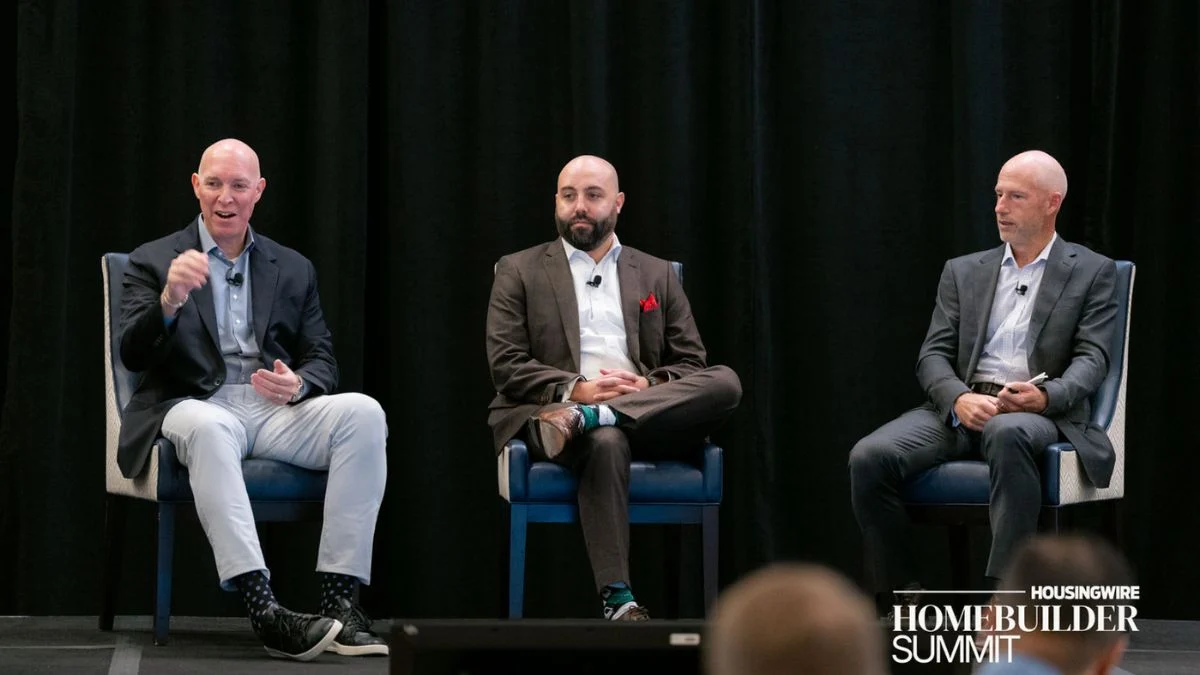
This rigorous strategic pivot was a primary focal point of discussion during the recent HousingWire Homebuilder Summit. Rob Paul, Texas and Arkansas group president for Toll Brothers, and Dustin Bowersett, vice president of land acquisition for the company’s Central Florida division, offered a comprehensive look into the corporate playbook during a panel moderated by veteran Wall Street housing analyst Dan Oppenheim. Their insights illuminated a broader industry truth: survival and sustained profitability in a cooling market require anticipating macroeconomic shifts rather than reacting to them after the damage is done.
The Evolution of Corporate Underwriting and Hurdle Rates
To understand Toll Brothers’ current operational standing, one must examine the macroeconomic trajectory that preceded it. During the post-COVID housing boom, lots traded aggressively across the United States. Propelled by historically low mortgage rates, rapid migration to the Sun Belt, and insatiable consumer demand, developers acquired land on the optimistic assumption that homes would sell almost instantly and at exceptionally high profit margins.
However, as inflationary pressures prompted the Federal Reserve to aggressively raise interest rates, mortgage rates climbed, purchasing power plummeted, and the housing market entered a prolonged period of normalization and correction. Recognizing these storm clouds gathering on the horizon, Toll Brothers initiated a comprehensive reassessment of its underwriting criteria several years ago.
According to Paul, the company’s land committee has drastically elevated its internal evaluation thresholds. As market conditions grew progressively tighter, the builder engineered a course correction, moving away from simple volume-based metrics to score potential land deals using a strict dual combination of gross margin and internal rate of return (IRR).
“The increase of that threshold and making the underwriting more strict over the course of the last couple of years has put us in a position where, should the market turn, we retain some value,” Paul stated during the summit panel.
Crucially, this modernized underwriting framework discards the inflated sales metrics of the spring selling seasons, favoring real-time data instead. Paul noted that historical performance from earlier in the year is heavily discounted, with decision-making driven almost entirely by localized sales data from the preceding 60 to 90 days, and increasingly, the prior few weeks.
This hyper-reactive yet conservative stance ensures that new land purchases pencil out even if localized market conditions deteriorate further. The overarching philosophy demands that builders underwrite the economic realities they are likely to face, rather than relying on the favorable operating environments of the recent past.
The Main-and-Main Advantage in a Flight to Quality
Toll Brothers has long adhered to its signature “Main-and-Main” philosophy, focusing property acquisitions in prime, established locations. This strategy aligns naturally with the company’s distinct market positioning as the publicly traded homebuilder with the highest average sales price in the United States, hovering at approximately $1 million nationally.
In markets like Central Florida, Bowersett noted that while the division’s inventory spans from $350,000 to $5 million, the vast majority of volume concentrates tightly in the $850,000 to $1.3 million price band. The core consumer demographic consists largely of domestic move-up buyers alongside affluent international purchasers from Latin America. Regardless of geographic origin, these buyers share a common priority: top-tier locations situated near exceptional school districts and established cultural and economic hubs.
The wisdom of the Main-and-Main strategy becomes glaringly apparent during market downturns. When housing demand is robust and buyers are plentiful, outlying suburban fringe areas often appear to be smart, high-margin bets. Production builders can post strong absorption rates, developers frequently offer attractive lot pricing, and complex deal structures are easily negotiated.
However, when macroeconomic pressures cool overall demand, the financial gap between prime central land and peripheral land widens dramatically. Bowersett pointed to Polk County, Florida—a rapidly growing suburban and exurban region situated squarely between Orlando and Tampa—as a textbook case study. During the pandemic-era housing surge, developers rushed into Polk County, snapping up peripheral acreage.
As population growth and buyer demand in Polk County subsequently moderated, that submarket lost significant momentum. In hindsight, Toll Brothers’ deliberate choice to avoid speculative land plays in the area proved exceptionally prudent.
“We decided not to. We stayed in our core markets, and if you look right now… the lots are essentially worthless in some instances,” Bowersett observed.
This vulnerability is not isolated to Central Florida. Peripheral markets nationwide are experiencing identical dynamics.
“The fringe is what gets hurt first, period,” Paul emphasized. “When there are fewer buyers, the market gets a little tough. There’s a flight to quality.”
This shift is heavily driven by consumer psychology. Even when newly constructed homes are comparable on paper, modern buyers are intensely risk-averse, hyper-conscious of making a poor financial investment in an uncertain economic climate.
“Buyers don’t want to feel stupid. They don’t want to feel dumb. They don’t want to feel like they’re making a mistake,” Paul explained. “There’s safety in a community that’s already half-built-out. There’s safety in a community that has 10 home sites left.”
This deeply ingrained preference gives established neighborhoods a massive competitive advantage over newly opened fringe developments. For major builders, it underscores a vital reality: a softening macroeconomic environment does not depress demand evenly across all housing submarkets. Instead, demand concentrates defensively in central, established locations, leaving developers heavily exposed to outer-ring land assets with a severely weakened hand to play.
Land Sellers Concede on Terms While Pricing Remains Sticky
Despite the undeniably more challenging sales environment, land sellers have largely resisted outright reductions in lot pricing. Paul noted that sellers continue to anchor their expectations to the peak valuations secured during the height of the pandemic housing boom. Consequently, pricing remains notably sticky across many primary real estate markets.
To bridge the gap between buyer caution and seller hesitation, Toll Brothers and other disciplined developers have increasingly focused on terms rather than price cuts. Sellers are demonstrating growing flexibility regarding payment timing, takedown schedules, and phased lot deliveries. In certain instances, landowners are willing to structure transactions dynamically around the actual pace of home sales rather than enforcing a rigid, pre-set payment calendar.
Nevertheless, industry analysts suggest this psychological resistance cannot hold indefinitely. If prolonged high interest rates and moderated buyer demand persist, landowners will ultimately be forced to adjust their price expectations downward to maintain liquidity.
“There’s no relief on price yet,” Paul acknowledged. “But that’s going to come if this continues.”
Simultaneously, a novel pipeline of available land opportunities has begun to materialize from an unexpected source: competing builders. Many residential construction firms that aggressively acquired expansive land portfolios several years ago are now experiencing severe project-level return degradation. As a result, these competitors are actively seeking to offload portions of their land holdings to shore up balance sheets.
This structural shift presents a strategic opening for well-capitalized firms like Toll Brothers, allowing them to selectively acquire prime parcels from projects that other builders can no longer justify holding under their original, overly optimistic underwriting models.
“We’ve had a bunch of opportunities in Florida where a builder bought a project that we were bidding on three years ago, and their project-level returns are now struggling,” Bowersett noted.
By cherry-picking the absolute best lots and the most lucrative phases of these distressed competitor projects, Toll Brothers can maximize capital efficiency and secure high-value assets perfectly tailored to its luxury buyer profile.
The Intersection of Modern Technology and Relational Real Estate
As the operational mechanics of land acquisition become more complex, homebuilding corporations are increasingly turning to advanced technological tools. Geographic Information Systems (GIS) and Artificial Intelligence (AI) platforms have transformed how developers screen markets, conduct initial due diligence, and identify off-market acquisition targets. Bowersett highlighted that Toll Brothers routinely tests multiple proptech platforms and currently utilizes specialized spatial data tools like Acres to accelerate its analytical pipeline.
However, industry leaders are quick to emphasize that technological sophistication alone cannot replace fundamental human relationships in the land business. While algorithms and spatial analytics can streamline the preliminary screening process, the core of successful land acquisition remains fundamentally personal.
“Land is still very much a relationship business,” Bowersett asserted, noting that approximately 90% of his closed transactions originate from long-standing industry relationships.
Even when a parcel of land officially enters the open market, experienced land brokers typically maintain a mental hierarchy of credible, reliable builders, placing proven developers at the top of their call lists. Bowersett described decades-long efforts cultivating trust with landowners and intermediaries, citing instances where acquisition teams maintained patience for years until a generational farming family’s personal circumstances aligned with a willingness to sell.
Furthermore, corporate brand equity plays an invaluable role in opening doors that might otherwise remain closed to smaller or lesser-known regional developers. Landowners frequently seek prestige, hoping to see a premier corporate flag proudly raised above their former family acreage.
“That brand gets us invited to a lot of dances because they want our flag hanging in their particular community,” Paul explained.
Yet, executives acknowledge that brand reputation alone is insufficient to close complex real estate transactions.
“Brand opens the doors and makes some phones ring,” Paul concluded. “Relationship will keep you in it long term and bring the next deal.”
Broader Economic Implications for the Housing Sector
The strategic shifts demonstrated by Toll Brothers offer a revealing window into the broader trajectory of the American housing market. As the industry transitions away from the unsustainable volume-driven expansion of the early 2020s toward a more disciplined, value-conscious paradigm, land acquisition practices will serve as a primary indicator of corporate health.
Developers that fail to adapt their underwriting hurdles to reflect higher baseline interest rates and localized buyer hesitation risk accumulating toxic asset portfolios reminiscent of the post-2008 housing downturn, albeit driven by different macroeconomic catalysts. Conversely, firms exhibiting operational restraint, prioritizing prime locations over peripheral volume, and maintaining strict financial discipline are uniquely positioned to weather ongoing market normalization.
Ultimately, the blurring line between strategy and tactics in modern homebuilding underscores a singular imperative: in an increasingly uncertain economic landscape, survival belongs to those who underwrite reality, respect the fundamentals of location, and build deep, enduring relationships within the communities they serve.