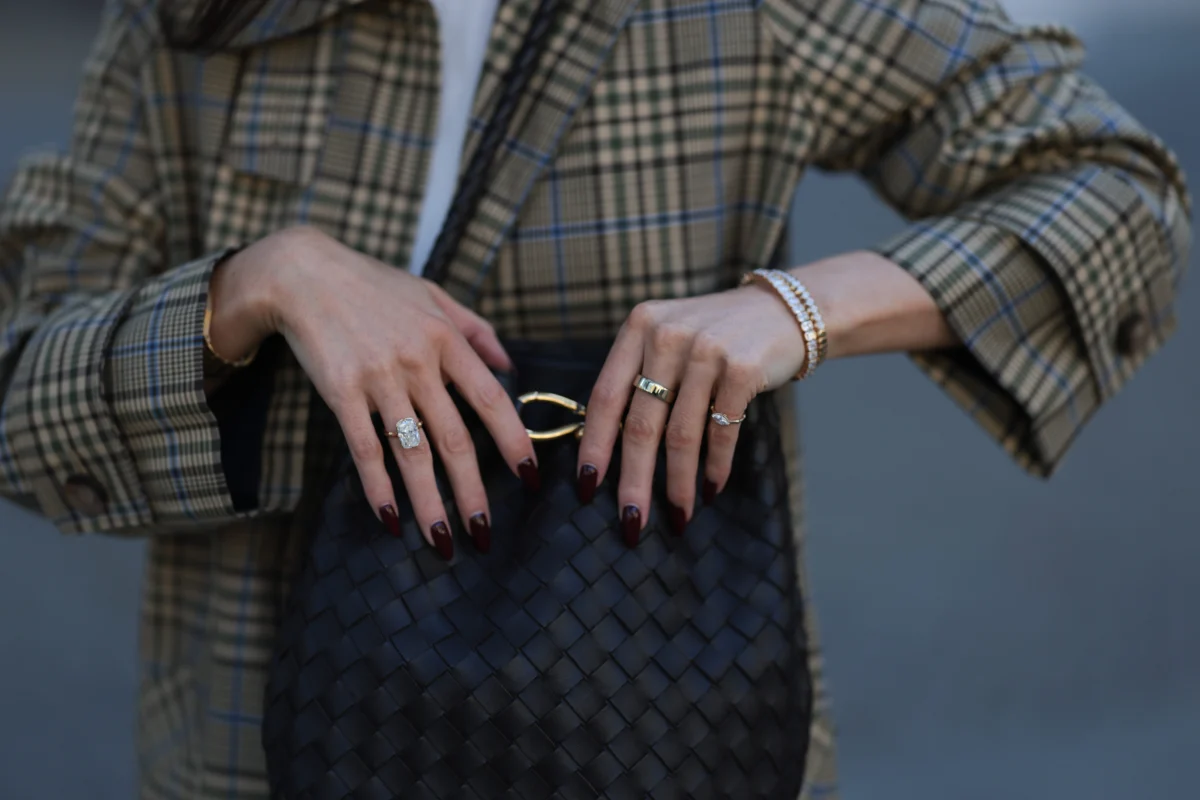
The beauty industry is currently undergoing a significant transition as the high-gloss, pastel-dominated aesthetics of summer yield to the grounded, sophisticated, and earthy palettes of the autumn season. Leading this shift is a manicure style colloquially known as "espresso martini nails," a trend that has rapidly transcended social media virality to become a staple in professional salons and luxury fashion environments. Characterized by deep roasted browns, creamy mocha highlights, and metallic chrome finishes, this trend reflects a broader consumer movement toward "quiet luxury"—an aesthetic that prioritizes understated elegance and rich, monochromatic color schemes.
The Evolution of the Espresso Aesthetic
The emergence of coffee-inspired nail art is not an isolated phenomenon but rather the latest iteration of the "food-inspired" beauty trend cycle. Over the past twenty-four months, beauty enthusiasts have seen the rise of "strawberry girl" makeup, "glazed donut" skin, and "latte makeup." These trends rely on accessible, relatable imagery that connects personal style with lifestyle choices.
The espresso martini manicure serves as a natural evolution of the "latte" trend that dominated the fall of 2023. While the latte aesthetic focused on soft, warm beiges and muted tan shades, the espresso martini iteration introduces greater depth, utilizing high-contrast tones ranging from deep, near-black cocoa to delicate champagne highlights. Industry analysts suggest that this shift toward darker, more intense pigments is a reaction to the extreme minimalism of the early 2020s, signaling a desire for bolder, more mature color profiles that maintain a level of timelessness.
Chronology of a Viral Movement
The rise of the espresso martini nail can be traced through a series of key markers in the fashion calendar. In late 2025, during the lead-up to the winter social season, high-end nail artists began experimenting with chrome powders layered over dark brown bases. By early 2026, the trend had gained significant traction on platforms such as Pinterest and Instagram, where search queries for "chocolate brown nails" and "coffee-themed manicure" increased by 140% compared to the previous year.
Celebrity influence acted as a primary catalyst for widespread adoption. In the second quarter of 2026, several high-profile public figures, including Dakota Johnson, were photographed sporting variations of the espresso-toned manicure. This visual endorsement served as the tipping point, moving the look from niche DIY nail blogs to the mainstream fashion press. By August 2026, major cosmetic retailers reported a marked uptick in sales for nail polish shades in the "espresso," "mocha," and "sable" categories, with inventory turnover rates for these specific colors outpacing standard neutral tones by nearly 30%.
Technical Application and Design Variations
From a technical standpoint, the espresso martini manicure is defined by its versatility. It is not a singular design, but rather a spectrum of styles that utilize the same color family. Professional nail technicians categorize the trend into several primary execution methods:
- Glazed Chrome: This involves applying a fine iridescent chrome pigment over a base of deep brown polish. The result is a liquid-metal effect that mimics the dark, reflective surface of a fresh espresso.
- Marbled Mocha: A complex technique that uses a wet-on-wet application process to swirl white or cream polish into the brown base, creating an appearance similar to milk integrating into a coffee cocktail.
- Minimalist French: A modern take on the classic French manicure, replacing traditional white tips with shades of deep coffee or caramel.
- Solid Monochrome: The most accessible iteration, focusing on high-pigmentation formulas that provide a glossy, opaque finish suitable for professional settings.
The longevity of this trend is attributed to its adaptability. Unlike seasonal fads that require specific nail lengths, the espresso palette complements both short, squoval-shaped nails and elongated, almond-shaped silhouettes. Furthermore, its neutral undertones ensure compatibility with diverse skin tones, a factor that has historically been a hurdle for brown-toned beauty products.
Data-Driven Market Implications
The success of the espresso martini trend highlights a shift in consumer spending habits within the beauty sector. Market research data from 2026 indicates that consumers are increasingly prioritizing "low-maintenance luxury." Because deep brown polishes generally exhibit longer wear times and are less prone to visible staining than lighter shades, they represent a cost-effective choice for the average consumer.
Furthermore, the "coffee-bean" nail art trend has provided a boost to boutique nail salons that offer custom hand-painted designs. Small businesses have reported that the ability to offer "bespoke" coffee-themed art allows them to charge a premium for their services, driving revenue growth in a competitive beauty market. The rise in demand for specialized nail art has also stimulated the development of new, high-density gel formulas that allow artists to create these intricate, swirled designs with greater efficiency and color payoff.
Perspectives on the "Quiet Luxury" Movement
Industry experts argue that the popularity of the espresso martini manicure is a direct reflection of current macroeconomic sentiments. "During periods of economic uncertainty, consumers often gravitate toward ‘investment’ aesthetics," says one retail analyst. "The espresso nail trend is a perfect example of this. It is a color palette that feels expensive, polished, and grounded. It doesn’t require a radical departure from one’s existing wardrobe, yet it feels distinctively ‘of the moment.’"
This perspective is supported by the fact that the trend pairs seamlessly with the autumn/winter fashion cycle, which emphasizes textures like cashmere, wool, and leather. The dark brown tones of the nails provide a neutral anchor that does not clash with the vibrant or oversized silhouettes often featured in seasonal collections.
Future Outlook and Sustainability
As the beauty industry moves toward the conclusion of 2026, the question remains whether the espresso martini manicure will endure. History suggests that while the specific "cocktail" naming convention may fade, the core color palette—warm, rich browns—is likely to remain a perennial favorite.
Manufacturers are already responding to this longevity by incorporating these shades into their core permanent collections rather than limiting them to seasonal releases. Additionally, there is a push toward sustainable polish formulations, with brands highlighting vegan and "10-free" ingredients in their new brown-toned lines. This alignment with ethical consumption further reinforces the trend’s legitimacy and appeal among younger, environmentally conscious demographics.
Conclusion
The espresso martini manicure has successfully transitioned from a social media curiosity to a definitive aesthetic pillar of the 2026 beauty landscape. By balancing the complexity of artisan nail art with the accessibility of classic, sophisticated color theory, the trend offers a rare intersection of high fashion and everyday utility. As the industry looks ahead, the influence of this color movement—and the "quiet luxury" ethos it embodies—is expected to inform design choices in other sectors of the beauty market, from eyeshadow palettes to long-wear lip pigments, cementing the "coffee" aesthetic as a foundational element of modern style.