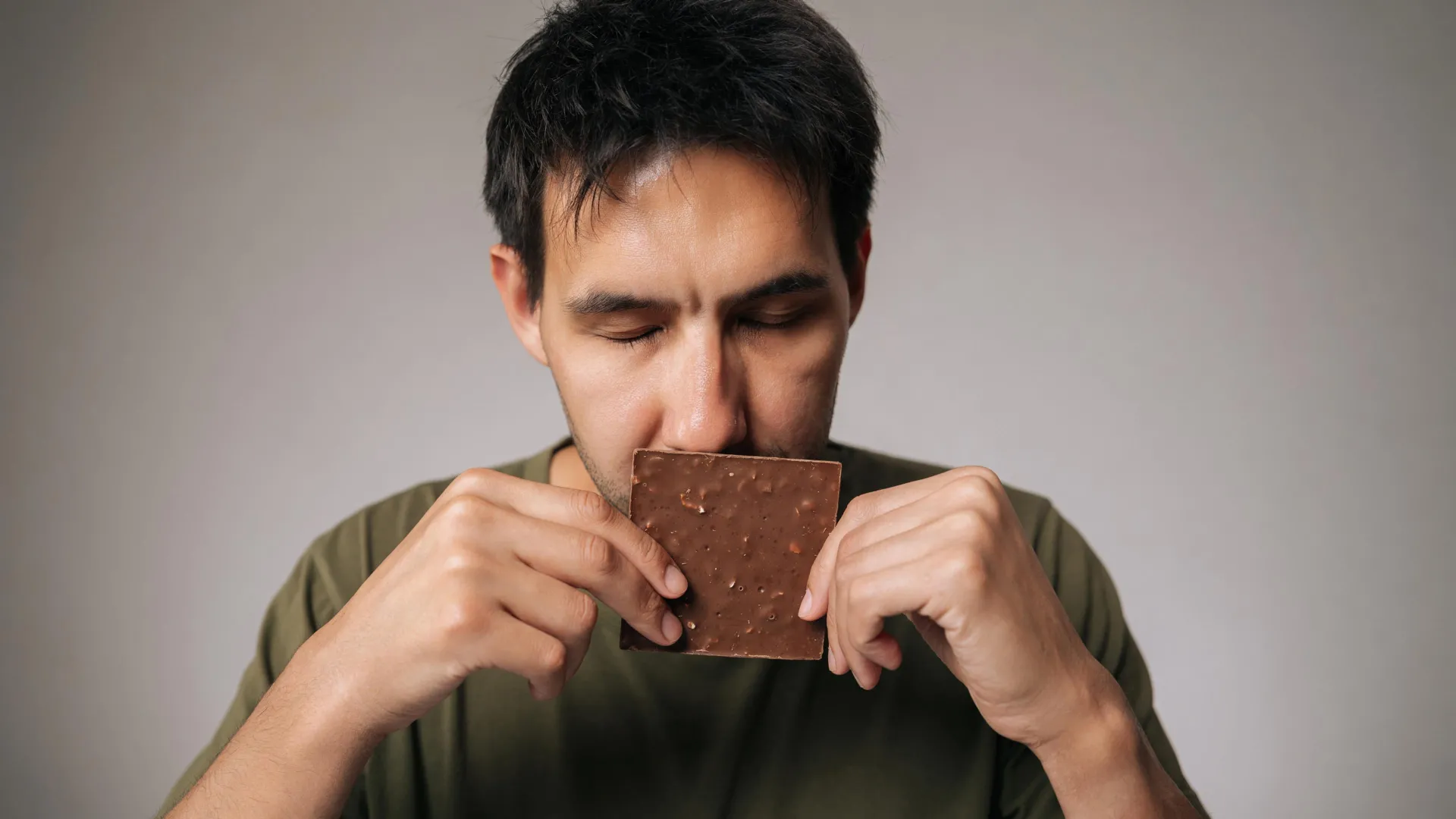
Struggling through the final grueling sets of a heavy leg day is a universal trial for fitness enthusiasts and elite athletes alike. However, recent scientific research suggests that a surprisingly simple sensory intervention might make those intense physical efforts more manageable: the scent of chocolate. A novel study published in the peer-reviewed journal Frontiers in Physiology reveals that exposing individuals to chocolate aromas before and during resistance training significantly enhances training volume. Intriguingly, this performance boost occurs without any corresponding increase in the athlete’s perceived exertion, opening up new avenues in the intersection of olfactory science and sports performance.
The research, conducted by a team of sports scientists at the University of Malaya, investigated the psychobiological effects of ambient food odors on physical endurance and appetite regulation. While the relationship between scent, the brain’s limbic system, and emotional or appetite networks has long been a subject of neurological study, this specific trial is among the first to systematically examine how olfaction interacts directly with muscular resistance exercise capacity.
Breaking Down the Methodology: Testing Scents in the Gym
To explore this phenomenon, the research team recruited a cohort of 23 healthy, moderately trained men in their early to mid-20s. These participants were subjected to rigorous experimental conditions designed to isolate the variables of scent, physical output, and subjective appetite. Before arriving at the laboratory, all participants underwent a mandatory fasting period of at least 10 hours to standardize baseline metabolic and hunger states.
Once at the facility, the participants were randomly divided into three distinct exposure groups. Each group was exposed to a specific olfactory stimulus during their testing sessions: a liquid dark chocolate sample containing 90 percent cocoa solids, a liquid milk chocolate sample containing 60 percent cocoa solids, and plain water, which served as the odorless control condition.
The physical exercise chosen for the trial was the leg extension—a standard resistance movement performed on a specialized machine where the participant sits and straightens their lower legs against mechanical resistance to lift a weighted stack. Researchers measured the total number of repetitions and overall training volume achieved during the sessions. Additionally, prior to the exercise regimen, participants completed detailed questionnaires rating their subjective feelings of hunger, fullness, desire to eat, and immediate intention to eat. These psychological metrics were continually reassessed throughout the training blocks following structured 30-second intervals of exposure to the assigned scent samples.
Divergent Effects: Dark Versus Milk Chocolate
The findings of the study demonstrated that not all chocolate aromas are created equal. The two types of chocolate utilized in the experiment produced strikingly different psychobiological outcomes, both in terms of appetite suppression and physical endurance enhancement.
When participants were exposed to the aroma of the 90 percent dark chocolate, researchers observed a consistent and statistically significant suppression of appetite indicators. Compared to both the water control group and the milk chocolate condition, the dark chocolate scent was associated with lower reported hunger, a diminished desire and intention to eat, and heightened feelings of perceived fullness before physical exertion even began. Scientists theorize that the bitter, intense profile of high-cocoa dark chocolate serves as a powerful learned cue that tricks the human digestive and nervous systems into an anticipatory state of satiety.
Milk chocolate, conversely, behaved quite differently. While participants rated the aroma of the 60 percent milk chocolate as significantly more pleasant than either the dark chocolate or the water, this sweet scent did not produce the same metabolic appetite-shifting properties. Instead of reducing hunger, the milk chocolate aroma functioned primarily as a hedonic reward cue, creating a pleasurable sensory environment that elevated mood and motivation without altering baseline metabolic hunger signals.
Despite these differing impacts on appetite, both aromas successfully enhanced physical performance, albeit to varying degrees. Participants in the dark chocolate scent group completed approximately 18 more repetitions on the leg extension apparatus compared to the baseline water control group. Meanwhile, those in the milk chocolate group added an average of nine additional repetitions. This substantial increase in physical output—achieved entirely through olfactory stimulation—occurred without any elevation in the participants’ rating of perceived exertion (RPE), meaning the heavier workload felt no more difficult than the baseline sets.
The Psychobiological Mechanism: Anticipation and Conditioning
To understand why a mere scent can prompt such profound physiological and physical adaptations, researchers point to the deep evolutionary wiring of the human olfactory system and the power of associative learning. From infancy onward, human beings repeatedly encounter specific food odors in tandem with the act of eating. Over years and decades, these aromas become deeply embedded neurological signals, training the brain and body to anticipate the physiological events that typically follow food consumption.
When an individual who has been fasting for 10 hours is suddenly exposed to a familiar, highly evocative food aroma like chocolate, the central nervous system activates anticipatory pathways. These mechanisms can prepare the digestive tract, alter hormonal signaling, and shift psychological perceptions from a state of deprivation toward a state of reward or fullness.
Dr. Mohamed Nashrudin bin Naharudin, an assistant professor at the Faculty of Sports and Exercise Science at the University of Malaya and the senior author of the study, emphasized the uniqueness of these findings. "Exposing moderately trained men to chocolate odors right before and between sets of resistance exercise significantly increased their overall training volume without increasing their perceived exertion," Dr. Nashrudin Naharudin noted. He highlighted that witnessing a substantial increase in repetitions without a corresponding rise in perceived effort represents a fascinating psychobiological outcome that warrants deeper exploration.
Elaborating on the distinct behavioral mechanisms observed between the two chocolate types, the research team explained that the dark chocolate scent acts as a learned cue for a rich, bitter, and highly satiating food item, effectively misleading the biological system into anticipating fullness. Conversely, the sweeter profile of milk chocolate acts as a pure hedonic reward mechanism, boosting training capacity by cultivating a highly enjoyable sensory landscape rather than altering core metabolic hunger signals.
Context, Limitations, and Future Directions
While the implications of the study are undeniably exciting for athletes, coaches, and fitness enthusiasts, the research team is quick to emphasize several important limitations that must be addressed in future scientific inquiries.
First and foremost, the biological explanations proposed by the researchers remain largely speculative at this stage. Because the study did not measure systemic blood hormone levels, neurotransmitter concentrations, or real-time neural activation via neuroimaging, it cannot definitively prove the exact biological pathways responsible for the observed shifts in appetite and resistance training performance.
Furthermore, methodological constraints included potential discrepancies in olfactory intensity between the dark chocolate, milk chocolate, and water samples. Because the control sample consisted of odorless water, participants may have been consciously aware of when they were experiencing the control condition, introducing the possibility of psychological expectancy bias. Additionally, the study cohort was relatively small and narrowly defined, consisting exclusively of healthy, moderately trained young men in their early twenties. Consequently, researchers caution that these findings cannot yet be broadly generalized to broader populations, including female athletes, untrained individuals, older adults, or elite competitors.
Another major question left open by the research is whether chocolate possesses uniquely potent properties or if other familiar, rewarding food aromas could yield similar performance-enhancing benefits. Dr. Nashrudin Naharudin and his colleagues suggest that chocolate is likely not entirely unique, though it certainly represents a food cue equipped with exceptionally strong, universally recognized reward associations across diverse human cultures.
It is hypothesized that any familiar, highly appealing food aroma—or at least one that is not met with aversion or repulsion—could potentially trigger a similar psychological and physiological shift. However, rigorous empirical testing will be required to determine whether scents representing savory, salty, or fruity foods can replicate or exceed the performance boosts observed with cocoa-based aromas.
Broader Implications for the Fitness and Wellness Industries
As sports science continues to explore the boundaries where psychology, neurology, and physical performance intersect, the potential applications of olfactory manipulation in athletic training are beginning to draw serious attention. Traditional ergogenic aids have long relied on nutritional supplements, stimulants like caffeine, and mechanical optimizations. The integration of targeted sensory cues introduces an entirely non-invasive, cost-effective, and safe alternative that could easily be incorporated into existing training protocols.
If future, larger-scale studies validate these findings across diverse demographics and exercise modalities, commercial applications could quickly follow. Fitness facilities and personal trainers might eventually utilize specialized ambient scent delivery systems to enhance workout endurance, delay the onset of mental fatigue, and help clients push through physical plateaus without requiring pharmacological or heavy stimulant interventions.
For now, the research serves as a compelling reminder of the intricate and often surprising ways the human brain governs physical capabilities. While a chocolate-scented gym may sound like a novelty, the underlying science suggests that harnessing the power of olfaction could soon become a legitimate, evidence-based tool in the pursuit of peak physical performance.