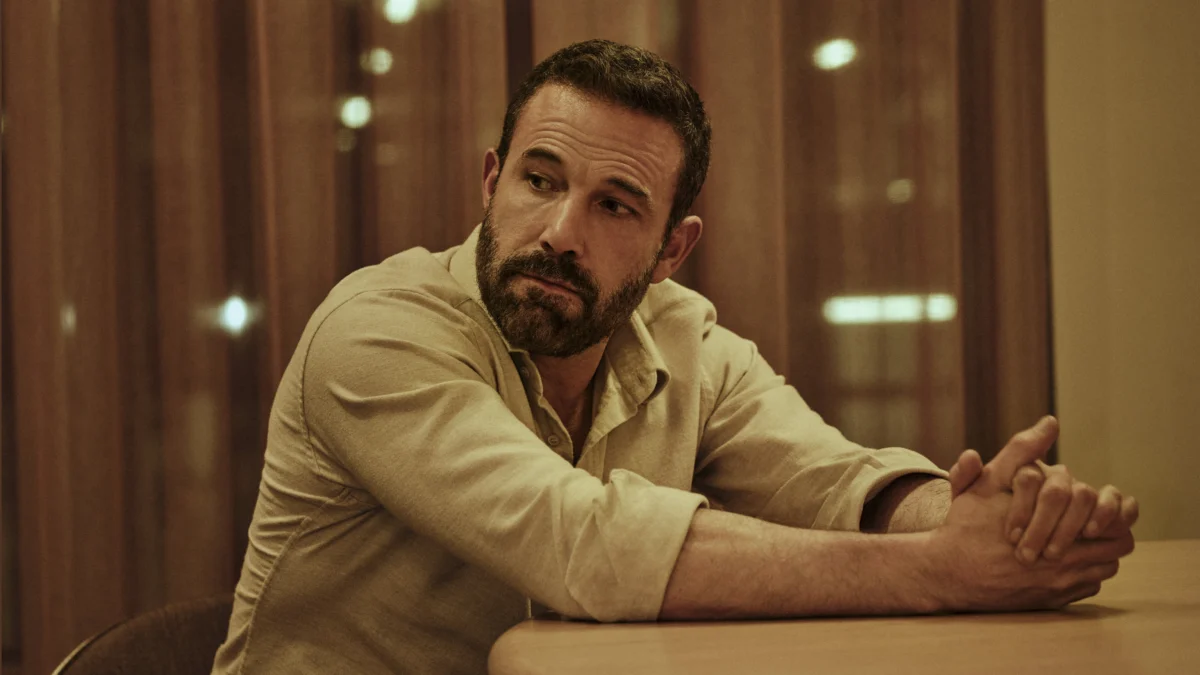
In a significant move that underscores the accelerating integration of artificial intelligence into the entertainment industry, streaming giant Netflix has officially disclosed a substantial cash payment of $587 million for InterPositive, an AI-powered filmmaking startup co-founded by acclaimed actor and director Ben Affleck. This revelation, detailed in a new regulatory filing, provides the definitive financial terms of an acquisition that was initially announced in March without specific monetary figures, solidifying Netflix’s strategic commitment to leveraging advanced technology in content production.
The InterPositive Proposition: Revolutionizing Post-Production with AI
InterPositive, at its core, represents a cutting-edge solution designed to address common and often costly challenges in film and television post-production. According to Ben Affleck’s statements at the time of the initial acquisition announcement, the startup’s AI tools are engineered to "protect the power of human creativity" by streamlining and enhancing the post-production process. Specifically, InterPositive’s technology aims to rectify "real-world production challenges such as missing shots, background replacements or incorrect lighting." This capability positions InterPositive as a valuable asset for any studio looking to improve efficiency, reduce costs, and maintain high production quality in an increasingly competitive landscape.
The problems InterPositive seeks to solve are perennial issues in filmmaking. Missing shots can necessitate expensive reshoots or creative compromises. Inconsistent lighting often requires extensive color grading and correction, a time-consuming manual process. Background replacements, while common in visual effects, can be labor-intensive and require significant artistic oversight. By automating or significantly assisting with these tasks, InterPositive offers the promise of faster turnaround times, more consistent visual output, and potentially a reallocation of human creative resources to more complex or innovative aspects of filmmaking. This aligns with a broader industry trend towards virtual production and AI-assisted workflows, which seek to bring production closer to final vision earlier in the process and mitigate on-set limitations.
A Chronology of Disclosure and Strategic Intent
The journey to this $587 million disclosure began earlier in the year. Netflix first publicly announced its intent to acquire InterPositive in March, generating considerable industry buzz, not least due to the involvement of a high-profile figure like Ben Affleck. While the initial announcement confirmed that the entire InterPositive team would transition to Netflix, with Affleck taking on a senior advisor role, the financial terms remained undisclosed, fueling speculation.
Following the March announcement, a report from Bloomberg suggested that the deal could be valued at up to $600 million, indicating the significant investment Netflix was prepared to make. The recent regulatory filing, however, provided the precise cash sum, confirming the high-end estimates and signaling the company’s transparency in its financial dealings as a publicly traded entity. This type of regulatory filing, typically an 8-K or a similar disclosure in quarterly reports, is mandated for material events that could impact a company’s financial standing or operational outlook, underscoring the perceived importance of this acquisition.
Netflix’s move to integrate InterPositive is not an isolated incident but part of a much larger, overarching strategy to embed artificial intelligence across its entire operational spectrum. In its most recent earnings report, Netflix revealed that approximately 300 of its titles have already utilized generative AI technologies within the past year. This statistic highlights a proactive and widespread adoption of AI, extending far beyond the scope of a single acquisition. Generative AI has been deployed in various capacities, from optimizing content recommendations and personalizing user interfaces to assisting in script development, marketing campaigns, and even the creation of visual effects or synthetic media elements. The acquisition of InterPositive specifically targets the post-production phase, complementing Netflix’s existing AI initiatives and fortifying its end-to-end technological capabilities in content creation.
The Broader Context: AI’s Inexorable March into Hollywood
The acquisition of InterPositive by Netflix is a microcosm of a much larger trend: the rapid and, at times, contentious integration of artificial intelligence into the creative industries. Hollywood, traditionally a bastion of human artistry and craft, is increasingly grappling with the implications of AI on everything from scriptwriting and casting to visual effects and distribution.
Advancements in machine learning, neural networks, and generative models have opened up new possibilities that were unthinkable just a decade ago. AI can now generate realistic images, synthesize voices, animate characters, and even compose music. In filmmaking, this translates to tools that can aid in pre-visualization, deepfake technology for de-aging or digital doubles, intelligent editing software, and predictive analytics for audience engagement. Virtual production, which uses LED screens and real-time game engines to create immersive sets, often relies on AI-driven processes for seamless integration of digital and physical elements.
However, the rise of AI has not been without significant friction. Concerns about job displacement, intellectual property rights, and the very definition of "human creativity" have become central themes in industry discourse. The recent Writers Guild of America (WGA) and Screen Actors Guild‐American Federation of Television and Radio Artists (SAG-AFTRA) strikes in Hollywood notably featured AI as a key point of contention. Unions sought protections against the unchecked use of AI to generate scripts, replicate actors’ likenesses without fair compensation, or replace human talent in various capacities. Ben Affleck’s stated goal for InterPositive – to "protect the power of human creativity" – can be seen as an attempt to position the technology as an augmentative tool rather than a replacement, a distinction that will be crucial for broader industry acceptance.
Financial Mechanics and Market Implications
The $587 million cash payment for InterPositive is a significant outlay, even for a company of Netflix’s scale. In the context of tech acquisitions, it represents a substantial investment in a specific niche technology. Cash deals are often preferred for their simplicity and immediate closure, avoiding the complexities of stock-based compensation and potential dilution for existing shareholders. This cash payment signifies Netflix’s confidence in InterPositive’s technology and its immediate strategic value.
Industry analysts will be closely scrutinizing this acquisition. While Netflix’s stock performance is influenced by a multitude of factors, including subscriber growth, content slate, and global expansion, strategic tech investments like this contribute to the company’s long-term competitive advantage. The ability to produce high-quality content more efficiently and cost-effectively directly impacts profitability and market leadership in the fiercely competitive streaming wars. Such an investment could be viewed positively by investors who see it as a proactive measure to control production costs and enhance output quality, potentially leading to stronger financial performance in the future.
Furthermore, the acquisition price reflects the perceived value of InterPositive’s intellectual property, its technological sophistication, and the expertise of its team. In the rapidly evolving AI landscape, companies with proven solutions and established talent are commanding premium valuations.
Ben Affleck’s Evolving Role: From Co-Founder to Senior Advisor
Ben Affleck’s involvement adds an intriguing layer to this acquisition. Known primarily for his extensive career as an actor, director, and producer, his foray into tech entrepreneurship with InterPositive highlights a growing trend of celebrities leveraging their industry insights and personal brands to invest in and shape technological advancements relevant to their fields. His transition from co-founder to a senior advisor role at Netflix is strategic. It allows Netflix to retain his creative input and industry connections, while integrating InterPositive’s technology into its broader infrastructure.
Affleck’s stated vision for InterPositive — to safeguard human creativity — positions him as a bridge between the artistic community and the technological frontier. His voice could be instrumental in advocating for the responsible and ethical deployment of AI within Netflix and potentially influencing broader industry standards. His presence lends credibility to the idea that AI can be a tool for empowerment, rather than solely for displacement, a narrative that many in Hollywood are eager to embrace.
Implications for the Future of Filmmaking
The integration of InterPositive’s technology into Netflix’s production pipeline carries profound implications for the future of filmmaking.
- Efficiency and Cost Reduction: By automating or streamlining complex post-production tasks, Netflix can potentially reduce the time and cost associated with bringing projects to completion. This could allow for more content production, quicker iterations, or simply higher budget allocation to other creative aspects.
- Creative Freedom and Consistency: Filmmakers might find new levels of creative freedom, knowing that certain technical challenges can be more easily mitigated in post-production. The ability to consistently correct lighting or seamlessly replace backgrounds could lead to a more polished final product.
- Democratization vs. Homogenization: While advanced tools can democratize access to high-quality production for independent filmmakers, there’s also a debate about whether over-reliance on AI could lead to a homogenization of visual styles or a reduction in unique artistic imperfections that contribute to a film’s character.
- Evolution of Creative Roles: The demand for traditional post-production roles may shift. Instead of manual rotoscoping or extensive color correction, human talent might be re-focused on supervising AI processes, refining AI outputs, or engaging in more high-level creative direction and problem-solving. This necessitates a re-skilling of the workforce.
- Ethical Considerations and Authenticity: The enhanced capabilities of AI in manipulating footage raise ethical questions about authenticity, particularly in documentary filmmaking or news. Clear guidelines and industry standards will be crucial to distinguish AI-generated or enhanced content from purely organic human creation.
The Competitive Landscape and Industry Outlook
Netflix’s substantial investment in InterPositive positions it as a frontrunner in the race to technologically advance content production among streaming services. Rivals such as Disney+, Warner Bros. Discovery, Amazon Prime Video, and Apple TV+ are all investing heavily in technology, but a targeted acquisition like this provides Netflix with a distinct advantage in a critical area of production.
This move could trigger a ripple effect across the industry. Other major studios and production houses may feel compelled to accelerate their own AI research and development, or seek similar acquisitions to keep pace. The "arms race" in content production is increasingly becoming an "AI arms race," where technological sophistication can directly translate into competitive differentiation, cost advantages, and superior content delivery.
Ultimately, the acquisition of InterPositive by Netflix is more than just a financial transaction; it is a strategic declaration. It signals Netflix’s deep commitment to integrating artificial intelligence not just into its recommendation algorithms or user experience, but directly into the very fabric of how its content is created. With Ben Affleck as a senior advisor, the company aims to navigate this technological frontier with a focus on enhancing, rather than replacing, the human element in storytelling, setting a potential precedent for how Hollywood will embrace the future of filmmaking.