Russell Westbrook’s Hand Surgery: A Deep Dive into Recovery and Impact
Russell Westbrook, the electrifying point guard known for his relentless energy and fearless drives to the basket, recently underwent surgery to address a fracture in his left hand. This unexpected setback not only impacts his immediate playing availability but also raises crucial questions about his recovery timeline, the potential long-term effects on his game, and how the Los Angeles Lakers will navigate his absence. Understanding the nuances of hand surgery recovery, particularly for an athlete whose game is so reliant on grip strength and ball-handling, is paramount to assessing Westbrook’s return and the Lakers’ season trajectory. This article will delve into the specifics of his injury, the typical recovery process for such an ailment, the implications for Westbrook’s elite athleticism, and the strategic considerations for his team.
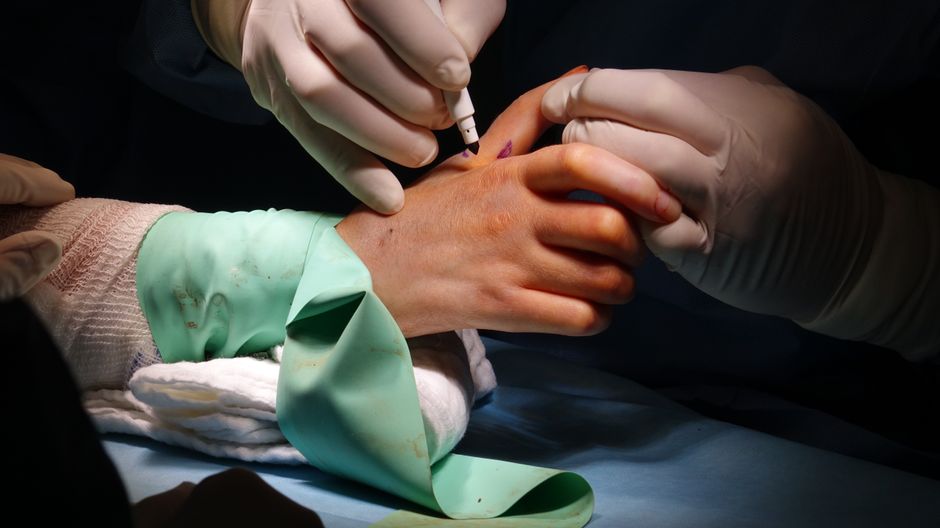
The injury, a fracture in his left hand, typically involves a break in one of the metacarpal bones or phalanges. The severity of the fracture, whether it’s a simple break, comminuted (multiple fragments), or displaced, dictates the surgical approach and the subsequent recovery protocol. In Westbrook’s case, the need for surgery indicates a level of severity that likely required internal fixation, such as screws, plates, or pins, to ensure proper alignment and healing of the bone. This type of intervention is common for athletes to promote faster and more stable bone union, allowing for an earlier return to functional use of the hand. The specific bone(s) affected will also influence the recovery. Fractures to the thumb metacarpal, for instance, can be particularly debilitating for a basketball player due to its crucial role in gripping and controlling the ball. Other common fracture sites include the proximal or distal phalanges, affecting finger extension and flexion. The surgical procedure itself is designed to stabilize the fracture and promote optimal bone healing, creating a foundation for the subsequent rehabilitation phase.
The recovery process for hand surgery, especially for a basketball player like Westbrook, is a meticulously planned, multi-stage journey. Immediately following surgery, the hand will likely be immobilized in a cast or splint to protect the surgical site and allow the initial healing process to commence. This immobilization period typically lasts for several weeks, during which pain management and swelling control are primary concerns. Once the cast is removed, the focus shifts to regaining range of motion and restoring flexibility to the affected joints. This is often achieved through gentle exercises performed under the guidance of a physical therapist. The initial movements will be slow and controlled, gradually progressing to more active and dynamic exercises. As mobility improves, the next critical phase involves strengthening the hand and wrist muscles. This is where the challenge for a basketball player truly begins. Grip strength, crucial for dribbling, shooting, and passing, will be significantly compromised due to disuse and the surgical intervention. Rehabilitation will involve progressive resistance exercises, using therapy putty, grip strengtheners, and eventually light weights.
The timeline for recovery from hand surgery in professional athletes is highly variable and depends on numerous factors, including the specific bone fractured, the complexity of the surgery, the individual’s healing capacity, and their dedication to the rehabilitation program. While a general guideline for a bone fracture requiring surgery might range from six to twelve weeks before a return to full athletic activity, for a player like Westbrook, every aspect of his game must be considered. The initial weeks post-surgery will be focused on bone healing and pain reduction. Following this, the emphasis will be on restoring full range of motion and reducing stiffness. Once pain-free and with adequate mobility, the rehabilitation will then progress to regaining strength, particularly grip strength. This is often the most prolonged and challenging aspect of the recovery for a basketball player, as their livelihood depends on their ability to firmly grip and control the ball. The gradual reintroduction to basketball-specific activities will be crucial, starting with non-contact drills, progressing to shooting and dribbling with modified intensity, and eventually full participation in practice and games.
Russell Westbrook’s playing style is characterized by its physicality and reliance on explosive movements. His signature driving layups, aggressive finishes at the rim, and tenacious defensive efforts all place significant stress on his hands and wrists. The ability to absorb contact, finish through defenders, and maintain control of the ball under pressure are all intricately linked to the strength and integrity of his hands. A hand fracture, even after successful surgery and rehabilitation, can potentially impact these critical aspects of his game. The fear of re-injury or the lingering effects of the fracture can lead to a degree of hesitancy or a modification in his approach. This could manifest as a subtle change in his shooting mechanics, a reduced willingness to drive into heavy traffic, or a slight decrease in his overall assertiveness. Furthermore, the intricate motor skills required for elite ball-handling—the quick crossovers, the precise dribble penetration, and the ability to execute complex passes—are all highly dependent on the dexterity and proprioception of the hand. Restoring these fine motor skills to their pre-injury level is a significant undertaking in the rehabilitation process.
For the Los Angeles Lakers, Westbrook’s absence presents a significant challenge. He is a primary ball-handler and playmaker for the team, and his ability to penetrate defenses and create scoring opportunities for himself and others is a vital component of their offense. His absence necessitates adjustments to the team’s offensive schemes, forcing other players to step up in terms of ball-handling, playmaking, and scoring. The coaching staff will need to find ways to compensate for his unique contributions, potentially relying more on their remaining guards to initiate offense and create opportunities. Defensive strategies may also need to be re-evaluated, as Westbrook’s defensive intensity and ability to disrupt opposing offenses are also valuable assets. The team’s depth at the guard position will be put to the test, and the performance of backup guards will be crucial in mitigating the impact of Westbrook’s injury. Furthermore, the psychological impact of losing such a high-energy player can also affect team chemistry and morale.
The long-term implications of Westbrook’s hand surgery are a subject of considerable interest. While modern surgical techniques and rehabilitation protocols are highly effective, the potential for residual effects cannot be entirely discounted. Athletes, especially those in high-impact sports like basketball, often push their bodies to the absolute limit. Even with a full recovery, there might be a subtle shift in their confidence or a learned protective mechanism that impacts their performance. The psychological aspect of returning from an injury, particularly one that affects such a fundamental tool of their trade, is often as challenging as the physical rehabilitation. Westbrook’s mental fortitude is well-documented, and his ability to overcome this challenge will be a testament to his resilience. He will likely need to work closely with sports psychologists to address any lingering anxieties or fears associated with re-injury. The team’s medical staff will play a crucial role in monitoring his progress and ensuring that he is cleared to return to play only when he is physically and mentally ready, not just on a predetermined timeline.
The return of Russell Westbrook to the court will be a phased process. Initially, he may be limited in his minutes and responsibilities. As he continues to progress through his rehabilitation and his hand regains full strength and function, his role and playing time will gradually increase. The Lakers’ medical and coaching staff will need to work in close conjunction to manage his return, ensuring that he is not overexerted and that he is able to perform at his peak without risking further injury. This may involve a period of playing on a minutes restriction, gradually increasing his involvement in practices and games. Communication between Westbrook and the medical staff will be paramount throughout this process, allowing them to gauge his pain levels, his confidence in his hand, and his overall readiness to return to full competitive action. The team’s strategy will likely evolve as Westbrook’s role expands, and they will need to adapt their offensive and defensive schemes to best utilize his strengths while protecting his recovering hand. The ultimate goal is for Westbrook to return to his dynamic, impactful self, contributing significantly to the Lakers’ success without compromising his long-term health. The journey back will be challenging, but with diligent rehabilitation and a supportive team environment, his return to elite performance is a distinct possibility.
