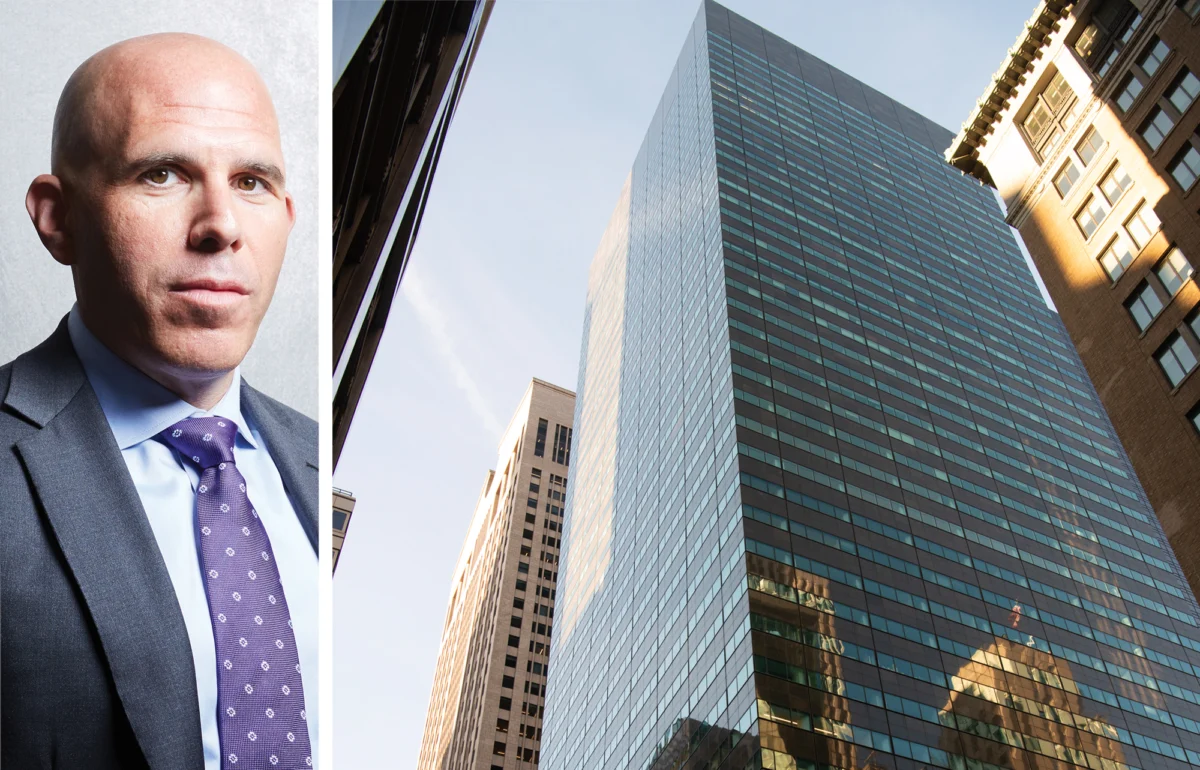
The Manhattan office market continues to show signs of high-end resilience as an affiliate of Apollo Global Management has finalized a 10-year lease for nearly 50,000 square feet of premier office space at 590 Madison Avenue. This latest transaction involves the entire 14th and 15th floors of the iconic Midtown tower, further solidifying the relationship between the alternative asset management giant and RXR, the prominent real estate investment and development firm led by Scott Rechler. This deal represents a significant expansion for the Apollo umbrella within the building, following a substantial 100,000-square-foot commitment made by the parent company in April 2025.
The strategic move is part of a broader consolidation effort by Apollo Global Management to streamline its New York City operations. According to sources familiar with the transaction, the firm is working toward housing its growing workforce primarily within two major hubs: 590 Madison Avenue, historically known as the IBM Building, and its long-standing headquarters at 9 West 57th Street. As part of this organizational shift, Apollo plans to relocate employees from several other Manhattan locations, including 3 Bryant Park and existing offices at 1350 and 1370 Avenue of the Americas.
A Strategic Consolidation in the Plaza District
The decision to concentrate operations at 590 Madison Avenue underscores a persistent trend among top-tier financial and private equity firms: the flight to quality. Despite broader fluctuations in the commercial real estate market, ultra-premium "Class A" assets in the Plaza District continue to command significant interest and premium pricing. By consolidating its platform companies and various business units into a centralized footprint, Apollo is positioned to enhance internal collaboration while maintaining a presence in one of the most prestigious corridors of global finance.
The 590 Madison Avenue property is a 43-story, 1.1 million-square-foot skyscraper that has long been a staple of the New York City skyline. Designed by the renowned architect Edward Larrabee Barnes and completed in 1983, the building is celebrated for its unique wedge-shaped silhouette and its glass-enclosed pedestrian atrium, which serves as a rare public-private amenity in the heart of Midtown. The building’s location at the corner of East 57th Street and Madison Avenue puts it at the epicenter of the city’s luxury retail and high-finance sectors.
Apollo’s latest lease for its platform company adds to the nearly 100,000 square feet the firm secured last year, which spans the 10th through 13th floors. With the addition of the 14th and 15th floors, the total footprint for Apollo-related entities at 590 Madison is approaching 150,000 square feet. This expansion occurs as the firm continues to maintain its primary executive presence at the nearby Solow Building (9 West 57th Street), a tower equally famous for its architectural distinction and high-profile tenant roster.
Financial Terms and Market Context
While the specific rental figures for the new 10-year lease were not officially disclosed, market insiders indicate that the asking rent for the space was "north of $120 per square foot." This pricing reflects the premium nature of the asset and the continued demand for high-floor, modernized office space in the Plaza District.
To put this figure into perspective, recent data from Colliers indicates that the average asking rent for office space in the Plaza District hovered around $95.68 per square foot during the first quarter of 2026. The fact that 590 Madison is commanding rates significantly higher than the district average is a testament to the building’s standing and the recent capital improvements overseen by RXR. The lease highlights a "K-shaped" recovery in the office market, where trophy assets continue to see record-breaking rents and low vacancy, even as older, less-amenitized "Class B" buildings struggle with higher vacancy rates.
The transaction was facilitated by a team of veteran brokers. Representing the landlord, RXR, were in-house executives William Elder and Daniel Birney. On the tenant side, Apollo’s platform company was represented by a high-powered team from CBRE, including Michael Wellen, Michael Geoghegan, and Stephen Siegel.
The Evolution of 590 Madison Avenue under RXR Ownership
The timing of this lease is particularly noteworthy as it follows RXR’s acquisition of the property. Scott Rechler’s RXR finalized the purchase of 590 Madison Avenue in August 2025 for approximately $1.1 billion. The seller was the State Teachers Retirement System of Ohio, which had owned the asset for decades.
RXR’s acquisition was seen as a major vote of confidence in the future of the New York City office market at a time when many investors were wary of the sector. Upon taking ownership, RXR moved quickly to implement a management strategy focused on high-touch tenant services and maintaining the building’s status as a premier corporate destination.
"Leasing activity at 590 Madison has been strong out of the gate following its addition to the RXR portfolio," William Elder, Executive Vice President at RXR, said in a statement. "As a premier Midtown asset, 590 Madison offers the quality, location, and tenant experience that today’s leading companies demand, and we look forward to building on this momentum."
The building’s tenant roster remains a "who’s who" of the financial world. In addition to Apollo, the tower houses firms such as Mak Capital and Odyssey Investment Partners. The ability to attract and retain such tenants is often attributed to the building’s large, efficient floor plates and its robust infrastructure, which were originally designed to meet the rigorous technological needs of IBM.
Apollo’s Growth and Real Estate Footprint
Apollo Global Management has been on a significant growth trajectory over the last several years. As an alternative asset manager with hundreds of billions of dollars under management, the firm has expanded its reach into insurance, credit, and private equity. This growth has necessitated a corresponding expansion of its physical office footprint.
The consolidation at 590 Madison and 9 West 57th Street suggests a desire for a more cohesive corporate culture. By moving employees out of 3 Bryant Park—a modern tower in its own right—and the older buildings along the Avenue of the Americas, Apollo is signaling a preference for the "Billionaire’s Row" vicinity. This area offers unparalleled access to high-end dining, luxury hotels, and transit links, which are critical for recruiting and retaining top-tier financial talent in a competitive labor market.
The relocation from 1350 and 1370 Avenue of the Americas also indicates a shift away from the Sixth Avenue corridor in favor of the more exclusive Madison and Fifth Avenue submarkets. While Sixth Avenue remains a powerhouse for legal and media firms, the Plaza District remains the undisputed home for the private equity and hedge fund elite.
Broader Implications for the New York Office Market
The Apollo lease serves as a significant data point for analysts tracking the health of the Manhattan commercial real estate sector. Several key takeaways can be derived from this transaction:
1. The Enduring Value of the Trophy Asset
The "flight to quality" is no longer just a trend; it is the defining characteristic of the post-pandemic office market. Companies are willing to pay a premium for buildings that offer more than just desk space. 590 Madison’s atrium, architectural pedigree, and proximity to Central Park provide a "magnetism" that helps encourage employees to return to the office.
2. Consolidation as a Strategy
Rather than downsizing, many large firms are choosing to consolidate. By taking more space in fewer buildings, companies can reduce the logistical friction of a fragmented workforce while potentially negotiating more favorable terms on larger blocks of space. Apollo’s move to exit three different buildings in favor of expanding at 590 Madison is a textbook example of this strategy.
3. The Resilience of the Plaza District
Despite the rise of Hudson Yards and the redevelopment of the Grand Central terminal area (including One Vanderbilt), the Plaza District has maintained its allure. The $120+ per square foot rent mentioned in this deal confirms that the neighborhood remains the gold standard for office valuations in North America.
4. Investor Confidence in NYC
RXR’s $1.1 billion bet on 590 Madison in 2025 appears to be paying off. High-velocity leasing to credit-worthy tenants like Apollo validates the acquisition price and suggests that institutional capital still views Manhattan office assets as a viable long-term investment, provided the assets are of the highest caliber.
Conclusion and Future Outlook
As Apollo Global Management begins the process of build-out and relocation for its platform company, the 14th and 15th floors of 590 Madison Avenue will undergo a transformation to meet the needs of a modern financial services firm. The 10-year commitment ensures that the IBM Building will remain a hub of high-finance activity well into the 2030s.
For the New York City real estate community, the deal is a welcome sign of stability. While the "work from home" debate continues to evolve, the actions of firms like Apollo suggest that for the upper echelons of the financial world, the physical office remains an indispensable tool for business operations. As other leases in the building and the surrounding district come up for renewal, all eyes will be on whether they can match the benchmark set by this latest transaction.
With the 2026 real estate market showing a clear divide between the "haves" and the "have-nots," 590 Madison Avenue firmly occupies the former category. Under RXR’s stewardship and bolstered by Apollo’s expanding presence, the building is poised to maintain its status as a cornerstone of the Midtown Manhattan business landscape. The deal not only highlights the individual success of the parties involved but also serves as a beacon of the enduring economic vitality of New York City’s commercial core.