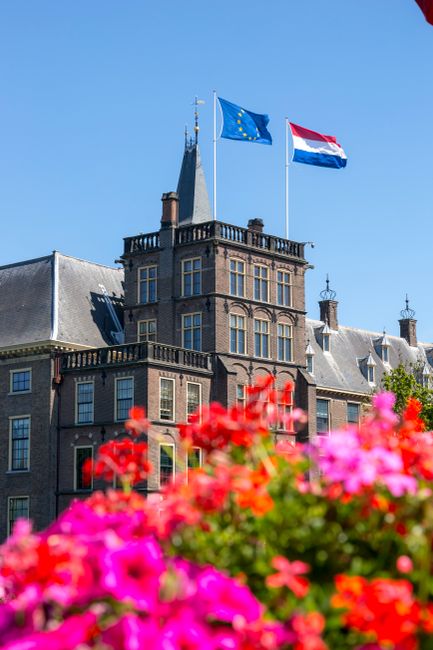
Dutch Politics: A Comprehensive Overview of the Netherlands’ Political Landscape
The Dutch political system, characterized by its multi-party proportional representation, coalition governments, and consensus-driven decision-making, offers a fascinating case study in contemporary democratic governance. At its core, the Netherlands operates as a parliamentary constitutional monarchy, with a sovereign head of state and a government led by a Prime Minister. The foundational principle of Dutch politics is the inviolability of parliamentary democracy, enshrined in the constitution and reflected in the active participation of citizens through regular elections. The Dutch Parliament, known as the Staten-Generaal, is bicameral, comprising the First Chamber (Eerste Kamer) and the Second Chamber (Tweede Kamer). The Second Chamber, directly elected, holds the primary legislative power, initiating most laws and scrutinizing government actions. Its 150 seats are allocated based on a national party-list proportional representation system, meaning a party’s seat count directly reflects its share of the national vote, with a low electoral threshold. This system fosters a diverse political landscape, with a multitude of parties regularly represented in parliament, often leading to the necessity of complex coalition formations. The First Chamber, on the other hand, consists of 75 members elected indirectly by the provincial councils. Its role is primarily advisory, reviewing legislation passed by the Second Chamber for constitutional compliance and technical accuracy, and possessing the power to reject bills, though this is rarely exercised.
The Dutch executive branch is headed by the King, who serves as the symbolic head of state and plays a formal role in government formation. However, the real power resides with the Council of Ministers, led by the Prime Minister, who is typically the leader of the largest party within the governing coalition. The Prime Minister and ministers are collectively responsible to Parliament, meaning they can be dismissed by a vote of no confidence. The process of government formation in the Netherlands is notoriously intricate. Following elections, the King, on the advice of parliamentary leaders, appoints a "verkenner" (explorer) to gauge potential coalition partners. This is followed by an "informateur" (information gatherer), who further investigates possibilities and aims to build a coalition agreement, often a lengthy and complex negotiation process involving significant compromises. The resulting coalition agreement, outlining the government’s policy agenda for its term, is then presented to Parliament for approval. This emphasis on consensus-building, while promoting stability and broad support, can also lead to a slow pace of legislative action and a dilution of radical policy proposals.
The Dutch electoral system, while promoting representation, also contributes to the fragmentation of the political landscape. Several significant political parties, each with distinct ideologies and constituencies, vie for power. Historically, the Christian Democratic Appeal (CDA) and the Labour Party (PvdA) have been dominant forces, often forming the backbone of coalition governments. However, the rise of new parties and the increasing polarization of Dutch society have reshaped this dynamic. Liberal parties, such as the People’s Party for Freedom and Democracy (VVD), have also played a crucial role, often in center-right coalitions. In recent decades, there has been a noticeable shift in voter allegiances, with a decline in traditional confessional parties and a rise in populist and eurosceptic movements. Environmental parties, like GroenLinks, and left-liberal parties, such as Democrats 66 (D66), have also carved out significant niches, advocating for progressive social policies and greater environmental protection. The Party for Freedom (PVV), a right-wing populist party, has emerged as a major player, often campaigning on anti-immigration and Eurosceptic platforms. This multiplicity of parties means that coalition governments are the norm, typically comprising three or more parties to secure a parliamentary majority.
Key policy areas in Dutch politics often revolve around economic stability, social welfare, environmental sustainability, and the country’s role within the European Union. The Dutch economy, known for its open markets and strong international trade links, often sees debates centered on fiscal policy, taxation, and labor market reforms. The robust welfare state, a cornerstone of Dutch society, faces ongoing discussions regarding its sustainability, with particular attention paid to pension reform and healthcare costs. Environmental policy is a prominent issue, with the Netherlands being a leader in renewable energy adoption and climate change mitigation efforts, driven by a strong environmental consciousness among the electorate and a commitment to international agreements. The European Union remains a central, and often contentious, issue in Dutch politics. While historically a staunch supporter of European integration, Euroscepticism has gained traction, with debates focusing on the balance of power between national sovereignty and EU competencies, as well as the economic and social implications of EU membership. Issues such as immigration, border control, and the future direction of the EU itself are frequently at the forefront of political discourse.
The Dutch political culture is characterized by pragmatism, compromise, and a strong emphasis on dialogue and consensus. This "polder model," named after the Dutch practice of reclaiming land from the sea through collective effort and negotiation, is deeply ingrained in the country’s political DNA. This approach, while fostering stability, can sometimes be perceived as leading to incremental change rather than bold reforms. However, it also contributes to a high level of trust in political institutions and a generally satisfied electorate. The media plays a significant role in shaping public opinion and holding politicians accountable, with a diverse and often critical press corps. Civil society organizations are also active, advocating for various causes and influencing policy debates.
Contemporary challenges facing Dutch politics include managing the complexities of a multi-party system, addressing the social and economic consequences of an aging population, navigating the ongoing debate about national identity and integration in an increasingly diverse society, and adapting to the rapidly evolving global geopolitical landscape. The rise of digital technologies and social media has also presented new challenges and opportunities for political engagement and communication, with parties and politicians increasingly utilizing these platforms to reach voters and disseminate their messages. The Netherlands’ position as a trading nation also means it is highly susceptible to global economic fluctuations and geopolitical events, requiring adaptable and resilient policy responses. Furthermore, the increasing polarization of political discourse, both domestically and internationally, presents a challenge to the traditional Dutch emphasis on consensus.
The administrative structure of the Netherlands also plays a crucial role in its political functioning. The country is divided into twelve provinces, each with its own provincial council and executive college, responsible for regional matters such as spatial planning, public transport, and environmental regulations. Below the provincial level are municipalities, which have significant autonomy in local affairs, including primary education, public housing, and local infrastructure. This decentralized system allows for tailored policy implementation at the local level, reflecting the specific needs and characteristics of different regions. However, it also necessitates coordination between different levels of government to ensure policy coherence and efficiency. The ongoing debates about the optimal balance between central and local governance are a recurring theme in Dutch political discussions.
The Netherlands’ foreign policy is largely shaped by its membership in international organizations, most notably the European Union and NATO. It is a strong advocate for multilateralism and international cooperation, playing an active role in various UN agencies and other global forums. The country is also a significant player in international development aid and humanitarian assistance. The Dutch commitment to free trade and open markets influences its economic diplomacy, with a focus on promoting global economic stability and fair trade practices. However, the growing nationalist and protectionist sentiments in some parts of the world pose a challenge to this approach. The ongoing conflict in Ukraine and its geopolitical ramifications have also brought defense and security policy to the forefront of Dutch political debate, with increased spending and a renewed focus on collective security within NATO.
The legal framework underpinning Dutch politics is a robust system of laws and regulations, overseen by an independent judiciary. The constitution provides the overarching framework for governance, outlining the rights and responsibilities of citizens and institutions. The principle of the rule of law is paramount, ensuring that all individuals and entities, including the government, are subject to the law. The Dutch legal system, influenced by civil law traditions, emphasizes codification and reasoned decision-making. The Constitutional Court does not have the power to review the constitutionality of laws, but courts can refuse to apply laws that conflict with binding provisions of EU law or fundamental human rights. This reliance on legal principles and judicial oversight contributes to a stable and predictable political environment.
In conclusion, Dutch politics is a dynamic and complex system characterized by its multi-party democracy, coalition governments, and a deep-seated culture of consensus. While the country’s proportional representation system ensures broad representation and inclusivity, it also necessitates intricate coalition negotiations and can lead to incremental policy-making. Key policy debates center on economic management, social welfare, environmental sustainability, and the Netherlands’ role in the European Union. Facing evolving domestic and international challenges, Dutch politics continues to adapt, striving to balance national interests with global responsibilities, and maintaining its commitment to democratic principles and pragmatic governance. The ongoing evolution of the political landscape, driven by demographic shifts, technological advancements, and global events, ensures that Dutch politics remains a subject of continuous interest and analysis.
