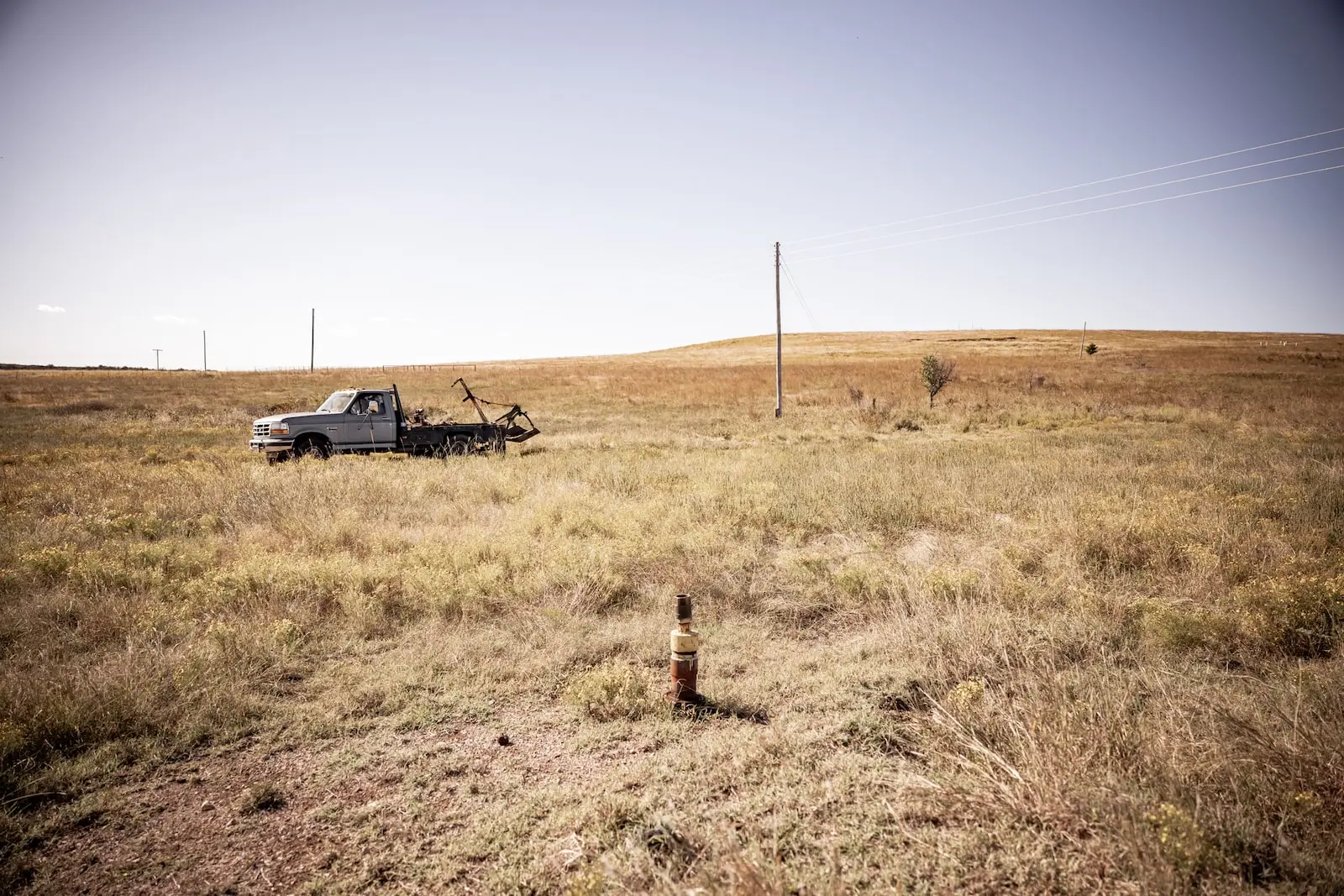
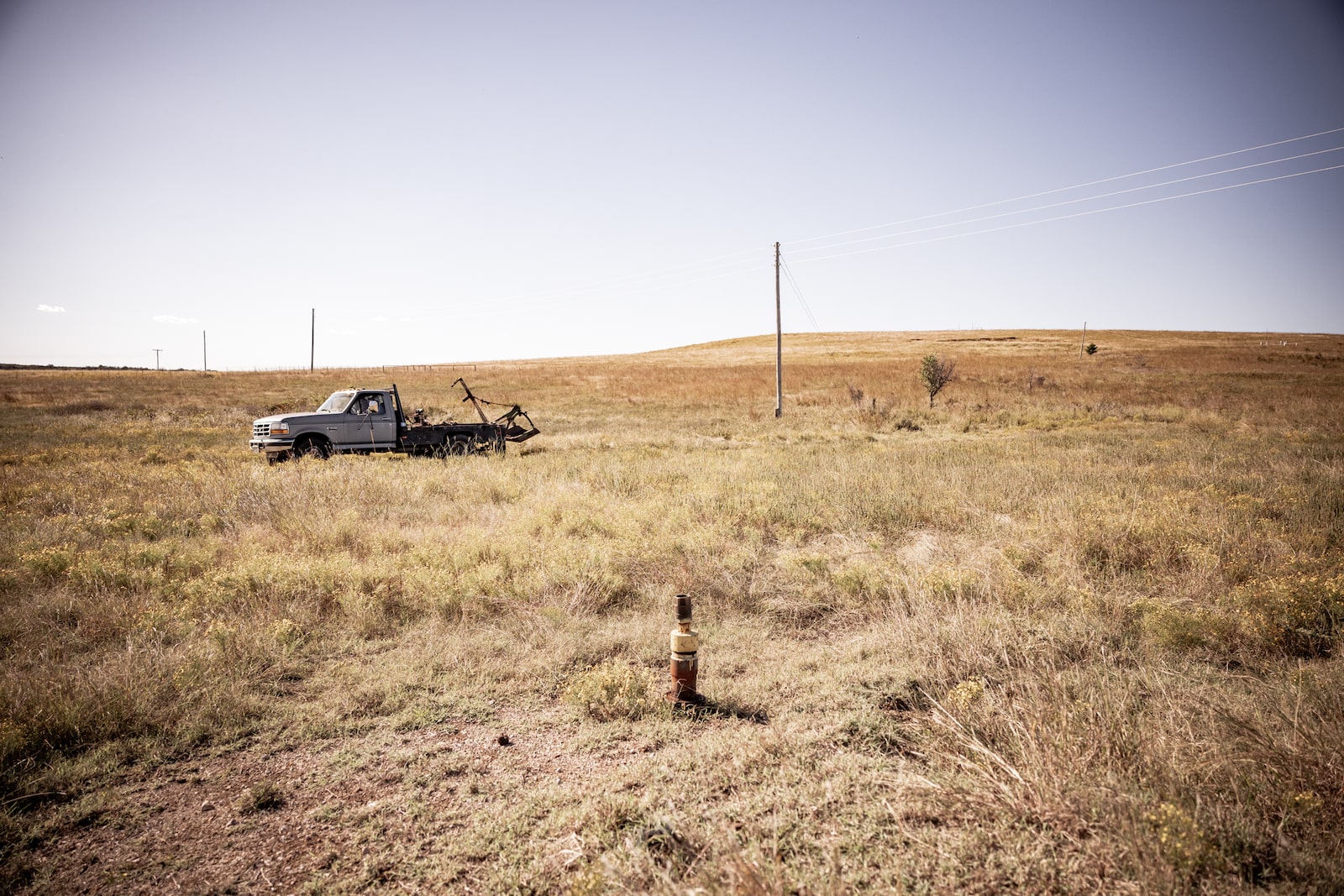
At the entrance to Harvest Land Farms within the sprawling expanse of the Osage Reservation, Fred Beartrack prepares to confront a legacy that has lingered for generations: an orphaned oil well whose surface records indicated a secure cement plug, but whose reality told a vastly different story. Upon excavation and a casing cutout, Beartrack and his crew from the Osage Nation Department of Natural Resources (DNR) discovered that historical data was fundamentally flawed. There was no cement barrier protecting the subterranean environment; the shaft was completely open down to 2,400 feet. Instead of a routine, rapid cap, the field team was forced into a complex remediation project requiring them to clean the well out to its base and fill it properly with industrial-grade cement—a process that could span anywhere from a few days to two months.
This single well encapsulates the systemic challenges facing the Osage Nation as it races to neutralize thousands of abandoned, leaking, and unrecorded oil and gas wells scattered across northeastern Oklahoma. For decades, the region has been burdened by the environmental and safety hazards left behind by defunct operators who vanished long before modern environmental protections were established. Now, fueled by unprecedented federal investments and a significant, abrupt shift in federal regulatory policy, the Osage Nation is aggressively scaling up its remediation efforts, even as critical questions loom regarding long-term jurisdictional responsibilities and the true financial cost of industrial cleanup.
The Scope of the Crisis and Historical Context
The Osage Nation Reservation encompasses approximately 1,470,559 acres in Osage County, Oklahoma, an area that has experienced more than a century of intensive oil and gas extraction. Collaborative reporting by Grist and the Osage News has identified roughly 2,300 documented orphaned wells across the county. However, energy experts and tribal authorities emphasize that the actual number is undoubtedly higher, as countless exploratory and production wells drilled during early twentieth-century oil booms were never recorded in official state or federal ledgers.
The physical threats posed by these structures are multifaceted. Unplugged or improperly sealed wells serve as conduits for subsurface contamination, potentially threatening freshwater aquifers relied upon by local agriculture and communities. Furthermore, deteriorating wellheads can leak potent greenhouse gases like methane into the atmosphere, while others pose localized hazards due to the presence of toxic hydrogen sulfide gas or unstable downhole fluid pressures.
Historically, the oversight of oil and gas development within the Osage Reservation has fallen under the purview of the federal government. As the trustee of the Osage mineral estate, the Bureau of Indian Affairs (BIA)—specifically through the Osage Agency in Pawhuska—has traditionally held the responsibility of overseeing leasing, drilling operations, and well-plugging compliance. However, federal watchdogs have repeatedly criticized the BIA for sluggish bureaucracy, staffing shortages, and inadequate monitoring of operators working within the reservation, setting the stage for chronic delays that hampered early remediation initiatives.
A Transformational Shift in Federal Oversight
The operational landscape for the Osage Nation’s Department of Natural Resources transformed significantly following a policy shift by the federal government. For years, the BIA’s Osage Agency was required to review and approve every single plugging permit filed by the Nation. This exhaustive administrative workflow required the bureau to verify DNR photographs and field data, followed by a mandatory public comment period spanning 30 to 45 days. According to tribal officials, the full permitting pipeline frequently dragged on for 120 to 130 days per well, serving as a major bottleneck that paralyzed cleanup momentum.
This friction became a central focus of an unflattering February report issued by the Office of the Inspector General (OIG) for the Department of the Interior. The federal watchdog revealed that as of late December 2024, the Osage Nation had successfully plugged only 14 of the 290 wells targeted for Phase 1 of its cleanup initiative—representing a completion rate of roughly 5 percent. The OIG report attributed the sluggish start to delays in hiring specialized petroleum engineers, severe staffing shortages at the local BIA office, and persistent disagreements over what constituted an emergency permit. Adam Trumbly, superintendent for the Osage Agency, noted during a tribal committee meeting that his office was operating with a skeletal crew under a federal hiring freeze, processing applications largely as a courtesy.
The regulatory dynamic shifted on March 13, when the Department of the Interior’s Orphan Wells Plugging Office (OWPO) revised its tribal grant guidelines for Phase 1 and Phase 2 projects. Under the updated framework, the BIA informed the DNR that wells lacking a responsible, solvent party no longer constitute a federal function. Furthermore, the revised guidance determined that tribal development and implementation grants are "nondiscretionary" and that activities conducted under them do not qualify as major "federal undertakings."
Consequently, the revised policy removed compliance requirements previously mandated by Section 7 of the Endangered Species Act and Section 106 of the National Historic Preservation Act from the BIA’s purview. The BIA Osage Agency formally relinquished its authority—and its obligation—to conduct these specific environmental and cultural reviews for orphan well plugging activities funded through the federal program. While the local BIA office continues to issue routine administrative verifications regarding lease status, the burdensome multi-month federal review process has been effectively eliminated, compressing the timeline for securing project approvals down to one or two weeks.
Assessing the Federal Exit: Relief and Regulatory Uncertainty
While the removal of federal administrative hurdles has dramatically accelerated field operations, the abruptness of the BIA’s policy change has generated complex legal and political questions within the Osage Nation.
Fred Beartrack observed that the federal agency did not merely delegate administrative authority to the tribal government; rather, it stepped away from the issue entirely. "They just said wells without a responsible party are not a federal function," Beartrack remarked. "It’s not like they gave us carte blanche. They just said it’s not their problem. They kind of wash their hands of it more than anything else."
This administrative retreat has sparked broader institutional debates regarding accountability and long-term jurisdiction. Former Principal Chief Geoffrey Standing Bear, who now serves on the Osage Minerals Council, has advocated for a comprehensive scientific and environmental review regarding any federal action that alters the traditional trusteeship model. The Osage Minerals Council has historically maintained that the federal government bears a distinct fiduciary duty as the trustee of the Osage mineral estate. While the council focuses heavily on promoting energy production and leasing, the DNR manages the grant-funded well-plugging program. Industry experts emphasize that these two objectives are fundamentally compatible, noting that modern enhanced oil recovery techniques in legacy fields cannot safely proceed until obsolete, compromised wells are permanently sealed.
Financial Realities and the Scale of the Challenge
The current acceleration of the Osage Nation’s orphan well program is propelled by historic federal funding made possible by the bipartisan Infrastructure Investment and Jobs Act (IIJA) of 2021, which included the REGROW Act. The landmark legislation established a $4.7 billion national fund dedicated to plugging orphaned oil and gas wells across states, federal public lands, and tribal reservations. Approximately $150 million of that total was allocated to Native American tribes, with the Osage Nation securing the largest single tribal share—totaling roughly $91 million distributed over a five-year grant cycle.
Despite the infusion of capital, energy policy analysts caution that the financial allocation is severely disproportionate to the actual magnitude of the crisis. Adam Peltz, an expert on orphaned wells with the Environmental Defense Fund (EDF), stated bluntly that $91 million "does not come close" to covering the total cost of addressing the liabilities in Osage County.
Depending on the depth, structural integrity, and environmental hazards present at a given location, the cost to properly plug a single oil or gas well ranges from $40,000 to upwards of $500,000. With thousands of documented sites and an unknown number of undocumented ghost wells hidden beneath pastures and rural properties, the financial burden far exceeds current federal appropriations. Peltz emphasizes that successfully navigating the program will require the Osage Nation to expand its internal capacity, hiring additional petroleum engineers and procurement specialists to scale up contractor bidding while keeping economic benefits centered within the local tribal workforce.
Current Progress and Operational Outlook

As the Department of Natural Resources concludes Phase 1 of the federally funded program and prepares for Phase 2, the tangible pace of remediation has stabilized. Since the inception of the initiative, DNR field crews have inspected between 2,500 and 2,700 wells and successfully plugged approximately 160 units, with 70 to 80 of those completed within the current operational year.
Crews are currently lining up new contracts and heavy rig allocations to tackle another 70 to 80 wells scheduled for Phase 2. Despite the removal of BIA permitting bottlenecks, Beartrack does not anticipate an exponential surge in daily completions, citing the physical realities of field verification. Every single well requires painstaking investigative work, historical record checks, and meticulous downhole preparation before cement can be poured.
The technical hurdles remain formidable. Many of the older wells encountered by the DNR were drilled decades ago, long before the adoption of contemporary construction standards. In the early eras of Oklahoma oil development, operators rarely set surface casing deep enough to reliably isolate freshwater zones from industrial fluids. While modern wells constructed to current regulatory specifications do not inherently compromise local water resources, legacy infrastructure continues to pose latent environmental risks.
At Harvest Land Farms and across dozens of similar sites throughout Osage County, the ultimate goal of the tribal cleanup initiative remains absolute surface remediation. Once a compromised well is cleared, cleaned to its base, and filled securely with continuous columns of cement, the surface infrastructure is dismantled, the soil is restored, and the land is returned to its original state.
"The final result is you won’t see anything," Beartrack said. "And we’ll have a record of where it was."