Pennsylvania is positioned to become the primary hub for data center growth within the Mid-Atlantic region over the next decade, a development that has sparked a high-stakes legislative battle in Harrisburg over the rights of local municipalities to regulate industrial siting. While industry analysts project a staggering 4,000 percent increase in data center capacity within the Commonwealth by 2036, a growing coalition of community advocates, environmentalists, and bipartisan legislators is warning that proposed state laws could strip local governments of their ability to manage the environmental and economic fallout of these massive facilities.
At the heart of the debate is a series of legislative proposals designed to streamline the permitting process for large-scale energy and industrial projects. Proponents argue these measures are essential to securing Pennsylvania’s role in the global artificial intelligence (AI) arms race, while critics, including the nonprofit research group Data & Society, argue that centralizing authority at the state level ignores the unique needs of diverse Pennsylvania communities. In a recently published policy brief, Data & Society cautioned that local authority remains one of the few meaningful tools communities have to negotiate with developers or reject projects that threaten local resources.
The Legislative Landscape: Streamlining vs. Sovereignty
The Pennsylvania General Assembly is currently considering several bills that would shift the balance of power from local zoning boards to state-level agencies. Leading the push for faster development is House Bill 502, a centerpiece of Governor Josh Shapiro’s "Lightning Plan." This Democrat-led measure aims to establish a statewide board tasked with approving large-scale energy projects. Because modern hyperscale data centers require immense amounts of electricity—often necessitating dedicated substations or "behind-the-meter" power plants—they would likely fall under the jurisdiction of such a board, bypassing traditional local approval processes.
Simultaneously, Republican-led initiatives seek to create a more hospitable regulatory environment for the tech industry. Senate Bill 939 proposes a standardized "regulatory sandbox" to create uniform statewide rules for data centers, effectively preventing a patchwork of different local ordinances. Another measure, Senate Bill 991, offers accelerated permitting timelines for developers who commit to meeting federal environmental standards. While these bills are framed as economic drivers, organizations like Data & Society argue they assume a "one-size-fits-all" solution for a state where rural townships and urban centers face vastly different infrastructural challenges.
"Local government should be supported, not overridden," the Data & Society brief stated, emphasizing that decisions regarding massive industrial infrastructure are too consequential to be removed from the hands of the people living near the sites. Currently, these bills remain in committee, but the debate surrounding them is intensifying as the scale of the projected growth becomes clearer.
Economic Projections: A 4,000 Percent Surge
The push for legislative reform is driven by a recent industry report from the Pittsburgh Technology Council and the Philadelphia Alliance for Capital and Technologies. The study, conducted by Mangum Economics, suggests that Pennsylvania is on the verge of an unprecedented industrial boom. According to the report, the Commonwealth’s data center capacity is expected to grow from its current 186 megawatts to over 7,196 megawatts by 2036.
This growth rate would outpace every other state served by PJM Interconnection, the regional electric grid that manages power for 13 states and the District of Columbia. The report highlights Pennsylvania’s "unique trifecta" of advantages:
- Energy Production: Pennsylvania is the nation’s largest net exporter of electricity.
- Natural Gas Resources: As the second-largest producer of natural gas in the U.S., the state offers a cheap and abundant fuel source for the "behind-the-meter" power plants that many data center developers prefer.
- Manufacturing Base: The state possesses the industrial capacity to manufacture the specialized cooling systems, racks, and electrical components required by the AI industry.
By 2036, the report predicts the industry will support approximately 19,400 jobs across the manufacturing, energy, and technology sectors. More than 50 data centers are already in various stages of planning or construction across the state, according to the Data Center Proposal Tracker.
Environmental and Consumer Concerns
Despite the promise of job creation and tax revenue, the rapid expansion of data centers has raised alarms regarding environmental sustainability and consumer costs. Environmental groups, including PennEnvironment and the Frontier Group, argue that the energy demands of AI and data processing will inevitably lead to increased greenhouse gas emissions. Many developers plan to power their facilities using natural gas, which could lock the state into decades of fossil fuel reliance and stimulate more fracking.
There is also a growing concern regarding the impact on the state’s water supply. Hyperscale data centers require millions of gallons of water daily for cooling purposes. In regions already facing water stress, the addition of a data center can strain municipal systems and compete with agricultural or residential needs.
Perhaps the most politically sensitive issue is the projected impact on residential electric bills. As data centers consume a larger share of the grid’s capacity, the cost of maintaining and expanding the transmission infrastructure is often passed down to consumers. A recent report from Duquesne Light indicated that Pennsylvania energy consumers could face a collective increase of approximately $2.18 billion in electric bills due to the rising demand for grid upgrades.
Quentin Good, an analyst at Frontier Group, noted that the industry has yet to prove that the long-term demand for these centers will justify the massive investment in energy infrastructure. "There is a danger of over-investing," Good said. "We might spend billions on infrastructure that we might not even need if the AI boom levels off, and those costs will stay on the backs of ratepayers."
Local Resistance and the Call for a Moratorium
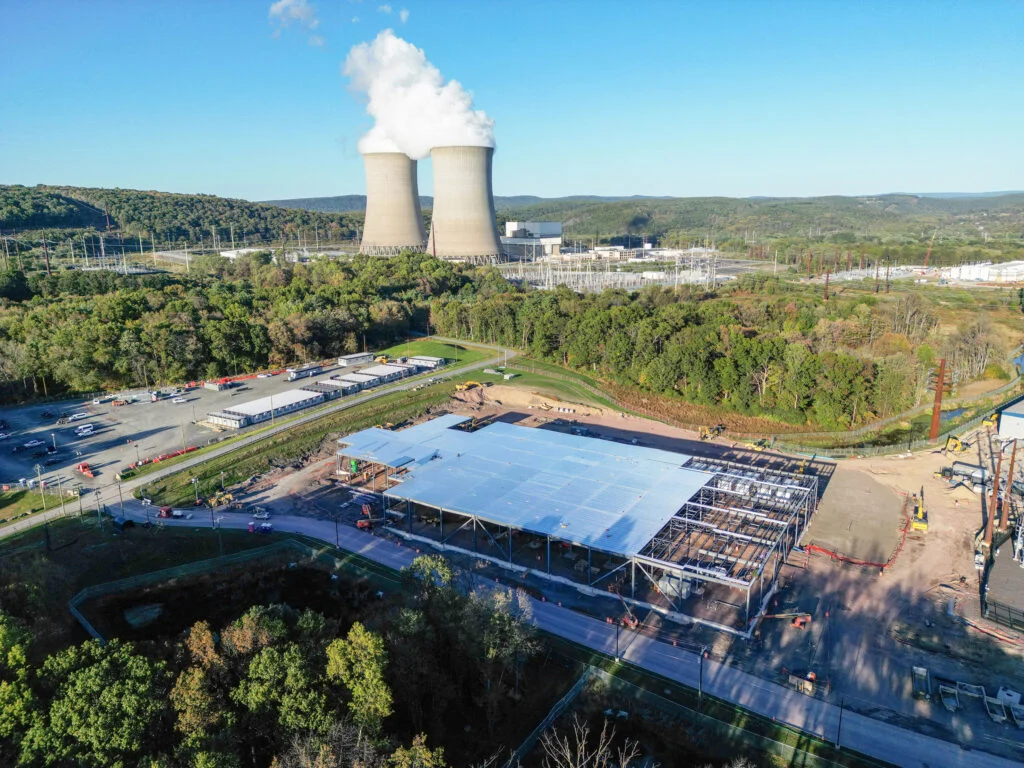
The tension between state-level economic goals and local concerns has already manifested in high-profile project rejections. In February, the commissioners of Montour County in central Pennsylvania denied a rezoning request from Talen Energy and Amazon. The tech giant had sought to build a massive data center complex adjacent to the Susquehanna Steam Electric Station, a nuclear power plant. Local officials cited concerns over land use and the long-term impact on the community’s character, marking a significant victory for those advocating for local control.
In response to the mounting pressure, State Senator Katie Muth (D-Montgomery/Chester) has announced plans to introduce legislation that would place a three-year moratorium on new data center development. The proposed pause is intended to give local governments and state regulators time to study the cumulative impacts on the electrical grid, water resources, and air quality.
Senator Muth noted that her proposal has gained unexpected bipartisan support, with four co-sponsors including two Republicans. She attributes this shift to "public outrage" over rising utility costs. "People are rightfully upset about their electric bills," Muth said. "I think that might be the reason why this has moved—it’s not just an environmental issue anymore; it’s a kitchen-table economic issue."
Analysis of Implications: The PJM Grid and Beyond
The situation in Pennsylvania is a microcosm of a national struggle as the United States grapples with the energy-intensive requirements of the digital age. The PJM Interconnection grid is currently under immense strain; a recent capacity auction saw prices spike by 800 percent, largely due to the retirement of coal plants and the rapid entry of high-demand users like data centers.
If Pennsylvania continues to centralize permitting authority, it may succeed in attracting billions in capital investment, but it risks alienating local constituencies and undermining its own climate goals. Conversely, if local resistance successfully slows development through zoning and moratoriums, the tech industry may shift its focus to neighboring states in the PJM territory, such as Ohio or West Virginia, potentially leaving Pennsylvania without the economic benefits of the AI revolution while still sharing the burden of higher regional energy costs.
As the legislative session progresses, the fate of HB 502 and the proposed moratorium will serve as a bellwether for how the Commonwealth intends to balance industrial ambition with community sovereignty. For now, Pennsylvania remains at a crossroads, caught between the promise of a high-tech future and the immediate concerns of residents worried about their environment and their wallets.