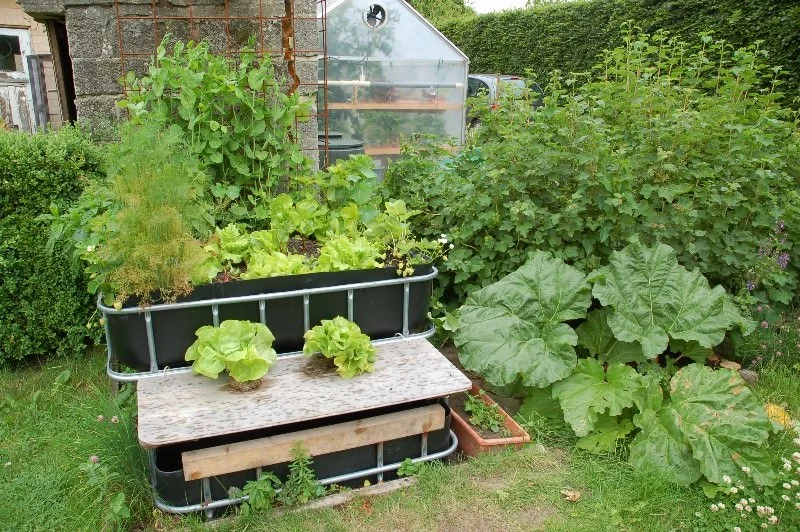
The global agricultural landscape is undergoing a fundamental shift as water scarcity and soil degradation push traditional farming methods to their limits. At the forefront of this transformation is aquaponics, a symbiotic method of food production that combines aquaculture—the raising of aquatic animals—with hydroponics, the cultivation of plants in water. While once considered a niche hobby for backyard enthusiasts, recent breakthroughs in artificial intelligence (AI), the Internet of Things (IoT), and biological research have propelled aquaponics into the mainstream of sustainable agricultural science.
According to a 2024 comparative greenhouse study, the efficiency of these systems is staggering: a well-managed aquaponics setup requires approximately one gallon of water to produce a single kilogram of leafy greens. In contrast, conventional soil-based farming requires 30 gallons or more for the same output. This 96% reduction in water usage, coupled with the elimination of chemical fertilizers, positions aquaponics as a critical solution for food security in an era of increasing environmental volatility.
The Biological Engine: Understanding Nitrification
To understand the efficiency of aquaponics, one must first understand the nitrogen cycle, which serves as the biological engine of the system. In a traditional aquarium, fish waste—primarily in the form of ammonia—builds up and becomes toxic to the animals unless the water is frequently changed. In an aquaponics system, this waste is repurposed as a vital resource.
The process, known as nitrification, relies on two primary types of beneficial bacteria: Nitrosomonas and Nitrobacter. First, Nitrosomonas convert the ammonia from fish waste into nitrites. While nitrites are still toxic to fish, they serve as the precursor for the second stage, where Nitrobacter convert the nitrites into nitrates. These nitrates are highly accessible nutrients that plants absorb through their roots. By removing these compounds, the plants effectively "scrub" the water, which is then recirculated back into the fish tank, clean and oxygenated. This closed-loop cycle minimizes the need for water replacement, limiting the system’s primary inputs to fish food and occasional top-offs due to evaporation.
The Technological Leap: AI and IoT Integration in 2026
As of 2026, the barrier to entry for home-scale aquaponics has reached an all-time low, driven by the mass adoption of smart monitoring technologies. A 2025 review published in Sustainable Environment Research highlights how the integration of AI and IoT sensors has moved the industry away from the "trial and error" phase of the early 2000s.
Modern systems now utilize low-cost WiFi-enabled sensors, ranging from $60 to $120, that continuously track pH levels, dissolved oxygen, ammonia concentrations, and water temperature. These devices feed data into AI-driven applications that can predict potential water quality crashes before they occur. For instance, if an AI detects a slight rise in ammonia alongside a drop in temperature, it can alert the grower to adjust the feeding schedule or check the heater, preventing fish mortality. This automation has significantly reduced the operational costs and technical knowledge previously required to maintain a balanced ecosystem.
Architectural Varieties: Choosing the Right Setup
The evolution of aquaponics has led to the development of several distinct system architectures, each suited to different environments and production goals.
1. Media Bed Systems
Commonly recommended for beginners by institutions such as Texas A&M, media bed systems utilize a container filled with inert materials like expanded clay pebbles, lava rock, or gravel. The fish water is pumped into this bed, often using a "flood and drain" mechanism. The media serves a dual purpose: it provides physical support for plant roots and acts as a massive surface area for beneficial bacteria to colonize. Recent research into alternative media has shown that carbonized rice husks and cocopeat can yield up to five times more crop than traditional clay aggregates, although these organic materials require more frequent replacement as they decompose.
2. Nutrient Film Technique (NFT)
For urban dwellers with limited floor space, the Nutrient Film Technique offers a vertical solution. In an NFT setup, nutrient-rich water flows in a thin, continuous film through PVC pipes or gutters. Plants are placed in small holes in the pipes, allowing their roots to dangle into the stream. Research from 2024 indicates that vertical NFT setups can increase productivity per unit area by up to 160% compared to horizontal systems, making them ideal for high-density crops like strawberries, basil, and lettuce.

3. Deep Water Culture (DWC) or Raft Systems
Raft systems involve floating large sheets of foam on top of a deep tank of nutrient-rich water. The plant roots hang through holes in the foam directly into the water. While highly productive for leafy greens and commercially popular, DWC systems require robust filtration to remove solid fish waste, as they lack the natural filtration provided by a media bed.
4. Decoupled Systems: The New Frontier
A significant development documented in the Journal of the World Aquaculture Society (2024) is the rise of "decoupled" systems. Unlike traditional "coupled" systems where water flows in a single continuous loop, decoupled designs separate the fish and plant units. This allows farmers to maintain different pH levels for each—fish generally thrive at a pH of 7.0 to 8.0, while plants prefer a slightly acidic 5.5 to 6.5. By separating the two, growers can optimize the environment for both, leading to significantly higher yields and better nutrient utilization.
Biological Diversity: Selecting Fish and Flora
The success of an aquaponics system depends heavily on the compatibility of the species involved. Tilapia remains the most popular choice for beginners due to their extreme hardiness and rapid growth rates. However, the industry has expanded to include a variety of species:
- Catfish: Known for their high density tolerance and resistance to disease.
- Goldfish and Koi: Ideal for ornamental systems where the fish are not intended for consumption.
- Perch and Bass: Preferred by those looking for high-quality edible fish in temperate climates.
On the botanical side, while leafy greens like spinach, kale, and Swiss chard remain the easiest to grow, the advent of nutrient-dense decoupled systems has made it possible to harvest fruiting vegetables such as tomatoes, cucumbers, and peppers. Furthermore, 2025 research in Reviews in Aquaculture suggests that "algae co-cultivation"—the practice of growing microalgae like Chlorella alongside plants—can double plant yields and manage ammonia levels twice as effectively as standard systems.
Economic and Environmental Impact
The implications of widespread aquaponics adoption extend far beyond the individual hobbyist. As urban populations grow, the "food miles" associated with transporting produce from rural farms to city centers contribute significantly to carbon emissions. Aquaponics allows for "hyper-local" production, where food is grown in the very neighborhoods where it is consumed.
Furthermore, the environmental benefits of eliminated runoff cannot be overstated. Conventional agriculture is a leading cause of nitrogen and phosphorus pollution in waterways, leading to "dead zones" in oceans. Aquaponics, by its very nature, retains these nutrients within the system, turning a potential pollutant into a valuable crop.
From an economic perspective, the initial investment in a home system—now often under $100 for basic kits—is frequently recouped through the reduction in grocery bills and the high market value of fresh, pesticide-free produce. For larger operations, the ability to harvest two crops (fish and vegetables) from a single input source provides a diversified revenue stream that is more resilient to market fluctuations.
Maintenance and System Resilience
Despite the advancements in automation, successful aquaponics still requires a baseline of human oversight. Maintaining a stable pH is the most critical task, as drastic swings can kill fish and prevent plants from absorbing nutrients. Regular testing of ammonia and nitrate levels is also essential, particularly in the first six weeks of a new system’s life, known as the "cycling" phase.
Experts suggest that the future of system resilience lies in renewable energy integration. Many 2026 home kits now come with solar-powered pumps and aerators, ensuring that the life-sustaining water flow continues even during power outages. This move toward energy independence further cements aquaponics as a cornerstone of sustainable living.
Conclusion: A Sustainable Path Forward
Aquaponics represents more than just a method of gardening; it is a sophisticated integration of ecology and technology. By mimicking natural ecosystems and enhancing them with modern data science, aquaponics addresses the dual challenges of resource scarcity and food security. As AI continues to lower the technical barriers and new research optimizes biological yields, the transition from conventional soil-based gardening to closed-loop aquatic systems appears not only inevitable but essential for a sustainable future. Whether in a high-tech urban vertical farm or a modest backyard setup, the marriage of fish and plants is proving to be one of the most efficient ways to feed a changing world.