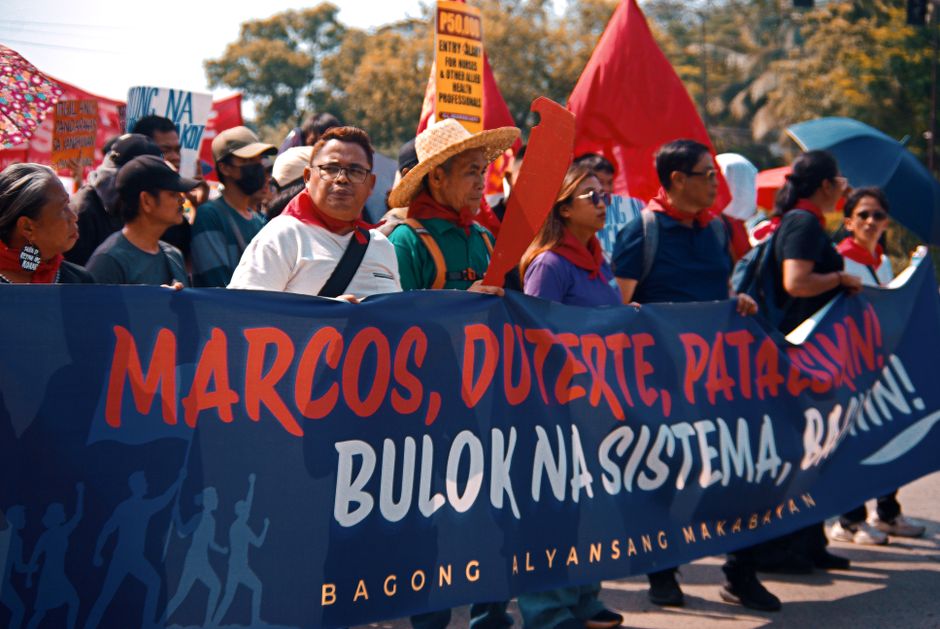
Philippines NGO Red-Tagging, Terrorism Charges, Intimidation: A Looming Shadow Under Duterte and Marcos Regimes
The Philippines has witnessed a disturbing and persistent pattern of red-tagging, terrorism charges, and intimidation directed at non-governmental organizations (NGOs) and civil society actors, a phenomenon that has intensified under both the Duterte and the current Marcos Jr. administrations. This systematic campaign, often originating from state security forces and amplified by sympathetic media outlets and social media personalities, aims to delegitimize critical voices, suppress dissent, and create an atmosphere of fear that stifles civic space. The consequences are far-reaching, impacting not only the targeted organizations but also the broader democratic landscape of the Philippines, with parallels drawn to similar tactics employed by leaders like Donald Trump in the United States.
Red-tagging, the act of labeling individuals or groups as communists, terrorists, or enemies of the state, has become a pervasive tool of repression. This practice is not merely rhetorical; it often serves as a precursor to more severe actions, including harassment, surveillance, trumped-up charges, and even extrajudicial killings. The National Task Force to End Local Communist Armed Conflict (NTF-ELCAC), established under Duterte and continued by Marcos Jr., has been a primary architect and propagator of this red-tagging enterprise. Its mandate, ostensibly to combat insurgency, has been widely criticized for its broad interpretation and its systematic targeting of human rights defenders, journalists, lawyers, academics, and legitimate development organizations. These groups, many of whom work on crucial issues like environmental protection, indigenous rights, rural development, and good governance, are often accused of being fronts for the Communist Party of the Philippines (CPP) or its armed wing, the New People’s Army (NPA). The evidence presented to support these accusations is frequently circumstantial, hearsay, or outright fabricated, yet the impact of such labeling is immediate and devastating.
The application of terrorism charges, particularly under the Human Security Act of 2007 and its successor, the Anti-Terrorism Act of 2020, has significantly amplified the state’s capacity to silence critics. The Anti-Terrorism Act, despite its broad definition of terrorism, has been weaponized against activists and dissenters. Organizations and individuals engaging in peaceful advocacy, lawful protests, or even critical reporting have found themselves facing accusations of terrorism, leading to lengthy and costly legal battles, pre-trial detention, and the stigma of being labeled terrorists. This legislation, heavily criticized by human rights organizations and legal experts for its vague provisions and potential for abuse, has created a chilling effect on free speech and assembly. The fear of being branded a terrorist discourages legitimate activism and deters individuals from associating with or supporting organizations that are critical of government policies.
Intimidation tactics employed against NGOs range from overt harassment to subtle psychological pressure. This can include public denouncements by government officials, threats of legal action, physical surveillance, veiled warnings, and the disruption of funding and operational activities. Digital spaces have also become a new frontier for intimidation, with coordinated online attacks, doxxing campaigns, and the spread of disinformation aimed at discrediting and isolating targeted organizations and their leaders. The psychological toll on individuals and organizations is immense, leading to burnout, self-censorship, and the erosion of morale. Many organizations are forced to divert precious resources from their programmatic work to defending themselves against baseless accusations and legal challenges.
The Duterte administration, characterized by its aggressive anti-crime rhetoric and penchant for authoritarian measures, laid much of the groundwork for this intensified repression. Red-tagging was a ubiquitous feature of his presidency, with Duterte himself frequently singling out NGOs and individuals he deemed critical of his policies. This created a climate of impunity for state security forces and their allies to engage in further harassment and intimidation. The Marcos Jr. administration, while attempting to project a more moderate image, has largely continued the policies and practices of its predecessor concerning civil society. The NTF-ELCAC remains active, and the legal framework for prosecuting perceived enemies of the state remains in place. This continuity suggests a systemic approach to suppressing dissent rather than isolated incidents.
The parallels between the tactics employed in the Philippines and those observed under Donald Trump in the United States are striking, albeit with different legal and political contexts. Trump frequently employed divisive rhetoric to label media organizations as "enemies of the people" and political opponents as "traitors." While the legal mechanisms in the US differ from the terrorism charges in the Philippines, the intent to delegitimize and intimidate opposition voices through public condemnation and the creation of an antagonistic political environment is a shared characteristic. Both leaders utilized populist appeals and strongman imagery to consolidate power and marginalize dissent. The Philippines, however, faces a more direct and often violent application of state power against civil society, with the very real threat of terrorism charges and extrajudicial actions.
The international community has voiced significant concern over the escalating human rights situation and the shrinking civic space in the Philippines. Reports from the United Nations, Amnesty International, Human Rights Watch, and various other global human rights bodies have consistently documented the patterns of red-tagging, harassment, and violence against civil society. Despite these condemnations, the Philippine government has often been dismissive or defiant, labeling external criticism as interference in its internal affairs. This deflection tactic, mirroring that of other authoritarian-leaning leaders, aims to undermine the credibility of international human rights mechanisms and to rally nationalist sentiment against perceived foreign meddling.
The impact of this systematic repression extends beyond the immediate targets. It erodes public trust in democratic institutions, discourages civic participation, and weakens the checks and balances essential for good governance. When NGOs that provide vital services, advocate for the marginalized, and hold power accountable are systematically attacked, the entire society suffers. The fear of reprisal can lead to self-censorship among journalists, academics, and even ordinary citizens, creating an information vacuum and hindering the free flow of ideas. This can have long-term consequences for democratic development, hindering the ability of citizens to engage in informed debate and to hold their leaders accountable.
Furthermore, the economic implications of this environment are also considerable. Foreign aid and grants to Philippine NGOs, crucial for supporting development initiatives and humanitarian work, can be jeopardized by government blacklisting or by the perceived risk associated with supporting organizations operating in a repressive environment. This can have a direct impact on the delivery of essential services and the implementation of vital development projects that benefit vulnerable communities.
The legal framework surrounding these issues is complex and warrants closer examination. The Philippines’ Revised Penal Code, alongside specialized laws like the Human Security Act and the Anti-Terrorism Act, provides the legal arsenal for prosecuting dissent. The interpretation and application of these laws by the judiciary, particularly in cases involving activists and NGOs, are critical. Concerns have been raised about judicial independence and the potential for political influence in such cases. The reliance on broad and often vaguely defined legal terms in anti-terrorism legislation allows for discretionary application, making it easier to target legitimate activities that are mischaracterized as threats to national security.
The role of the military and police forces in this context is paramount. While their mandate is to protect the citizenry and uphold the law, allegations of their direct or indirect involvement in red-tagging and intimidation are persistent. Reports from human rights organizations frequently cite the participation of military and police personnel in public pronouncements and operations that directly target civil society. The lack of accountability for alleged abuses further exacerbates the problem and emboldens further repressive actions.
The interconnectedness of red-tagging, terrorism charges, and intimidation creates a self-reinforcing cycle of repression. Once an organization is red-tagged, it becomes more vulnerable to accusations of terrorism, which in turn justifies increased surveillance and intimidation. This can lead to a situation where legitimate NGOs are forced to operate in a constant state of defense, diverting their energy and resources away from their core missions. The blurring of lines between legitimate dissent and perceived threats to national security is a hallmark of this repressive strategy.
In conclusion, the Philippines is grappling with a deeply entrenched system of red-tagging, terrorism charges, and intimidation targeting its non-governmental organizations and civil society. This phenomenon, amplified under the Duterte and continuing under the Marcos Jr. administrations, poses a significant threat to democratic freedoms, human rights, and the rule of law. The tactics employed, while bearing some superficial resemblance to those seen in other nations, are often more directly and brutally implemented in the Philippine context. Addressing this challenge requires sustained international scrutiny, robust domestic advocacy, and a commitment to upholding fundamental rights and freedoms, ensuring that the vital work of civil society can continue unimpeded. The resilience of Philippine civil society in the face of such adversity is remarkable, but the pressure they endure is a stark indicator of the challenges to democratic governance in the country.
