The contemporary fashion landscape has long celebrated designers who successfully blur the boundaries between traditional masculine and feminine dressing, yet few have transitioned with the organic momentum of Bianca Saunders. Following a decorated tenure in menswear that began during her postgraduate studies at the Royal College of Art in 2017, Saunders has officially made her leap into womenswear. This strategic expansion is cemented by her recent victory of the coveted BFC/Vogue Designer Fashion Fund prize, a win secured precisely on the strength of her inaugural womenswear proposal. Rather than a calculated marketing exercise, this long-awaited pivot emerged from an undeniable market demand, driven by female consumers who had spent years adapting her tailored menswear silhouettes to fit their own wardrobes.
Saunders’ journey to this critical milestone reflects a steady, deliberate evolution within the global fashion ecosystem. Since launching her eponymous label, the British-Jamaican designer has steadily garnered critical acclaim, notably winning the prestigious ANDAM Fashion Award in 2022. Her latest achievement not only validates her design philosophy but provides the financial and institutional backing necessary to scale her vision for a broader consumer base. As the industry grapples with shifting consumer habits and a demand for authentic storytelling, Saunders’ debut collection stands out as a masterclass in personal narrative translated into commercial reality.
From Royal College of Art to Menswear Innovation
To understand the weight of Saunders’ womenswear debut, one must trace the trajectory of her career since her graduation from the Royal College of Art. Entering the industry with a distinct perspective on modern masculinity, Saunders focused her early research on the subtleties of male body language and the psychological comfort of exposure. Her garments quickly became known for subtle anatomical distortions, optical illusions, and a relaxed approach to tailoring that challenged rigid sartorial conventions.
As her brand gained traction within London’s vibrant creative community, an unexpected phenomenon occurred. A growing demographic of female buyers began purchasing pieces from her menswear collections. While Saunders was flattered by the cross-demographic appeal, the reality of the fit presented ongoing challenges. The garments, engineered specifically around the proportions of a male body, required structural compromises when worn by women.
This consumer-driven demand served as the catalyst for her eventual pivot. However, the definitive push to formalize a womenswear line came from an unexpected source: an informal mentorship with seasoned designer Louise Trotter. Following Saunders’ ANDAM Prize victory in 2022, Trotter reached out with messages of encouragement. The relationship blossomed into a vital source of guidance. Describing Trotter as a profound inspiration, Saunders has often recounted how their conversations regarding design processes, team management, and studio operations provided her with the strategic clarity needed to expand her brand architecture.
A Personal Tribute: The Story Behind the Collection
True to her signature design methodology, Saunders anchored her debut womenswear collection in deeply personal history, naming it in honor of her mother: She Was the Most Beautiful Woman I’ve Ever Seen. The collection serves as an aesthetic dialogue with her mother, Yvonne, a mid-1990s businesswoman and hairdresser whose dynamic personal style left an indelible mark on the designer’s childhood.
In interviews accompanying the launch, Saunders often contrasts two distinct photographs of her mother: one capturing her striding into work in a striking canary yellow jacket during the mid-1990s, and another depicting her relaxing unhurriedly on a sun-drenched beach in Jamaica. This duality of polished professional ambition and effortless leisure forms the conceptual backbone of the collection.
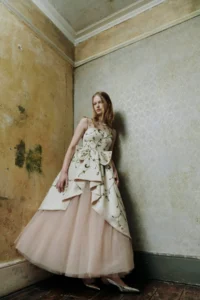
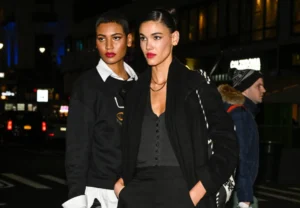
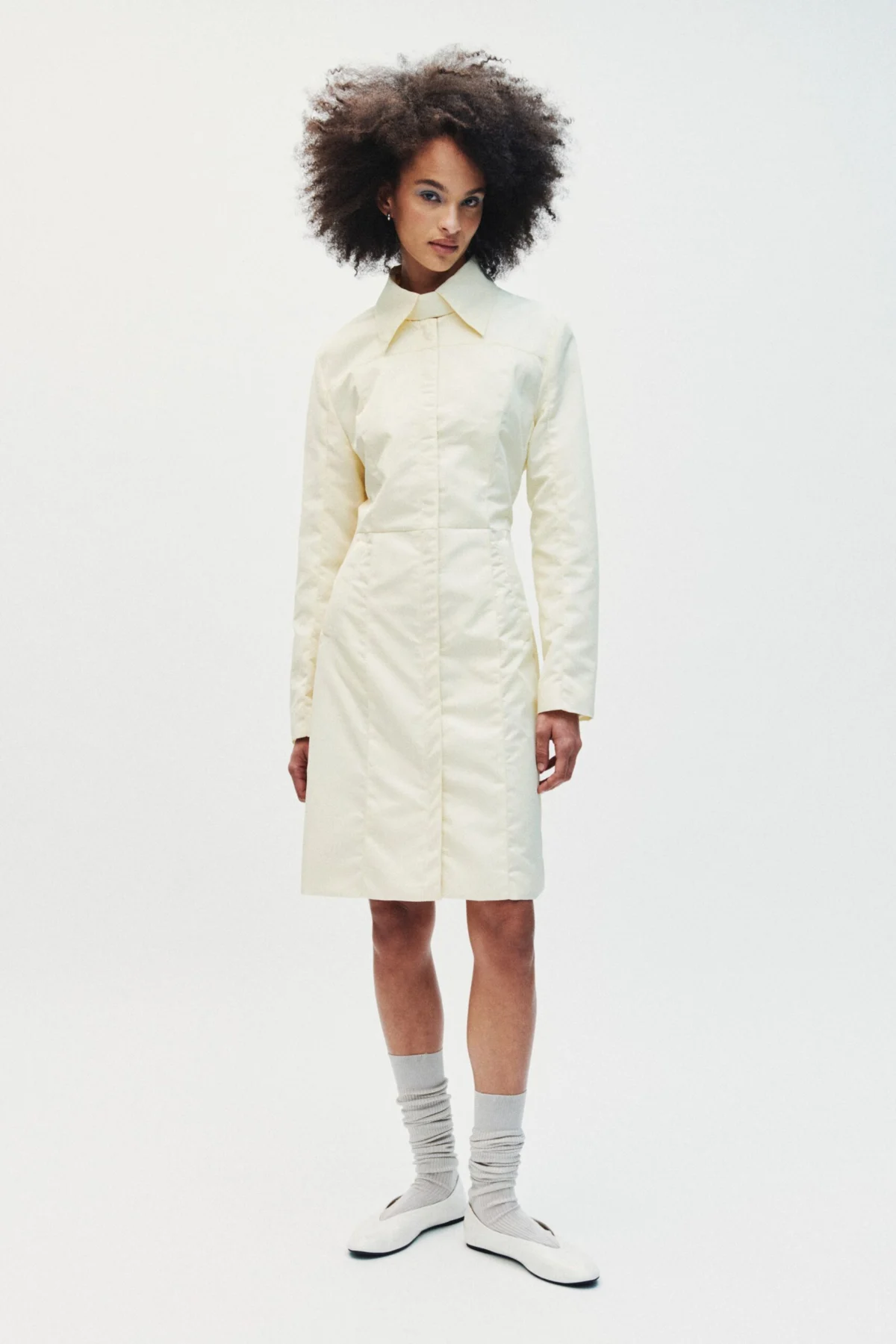
The resulting garments cleverly bridge the gap between Saunders’ established menswear vocabulary and an entirely new exploration of femininity. Observers will find familiar design tropes—such as the signature asymmetric, pulled-down necklines on fitted tank tops and the soft, unstructured drape of tailored gray suiting. Yet, the collection avoids feeling like a mere replica scaled down for women. Instead, it reflects Saunders’ own evolution and personal style preferences. Embracing an ultra-feminine aesthetic characterized by fitted silhouettes, playful experimentation with hair and styling, and an emphasis on sensual confidence, the designer views the collection as an exercise in self-discovery.
Collection Highlights and Materiality
Designed for the summer season, the inaugural womenswear lineup introduces a vibrant palette and tactile variety that expands the boundaries of the Bianca Saunders brand. Among the standout pieces is a striking hot pink slip dress, embodying a bold yet effortless approach to evening wear. This is complemented by custom photographic prints featuring Jamaican sunsets captured by Saunders herself during family visits to relatives.
The collection also heavily features expertly draped jersey pieces and an elevated take on the modern tracksuit. By engineering the tracksuit with a semi-formal, workplace-appropriate sensibility, Saunders addresses the modern consumer’s demand for garments that seamlessly transition from professional environments to evening engagements. As the designer noted regarding her lifestyle-driven approach, the versatility of the pieces allows the wearer to move effortlessly from early morning commitments to nighttime social settings without sacrificing elegance.
The timing of the BFC/Vogue Designer Fashion Fund prize could not be more fortuitous. Providing crucial financial resources and creative autonomy, the award arrives precisely when Saunders is navigating the complexities of scaling her operations and addressing the functional needs of her expanding customer base.
Broader Industry Implications and Market Analysis
The launch of Bianca Saunders’ womenswear line arrives at a pivotal juncture for independent British fashion designers. In an economic climate marked by cautious consumer spending and heightened operational costs, securing institutional backing—such as the BFC/Vogue prize—has become increasingly vital for emerging talent looking to diversify their product offerings.
Industry analysts note that Saunders’ transition offers a compelling case study in brand expansion. Rather than abandoning the menswear codes that built her reputation, she has leveraged her core equity to capture an underserved market segment. By translating the psychological nuance and technical innovation of her menswear into a feminine vernacular, Saunders has minimized the financial risks typically associated with launching a new category.
Furthermore, the collection taps into the ongoing consumer preference for authenticity and narrative-driven fashion. In an era where shoppers increasingly demand transparency and emotional resonance from the brands they support, Saunders’ tribute to her mother and her Jamaican heritage provides a rich cultural narrative that resonates deeply with contemporary luxury consumers.
As the collection rolls out globally, industry watchers will be closely monitoring its commercial performance. Given the pre-existing demand from her loyal consumer base and the expanded media visibility afforded by her recent accolades, Saunders is well-positioned to cement her status not merely as a boundary-pushing menswear designer, but as a formidable multidisciplinary voice in contemporary womenswear.