The modern American energy grid faces an unprecedented reckoning, driven by the explosive proliferation of data centers, industrial electrification, and rapid technological advancement. Nowhere is this tension more palpable than in eastern Nebraska, where the Omaha Public Power District (OPPD) finds itself confronting a severe energy capacity deficit. Serving roughly 419,000 customers across the region, OPPD currently holds less than 100 megawatts of available power capacity for new or expanding large-scale commercial and industrial operations. This acute shortage threatens to stifle local economic development, jeopardize job creation, and impair the state’s long-term financial health.
As utilities nationwide grapple with aging infrastructure, climate change pressures, and relentless spikes in demand, the situation in Nebraska highlights a broader national dilemma. Economic development leaders, utility executives, and municipal planners are now locked in a high-stakes debate over how to scale energy generation rapidly without overburdening ratepayers or running aground of fierce local opposition to renewable energy projects.
A Legacy of Strain: The Ghost of Winter Storm Uri
The roots of the current capacity crunch trace back significantly to the vulnerabilities exposed by extreme weather events over the past several years. In February 2021, Winter Storm Uri swept across large swaths of the United States, triggering unprecedented surges in electricity and natural gas consumption. Grid operators nationwide scrambled to maintain stability as fuel supplies froze and critical equipment malfunctioned under extreme thermal stress.
To prevent a catastrophic, system-wide grid failure, the Southwest Power Pool (SPP)—the regional RTO responsible for managing grid reliability across all or parts of 14 central states—mandated emergency measures. In Nebraska, OPPD was forced to execute rolling blackouts to preserve the integrity of the electrical system. In the wake of Uri, the SPP instituted stringent new planning reserve margins, requiring member utilities to maintain higher levels of power capacity in reserve to safeguard against future climate-induced emergencies.
While these heightened reserve requirements successfully mitigated the risk of sudden blackouts, they simultaneously locked up available generation capacity. When combined with the subsequent post-pandemic economic rebound, the nationwide data center boom, and aggressive electrification efforts, these structural adjustments left regional utilities with razor-thin margins for growth.
The Looming Capacity Bottleneck and Economic Consequences
Today, OPPD’s available power capacity for new or expanding large customers sits at less than 100 megawatts. To contextualize this constraint, a single modern data center can command as much as 1,000 megawatts of capacity—rivaling the output of a traditional baseload power plant. Meanwhile, industrial manufacturing facilities frequently demand anywhere from a few megawatts to over 100 megawatts.
With margins this thin, OPPD leadership has communicated that any new or expanding commercial development requiring 2 megawatts or more may face substantial delays in receiving electrical service. Javier Fernandez, OPPD’s outgoing president and CEO whose tenure concludes at the end of the year, framed the predicament bluntly: utility officials have searched exhaustively for outside power to purchase, only to find that neighboring providers are caught in the exact same bind.
“We are bending over backwards. We’re trying to figure out creative solutions,” Fernandez noted. “How do we bridge this? Can we buy capacity from other utilities? Literally, no one has excess capacity. Everyone is in the same boat as we are, so now the pinch, so to speak, it’s, well, growth has to slow down, maybe?”
This bottleneck arrives at an inopportune time for Nebraska’s broader economic outlook. The state is projected to face a $208 million budget deficit in the upcoming fiscal year, compounded by state income tax revenues that dropped by $703 million over the past year compared to 2022. Local economic development authorities emphasize that a restricted power supply places the Omaha metropolitan area—and by extension the entire state—at a severe competitive disadvantage in attracting businesses, securing high-paying jobs, and generating crucial tax revenue.
The Competing Demands of Industrial Growth and Data Centers
OPPD’s long-term planning models reveal a dramatic shift in the utility’s consumer base. According to peak demand charts released by the utility, industrial customers currently account for 32 percent of peak demand, residential users represent 41 percent, and commercial accounts make up 27 percent. However, projections indicate that by 2035, industrial customers will surge to command 52 percent of the utility’s peak demand.
“Clearly, data centers have been a very, very big force on that increase,” Fernandez said.
The scale of prospective development currently waiting in the wings is immense. As of late 2023 and 2024 updates, companies with nearly 2,000 megawatts of active economic development projects are sitting in OPPD’s interconnection and service queue through 2031. Furthermore, an additional 5,000 megawatts worth of prospective projects are actively evaluating the region.
While utility executives acknowledge that only a fraction of these speculative projects will ultimately materialize, the planning arithmetic presents a formidable challenge. If OPPD builds too conservatively, the Omaha metro area will remain locked in a perpetual economic holding pattern. Conversely, if the utility overbuilds new generation assets that fail to find expected commercial subscribers, everyday residential and commercial ratepayers will likely be forced to shoulder the financial burden through higher utility rates.
The Clash Over Long-Term Generation Planning
To navigate this uncertainty, OPPD’s board of directors is evaluating long-term resource plans spanning the next decade. The utility’s portfolio currently stands at 4,583 megawatts of energy capacity. Initial planning results suggest that OPPD may need to expand this portfolio by anywhere from 1,000 megawatts on the conservative end to more than double its current size on the aggressive end.
The Greater Omaha Chamber of Commerce has strongly advocated for an ambitious expansion strategy. In September, Heath Mello, president and CEO of the chamber, dispatched a letter urging OPPD’s board to plan well beyond the 2036 horizon and aggressively build out infrastructure to capture future growth. Paul West, chair of the chamber’s board, emphasized that local leaders are intensely focused on recruiting and expanding high-value sectors such as advanced manufacturing.
Yet, energy availability has emerged as one of the top two deal-breaking factors causing the chamber to lose economic development prospects to competing regions. Moreover, incoming manufacturing operations find themselves forced to compete directly with massive data center developers for scarce electrical capacity.
Larry Gigerich, chair of the Site Selectors Guild, noted that this dynamic reflects a nationwide trend. “The competition for electricity with data centers is causing manufacturing companies now to be more proactive and to use their voice more directly with utilities versus the way they have done it for decades,” Gigerich observed. “Now it’s a true competition, and we can’t generate enough new power fast enough to meet everybody’s needs.”
Obstacles to Generation: Supply Chains and Community Resistance
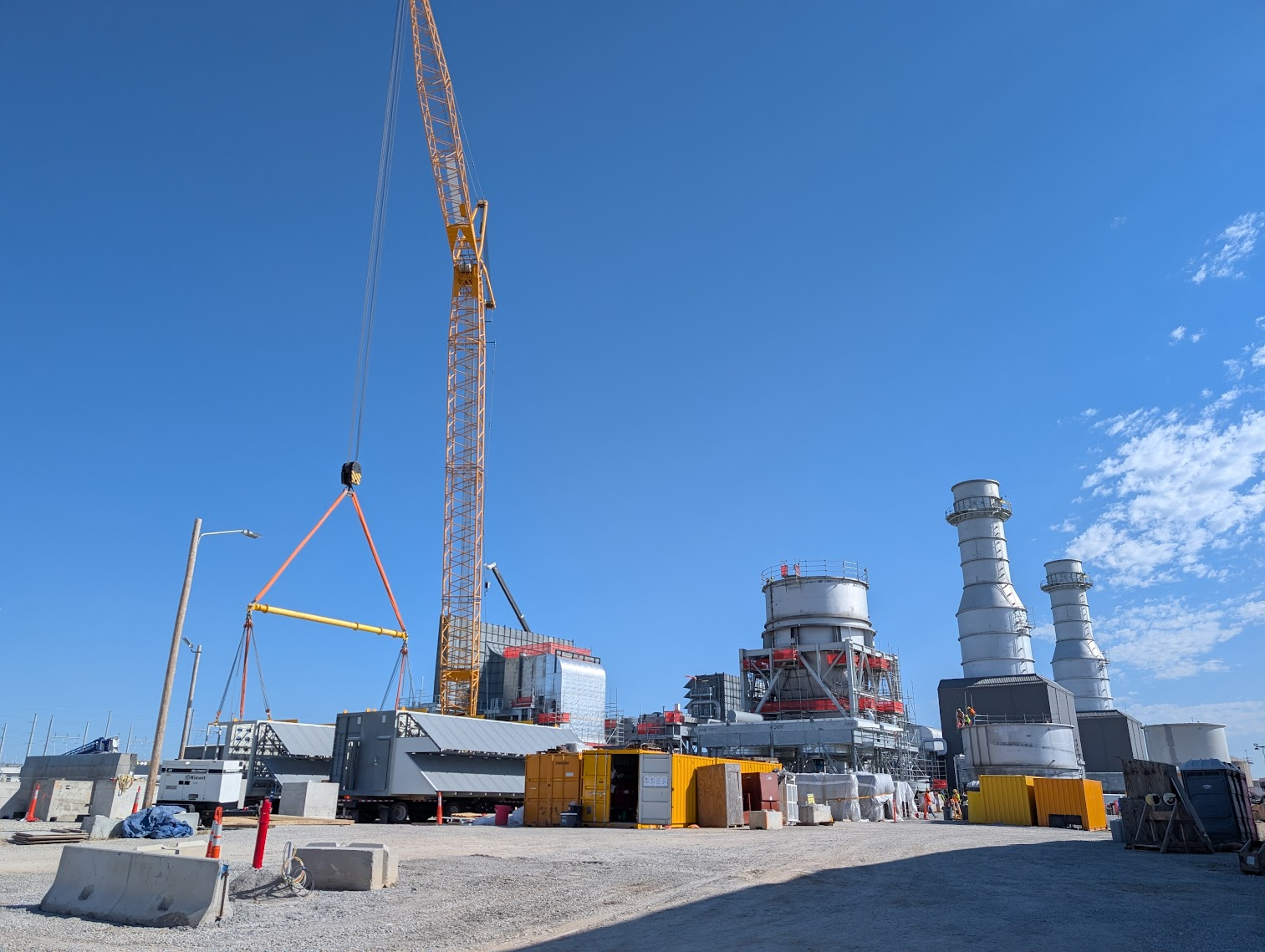
Translating projected energy demand into physical power plants is fraught with logistical and sociopolitical hurdles. To meet anticipated needs while maintaining cost efficiency, OPPD is exploring a dual-track approach involving natural gas generation and utility-scale renewable energy resources.
However, both pathways present distinct challenges. The nationwide surge in demand for natural gas infrastructure has severely strained the equipment supply chain, lengthening procurement timelines and delaying construction schedules.
Meanwhile, renewable energy projects—while offering the lowest operational costs over their lifespans—have encountered fierce localized resistance across Nebraska. Over recent years, various rural communities have rejected clean energy proposals amid misinformation campaigns, developer secrecy, and resident concerns regarding agricultural land preservation, fire risks, and local infrastructure degradation.
This creates a policy paradox: local community leaders and elected officials frequently push for aggressive economic development and job creation while simultaneously voting down the very renewable energy facilities required to power those enterprises.
“Everyone is saying no, and then we end up in a really bad place,” Fernandez warned.
Broader Implications and the Path Forward
Resolving Nebraska’s energy capacity impasse will require unprecedented alignment among state legislators, municipal planners, utility regulators, and economic development agencies. Board members have stressed that clear, unified economic directives from state and local leadership are vital to establishing precise capacity targets.
Ultimately, OPPD carries a legal and public service obligation to provide reliable electricity to all constituents. However, the path forward will dictate whether Nebraska can successfully capitalize on the modern technological boom or whether infrastructure constraints will force a deliberate throttling of state growth.
“If Omaha doesn’t grow, if Omaha doesn’t prosper, the rest of the state very likely won’t,” Fernandez concluded. “What the state wants versus what the city wants versus what the chambers want—well, they all want different things. But the one common denominator that I keep hearing is jobs and income.”