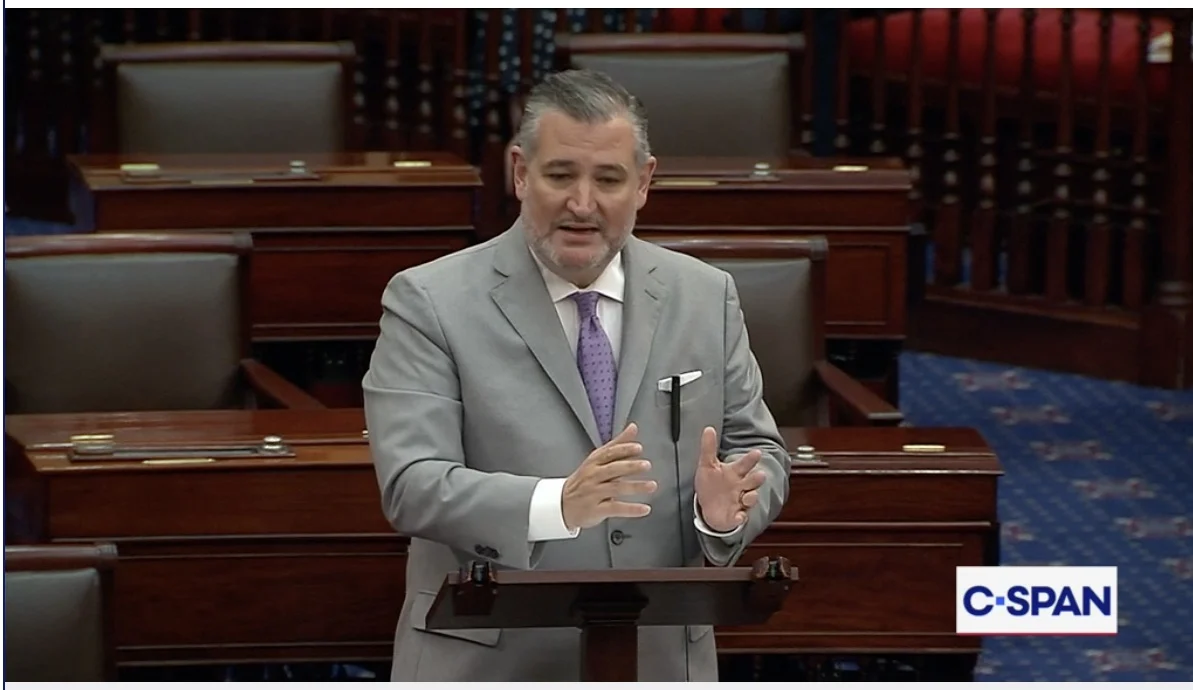
Legislative efforts to crack down on the proliferation of unauthorized artificial intelligence-driven digital replicas hit a major wall in the United States Senate on Wednesday. Senator Ted Cruz, a Republican representing Texas, formally blocked the bipartisan No Fakes Act, effectively sidelining the legislation just as its key sponsors hoped to push it through before the chamber recessed for the midterms.
The high-profile setback highlights a growing tension in Washington: balancing the legitimate protection of individual likenesses and intellectual property against the robust constitutional protections afforded to free speech, political commentary, and satirical works. While the bill boasts a powerful coalition of supporters spanning Hollywood studios, major record labels, labor unions, and leading technology firms, the debate over how the legislation might impact digital humor, political campaigns, and platforms like The Onion or the Babylon Bee proved to be an insurmountable hurdle for this legislative push.
Understanding the No Fakes Act and Its Core Provisions
The No Fakes Act is designed to establish a definitive national standard protecting individuals from the unauthorized creation and distribution of AI-generated deepfakes. Under the framework of the bill, every person is granted a federal property right in their own voice and likeness, meaning that digital replications—such as hyper-realistic video or audio generated by neural networks—cannot be commercially exploited or distributed without explicit consent.
Proponents of the legislation argue that current legal frameworks are outdated, patchy, and ill-equipped to handle the rapid democratization and sophistication of generative AI tools. Creators, actors, musicians, and public figures have increasingly found their likenesses hijacked by bad actors to promote products, spread misinformation, or create explicit content without permission.
To mitigate fears that the bill would inadvertently stifle creative expression, the legislation’s drafters included explicit exemptions. The text of the bill carves out protections for traditional news reporting, documentaries, sports broadcasting, and biographical works. Furthermore, it explicitly exempts uses intended for comment, criticism, parody, and satire. Despite these inclusions, critics and skeptical lawmakers argue that the mechanics of how these exemptions are applied remain dangerously vague.
Senator Ted Cruz’s Objections and First Amendment Concerns
Senator Cruz’s objection on the Senate floor brought these constitutional anxieties to the forefront. While Cruz noted that he ultimately wants to see a functional version of the bill pass, he argued that the current drafting leaves too much room for interpretation, which could chill protected speech.
"One of my concerns about how this bill is drafted right now is it will apply to websites like the Babylon Bee or The Onion, and it leaves the decision as to whether someone’s use of a likeness falls within the exception," Cruz stated during the proceedings. He criticized the mechanism within the bill that attempts to establish a standard for bona fide parody, arguing that it improperly delegates enforcement decisions to major technology companies. "It creates an exception for what it calls bona fide parody, but it leaves to big tech to make the decision whether it falls in that exception or not."
Cruz also pointed to specific recent examples in American political discourse to illustrate his concerns. He questioned how the legislation would treat political communication, referencing instances such as Los Angeles mayoral candidate Spencer Pratt featuring an AI-generated deepfake of Karen Bass styled to resemble the Joker from Batman, as well as various AI-generated images deployed in national political communications by Donald Trump and other campaigns.
For Cruz, the boundary line between malicious deepfakes and aggressive political satire is far too blurry to codify without ironclad First Amendment safeguards. He signaled that his legislative staff will spend the coming weeks collaborating with the bill’s sponsors to strengthen free speech protections before he drops his blockade.
The Legislative Timeline and Committee Progression
The path to Wednesday’s Senate floor clash has been marked by steady momentum followed by sudden friction. The No Fakes Act originally cleared the Senate Judiciary Committee in June following months of stakeholder negotiations and expert testimony.
Notably, Senator Cruz voted in favor of the bill during its committee markup phase. However, even as he cast that supporting vote, Cruz placed his colleagues on notice, raising early flags regarding political satire and insisting that the language must be refined before reaching a full floor vote. Despite those warnings, sponsors pressed forward, hoping to capitalize on the momentum of broader tech-regulation debates and secure a legislative victory before the midterms. The Wednesday objection effectively resets the timeline, forcing proponents back to the drawing board for negotiations.
Sponsors Defend the Bill’s Constitutional Integrity
The legislative sponsors of the No Fakes Act expressed frustration over the delay, vigorously defending the constitutional soundness of the bill and insisting that the protections Senator Cruz demands are already built into the statutory text.
Senator Marsha Blackburn, a Republican from Tennessee and one of the primary architects of the legislation, pushed back firmly against Cruz’s characterization of the bill’s exemptions.
"This bill contains the necessary broad exceptions for entire categories of speech," Blackburn asserted on the Senate floor. She maintained that the precise protections Cruz is asking for "are there" and noted that her office has repeatedly attempted to work with Cruz’s staff on refining the statutory language.
Blackburn emphasized that the architecture of the bill relies on the judicial system—not private tech corporations—to adjudicate First Amendment disputes. "We have worked with First Amendment legal experts in drafting the bill, and we are confident that it is First Amendment compliant," she said, adding that the sponsors have "even doubled down on this language."
Detailing the mechanics of how contested content is handled, Blackburn explained that if an individual believes their protected speech has been wrongfully removed under the bill’s provisions, they can submit a counter-notice. This action triggers a mandatory judicial review within a 14-day window if the alleged victim wants the material to remain suppressed. If no judicial action is taken, the content can be immediately restored.
Senator Chris Coons, a Democrat from Delaware and another key co-sponsor of the legislation, urged pragmatism among his colleagues, echoing the sentiment that further delay could leave victims defenseless as generative AI technology outpaces the law. "We should not let the perfect be the enemy of the good," Coons remarked.
Broad Coalition of Support Across Industries
The No Fakes Act has united a remarkably diverse coalition of stakeholders who rarely find themselves on the exact same side of a legislative issue. Major Hollywood entertainment guilds and unions—including SAG-AFTRA, which represents over 160,000 media professionals—have thrown their full weight behind the bill, viewing it as an existential defense for actors, voice-over artists, and background performers whose livelihoods are threatened by uncompensated digital cloning.
Traditional media powerhouses, major motion picture studios, and prominent record labels have similarly lobbied aggressively for the legislation. For the music industry, the rise of unauthorized AI-generated vocals mimicking famous artists has created an alarming black market of fake tracks that evade traditional copyright infringement laws.
Intriguingly, the bill has also garnered support from major technology companies, including industry giants OpenAI and Google/YouTube. Big tech’s backing stems largely from a desire for regulatory clarity. Rather than navigating a chaotic patchwork of state-level laws, right-of-publicity statutes, and common-law precedents, major platforms prefer a unified federal framework that clearly outlines liability, takedown procedures, and compliance standards.
Implications for the Future of AI Regulation and Free Expression
The temporary defeat of the No Fakes Act underscores the profound difficulties lawmakers face when attempting to regulate rapidly evolving technologies without inadvertently trampling on constitutional rights. Generative artificial intelligence operates at the intersection of copyright law, privacy law, and free speech, making it one of the most legally complex domains in modern jurisprudence.
If the legislation is successfully amended to satisfy Senator Cruz and other free-speech advocates, it could set a powerful precedent for how the federal government handles emerging digital technologies. Conversely, if negotiations stall permanently, creators and public figures will remain exposed to a Wild West of deepfakes, while technology companies and state courts are left to muddle through inconsistent legal doctrines.
As negotiations resume between Cruz’s office and the bill’s bipartisan sponsors, the ultimate challenge will be drafting a standard precise enough to catch malicious digital impersonators while keeping the doors wide open for political debate, sharp satire, and creative expression.