The landscape of Milan Fashion Week has long been defined by theatrical spectacle, exquisite tailoring, and an uncompromising adherence to traditional luxury codes. However, as the industry navigates a post-pandemic retail climate characterized by shifting consumer values and economic realities, a noticeable pivot toward pragmatism has emerged. This transitional phase reached a high-profile milestone with the debut of co-creative directors Simone Rizzo and Messina at Moschino. Stepping into the role following the departure of Adrian Appiolaza, the duo brought their signature irreverence and street-level philosophy to a historic Italian house, setting a new tone for legacy brands operating in contemporary markets.
The Setting and the Spectacle
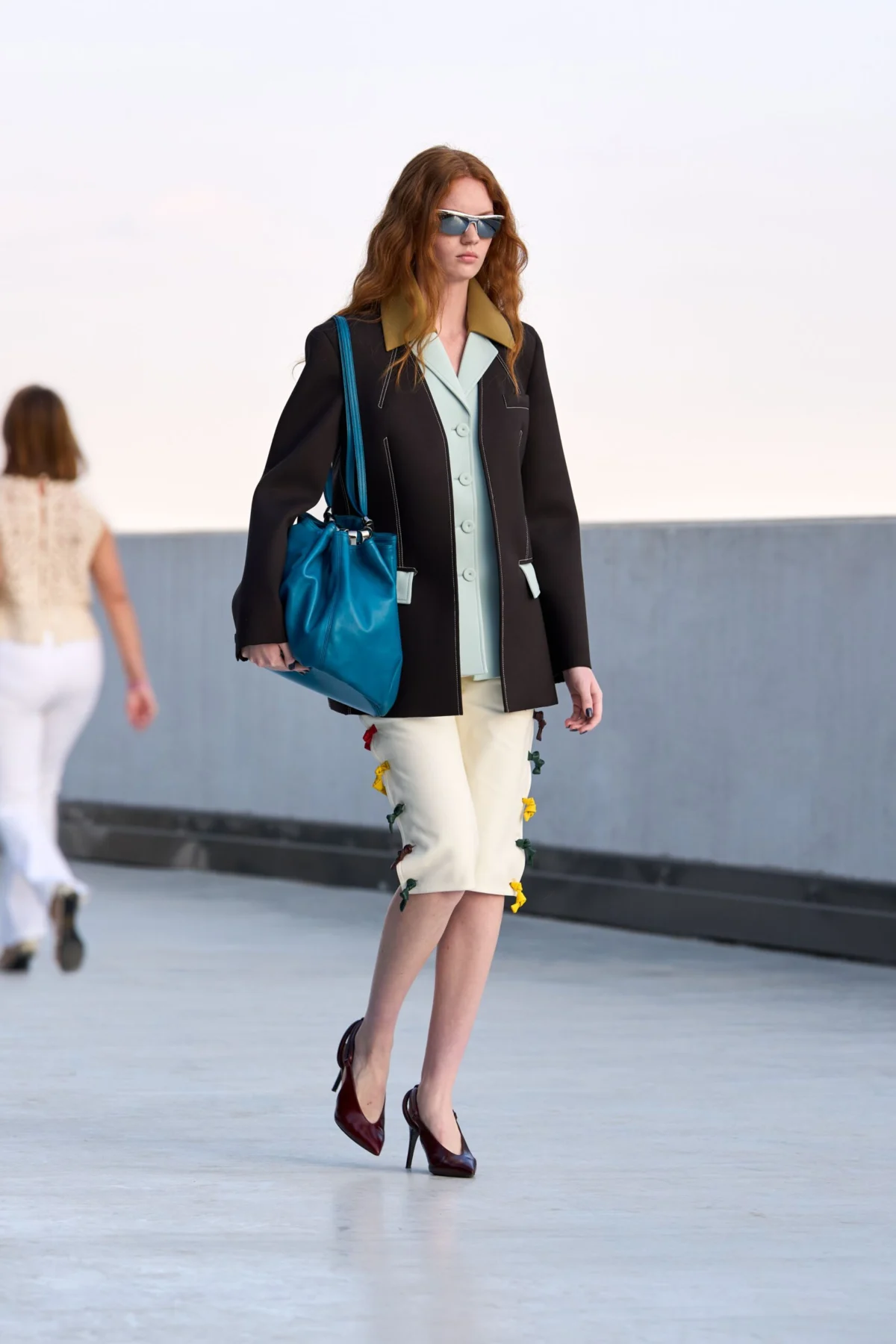
To understand the vision of Rizzo and Messina, one must examine the physical presentation of their inaugural collection. Eschewing the opulent gilded halls and controlled indoor environments typical of major Milanese fashion houses, the designers chose the industrial rooftop of a parking garage situated on the periphery of Milan. The choice of venue was far from arbitrary.
As the presentation commenced, hundreds of local extras streamed down the runway in the exact opposite direction of the professional models. This deliberate choreography served as a visual thesis statement. When asked whether the staging was intended to signify that the garments belonged on the streets, Rizzo confirmed the sentiment, adding that the clothes ultimately belonged to real people. This direct engagement with the public sphere mirrors the overarching trend sweeping through Milan this season, where both emerging labels and established powerhouses are tuning into the "give-no-fucks" freedom that the post-pandemic generation brings to daily dress codes.
A Philosophy Rooted in Fashion Realism
For Rizzo and Messina, this grounded approach is native territory. During their tenure at Sunnei—a brand they built into a critical darling through clever, disruptive presentation concepts, including a memorable stunt where they auctioned off the brand’s intellectual property—they repeatedly emphasized a core belief. Years before stepping down from Sunnei, the designers summarized their ethos concisely: the contemporary moment calls not for fashion magic, but for fashion realism.
This philosophy represents a significant departure from the traditional expectations placed upon creative directors of legacy houses, where strict obedience to brand archives and design heritage is frequently enforced. Yet, it is an approach that house founder Franco Moschino—widely remembered as Italian fashion’s impertinent prankster—would likely have recognized and endorsed.
Historical Parallels: Franco Moschino’s Legacy
Franco Moschino built his eponymous label on a foundation of subversive humor, frequently poking fun at the rigid structures of the luxury fashion system. In the late 20th century, Moschino blithely co-opted the signatures of rival luxury competitors, famously printing "Moscalvin Klino" on scarves, subverting classic Chanel tweeds, and otherwise lampooning the commodification of high fashion.
Beyond fashion satire, Moschino utilized his global platform to deliver pointed social commentary. His collections frequently addressed pressing societal issues of the era, ranging from economic inequality and environmental degradation to the devastating impact of the global AIDS crisis. By blending consumer critique with accessible, wearable garments, he established a precedent for a brand that could look inward at the industry while looking outward at the world.
Cultural Commentary and Modern Satire
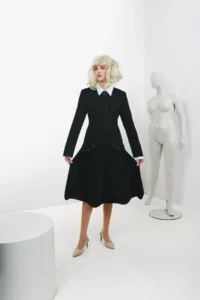
Rizzo and Messina channeled this historical spirit of critique through a contemporary lens, introducing pieces that offered sharp cultural commentary on modern aesthetic fixations. Among the most talked-about garments in the collection were a structured dress mimicking the exaggerated proportions of a Brazilian Butt Lift (BBL) and a men’s padded muscle tee that played on contemporary body-modification trends.
In addition to these sculptural pieces, the runway featured playful graffiti-adorned t-shirts. According to Milanese fashion insiders, these painterly motifs served as a deliberate nod to Franco Moschino himself, who was known to be a gifted visual artist outside of his work in garment construction.
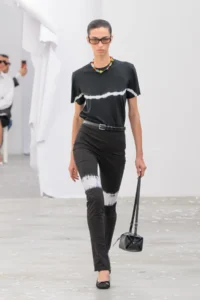
Despite these historical nods, the new creative directors consciously avoided falling into the trap of replicating or imitating the house founder wholesale. Rather than relying on a literal translation of 1980s and 90s archives, Rizzo and Messina anchored the collection in their own strengths: a vibrant, intuitive color sense and an innate understanding of real-world wardrobe requirements. Across the lineup, industry analysts noted a distinct correlation: the more low-key and understated the look, the more believable and commercially viable it appeared.
Chronology of Leadership Transitions at Moschino
The arrival of Rizzo and Messina marks the latest chapter in a turbulent yet fascinating period of creative leadership for the house of Moschino. Following the tragic passing of longtime creative director Jeremy Scott in spirit—though Scott stepped down amicably in March 2023 after a decade at the helm—the brand embarked on a search for a new identity that could balance Scott’s pop-culture maximalism with a sustainable commercial trajectory.
Adrian Appiolaza assumed the role of creative director in early 2024, tasked with steering the house through a period of re-evaluation. However, Appiolaza’s tenure was brief, leading to the swift appointment of Rizzo and Messina. This rapid succession highlights the mounting pressure luxury conglomerates face to align legacy houses with younger, digitally native demographics who prioritize authenticity, wearability, and social consciousness over traditional markers of status.
Broader Implications for the Luxury Sector
The strategic appointment of Rizzo and Messina, coupled with their parking-garage debut, signals a broader industry shift. As luxury brands grapple with fluctuating consumer spending, particularly among aspirational buyers, the pressure to deliver "fashion realism" has intensified.
Data from recent retail analyses indicate a growing consumer preference for versatile, high-quality garments that seamlessly transition from day-to-night settings, over-the-top runway novelties that lack real-world utility. By stripping away unnecessary theatricality and focusing on genuine human utility, Rizzo and Messina are positioning Moschino to capture a demographic that values self-expression over rigid adherence to luxury codes.
Furthermore, the integration of sharp social commentary through items like the BBL dress and muscle tees demonstrates that satirical fashion still holds a vital place on the runway. In an era saturated with digital content and superficial aesthetic trends, garments that provoke thought while remaining fundamentally wearable are proving to be powerful commercial tools.
Conclusion
As Milan Fashion Week concludes, the debut of Simone Rizzo and Messina at Moschino stands out as a masterclass in how to honor a legacy brand without becoming trapped by its past. By channeling the satirical, socially aware spirit of Franco Moschino and merging it with their own signature focus on fashion realism, the duo has successfully charted a new course for the house. If their rooftop presentation on the edge of Milan is any indication, Moschino is entering a new era—one where the clothes not only belong on the streets, but truly belong to the people who wear them.