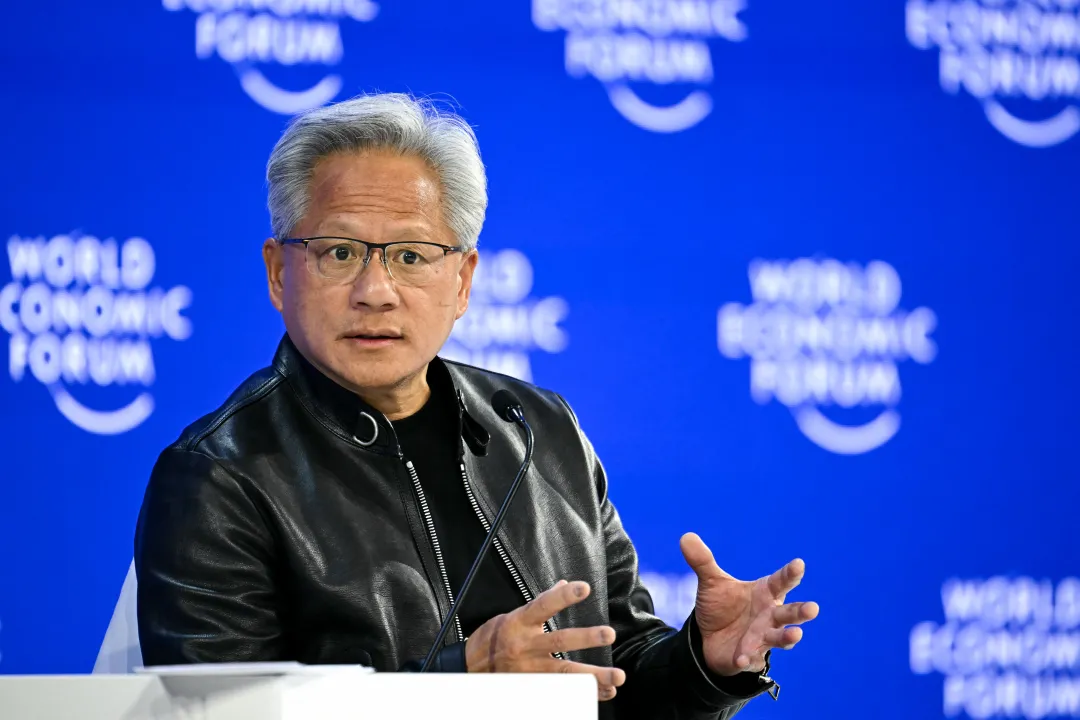
S&P Global Ratings, one of the world’s most influential credit rating agencies, has officially placed Nvidia under a credit watch with negative implications, signaling that the semiconductor giant could soon face a credit downgrade. Despite posting record-shattering financial results driven by an insatiable global demand for artificial intelligence hardware, Nvidia is confronting intense scrutiny regarding its internal governance structure. The primary catalyst for this rating review stems from the recent, unexpected ouster and subsequent reinstatement of long-time Chief Executive Officer Jensen Huang, an episode that has exposed vulnerabilities in the company’s executive oversight and long-term leadership continuity.
The 90-day review initiated by S&P Global Ratings could result in Nvidia’s credit rating dropping from its current ‘AA’ status to ‘AA-‘. While this adjustment would keep the company firmly within investment-grade territory, the psychological and financial ripple effects of such a move could reverberate far beyond corporate headquarters in Santa Clara. As the foundational engine powering the global artificial intelligence boom, Nvidia’s financial stability is closely tied to the broader tech ecosystem. A potential downgrade threatens not only to increase the chipmaker’s own cost of capital but also to complicate its ambitious multi-billion-dollar financing commitments across the burgeoning AI infrastructure landscape.
Corporate Governance and the Specter of Key Man Risk
At the heart of S&P’s credit review is a concept well-known in corporate finance: key man risk. For decades, Jensen Huang has been synonymous with Nvidia, guiding the company from a niche graphics card manufacturer for video gamers into the undisputed titan of artificial intelligence hardware. However, the recent boardroom drama surrounding his brief departure and rapid return laid bare what credit analysts describe as a critical deficiency in succession planning and formal executive oversight.
In its official rating advisory, S&P Global Ratings explicitly pointed to "weak executive oversight and lack of succession planning" as core vulnerabilities. In corporate governance evaluations, the heavy concentration of strategic vision and operational control in a single individual is viewed as a high-risk factor. When that leadership is suddenly disrupted—even if temporarily resolved—it introduces uncertainty that rating agencies cannot ignore. For a company valued in the trillions, the absence of a clearly articulated and tested leadership transition plan creates a governance vacuum that directly impacts creditworthiness.
Chronology of a Crisis: The Events Leading to the S&P Review
To understand how one of the world’s most valuable corporations found its credit rating under threat, it is necessary to examine the timeline of events that preceded S&P’s announcement on November 25, 2026.
In August 2026, Nvidia made massive waves across global financial markets by announcing an unprecedented $500 billion financing initiative designed to supercharge AI infrastructure development. Partnering with six major financial institutions—including Wall Street powerhouses Goldman Sachs, Apollo, and Blackstone—the initiative aimed to provide the necessary capital for neoclouds and data center operators to purchase high-end Nvidia hardware. Under the original terms of this sweeping arrangement, Nvidia agreed to act as a backstop, guaranteeing 25% of the loans extended to these infrastructure companies.
However, beneath the surface of this historic financial engineering, tensions were already brewing. Prior to the leadership dispute involving Huang, lenders participating in the $500 billion program had begun pushing back against the risk profile of the arrangement. Citing the fragile credit profiles of many emerging neocloud providers—which rely almost entirely on borrowed money and unproven business models—lenders demanded that Nvidia increase its financial guarantees well beyond the initial 25% threshold.
Shortly after these financing friction points came to light, internal disagreements at the executive level culminated in the stunning, albeit brief, ouster of CEO Jensen Huang. Although the board moved quickly to reinstate Huang and present a united front, the damage to perceived corporate stability was already done. The visible friction at the top alarmed institutional investors and rating agencies alike, ultimately prompting S&P Global Ratings to launch its formal 90-day review to determine whether Nvidia’s governance practices warrant a downgrade.
Financial Mechanics: Why a Downgrade Matters for Nvidia and Neoclouds

A drop from ‘AA’ to ‘AA-‘ on the S&P rating scale might appear incremental to casual observers, but in the realm of corporate debt markets, every notch carries significant financial weight.
For Nvidia, a lower credit rating translates directly into higher borrowing costs. While the company currently sits on substantial cash reserves and generates immense operating cash flow, its massive capital expenditure plans and financial guarantees mean it frequently engages with debt markets. Higher yields demanded by bondholders would incrementally increase the cost of servicing future debt obligations.
More critically, however, the downgrade poses a systemic risk to the broader AI infrastructure ecosystem. Nvidia functions as the ultimate financial anchor—or backstop—for numerous neocloud startups and specialized data center operators. Many of these infrastructure companies lack the standalone credit ratings or balance sheet strength required to secure billions of dollars in commercial loans independently. They rely heavily on Nvidia’s credit backing to convince risk-averse lenders to unlock capital.
If Nvidia’s credit rating is downgraded, its ability to effectively backstop these vulnerable third-party entities diminishes. Even before the S&P review, financial institutions were already pressing Nvidia to absorb more risk due to the questionable creditworthiness of the neoclouds. A formalized credit downgrade would likely embolden lenders to demand even larger financial guarantees, put more collateral requirements in place, or scale back their lending entirely. This chain reaction could create a liquidity squeeze for the very companies responsible for buying and deploying Nvidia’s advanced AI accelerators.
Industry and Market Reactions
As financial analysts digest the implications of S&P’s warning, market sentiment has turned increasingly cautious. While equity investors have largely remained focused on Nvidia’s stellar quarterly earnings and robust forward guidance for chip shipments, fixed-income markets are taking a much more conservative view.
Representatives for Nvidia have defended the company’s governance framework, emphasizing that the rapid reinstatement of CEO Jensen Huang demonstrates the board’s ability to navigate crises and maintain strategic continuity. Company officials argue that the overarching operational momentum and technological dominance in accelerated computing far outweigh transient management disputes.
Nevertheless, institutional investors are calling for greater transparency. Wall Street analysts have highlighted the urgent need for Nvidia to formalize a transparent succession roadmap. Institutional shareholders increasingly view robust governance and clear bench strength at the executive level as non-negotiable prerequisites for maintaining long-term market valuation, particularly for firms experiencing hyper-growth driven by generational technological shifts.
Broader Economic Implications and the Outlook for the Next 90 Days
The coming months will be a critical test for Nvidia’s executive leadership and board of directors. As S&P Global Ratings proceeds with its 90-day evaluation window, the company faces mounting pressure to address the agency’s concerns proactively.
To avert the downgrade, or at least mitigate its potential fallout, Nvidia may need to provide clearer assurances regarding board independence, executive oversight, and long-term succession planning. Additionally, the company will likely need to navigate delicate negotiations with its Wall Street banking partners regarding the structure of the $500 billion AI infrastructure financing program, ensuring that escalating guarantee demands do not strain its own balance sheet.
The outcome of S&P’s review will serve as a bellwether for the entire artificial intelligence sector. It highlights a broader tension in the modern tech economy: the friction between the charismatic, founder-led leadership model that has traditionally driven Silicon Valley innovation, and the rigorous institutional governance standards demanded by global credit markets. As AI infrastructure investments scale to unprecedented heights, the financial architecture supporting the revolution must prove that it is built on a foundation as solid as the silicon chips powering it.