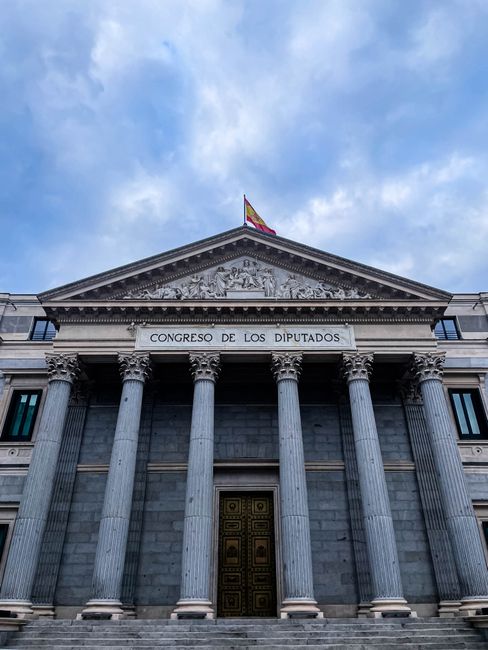
Spanish Government Scrutinizes BBVA’s Bid for Sabadell: A Deep Dive into Regulatory Hurdles and Economic Implications
The proposed acquisition of Banco Sabadell by BBVA, a move that would reshape Spain’s financial landscape, has triggered intense scrutiny from the Spanish government. This examination is not merely a procedural formality; it represents a critical juncture where national economic interests, competitive market dynamics, and regulatory frameworks converge. The potential merger, valued at an estimated €12 billion, presents a complex web of challenges and opportunities, demanding a thorough assessment by authorities to ensure it aligns with broader economic objectives and safeguards the integrity of the financial system.
At the heart of the government’s apprehension lies the significant market concentration that would result from this merger. BBVA and Sabadell are two of Spain’s largest banking institutions, and their amalgamation would create a behemoth with an even greater share of deposits, loans, and financial services. This heightened market power raises concerns about potential anti-competitive effects. Regulators are meticulously evaluating whether the combined entity could exert undue influence on pricing, limit consumer choice, and stifle innovation within the banking sector. The threshold for what constitutes a dominant position is a key consideration, and the government will be analyzing the implications for retail banking, corporate lending, and other financial products. The potential for reduced competition could translate into higher fees for consumers and businesses, and a diminished capacity for smaller, challenger banks to gain traction. Furthermore, the government is tasked with ensuring that the Spanish banking sector remains robust and diversified, capable of weathering economic downturns and effectively serving the needs of a broad spectrum of the economy.
A crucial aspect of the government’s review involves assessing the potential impact on employment and branch networks. Mergers of this scale often lead to rationalization and cost-saving measures, which can include significant job cuts and the closure of redundant branches. The social and economic consequences of such reductions, particularly in regions heavily reliant on local banking services, are a major concern for the government. Maintaining a degree of accessibility to financial services, especially in rural or less populated areas, is a priority. The government will likely be pushing for commitments from BBVA regarding employment levels and the preservation of a minimum number of branches to mitigate any adverse social impact. The broader economic implications of job losses within the financial sector, which can have ripple effects on local economies, are also under careful consideration.
Beyond market concentration and social impact, the Spanish government is also examining the broader macroeconomic implications of the proposed merger. A consolidated banking sector, while potentially more efficient, could also be perceived as less resilient in times of crisis. The government will be evaluating the systemic risk posed by a larger, more interconnected financial institution. This includes assessing capital adequacy, liquidity ratios, and the overall stability of the combined entity. Furthermore, the government is keen to understand how the merger might affect the flow of credit to the Spanish economy. A more concentrated banking sector could potentially lead to a tightening of lending standards or a reduced appetite for risk, impacting the ability of small and medium-sized enterprises (SMEs) and individuals to access financing. The government’s objective is to foster economic growth, and any merger that could inadvertently hinder this process will be viewed with caution.
The regulatory framework governing mergers and acquisitions in the financial sector is designed to prevent market distortions and protect consumers. In Spain, the Bank of Spain, the Comisión Nacional de los Mercados y la Competencia (CNMC – the National Markets and Competition Commission), and the European Central Bank (ECB) all play crucial roles in scrutinizing such proposals. The Bank of Spain will focus on prudential aspects, ensuring the stability and soundness of the combined entity. The CNMC will assess the competitive landscape and potential anti-competitive effects. The ECB, as the supervisor of significant institutions within the Eurozone, will also have a vested interest in the prudential soundness and market impact of such a large transaction. The government’s ultimate approval will likely depend on the satisfactory resolution of concerns raised by these various regulatory bodies.
The political dimension of this acquisition cannot be overstated. The Spanish government, regardless of its political leaning, has a mandate to act in the best interests of the nation. The potential implications for national economic sovereignty, the robustness of the domestic financial system, and the well-being of its citizens are all factored into the decision-making process. Historical precedents and the experiences of other countries with significant banking consolidation will undoubtedly inform the government’s deliberations. The government may also be influenced by public opinion and the concerns of various stakeholders, including consumer groups, trade unions, and business associations. The visibility of this transaction means that any decision will be subject to considerable public and political scrutiny.
The examination process involves a detailed review of BBVA’s offer and Sabadell’s response, including their proposed integration plans, operational synergies, and expected benefits. The government will be looking for concrete evidence that the merger will lead to greater efficiency and improved services for customers, rather than simply an increased concentration of power. There will be particular attention paid to any commitments offered by BBVA to mitigate potential negative consequences, such as job guarantees, commitments to maintaining branch networks, or initiatives to support SMEs. The devil, as always, will be in the details of these commitments and the mechanisms for ensuring their enforcement.
Furthermore, the broader European context is also a factor. The Spanish banking sector operates within the European Union’s single market and under the supervision of EU institutions. While the Spanish government retains significant oversight, decisions made at the national level will also need to be consistent with broader EU financial regulations and objectives. The European Commission, for instance, could also have a role to play if the merger is deemed to have a significant impact on competition within the EU.
The complexity of the regulatory review process means that a swift resolution is unlikely. The government will likely engage in extensive consultations with BBVA, Sabadell, and other relevant parties. This will involve the submission of detailed documentation, expert analysis, and potentially public hearings. The outcome of this examination is uncertain, and it is possible that the government could impose conditions on the merger, demand modifications to the offer, or even block the transaction outright if its concerns cannot be adequately addressed.
The examination of BBVA’s bid for Sabadell by the Spanish government is a critical exercise in balancing the pursuit of greater financial efficiency and competitiveness with the imperative of safeguarding market competition, protecting consumer interests, ensuring employment stability, and maintaining the overall health and resilience of the Spanish financial system. The government’s decision will have far-reaching consequences for the future of banking in Spain and will be closely watched by investors, industry participants, and the public alike. The SEO keywords relevant to this article include: BBVA Sabadell merger, Spanish government banking regulation, financial sector consolidation Spain, anti-trust review banking, market competition financial services, economic impact banking merger, regulatory approval financial institutions, Spanish economy banking sector, BBVA acquisition Sabadell, banking sector reform Spain.
