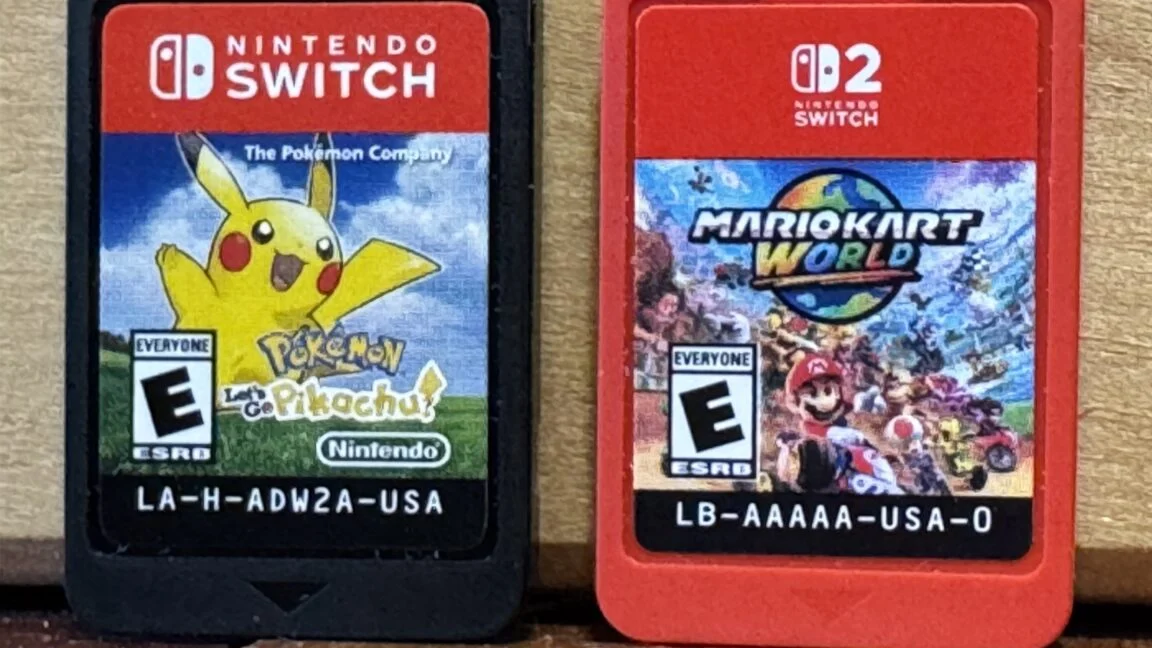
The landscape of physical media in the video game industry is undergoing a profound transformation, yet Nintendo remains a distinct outlier in its commitment to the cartridge format. While industry rivals like Sony have increasingly pivoted toward digital-only ecosystems, Nintendo has reaffirmed its intent to continue producing physical game cartridges for the foreseeable future. However, this commitment comes with significant logistical and economic hurdles. As the manufacturing base for specialized ROM chips shrinks, the costs associated with physical distribution are rising, forcing publishers and consumers to navigate a shifting financial reality.
The Shrinking Supply Chain for ROM Technology
At the heart of the issue is the specialized nature of the Nintendo Switch cartridge. Unlike the high-capacity Blu-ray discs used by Sony and Microsoft, which rely on mature, mass-produced optical technology, Nintendo utilizes proprietary ROM (Read-Only Memory) chips. These components are manufactured by a dwindling number of suppliers, primarily specialized semiconductor firms such as Rohm and Lapis Semiconductor.
As the global semiconductor industry pivots toward advanced nodes for AI, automotive, and high-performance computing, legacy production lines for consumer-grade ROM chips are becoming increasingly scarce. This supply-side contraction creates a bottleneck. When a manufacturer has limited capacity, the cost per unit tends to rise. For Nintendo, this means that the price of physical media is no longer solely dictated by demand; it is increasingly tethered to the overhead costs of maintaining access to these niche production lines.
Chronology of a Shifting Strategy
The transition toward higher prices for physical media did not happen overnight. It is the result of several years of incremental adjustments and market pressures.
- Late 2025: The industry saw early warning signs when publishers began expressing concerns over the cost-prohibitive nature of large-capacity cartridges. Reports emerged that developers were hesitant to release games physically unless they could secure lower-capacity, cheaper storage solutions.
- December 2025: Japanese publisher Inin provided a rare look into the backend economics of the industry. When discussing the release of R-Type Dimensions III, the company explicitly stated that a full cartridge release was only feasible because Nintendo had introduced smaller, more cost-effective storage tiers for the Switch 2 hardware.
- March 2026: Nintendo officially adjusted its pricing structure, marking a notable departure from industry norms. For the first time, select physical titles were priced at a premium compared to their digital counterparts. This move signaled that Nintendo was no longer willing to absorb the full cost of manufacturing and logistics, shifting the burden to the end consumer.
- Q2 2026: Recent financial reports indicate that digital software sales have climbed to 61.5 percent of Nintendo’s total business, up from the previous year. This growth highlights the dual path Nintendo is traveling: maintaining a physical legacy while simultaneously capitalizing on the high-margin nature of digital distribution.
The Economics of Physical vs. Digital
The disparity between physical and digital pricing is a modern phenomenon in the gaming industry. Traditionally, physical games were the standard, and digital versions were often priced similarly. However, the rise of digital distribution has allowed publishers to bypass the costs of manufacturing, warehousing, shipping, and retail markups.
When a consumer purchases a digital copy, the revenue goes almost entirely to the publisher and the platform holder. When a consumer purchases a physical cartridge, there is a significant "cost of goods sold" (COGS) that includes the physical chip, the plastic case, the printing of cover art, and the logistics of global distribution. As these costs rise, the physical medium becomes less attractive for smaller publishers who operate on thin margins.
Financial analysts suggest that if the cost of manufacturing continues to climb, physical games could evolve into a "premium" product. Much like the resurgence of vinyl records in the music industry, physical game cartridges may eventually be marketed toward collectors and enthusiasts who are willing to pay a premium for a tangible asset, while the general gaming populace shifts entirely to digital platforms.
Official Stances and Market Sentiment
Nintendo’s leadership has been transparent about its desire to keep physical media alive. In public statements made in mid-2026, the company emphasized that it recognizes the deep attachment its fan base has to physical copies. For many players, physical games represent ownership and the ability to resell or trade titles—rights that are often curtailed in digital environments through EULA agreements.
However, Nintendo’s commitment is not absolute; it is strategic. By keeping physical games in the mix, they maintain presence on retail shelves—a vital marketing tool for brand visibility—while simultaneously pushing digital growth to increase their bottom line. The company is effectively trying to have it both ways: keeping the traditionalists happy while reaping the massive profit margins of the digital storefront.
Implications for the Future of Retail
The implications for the broader retail sector are significant. Major retailers like GameStop, Best Buy, and Target have already begun to shrink their physical game sections as digital sales dominate. If the cost of manufacturing cartridges continues to drive up the retail price, the "physical" segment of the market may see a further decline in shelf space.
Furthermore, there is a growing concern regarding "archival integrity." Unlike a digital file that can be patched or removed from a server, a cartridge contains the game in a static state. As Nintendo continues to navigate the supply chain issues with Rohm and Lapis, the industry must ask whether the long-term viability of these games is being compromised. If the production of these proprietary chips ceases entirely, the only way to preserve these titles will be through emulation or digital snapshots, neither of which carries the same historical weight as the physical cartridge.
Data Analysis: The Balancing Act
The data from the second quarter of 2026 provides a clear picture of the trend. With digital sales accounting for over 61 percent of total volume, the pressure to maintain physical infrastructure is being mitigated by the efficiency of digital revenue. If this trend continues, Nintendo may reach a point of "equilibrium," where the costs of manufacturing physical media are offset by the high volume of digital profits.
This transition period is likely to be characterized by volatility. Consumers should expect to see more publishers following the path of Inin, where physical releases are gated by the availability of cost-efficient hardware. We may also see an increase in "limited edition" physical releases, where publishers produce smaller batches of games at higher prices to ensure profitability.
Conclusion
The Nintendo model of 2026 is a balancing act between tradition and modern financial necessity. While the company maintains its dedication to physical cartridges, the reality of the supply chain—specifically the reliance on specialized ROM production—is forcing an evolution in how those games are priced and distributed.
As long as the demand for physical media remains, Nintendo will likely continue to subsidize or manage the supply chain challenges, albeit at an increased cost to the consumer. However, the trajectory is clear: the industry is moving away from a hardware-reliant model toward a software-as-a-service ecosystem. For the time being, the physical cartridge lives on, but it is doing so with an increasingly heavy burden, serving as a reminder that even the most iconic formats are subject to the cold, hard realities of the global semiconductor market. As Nintendo looks toward the future, its ability to navigate this divide will determine whether the cartridge remains a staple of the gaming experience or becomes a nostalgic artifact of a bygone era.