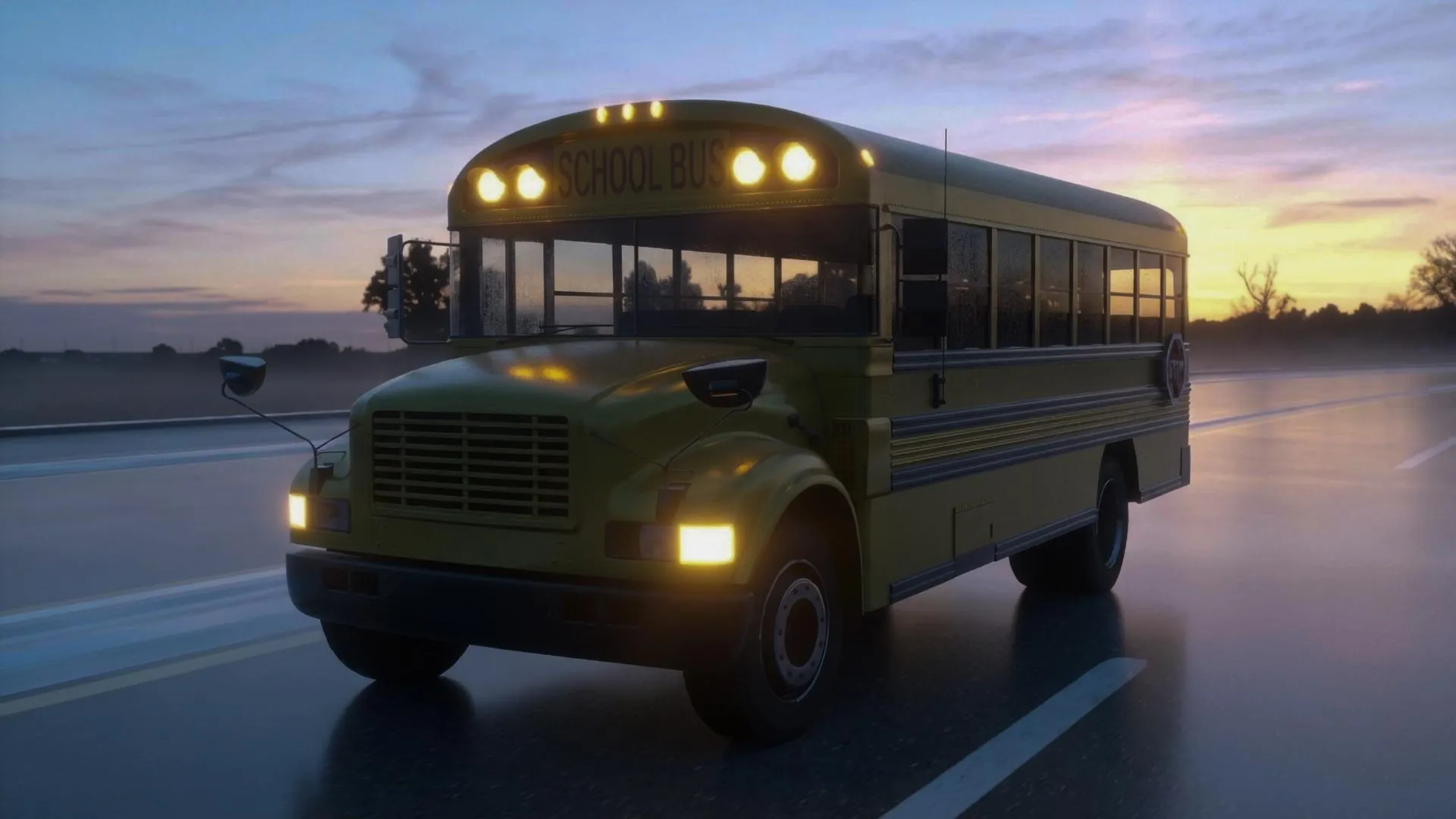
The movement to abolish the biannual ritual of shifting clocks has gained unprecedented traction in the United States, yet new research suggests that "locking the clock" in permanent daylight saving time (DST) may come at a steep price for the nation’s youth. A comprehensive study conducted by researchers at the University of Washington indicates that adopting permanent DST would force millions of students to navigate their morning commutes in near-total darkness, creating a hazardous environment for children and disrupting the essential biological rhythms required for healthy development.
As the debate intensifies in the corridors of the U.S. Congress, the proposal—often branded as the "Sunshine Protection Act"—has encountered stiff resistance from the scientific community. While proponents argue that the shift would provide the public with a coveted extra hour of evening light, data published on October 29 in the journal Current Biology highlights a significant trade-off: what is gained in the evening is effectively stolen from the morning. By shifting the sunrise an hour later during the winter months, from November through March, the nation would inadvertently plunge millions of students into pre-dawn transit scenarios that pose both immediate safety risks and long-term health consequences.
A Legislative Timeline of the Time Change Debate
The push to end the "spring forward, fall back" cycle is not a recent phenomenon, but it has reached a legislative fever pitch over the last three years. The practice of changing clocks, initially instituted to conserve energy during the World Wars, has long been criticized for its negative impacts on human health, including increased rates of heart attacks, strokes, and traffic accidents immediately following the shift.
In March 2022, the U.S. Senate unanimously passed the Sunshine Protection Act, a bill intended to make daylight saving time the permanent standard for the entire country. The legislation was met with immediate, though mixed, public support. Following the Senate’s action, the focus shifted to the U.S. House of Representatives. Throughout the summer, the House Committee on Energy and Commerce held hearings to assess the potential economic and health impacts of the transition. While the legislation gained momentum, it eventually stalled, caught between lobbying groups favoring the change and public health experts urging caution.
At the state level, the enthusiasm for ending the clock change is palpable. To date, 19 states—including Washington, California, and Florida—have enacted legislation expressing their intent to move to permanent DST should Congress grant them the authority to do so. However, these state-level measures remain dormant, awaiting federal approval. The bottleneck in Washington, D.C., has allowed researchers to step back and evaluate what the implementation of such a policy would actually look like on the ground for the most vulnerable demographic: students.
The Mathematics of Darkness: Quantifying the Impact
To move beyond anecdotal concerns, the research team at the University of Washington undertook a granular analysis of 14 of the 19 states that have already signaled support for the change. By integrating school enrollment data, precise school start times, and geographic coordinates, the team modeled the impact of permanent DST on student safety.
The findings are stark. In Washington state alone, researchers projected an additional 35 million school commutes occurring in darkness during the winter months. The numbers grow exponentially when extrapolated to a national scale. The researchers calculated that across the United States, permanent daylight saving time would result in at least 2 billion additional trips to school before sunrise.
The geographical distribution of these risks is not uniform. The impact is most severe for schools located near the western edges of time zones, where sunrise is naturally delayed. For instance, in states like Georgia, the study estimates an increase of roughly 71 million dark commutes. Even more alarming are the projections for states like Mississippi and Alabama, where early school start times—often occurring before 8:00 a.m.—would result in a tenfold increase in dark, pre-sunrise travel compared to the current system.
Public Health and the Circadian Rhythm
The dangers of a permanent shift extend beyond traffic safety. At the heart of the researchers’ concern is the role of morning sunlight in maintaining the human circadian clock. This internal timing mechanism is not merely about sleep; it governs the hormonal regulation of appetite, mood, and cognitive function.
"When we send kids to school in the dark, we are depriving them from an opportunity to get that morning daylight," says Guadalupe Rodríguez Ferrante, lead author of the study and a postdoctoral researcher at the University of Washington. Morning light acts as a critical signal to the brain, helping to synchronize the body’s internal clock with the solar day. Without this natural light exposure, children—who are already prone to sleep deprivation during their developmental years—may experience significant shifts in their biological rhythms, leading to diminished academic performance and increased vulnerability to mood disorders.
Senior author Horacio de la Iglesia, a professor of biology, has been outspoken regarding the naming of the legislative efforts. "It’s called the ‘Sunshine Protection Act’ because you get an extra hour of light at the end of the day. But you will take that hour from the morning. You could call it the Sunshine Destruction Act," he noted. The research team emphasizes that this is a "tangible metric" that cuts across socioeconomic boundaries; regardless of a family’s status, the shift to dark mornings is an inescapable reality for the student population.
Traffic Safety and the Pedestrian Risk Factor
The implications for physical safety are grounded in empirical evidence. An analysis of U.S. traffic collision data cited in the Current Biology study reveals that fatal crashes involving school-aged pedestrians are roughly twice as likely to occur during dark mornings compared to daylight hours.
As children traverse neighborhoods, cross intersections, and board school buses, the presence of morning light provides a crucial buffer for drivers and pedestrians alike. Removing this layer of natural visibility during the winter months, when roads may also be compromised by rain, snow, or ice, could lead to a measurable increase in pediatric traffic fatalities. This data point has become a central argument for those urging lawmakers to reconsider the permanent DST proposal.
The Hidden Costs and the "Standard Time" Alternative
The study’s authors warn that their estimate of 2 billion dark commutes is likely conservative. The calculations were based on an assumed school start time of 8:00 a.m. In reality, many districts, particularly those offering early-morning breakfast programs or extracurricular activities, begin much earlier. As these programs become more common, the number of children exposed to pre-dawn travel risks continues to rise.
Furthermore, the proposal complicates existing efforts to improve adolescent health by delaying high school start times. In recent years, school districts across the nation have shifted start times later to accommodate the delayed sleep-wake cycles of teenagers. A move to permanent DST would, in effect, counteract these improvements by forcing students back into a dark-morning reality, effectively negating the benefits gained by the later schedule.
When confronted with the suggestion that schools could simply delay their start times to compensate for the later sunrise, de la Iglesia argues that such a fix is fundamentally flawed. "If we do that, you will end up going to work later. And everything is going to get delayed," he explains. By shifting every aspect of society an hour later to accommodate a daylight-shifted clock, the nation would effectively be realigning itself to "Solar Time"—which is, by definition, Standard Time.
Ultimately, the University of Washington study serves as a critical intervention in a debate that has thus far been dominated by the desire for longer summer-like evenings. By quantifying the frequency of dark commutes and highlighting the biological necessity of morning sunlight, the researchers have provided lawmakers with a clear warning: the convenience of permanent daylight saving time may come at the cost of the safety and health of the next generation. As the debate continues, policymakers must weigh the ephemeral benefit of evening light against the permanent, daily challenges of a darker, less predictable morning.