Scientists at Stanford Medicine have announced the identification of a naturally occurring molecule that could pave the way for an entirely new generation of weight loss therapeutics. Through rigorous early animal testing, researchers demonstrated that this novel compound—known as BRP—can effectively suppress appetite and drive significant fat loss in a manner comparable to semaglutide, the blockbuster active ingredient found in medications like Ozempic and Wegovy. Crucially, early data indicate that BRP may achieve these results while sidestepping many of the problematic and debilitating side effects that frequently plague users of current GLP-1 receptor agonists, such as severe gastrointestinal distress and substantial lean muscle mass depletion.
The discovery of BRP marks a major milestone in the intersection of artificial intelligence and metabolic research. Led by a team at Stanford University, the breakthrough addresses longstanding hurdles in endocrinology by leveraging a custom-built predictive algorithm to scan thousands of human genes for hidden peptide hormones. Published in the peer-reviewed scientific journal Nature, the findings have already transitioned from the academic laboratory toward commercial development, with researchers establishing a startup company to shepherd the molecule through the arduous pipeline of human clinical trials.
A Radically Different Mechanism of Action
To understand the potential significance of BRP, researchers point to the fundamental physiological differences in how current anti-obesity medications operate relative to this newly discovered peptide.
Semaglutide and related medications function by mimicking glucagon-like peptide-1 (GLP-1), a naturally occurring gut hormone that stimulates insulin secretion, slows gastric emptying, and signals satiety to the brain. However, the biological receptors targeted by semaglutide are ubiquitous throughout the human body. They are heavily distributed not only within the central nervous system but also across the gut, pancreas, cardiovascular system, and various peripheral tissues.
This widespread distribution accounts for both the remarkable efficacy of GLP-1 receptor agonists and their well-documented adverse event profile. By acting upon the gastrointestinal tract, these drugs frequently induce symptoms such as persistent nausea, vomiting, abdominal cramping, and severe constipation. Furthermore, rapid weight reduction driven by caloric restriction combined with broad metabolic signaling can often result in the unintentional breakdown of lean muscle tissue, posing long-term risks to physical strength, mobility, and basal metabolic rate.
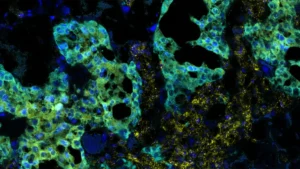
BRP, by contrast, operates with far greater anatomical precision. Rather than interacting with systemic peripheral tissues, the molecule appears to act selectively within the hypothalamus—a small, highly specialized region deep within the brain responsible for orchestrating energy homeostasis, autonomic nervous system function, body temperature, and hunger cues.
By targeting distinct neural populations within the hypothalamus rather than broadly mimicking systemic GLP-1 pathways, BRP triggers powerful appetite suppression while theoretically bypassing the triggers that cause gastrointestinal distress and muscle degradation elsewhere in the body. This precision-targeted approach represents a paradigm shift in how pharmacologists conceptualize the treatment of obesity and metabolic syndrome.
Chronology of the Discovery: From AI Algorithm to Cellular Validation
The journey toward identifying BRP required overcoming a fundamental bottleneck in molecular biology: the sheer complexity of the human peptidome. The human body continuously produces immense quantities of small protein fragments, but only a minute fraction possess genuine biological signaling functions.
Traditionally, scientists identified these active messengers—known as peptide hormones—by laboriously extracting proteins from biological tissues and running them through mass spectrometry. This process is exceptionally slow, resource-intensive, and prone to missing rare molecules obscured by the background noise of ordinary cellular debris.
Recognizing these limitations, the Stanford research team opted for an in silico computational approach. The chronological timeline of the discovery unfolded through several distinct phases:
- Target Selection and Enzymatic Mapping: The researchers focused their attention on prohormone convertase 1/3, a critical enzymatic catalyst known to process larger inactive prohormones into smaller functional peptides. Mutations in this enzyme have historically been linked to human obesity, making it an ideal focal point for investigating novel metabolic regulators.
- Algorithm Development: To accelerate the search, the team engineered a specialized computer algorithm christened "Peptide Predictor." Instead of physical extraction, the software computationally analyzed approximately 20,000 human genes encoding proteins, searching specifically for structural sequences where prohormone convertase 1/3 was statistically likely to cleave.
- Filtration and Narrowing: The algorithm filtered the human genome based on established characteristics of hormones—specifically requiring candidate proteins to be secreted outside of cells and to contain a minimum of four prospective enzymatic cutting sites. This digital screen winnowed down the staggering breadth of the human proteome to a manageable subset of 373 prohormones, predicted to yield 2,683 distinct peptide fragments.
- In Vitro Screening: From this refined collection, senior research scientist Dr. Laetitia Coassolo and senior author Dr. Katrin Svensson selected 100 high-probability peptide candidates and tested them on laboratory-grown nerve cells. The objective was to measure neuronal activation as an early indicator of biological potency.
- The Breakthrough: While established benchmarks like GLP-1 successfully tripled neuronal activity compared to baseline controls, a previously uncharacterized 12-amino-acid peptide produced an extraordinary tenfold increase in neural stimulation. Derived from the larger protein BRINP2 (BRINP2-related-peptide), the molecule was formally designated as BRP.
Preclinical Animal Testing Reveals Promising Data
Following its validation in cellular assays, the Stanford team advanced BRP to in vivo testing models to evaluate whether microscopic neural stimulation would translate into observable behavioral and physiological changes in living organisms.
Researchers administered BRP via intramuscular injections to lean mice and miniature pigs—the latter chosen because their digestive physiology and metabolic pacing closely mirror those of humans. The behavioral response was immediate and pronounced. Within one hour of receiving the injection, the treated animals voluntarily consumed up to 50 percent less food than their untreated control counterparts, providing clear quantitative evidence of BRP’s appetite-suppressive potency.
To assess long-term therapeutic utility, the researchers conducted a 14-day trial involving diet-induced obese mice. The subjects received daily administrations of BRP over the two-week span. By the conclusion of the study, the BRP-treated mice had achieved an average net weight loss of approximately 3 grams, whereas the control group had continued to gain an average of 3 grams under identical nutritional conditions.
Most notably, body composition analysis revealed that nearly the entirety of the weight shed by the BRP-treated cohort consisted of adipose tissue rather than lean muscle mass. Maintaining lean tissue during weight loss is a critical clinical objective, as muscle preservation protects metabolic health, prevents frailty, and reduces the likelihood of weight regain post-treatment. Furthermore, the treated animals demonstrated marked improvements in systemic glucose clearance and insulin sensitivity, indicating broader restorative effects on metabolic health parameters.
Safety Profiles and Side Effect Comparisons
In parallel with tracking weight and metabolic markers, the Stanford investigators closely monitored the animals for behavioral anomalies and known side effects associated with existing incretin-mimetic therapies.
Throughout the trials, researchers recorded no statistically significant deviations in spontaneous locomotor activity, fluid consumption, or anxiety-related behaviors between treated subjects and control groups. Crucially, monitoring of fecal output revealed no indications of drug-induced constipation—a frequent and disruptive clinical complaint among patients taking semaglutide. While animal models cannot definitively predict subjective human experiences such as nausea, the absence of corresponding physiological stress markers in the subjects offered early encouragement to the research team.
Broader Economic and Healthcare Implications
The publication of these findings arrives at a critical juncture in modern public health. Obesity rates continue to climb globally, imposing massive burdens on healthcare systems through associated comorbidities such as type 2 diabetes, cardiovascular disease, non-alcoholic fatty liver disease, and certain forms of cancer.
While current GLP-1 receptor agonists have revolutionized metabolic medicine and generated tens of billions of dollars in pharmaceutical revenue, significant limitations remain. High financial costs, supply chain shortages, persistent gastrointestinal side effects, and the discontinuation of treatment due to adverse events leave millions of patients without viable, long-term therapeutic options.
The emergence of BRP points toward a future where metabolic disease can be managed with surgical precision rather than systemic inundation. If subsequent human trials successfully replicate the preclinical findings, a BRP-based therapeutic could offer patients the profound weight-loss efficacy of current market leaders while eliminating the barriers of muscle wasting and chronic digestive discomfort.
Future Outlook and Clinical Trial Roadmap
Despite the enthusiasm surrounding the discovery, investigators emphasize that BRP remains firmly in the preclinical phase of development. Substantial scientific hurdles must be cleared before the molecule can be evaluated in human populations.
Immediate research priorities for the Stanford laboratory include identifying the precise cell-surface receptors that bind to BRP to initiate its signaling cascade within the hypothalamus. Understanding this receptor interaction at a structural level will enable researchers to optimize the molecule’s pharmacokinetics—specifically addressing its natural vulnerability to enzymatic degradation within the bloodstream. Developing a modified, longer-acting formulation will be essential to ensure that patients would not require excessively frequent injections.
To accelerate this translational process, Dr. Svensson has co-founded a biotechnology startup, Merrifield Therapeutics, dedicated to advancing BRP through the rigorous phases of preclinical optimization, toxicology screening, and eventually, human clinical trials. Patents covering the composition and therapeutic use of BRP peptides have already been filed, with Svensson and Coassolo named as primary inventors.
The collaborative research effort spanned multiple premier academic institutions, including the University of California, Berkeley, the University of Minnesota, and the University of British Columbia. Financial backing for the project was provided by a diverse coalition of public and private entities, including the National Institutes of Health (under grants R01DK125260, P30DK116074, K99AR081618, and GM113854), the SPARK Translational Research Program at Stanford, Stanford Bio-X, the Stanford Maternal and Child Health Research Institute, the American Heart Association, the Carlsberg Foundation, and the Wu Tsai Human Performance Alliance.
"The lack of effective drugs to treat obesity in humans has been a problem for decades," Dr. Svensson reflected following the publication of the study. "Nothing we’ve tested before has compared to semaglutide’s ability to decrease appetite and body weight. We are very eager to learn if it is safe and effective in humans."
As the scientific community awaits the initiation of Phase 1 clinical trials, BRP stands as a testament to the growing power of artificial intelligence in biomedical discovery—transforming a genomic haystack into a precisely targeted molecule that may soon redefine the standard of care for metabolic medicine.