The automotive industry stands at a critical crossroads regarding the role of plug-in hybrid electric vehicles (PHEVs). For years, these vehicles have been framed through two competing narratives: either as a vital "on-ramp" for consumers transitioning to fully electric vehicles (EVs) or as an unnecessarily complex and costly stopgap measure mandated by regulatory pressure rather than consumer demand. As the 2025 model year approaches, the answer appears to be a sophisticated blend of both perspectives. While PHEVs offer a solution for drivers with "range anxiety," their mechanical complexity—featuring both a traditional internal combustion engine and a high-voltage battery system—presents a unique set of challenges and opportunities for manufacturers and owners alike.
The PHEV Dilemma: Complexity Versus Utility
A plug-in hybrid is fundamentally designed to bridge the gap between gasoline and electricity. By equipped these vehicles with an internal combustion engine and a battery significantly larger than those found in standard hybrids, manufacturers aim to provide the best of both worlds. For the typical commuter, a PHEV offers enough electric-only range to cover daily trips without burning a drop of fuel, provided the vehicle is plugged in regularly. For longer journeys, the gasoline engine eliminates the need for frequent, time-consuming charging stops, which remains a primary concern for potential EV adopters.
However, the efficacy of this "greening" of the ownership experience is currently the subject of intense academic and regulatory scrutiny. The core of the controversy lies in the "utility factor"—the proportion of miles driven on electricity versus gasoline. Data suggests that real-world usage often falls short of laboratory expectations. A 2022 study conducted by the International Council on Clean Transportation (ICCT), utilizing expansive U.S. data sets, revealed that PHEVs are frequently driven 25% to 65% fewer electric miles than Environmental Protection Agency (EPA) window stickers suggest. Similarly, a study by the European Commission found that these vehicles often pollute significantly more in real-world scenarios than during official testing, largely because many owners fail to charge them daily, effectively operating them as heavy, inefficient gasoline vehicles.
Regulatory Shifting Sands and Technological Responses
Despite these criticisms, PHEVs are poised for a significant resurgence, driven by evolving federal and state regulations. The EPA and the National Highway Traffic Safety Administration (NHTSA) have acknowledged the discrepancy between rated and real-world emissions, proposing new greenhouse-gas and Corporate Average Fuel Economy (CAFE) standards that adjust for the lower-than-expected electric utility of PHEVs. Simultaneously, California’s Advanced Clean Cars II regulations are pushing the industry toward more capable hardware.
To remain compliant and competitive, the next generation of PHEVs will undergo a technological transformation. Future models are expected to offer vastly improved electric ranges, moving from the current average of 25–35 miles to a more robust 50–70 miles. This shift is intended to ensure that even less-diligent chargers can complete most of their daily driving on battery power. Furthermore, automakers are redesigning the "logic" of these drivetrains. While older PHEVs often engaged the gasoline engine under moderate acceleration, newer versions are being engineered with an "electric-first" philosophy, where the electric motor is the primary and more powerful propulsion source, and the engine serves as a secondary support system or range extender.
Detailed Profiles of the 2025 PHEV Vanguard
As the market prepares for this shift, several key models for the 2025 model year illustrate the diverse strategies manufacturers are employing to balance performance, efficiency, and regulatory compliance.
Mercedes-Benz GLC 350e: A Benchmark for Range and Charging
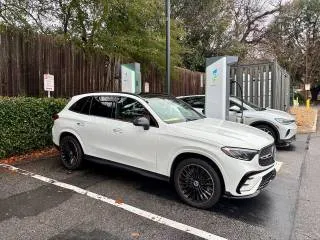
The 2025 Mercedes-Benz GLC 350e represents the luxury segment’s commitment to the PHEV format. This midsize crossover combines a 2.0-liter turbocharged four-cylinder engine with a substantial 24.8-kwh battery pack (23.3 kwh of which is usable). The result is a total system output of 313 hp and 406 lb-ft of torque. Most notably, the EPA has rated the GLC 350e at 54 miles of electric range—a figure that meets the stringent upcoming requirements in California.
Mercedes-Benz has also addressed one of the primary complaints regarding PHEVs: slow charging times. The GLC 350e offers a 60-kw DC fast-charging mode, allowing the battery to be replenished from near-empty to full in under an hour. This feature, combined with a 0-60 mph time of 6.2 seconds and a starting price of $61,050, positions it as a highly practical entry in the premium electrified market.
Ram 1500 Ramcharger: Redefining the Series Hybrid
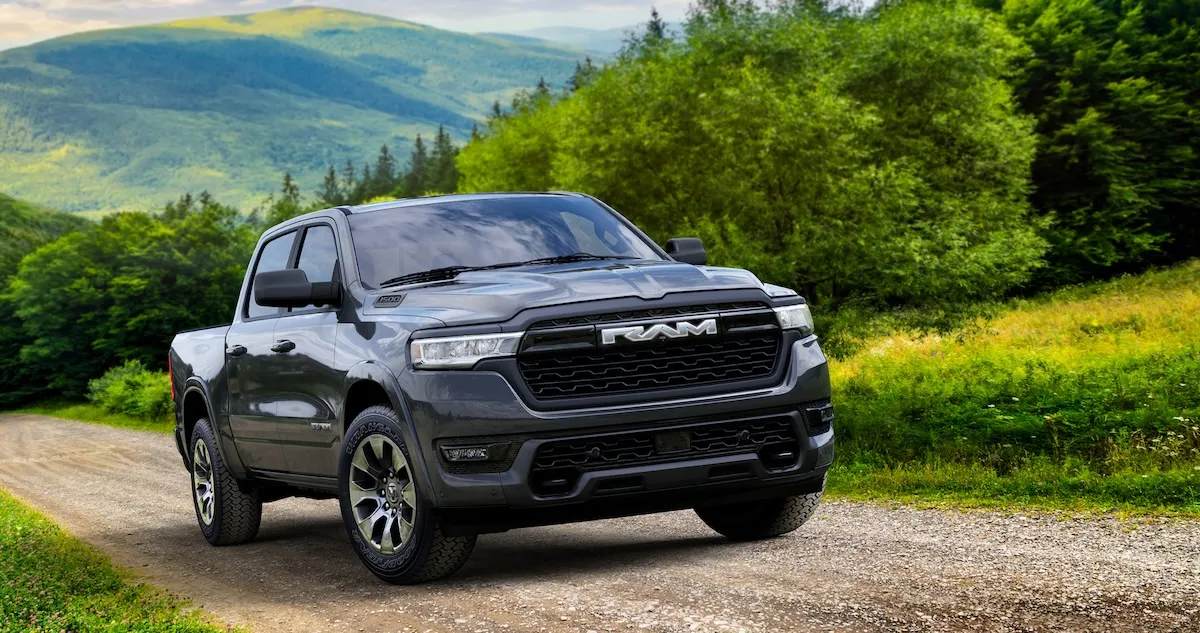
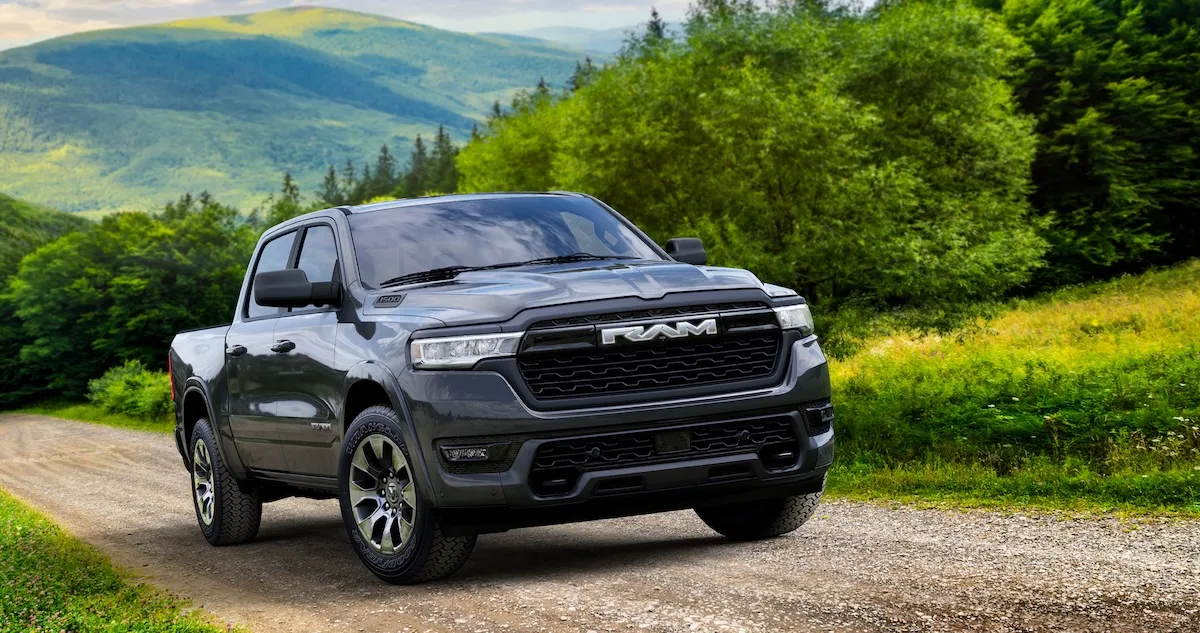
Perhaps the most innovative entry for 2025 is the Ram 1500 Ramcharger. Unlike traditional PHEVs where the engine and electric motor can both drive the wheels, the Ramcharger is a series hybrid. There is no mechanical connection between the gasoline engine and the wheels; instead, the engine acts exclusively as an onboard generator to charge a massive 92-kwh battery pack.
This configuration allows for a staggering 145 miles of electric-only range. When the battery is depleted, the gasoline generator kicks in to provide a total range of 690 miles. With 663 hp and 619 lb-ft of torque, Ram claims the truck is fully capable of heavy-duty towing over long distances—a task that remains a significant challenge for pure battery-electric trucks. The Ramcharger is expected to arrive in dealerships in early 2025, following the launch of the fully electric Ram 1500 REV.
Honda CR-V e:FCEV: A Unique Hydrogen-Plug-In Hybrid
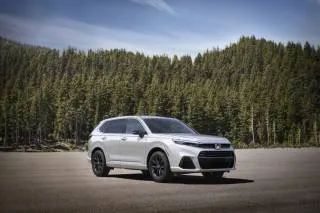
Honda has introduced a highly specialized vehicle in the form of the 2025 CR-V e:FCEV. This model is unique because it replaces the traditional gasoline engine with a 92.2-kw hydrogen fuel-cell stack. It functions as a plug-in hybrid that can be charged via a standard outlet to provide 29 miles of electric range, but it can also be refueled with hydrogen for longer trips.
Currently limited to the California market due to hydrogen infrastructure constraints, the e:FCEV produces 174 hp and 229 lb-ft of torque. The inclusion of a plug-in port is a strategic "backup plan" for drivers, allowing them to utilize traditional electricity when hydrogen fueling stations are unavailable or out of service.
Jeep’s Expanding 4xe Portfolio: Gladiator and Wagoneer
Stellantis, the parent company of Jeep, is doubling down on PHEV technology under the "4xe" banner. For 2025, the brand will introduce the Gladiator 4xe, bringing plug-in technology to the midsize truck segment for the first time in the U.S. While full specifications are still forthcoming, it is expected to mirror the Wrangler 4xe’s powertrain, which offers 375 hp and 21 miles of electric range.
Furthermore, Jeep has confirmed that the full-size Wagoneer and Grand Wagoneer will receive 4xe variants. These large SUVs will likely utilize a version of the Ramcharger’s range-extended system, providing the high torque necessary for large vehicles while significantly improving their historically low fuel economy.

Porsche Panamera Turbo S E-Hybrid: Performance-Oriented Electrification
At the high end of the performance spectrum, the 2025 Porsche Panamera Turbo S E-Hybrid showcases how electrification can enhance speed. Part of the redesigned third-generation Panamera family, this model pairs a twin-turbocharged 4.0-liter V-8 with an electric motor to produce a combined 771 hp. With a larger 25.9-kwh battery, it is expected to significantly exceed the 20-mile electric range of its predecessor. It can sprint from 0-60 mph in a mere 2.8 seconds, reaching a top speed of 202 mph, proving that PHEV technology is not solely about fuel economy.
Volvo and Hyundai: Refreshing the Mainstream and Luxury Segments
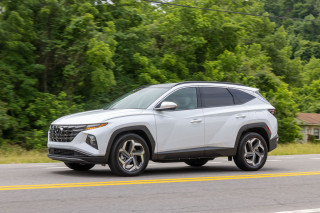
Volvo continues its "electric with a backup plan" strategy with the 2025.5 XC90 T8. The refreshed flagship SUV features a new interface and upgraded cabin materials while maintaining its 455-hp powertrain and an estimated 33 miles of electric range. Similarly, the 2025 Hyundai Tucson Plug-In Hybrid receives a mid-cycle refresh with a more modern interior and standard all-wheel drive. While its 33-mile electric range remains unchanged, its faster 7.2-kw onboard charger allows for quick replenishment at home.
Chronology of Market Arrival
The rollout of these advanced PHEVs is scheduled throughout the next 12 to 18 months:
- Late 2024: Mercedes-Benz GLC 350e, Porsche Panamera Turbo S E-Hybrid, and updated Hyundai Tucson arrive.
- Q1 2025: Volvo XC90 T8 (2025.5 model) begins reaching U.S. dealerships.
- Early 2025: The Ram 1500 Ramcharger is slated for its commercial debut following the Ram REV.
- Late 2025: Full details and market launch for the Jeep Gladiator 4xe and Wagoneer 4xe are expected.
Broader Impact and Industry Implications
The pivot toward more capable PHEVs reflects a broader realization within the automotive industry: the transition to 100% battery-electric vehicles may take longer than initially projected. Consumer concerns regarding charging infrastructure and the high cost of large-battery EVs have led to a plateau in sales growth for some pure electric models. In response, PHEVs are emerging as a pragmatic compromise.
However, the long-term success of this segment depends on consumer behavior. If owners treat PHEVs as traditional hybrids and neglect to plug them in, the environmental benefits touted by manufacturers and regulators will remain unrealized. This has prompted some advocacy groups to call for more transparent reporting of electric versus gasoline mileage.
From a manufacturing standpoint, the increased range of 2025 models requires larger batteries, which adds weight and cost. Yet, as battery energy density improves and production scales, the price gap between PHEVs and traditional gasoline cars is expected to narrow. For the consumer, the 2025 model year offers more choice than ever before, providing a diverse array of vehicles that can operate as clean EVs for the daily grind and as reliable long-distance cruisers for the open road. As the infrastructure for both charging and hydrogen continues to evolve, the PHEV stands as a sophisticated, albeit complex, testament to an industry in the midst of a historic transformation.