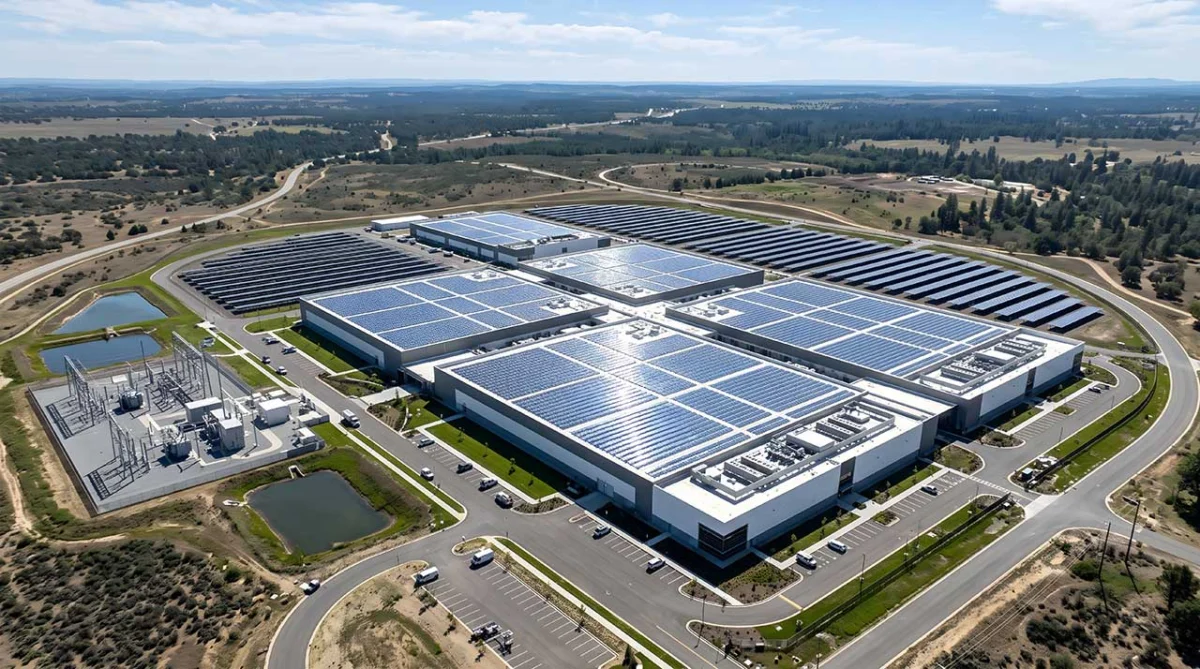
The environmental footprint of artificial intelligence extends far beyond the immediate digital screen, raising critical questions about resource allocation, infrastructure limits, and community governance. When a user queries a standard AI chatbot with a straightforward request, the digital exchange consumes roughly as much electricity as a microwave running for a single second. However, shifting from simple prompts to complex, autonomous workflows—often managed by AI "agents" that independently plan, search, and execute multi-step tasks—dramatically increases power consumption. These sophisticated jobs can demand as much electricity as operating a standard laptop continuously for nearly six hours. While the core technology remains identical, the utility impact, environmental cost, and infrastructure demands vary by orders of magnitude.
This stark divergence has introduced a complex environmental and economic challenge that goes beyond simple electricity tallies. Water resource management, local tax revenues, and surging monthly residential power bills have transformed the conversation about artificial intelligence from a technical optimization problem into a localized battle over zoning, grid capacity, and community survival.
The Scientific Debate Over AI and Human Carbon Efficiency
The debate surrounding the carbon cost of artificial intelligence gained prominent academic traction in February 2024, when researchers from three universities published a comparative study in the journal Scientific Reports. The initial analysis concluded that an AI model producing a single page of text emitted between 130 and 1,500 times less carbon dioxide than a human writer performing the same task. According to the study’s framework, an individual AI query generated approximately 2 grams of carbon dioxide—factoring in its proportional share of training emissions—while an equivalent human contribution was calculated at roughly 1,400 grams.
Critics quickly identified methodological flaws in how the human baseline was calculated. The original researchers had taken the average annual carbon footprint of an American—roughly 15 tons—divided it by the total hours in a year, and multiplied that hourly rate by the 48 minutes a human took to draft the text. Commentators pointed out that a human writer emits carbon regardless of whether they are actively writing; individuals continue to heat homes and commute whether or not they are typing.
When isolating the actual marginal energy expenditure—specifically the electricity consumed by a laptop over a multi-day project—the human carbon cost drops closer to 2 kilograms of CO2, starkly lower than the 36 kilograms implied by the original study’s methodology.
A follow-up study published in the same journal in November 2025 by researcher Nolan Woo attempted to correct these baseline discrepancies by grading output quality and evaluating the computational energy required to achieve correct answers. Utilizing programming challenges from national high-school computing contests with objective pass-or-fail metrics, Woo tested multiple AI models. The results demonstrated that cumulative emissions were driven less by model size and more by the number of iterative attempts required to reach a correct solution. Furthermore, historical data showed that early iterations of these models struggled to solve the vast majority of challenges without extensive trial and error. More recent benchmarks, however, have shown dramatic leaps in capability, with advanced models exceeding 95% accuracy on similar technical evaluations, according to Stanford University’s 2026 AI Index Report.
The Shift Toward Autonomous Agents and Hidden Energy Costs
The paradigm of AI interaction has shifted away from single-prompt queries toward autonomous, multi-step agents. Modern workflows involve systems that plan, execute web searches, read literature, revise outputs, and loop continuously over hours or days. This autonomous reasoning multiplies energy consumption exponentially compared to traditional text generation.
Research conducted at KAIST, a premier engineering institution in South Korea, quantified this hidden energy expenditure. Evaluating commercial-grade models, the KAIST team discovered that a single-agent task consumed an average of 348 watt-hours—representing a 136-fold increase over the energy required to answer a standard, simple query. This surge in power usage is driven by two primary factors: tasks take up to 154 times longer to complete, and workloads are distributed across multiple AI sub-agents handling fragmented portions of the objective.
Crucially, the research revealed that specialized hardware chips remained idle for more than half of the testing duration, continuing to draw electrical power while awaiting external inputs such as web searches or code compilation. Consequently, more than 50% of the energy consumed during complex agentic workflows is directed toward expensive hardware sitting in an idle state.
Simultaneously, infrastructure optimization is advancing rapidly. An April 2026 report from the International Energy Agency noted that the task-specific energy efficiency of artificial intelligence is improving at an unprecedented rate within energy history. Industry operators are actively eliminating infrastructural waste to reduce operational overhead, making the technology increasingly profitable while simultaneously driving down its environmental footprint.
Analyzing the Environmental Break-Even Point
Determining whether artificial intelligence or human labor represents the more environmentally sustainable choice requires evaluating specific operational contexts. Consider a comprehensive research assignment that takes a human researcher 20 hours to complete—involving the review of 40 sources and the drafting of a 5,000-word report. Factoring in the marginal energy consumption of the researcher’s laptop, monitor, and the embedded emissions of manufacturing that hardware, the project yields roughly 2 kilograms of carbon dioxide emissions.
Calculating the equivalent break-even point for AI agent requests depends heavily on the carbon intensity of the electrical grid powering the underlying data center:
- In the cleanest operational scenarios, where technology companies procure dedicated renewable energy, an AI workflow reaches the 2-kilogram carbon threshold at approximately 46 agent requests.
- Operating under the average U.S. electrical grid mix, the break-even point drops to roughly 15 requests.
- In geographic regions where large-scale AI data centers are frequently constructed—often characterized by higher-than-average grid carbon intensity—the break-even point occurs at roughly 11 requests.
Empirical studies indicate that major industrial AI research tasks routinely exceed 11 requests, suggesting that large-scale autonomous deployments frequently surpass the environmental impact of human-led research when relying on standard grid power.
The Jevons Paradox and Expanding Workloads
Calculations favoring AI efficiency inherently assume that machine automation directly displaces human labor hours rather than expanding total output. Real-world utilization data, however, suggests a different behavioral pattern.
Research from the National Bureau of Economic Research indicates that knowledge workers heavily exposed to artificial intelligence tools increase their weekly working hours by an average of 3.5 hours. Surveys conducted by staffing and consulting firms further reveal that only a minority of employees reinvest time savings into personal leisure; the remainder of the conserved time is routinely redirected into expanded professional workloads.
This dynamic illustrates Jevons’ Paradox, an economic principle first observed in 1865 by economist William Stanley Jevons, who noted that efficiency gains in steam engines did not reduce aggregate coal consumption, but rather accelerated it by making the resource economically viable for broader applications. Similarly, as AI tools make task completion faster and cheaper, the frequency of deployment increases, driving up cumulative resource consumption.
Water Resource Pressures and Grid Infrastructure Impacts
Water consumption represents a critical friction point in local resistance to data center expansion. According to the Lawrence Berkeley National Laboratory, U.S. data centers consumed approximately 17.4 billion gallons of water in 2023 for direct building cooling systems. While this volume represents a fraction of agricultural irrigation demands, industry projections indicate that direct data center water utilization could quadruple by 2028.
However, direct cooling consumption accounts for only a minor share of total water usage. Generating the electricity consumed by data centers requires vast quantities of water at utility scale. Power plants remain the largest industrial consumer of fresh water in the United States, and data centers absorb a proportional share of this indirect footprint through their utility contracts. While facilities can implement air-cooling systems to minimize on-site water evaporation, their comprehensive water footprint remains tied to the generation profile of the electrical grid supplying them.
Transparency regarding resource utilization remains fragmented. While corporate sustainability disclosures report aggregate global consumption—such as Google’s disclosure of 7.7 billion gallons consumed globally in 2024, with specific sites like Council Bluffs, Iowa, accounting for roughly one billion gallons—regional enforcement varies. Regulatory audits in states like Texas reveal that a significant majority of operational data centers have historically failed to file mandatory municipal water reports.
Simultaneously, the financial impact on household utility bills has accelerated local opposition. In regional transmission organizations such as PJM Interconnection—which manages the power grid for 65 million people across 13 states and Washington, D.C.—annual capacity auction prices escalated sharply. Independent market monitors identified data center expansion as the primary driver behind major auction spikes, which resulted in billions of dollars in added capacity costs passed directly to regional utility customers. Home electricity rates in affected jurisdictions, including Ohio, Pennsylvania, and the District of Columbia, have registered notable upward adjustments, prompting state regulators to explore isolated rate structures and mandatory long-term contracts to ensure that incoming industrial loads fund their own infrastructural requirements.
Land-Use Disputes and Community Resistance
These compounding economic and environmental pressures have catalyzed a widespread land-use movement across the United States. Trackers of local infrastructure disputes, such as Data Center Watch, documented dozens of high-value data center projects experiencing significant delays, blocks, or cancellations as municipal pushback intensified. Legislative activity across statehouses has similarly surged, with hundreds of bills introduced to regulate data center zoning, tax incentives, and environmental disclosures.
Community opposition has frequently transcended traditional partisan divisions. Conservative officials often emphasize local grid strain and municipal fiscal impacts, while progressive stakeholders focus on water security and localized air pollution, leading to unified local resistance.
Notable municipal clashes illustrate the widening gulf between industrial developers and local communities:
- In Tucson, Arizona, municipal leadership faced intense public pushback following the revelation of a confidential land-sale agreement for a major technology campus. Following a public hearing drawing over a thousand residents, the Tucson City Council voted unanimously to reject annexation and withhold municipal water access. Despite the municipal block, developers acquired adjacent land outside city jurisdiction to advance the project, highlighting the jurisdictional limits of local municipal authority.
- In Saline Township, Michigan, local planning commissions and township boards initially voted to deny rezoning requests for extensive agricultural acreage designated for industrial data center development. Following legal challenges from developers asserting that the township lacked adequate industrial zoning to accommodate permissible commercial use, the municipality—operating under constrained legal defense budgets—negotiated a settlement securing community benefit packages, clearing the way for project approval while triggering subsequent legislative freezes in neighboring jurisdictions.
Broader regulatory responses have followed. New York enacted temporary statutory pauses on large-scale data center construction, while other states have implemented moratoriums while legislative bodies reassess long-term energy planning, zoning frameworks, and environmental review standards.
Evaluating the Broader Implications
For immediate, bounded tasks executed on initial prompts, artificial intelligence systems generally offer lower marginal energy footprints than manual alternatives. However, for expansive research and multi-step autonomous workflows requiring iterative correction, human labor currently incurs a lower environmental cost, with the performance gap widening across every computational loop.
Ultimately, the environmental sustainability of artificial intelligence is determined less by algorithmic efficiency than by foundational infrastructure decisions. The geographic placement of data centers, the energy mix of serving utilities, municipal water allocations, and utility rate structures represent the primary determinants of AI’s long-term environmental toll. As deployment scales, these public infrastructure choices remain central to local governance, regulatory policy, and community planning nationwide.