The crisp coastal air of Newport, Oregon, carried a distinct undercurrent of urgency last week as several hundred marine scientists, government researchers, and environmental advocates converged for a specialized, high-stakes two-day symposium. Entirely dedicated to the plight of a single marine mammal—the eastern North Pacific gray whale—the gathering served as an urgent forum to address a crisis that has alarmed the conservation community: the staggering, rapid decimation of a population that was once considered a conservation success story.
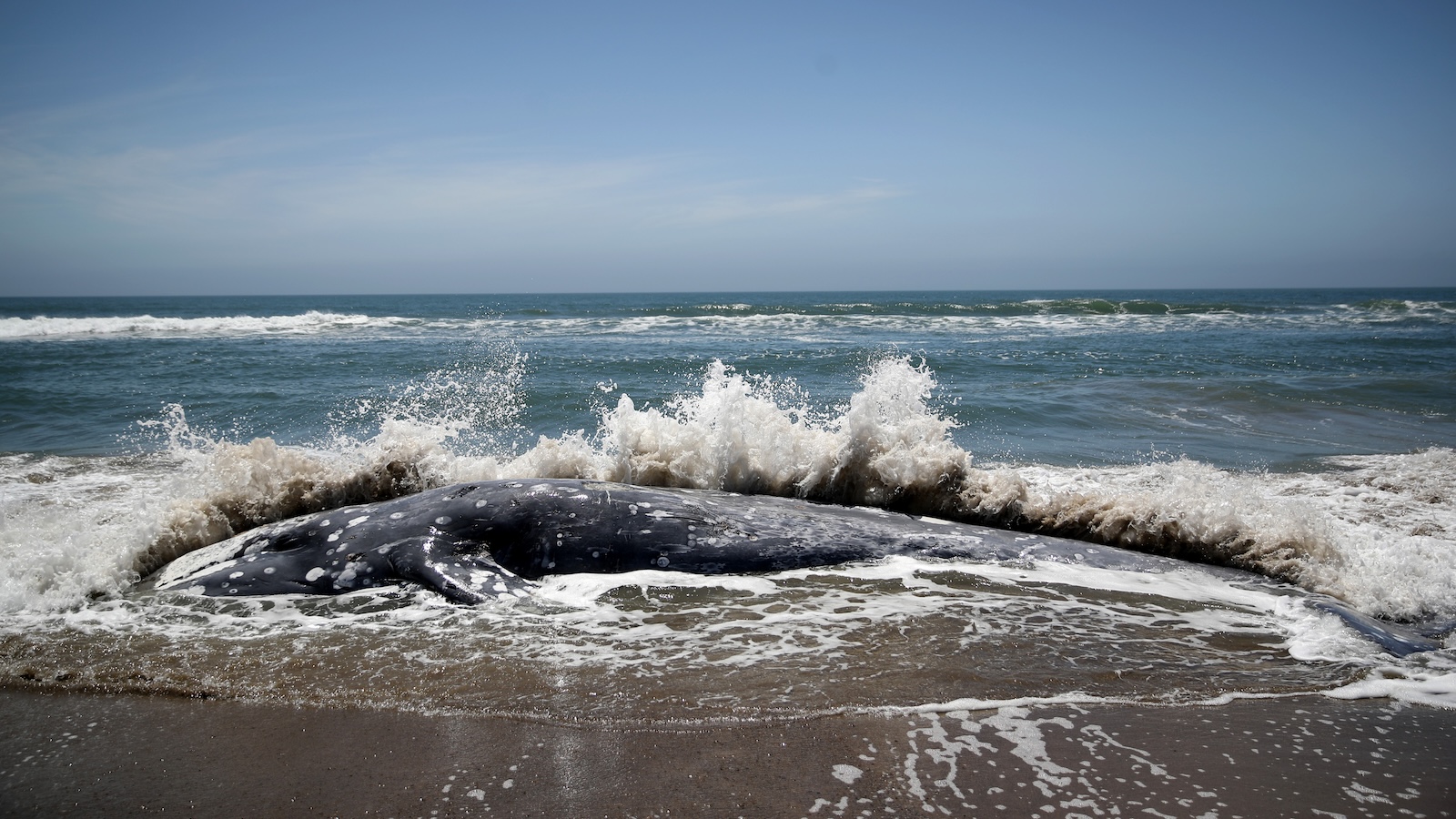
Over the past decade, gray whale numbers along the United States West Coast have been halved, dropping by thousands from their recent historic peaks. This drastic decline has been compounded by alarming mortality events, highlighted by the grim discovery of 187 gray whale carcasses washing ashore across the regional coastline this past summer alone. While scientists point overwhelmingly to climate-driven ecological shifts in the Arctic as the primary catalyst, the political landscape surrounding the crisis has grown increasingly contentious. The current administration has largely overlooked mounting appeals for emergency interventions, leaving conservationists, researchers, and government scientists navigating a tense landscape marked by federal silence and looming legal battles.
A Legacy of Recovery and Rapid Decline
To understand the severity of the current predicament, observers must look back at the fraught history shared between humans and gray whales. During the 19th and early 20th centuries, aggressive commercial whaling decimated global populations, driving the Atlantic gray whale to complete extinction—a tragic milestone recognized as the only known extinction of a whale species in recorded human history.
Relief finally arrived with the implementation of international whaling bans and robust domestic protections under the U.S. Endangered Species Act (ESA), enacted in the 1970s. These legislative safeguards fueled a remarkable rebound for the eastern gray whale population, which journeys along one of the longest mammalian migration routes on Earth, traveling from its summer feeding grounds in the frigid Arctic waters of Alaska down to the warm breeding lagoons of Baja California, Mexico.
The recovery was so profound that federal wildlife officials officially delisted the eastern gray whale from the Endangered Species Act in 1994, citing a healthy and stable population. For decades, the species stood as a shining example of what concerted environmental policy and regulatory enforcement could achieve. However, changing ocean conditions and escalating anthropogenic pressures have systematically undone those decades of progress, turning the tide sharply against the iconic cetaceans.
The Arctic Heat: Climate Change and Starvation
At the heart of the biological crisis lies an increasingly volatile Arctic environment. Scientific consensus points to rapid climate change as the driving force behind the whales’ dwindling food supply. The Arctic is warming nearly four times faster than the rest of the planet, triggering a cascading series of ecological disruptions that include the rapid retreat and thinning of sea ice.
Gray whales rely heavily on abundant summer feeding seasons in the Arctic, where they consume vast quantities of benthic amphipods—small, nutrient-rich crustaceans found on the ocean floor. As sea ice melts prematurely and water temperatures shift, the availability and nutritional quality of these vital prey sources have plummeted.
Deprived of adequate caloric intake during the summer months, hungry gray whales embark on their grueling southward migrations with dangerously low energy reserves. Marine biologists emphasize that this chronic malnutrition directly suppresses reproductive success and lowers overall resilience. Consequently, annual calf production has plummeted. While a healthy population typically yields roughly 1,000 calves per year, surveys from the previous year estimated a grim record low of just 85 births.
"The science on this is perfectly clear," noted Richard Steiner, a marine conservation biologist who formally petitioned the federal government to relist the species. "As goes Arctic sea ice, so goes the gray whale population. And Arctic sea ice will continue its decline throughout this century." Steiner warned that unchecked greenhouse gas emissions could precipitate apocalyptic consequences not only for gray whales, but for interconnected marine ecosystems worldwide.
Compounding Threats: Ship Strikes and Entanglements
Malnutrition does not act in a vacuum; rather, it amplifies the lethality of other hazards encountered along the whales’ migratory corridor. Weakened and starving whales frequently alter their traditional migratory paths in desperate search of food, bringing them into closer proximity to high-traffic commercial shipping lanes and complex networks of fishing gear.
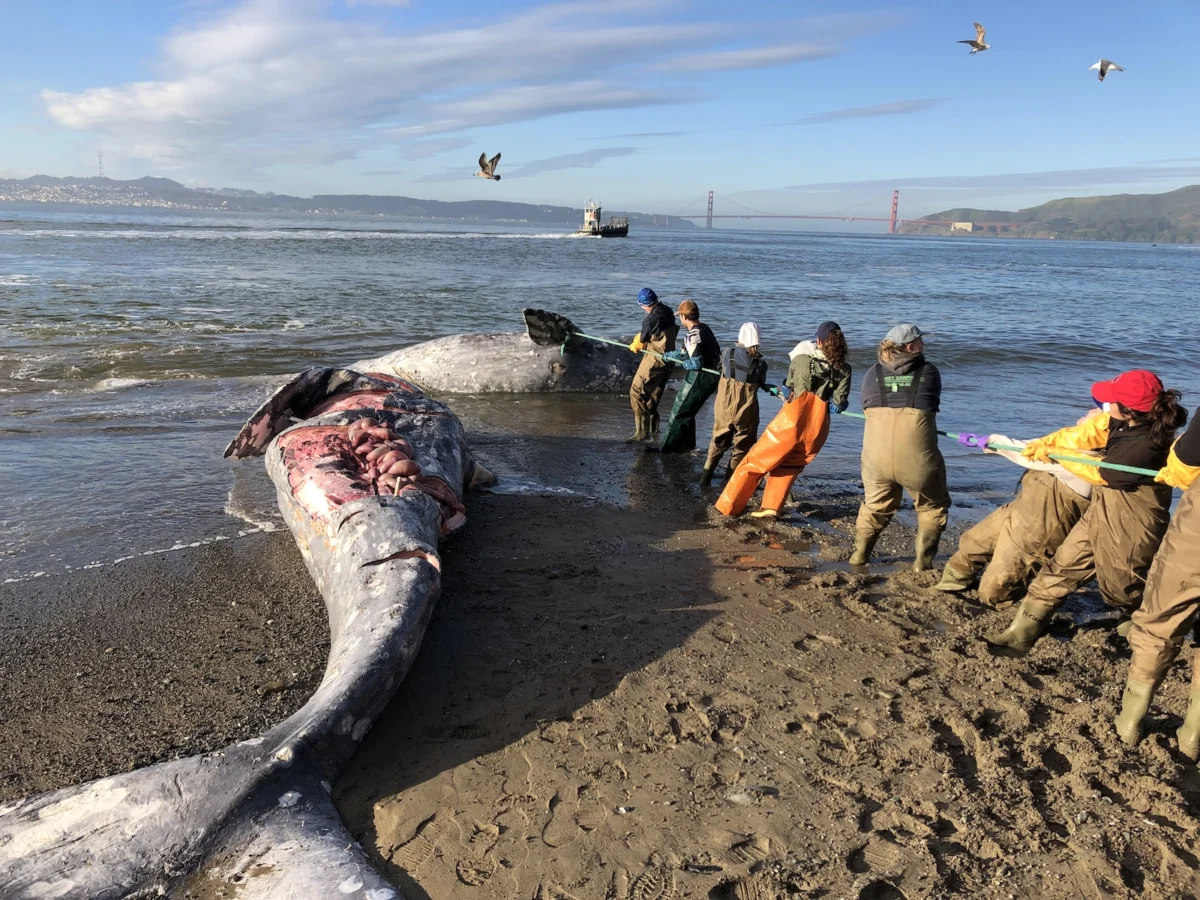
A prominent danger zone has emerged in the San Francisco Bay Area, where researchers have documented an alarming increase in whale strandings and vessel collisions in recent years. Scientists estimate that between 20 percent and 50 percent of all gray whales entering the San Francisco Bay ultimately succumb to vessel strikes. While 13 dead whales were officially logged in the area this summer, marine researchers caution that this figure represents an undercount, as many mortalities sink undetected beneath the waves before reaching the shore.
Furthermore, weakened animals are significantly more vulnerable to fatal entanglements in commercial fishing gear, such as crab pot lines and gillnets. The combination of starvation, vessel strikes, and gear entanglements has created a multi-pronged assault that the population is currently ill-equipped to survive.
Political Tensions and the Looming Legal Battle
Against this grim ecological backdrop, the atmosphere at the Newport conference was notably tense. Attendees described walking on eggshells, constrained by the political sensitivities surrounding federal oversight and funding.
The National Oceanic and Atmospheric Administration (NOAA)—whose own researchers participated in the symposium—missed the statutory legal deadline to formally respond to a petition submitted by conservation groups seeking to relist the gray whale under the Endangered Species Act. In response, three prominent environmental organizations filed a formal notice of intent to sue at the end of August, setting a two-month clock for the administration to act before litigation officially commences.
The hesitation among government scientists and grant-dependent researchers is rooted in recent policy shifts. Since taking office in 2025, the administration has pursued sweeping staff reductions and budget cuts at NOAA to align agency priorities with partisan agendas. Compounding these concerns, the administration has proposed eliminating the Marine Mammal Commission—an independent agency tasked with advising the federal government on marine mammal protection—and has systematically rolled back critical habitat definitions under the ESA, leaving a backlog of roughly 400 species awaiting federal listing decisions.
Mark Palmer, co-director of the marine mammal protection project at the Earth Island Institute, remarked on the palpable anxiety among conference participants. "Obviously they are very nervous about what the administration could do to them," Palmer said, pointing out that NOAA has also lagged several months behind schedule in releasing its official count of gray whale births.
Adding to the controversy, NOAA recently published estimates suggesting the whale population may have rebounded by roughly 5,000 individuals over the past year. Independent researchers, however, have strongly challenged these figures. Given the precipitously low birth rates documented recently, scientists argue that such a rapid population surge is biologically impossible. NOAA declined to comment on the disputed population models when contacted for inquiries.
The Case for Endangered Species Relisting
Proponents of the federal relisting petition argue that formal protection under the ESA is a vital, non-negotiable step toward preventing extinction. Miyoko Sakashita, an attorney at the Center for Biological Diversity who is spearheading the impending legal action, emphasized that a formal listing compels federal agencies to draft comprehensive recovery plans and unlocks critical funding for habitat restoration, population monitoring, and targeted research.
"Once a species is formally protected, it buys us some time to solve that bigger climate change problem," Sakashita explained. She added that if the administration fails to act voluntarily, the plaintiffs are fully prepared to take the matter to federal court. "The law says they have to use the best available science when deciding which species are endangered. When we look at this terrible population decline, it seems like there cannot be any other answer than to proceed forward with a threatened or endangered listing."
Grassroots Mitigation and the Path Forward
While policy battles play out in administrative offices and courtrooms, various research institutions and non-governmental organizations are racing to implement practical mitigation strategies on the water.
One of the most promising initiatives focuses on mitigating vessel strikes through real-time tracking and mandatory or voluntary speed reductions. Rachel Rhodes, a scientist at the Benioff Ocean Science Laboratory at the University of California, Santa Barbara, leads Whale Safe, an innovative project that maps whale locations within shipping lanes using advanced technologies such as acoustic sonar, thermal imaging cameras, and satellite telemetry tags.
"In an ideal world, ships would be able to avoid whales entirely," Rhodes noted. "But waterways are often too busy and confined for that to be possible. So the next best thing is to ask ships to slow down to 10 knots or less."
While slow-speed mandates are already legally enforced for large vessels along the U.S. East Coast, protections on the West Coast remain largely voluntary. Programs like Blue Whales Blue Skies have achieved notable success by offering financial incentives and public recognition to shipping lines that voluntarily reduce speeds in high-risk zones. Nevertheless, compliance remains uneven, with certain commercial vessels and cruise operators continuing to transit sensitive areas at high speeds.
As the scientific community finalizes its assessments and legal teams prepare their filings, experts agree that the window to secure the future of the eastern North Pacific gray whale is narrowing rapidly. The data compiled in Newport paint an unmistakable picture of an ecosystem under severe stress, where human-driven climate change and localized maritime hazards converge on a resilient yet vulnerable species.
"The scientists have done their job in reporting the dire situation for gray whales," Steiner concluded. "Now it’s time for the policymakers to put that science to work in protecting them as much as possible."