The political landscape has been abuzz with reactions from late-night television hosts targeting Senator JD Vance, who has reportedly faced a particularly demanding week while navigating public support for former President Donald Trump. Vance’s recent appearances, including a speech at a Turning Point USA conference, have become fodder for comedic commentary, particularly concerning his attempts to address controversial statements made by Trump regarding Pope Francis and his past association with Jeffrey Epstein.
Vance’s Week of Deflection and Defense
Senator JD Vance’s recent public engagements have placed him in a difficult position, requiring him to defend and contextualize statements made by Donald Trump that have drawn significant public scrutiny. One such instance occurred at a Turning Point USA conference, where Vance was tasked with addressing Trump’s critical remarks about Pope Francis. The Pope, in an interview with Swiss broadcaster RTS, expressed his dismay and sadness over Trump’s rhetoric, stating, "I never sought the support of a politician, and I will never have it. The Pope, in his role, speaks to everyone, but he does not give guidance on political choices." Vance’s response at the conference reportedly involved an attempt to downplay the significance of Trump’s comments and to reframe them within a specific political context, suggesting that the Pope should exercise caution when commenting on theological matters, drawing a parallel to the vice president’s responsibility when discussing public policy.
Adding to the challenging week, Vance also reportedly addressed Trump’s past relationship with Jeffrey Epstein. Epstein, a convicted sex offender, had numerous high-profile connections, and his association with Trump has been a recurring point of discussion. Vance’s efforts to characterize their relationship as less than intimate, suggesting they were merely "extremely horny acquaintances," have been met with skepticism and ridicule.
Late-Night Hosts Pounce on Vance’s Difficulties
The perceived struggles of Senator Vance have not gone unnoticed by prominent late-night television hosts, who have seized upon the events as prime material for their monologues. Jimmy Kimmel, host of "Jimmy Kimmel Live!", was particularly sharp in his critique. Citing polling data that reportedly indicates Vance is the "least popular vice president in more than two decades," Kimmel sarcastically remarked on Vance’s perceived lack of charisma, quipping, "Weirdly, Americans don’t seem to be responding to JD infectious charisma. Maybe it’s time for a new eyeliner."
Kimmel also highlighted the reportedly sparse attendance at the Turning Point USA event where Vance spoke, contrasting it with the viewership of a "Melania documentary." He stated, "JD Vance may be deeply unpopular, but you wouldn’t know it from the sitting room-only crowd in Athens, Georgia yesterday. There were more people in the theater to see the Melania documentary than JD Vance."
The host further elaborated on Vance’s challenging week, listing his perceived failures: "JD Vance has had a rough week. He failed to make a deal to end the war in Iran. He had to defend Trump bashing the pope and the AI Jesus stuff. And now he’s made it his job to try to pretend his boss wasn’t a close friend of the world’s most notorious pedophile."
Colbert’s Take on Vance’s Role
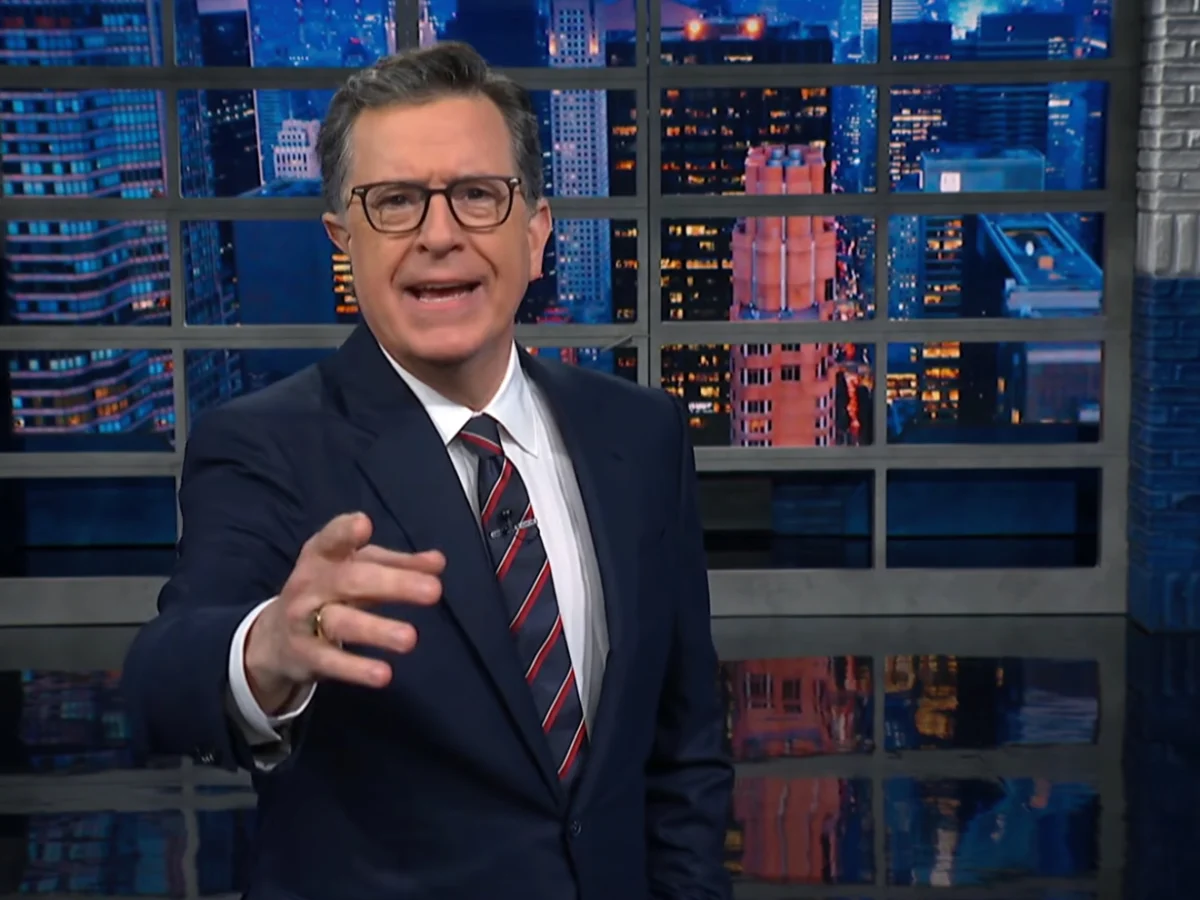
Stephen Colbert, host of "The Late Show," also weighed in on Vance’s predicament, characterizing his role as that of someone constantly subjected to difficult situations. Colbert suggested that it has been "JD Vance’s job to get out there to receive a swift kick in the nuts."
Colbert then focused on Vance’s comments regarding the Pope. After playing a clip of Vance’s remarks, Colbert, a self-proclaimed Catholic, responded with a touch of incredulity. "Wow," Colbert stated. "Hey, hey, JD. I know you’re Catholic. But you joined in 2019. I’ve been genuflecting since the mid-1960s and let me tell you brother, I think you’re out over your Catholic skies here." He then delivered a pointed remark, invoking a biblical allusion: "You know who left the last supper early? Judas."
Contextualizing the Turning Point USA Conference
The Turning Point USA conference, where Vance delivered his remarks, is an annual event organized by a conservative youth organization founded by Charlie Kirk. The conferences typically feature prominent conservative speakers and aim to engage young conservatives in political discourse. These events often serve as platforms for Republican figures to rally support and articulate their policy positions and endorsements. Vance, a Republican Senator from Ohio, has been a vocal supporter of Donald Trump and is often seen as a potential contender for future leadership roles within the party. His appearance at such a conference underscores his commitment to the conservative movement and his alignment with Trump’s political agenda.
Broader Implications and Political Analysis
The scrutiny faced by JD Vance from late-night hosts and the broader media highlights the intricate and often challenging nature of political surrogacy. When a prominent figure endorses a polarizing candidate, their surrogates are frequently tasked with defending controversial statements and navigating difficult public relations challenges. Vance’s efforts to do so have been met with both criticism and mockery, underscoring the public’s engagement with these political narratives.
The repeated controversies surrounding Trump’s statements, whether on religious figures or past associations, create a recurring cycle of defense and deflection for his allies. This dynamic can impact the public perception of both the candidate and those who represent them. For Vance, consistently having to address these issues could potentially affect his own standing with voters, particularly if he aims for higher office. The "rough week" described by Kimmel and Colbert suggests a period where Vance has been particularly exposed to these defensive maneuvers.
Furthermore, the "AI Jesus" reference by Kimmel points to another recent instance where Trump shared an image of what appeared to be an AI-generated depiction of Jesus Christ, which also sparked debate and commentary. The confluence of these events – criticism of the Pope, the Epstein association, and the AI-generated religious imagery – presents a complex set of challenges for any political figure tasked with defending such a multifaceted public persona.
The engagement of late-night hosts in these political discussions serves as a form of political commentary that reaches a broad audience. While their approach is often satirical, it can amplify public sentiment and contribute to the ongoing narrative surrounding political figures. The current focus on Vance’s week underscores the ongoing media attention on the dynamics of the Trump-aligned Republican party and the individuals who navigate its often turbulent waters. The long-term implications for Vance’s political trajectory will likely depend on how effectively he manages these recurring challenges and his ability to connect with a wider electorate beyond his core base.