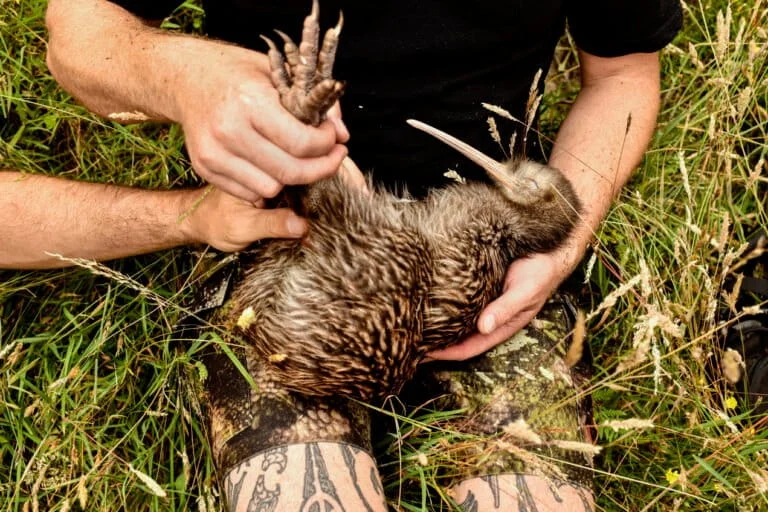
For the first time in 150 years, the kiwi—Aotearoa New Zealand’s flightless, nocturnal national icon—is once again roaming the hills surrounding the nation’s capital. The successful reintroduction of more than 250 birds to the Wellington region marks a definitive shift in conservation strategy, moving away from traditional "ambulance-at-the-bottom-of-the-cliff" tactics toward a landscape-scale restoration model built on community engagement and deep-seated cultural partnerships. This achievement, spearheaded by the Capital Kiwi Project, represents a pivotal moment in the nation’s efforts to reverse biodiversity loss and reconnect urban citizens with their indigenous natural heritage.
A Century of Absence and the Quest for Restoration
The kiwi, a flightless bird that evolved in the absence of land-based mammalian predators, has historically held a central place in the identity of both Māori, the indigenous people of New Zealand, and Pākehā, or European settlers. For Māori, the bird is a taonga (treasure) and is known as the "hidden bird of Tāne Mahuta," the god of the forest. Historically, kiwi were abundant across the country, providing food and fiber for Māori for over a millennium.
However, the arrival of human settlers brought with it a cascade of ecological disasters. Polynesian settlers introduced the kiore (Pacific rat) and the kurī (dog), while European colonizers later introduced a suite of highly efficient mammalian predators, including stoats, ferrets, and cats. These animals, which hunt by scent, proved devastating to a species whose primary survival strategy was camouflage and stillness. By the late 19th century, the kiwi had been largely extirpated from the hills surrounding Wellington, effectively exiling the bird from the capital’s landscape for a century and a half.
The Strategy: The Capital Kiwi Project’s Three-Legged Model
The Capital Kiwi Project, founded by Paul Ward, operates on a philosophy that conservation is as much a social endeavor as it is a biological one. The project team identified that the primary barrier to kiwi survival in the wild was not a lack of habitat, but the high mortality rate of chicks. Without intervention, 95% to 100% of kiwi chicks in areas without predator control are killed by stoats before reaching "fighting weight"—a threshold of one kilogram, at which point the birds are physically capable of defending themselves.
To combat this, the project deployed an expansive network of over 5,300 traps across 24,000 hectares (approximately 59,300 acres) of land, including farms, forestry blocks, and national infrastructure corridors. This massive logistical undertaking was designed to suppress the stoat population sufficiently to allow the kiwi to reach maturity in the wild.
However, the project’s success is anchored in what Ward describes as a "tripod" of relationships: the iwi (tribal nations), the community, and the landowners. Each of these pillars is essential. If one is removed, the project loses its foundation. This relational approach distinguishes the initiative from government-led programs that have historically focused on fenced sanctuaries or island reserves, which, while successful, often isolate species from their natural ranges and the public.
The Role of Te Ao Māori and the Tono Process
Central to the project’s legitimacy is the integration of Te Ao Māori (the Māori world). The translocation of these birds is not merely a scientific procedure but a deeply cultural one, governed by the principle of reciprocity. The process begins with a tono, a traditional formal request for the gifting of the birds by iwi who manage healthy, growing populations in other parts of the country.
Rawiri Walsh, the project’s Kaimanaaki Kiwi (kiwi guardian) and iwi liaison, explains that this process ensures that the birds are not simply taken, but rather gifted and accepted with mutual agreement and responsibility. Once the birds arrive in Wellington, they are welcomed through a pōwhiri, a traditional ceremony that acknowledges the birds as living treasures and shifts the guardianship (kaitiakitanga) from the gifting tribe to the local community. This process is instrumental in fostering a sense of shared stewardship among residents, including farmers, mountain bikers, and school children, who now actively monitor and protect the birds on their land.
Data-Driven Success and Future Implications
The results of the Capital Kiwi Project have surpassed initial expectations. The project team set a conservative survivorship target of 30% for chicks; to date, that figure has exceeded 90%. This remarkable survival rate is attributed to a combination of effective predator control and the high-quality, food-rich environment of the modified farmland and scrubland surrounding Wellington.
Furthermore, the kiwi have displayed unexpected vitality. Monitoring has shown that some birds are reaching fighting weight in as little as four months—roughly half the time previously observed—and health checks have frequently revealed birds in peak physical condition. The project has also documented instances of birds laying eggs shortly after translocation, a sign that the individuals are thriving despite the environmental shift.
Currently, the estimated population of kiwi in the Wellington hills stands at over 300 individuals, including those translocated and those hatched in the wild. This represents a proof of concept that the project intends to leverage for future ecological restorations.
Addressing the Challenge of Complacency
While the initial phase of reintroducing 250 birds has been a success, project leaders warn against the danger of complacency. Sustaining this population requires long-term commitment to trap maintenance and ongoing community education regarding threats such as pet dogs and vehicle traffic.
The success of the Capital Kiwi Project has implications that extend far beyond the Wellington region. It challenges the traditional "ambulance" model of conservation—which keeps species behind fences or on remote islands—and proposes a future where native biodiversity exists alongside human activity. The project serves as a model for other regions in Aotearoa and globally, demonstrating that when communities are empowered to become the guardians of their own landscapes, the results can be transformative.
A Broader Cultural Impact
The return of the kiwi has had a profound emotional and cultural impact on the people of Wellington. For many, the ability to hear the distinctive call of a wild kiwi in the hills—a sound that has been absent for generations—has repaired a sense of ecological and cultural loss. The ceremonies surrounding the release of these birds have brought together diverse groups of people, from government officials to local farmers, creating a collective identity centered on the restoration of the whenua (land).
As the project looks to the future, it is exploring the reintroduction of other taonga species, building on the network of relationships established through the kiwi initiative. The success in Wellington proves that with the right balance of technical expertise, respect for indigenous protocols, and broad-based community engagement, it is possible to reverse the tide of extinction and foster a closer, more responsible relationship with the natural world.
The Capital Kiwi Project stands as a testament to the idea that nature and humanity are not separate, but inextricably linked. By restoring the kiwi, the project has not only brought back an iconic species; it has restored a fundamental connection between the people of Aotearoa and the land they call home. As these birds continue to establish themselves in the hills, they serve as a powerful symbol of hope and a tangible indicator that even after 150 years of absence, the path to ecological restoration is not closed.