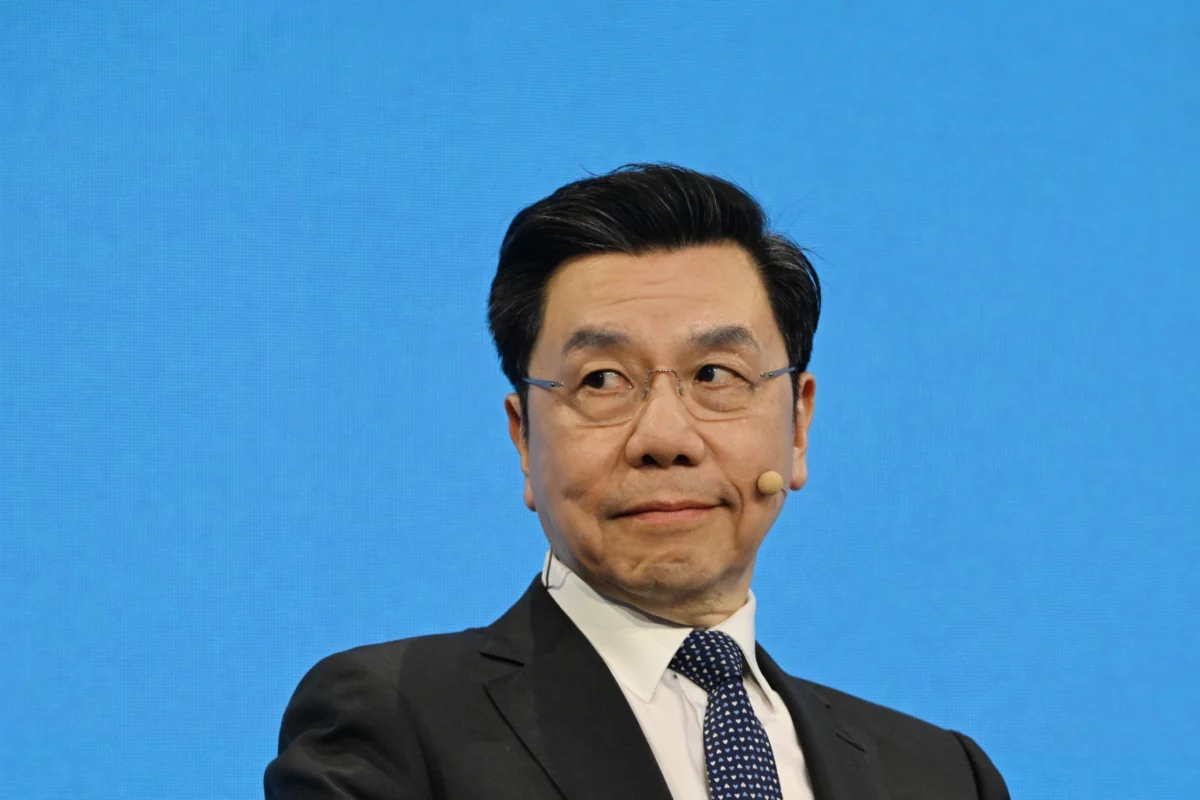
For years, the United States government has employed a rigorous strategy of semiconductor export restrictions aimed at curbing China’s access to the world’s most advanced AI-capable hardware. The objective was clear: to maintain a decisive technological lead by choking off the supply of high-end GPUs necessary for training the most sophisticated large language models. However, according to Kai-Fu Lee, a veteran AI entrepreneur and the former president of Google China, this policy has inadvertently catalyzed a shift in the Chinese AI landscape. Rather than falling permanently behind, Chinese developers have pivoted toward a model of "frugal innovation," creating high-performing AI systems with significantly fewer resources. This shift has placed Chinese models within a mere six to 12 months of parity with industry leaders like OpenAI and Anthropic.
A Shifting Competitive Landscape
The narrative that China is permanently shackled by hardware limitations is increasingly viewed by experts as a miscalculation of the country’s engineering culture. While American tech giants, flush with venture capital and hyperscale data center capacity, have adopted a "brute force" approach to AI development—spending billions on compute to achieve incremental gains—Chinese firms have been forced into a corner. Facing restricted access to top-tier hardware, Chinese developers have optimized their algorithms to achieve high performance on less powerful infrastructure.
This "parsimonious" engineering, as described by Lee, is not a product of state mandate but of market survival. The emergence of the DeepSeek model in early 2025 served as a watershed moment for this trend. By producing a highly competitive AI model using a fraction of the computational resources consumed by Western counterparts, DeepSeek demonstrated that the U.S. strategy of hardware containment might be yielding a more efficient, agile, and cost-effective competitor than initially anticipated.
The Profitability Imperative: Debunking the AGI Obsession
A prevailing misconception in Washington and Silicon Valley is that the primary motivation driving Chinese AI development is the race to achieve Artificial General Intelligence (AGI) as a tool of national prestige or dominance. Lee argues that this lens is fundamentally flawed. In the Chinese market, where capital is increasingly disciplined and competition is cutthroat, the goal is not to win an abstract theoretical race, but to build viable, profit-generating businesses.
Drawing parallels to the meteoric rise of Chinese tech titans like Pinduoduo, Meituan, and ByteDance, Lee notes that the same skepticism once directed at these companies is now being applied to the current wave of AI startups. In the early stages of those companies, many international observers doubted their business models. Today, they are among the most valuable and efficient organizations in the world. Similarly, Chinese AI developers are operating under the assumption that sustainability depends on commercial viability. While U.S. firms may prioritize rapid scaling and model capacity at any cost, Chinese firms are focusing on the "unit economics" of AI, aiming to provide services at a fraction of the cost of their American competitors.
Chronology of Escalation and Adaptation
The recent developments in the AI sector follow a multi-year trajectory of technological decoupling:
- 2022–2023: The U.S. Department of Commerce implements sweeping export controls, prohibiting the sale of advanced Nvidia chips (such as the H100 and its successors) to Chinese entities.
- Early 2024: Chinese firms begin aggressively pivoting toward local hardware alternatives and optimized, smaller-scale models, attempting to maximize output from older-generation silicon.
- April 2025: President Xi Jinping formally calls for the development of "independent, controllable, and collaborative" AI infrastructure, signaling a move toward total domestic self-sufficiency.
- Mid-2025: DeepSeek releases its flagship model, proving that sophisticated AI can be achieved without access to the absolute latest silicon. This event causes a significant shift in sentiment, with local venture capitalists and developers realizing that the "gap" to American leadership is bridgeable.
- Late 2026: As American AI firms face increased public and regulatory scrutiny over their massive data center energy consumption and infrastructure costs, Chinese firms continue to refine cost-efficient, open-weight models.
- November 2026: OpenAI secures an $11 billion funding round at a $1.25 trillion valuation, while Anthropic prepares for a massive IPO, signaling a period of extreme capital intensity in the U.S.
The Role of Government and Venture Capital
While the market dictates the direction of innovation, the role of the Chinese state remains a critical factor. Data from Pitchbook indicates that investors with ties to the Chinese government participated in over 140 AI-related deals throughout 2025. This state-backed venture capital model provides a layer of support that differs from the pure-market approach of the U.S. Silicon Valley ecosystem.
However, Lee cautions against viewing this solely as a state-directed project. He maintains that Chinese startups are, at their core, venture-funded entities that must answer to their investors. The strategic alignment between state goals—such as the call for "controllable" AI—and the commercial survival of these startups creates a symbiotic environment. The government provides the stability and incentive structures, while the startups provide the technical efficiency and commercial output.
Comparative Analysis: U.S. vs. China Strategy
The dichotomy between the two nations is becoming increasingly defined by their approach to resources:
- Capital Allocation: U.S. firms are currently engaged in a massive arms race, pouring capital into energy-intensive data centers. While this allows for rapid progress and high-impact innovation, it creates a massive "burn rate" that may be unsustainable if the commercial applications do not catch up to the infrastructure costs.
- Engineering Philosophy: Chinese firms, constrained by hardware, are leaning into architectural innovation. By optimizing software, they are effectively lowering the barrier to entry for high-quality AI, which allows them to undercut U.S. pricing in emerging markets and for enterprise clients who are price-sensitive.
- Market Focus: American firms are currently the undisputed leaders in "frontier" research and hold the highest concentration of top-tier AI patents. However, the Stanford 2026 AI Index Report highlights that while the U.S. leads in foundational research, China is rapidly closing the gap in applied AI, where the primary goal is business optimization and cost reduction.
Broader Implications and Future Outlook
The rise of a competent, cost-efficient Chinese AI ecosystem has profound implications for global trade and technological standards. If Chinese models can provide 90% of the functionality of Western models at 10% of the cost, the global adoption of AI may bifurcate. Developing nations and cost-conscious enterprises may gravitate toward Chinese open-weight models, effectively creating a parallel AI ecosystem.
Furthermore, the pressure on companies like OpenAI and Anthropic is intensifying. With Anthropic looking toward a record-breaking IPO with a valuation potentially reaching $1.4 trillion, the market expectation for growth and profitability is immense. If these companies cannot translate their technological lead into sustainable margins, the "frugal" model pioneered by the likes of DeepSeek may eventually become the industry standard globally, regardless of U.S. export controls.
The irony of the current situation is not lost on industry observers. By restricting China’s access to the "easy path" of massive computing power, the United States may have inadvertently forced its primary competitor to master the "hard path" of algorithmic efficiency. As the industry moves toward 2027, the success of the Chinese AI sector will likely be measured not by how many chips they have, but by how well they can operate without them. For American policymakers, the challenge is now shifting from how to keep China out of the market to how to compete with an adversary that has learned to do more with less.