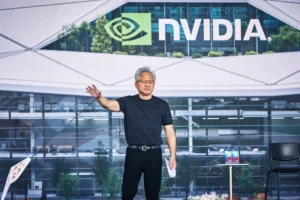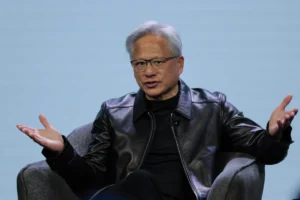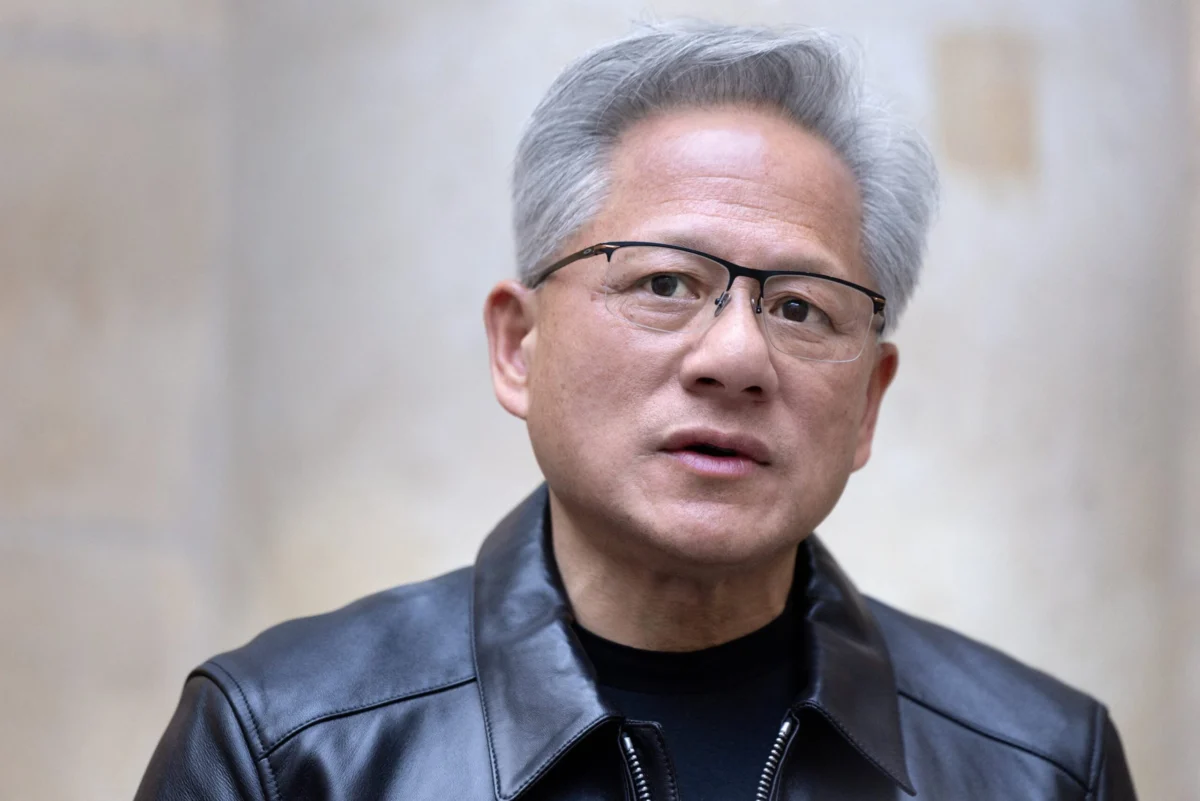
The potential ouster of the 61-year-old visionary marks a historic inflection point for the $4 trillion semiconductor giant. Nvidia’s board of directors is reportedly convening emergency sessions to finalize the departure of the man who has served as the face, architect, and primary strategist of the company since its founding in 1993. This development, first reported by the Wall Street Journal, follows a chaotic week of revelations that have sent Nvidia’s stock into a volatile tailspin, wiping billions off the company’s market capitalization in after-hours trading.
A Timeline of Escalating Disclosures
The crisis began in earnest on Sunday, November 9, 2026, when Jensen Huang issued a public statement acknowledging personal infidelity. The admission came against a backdrop of intensifying scrutiny regarding his private life and potential security vulnerabilities. Shortly after the disclosure, Nvidia’s board of directors announced a formal internal investigation to determine if the executive’s actions had compromised national security or exposed the company’s proprietary intellectual property.
While the board initially stated they had "no reason to believe that either national security or Nvidia secrets were compromised," the situation escalated rapidly on Wednesday. Reports surfaced that the woman involved in the affair had been flagged by U.S. intelligence agencies as a foreign operative. The gravity of these allegations—connecting the CEO of the world’s most critical AI hardware provider to a suspected espionage threat—forced the board’s hand, accelerating discussions regarding a permanent leadership change.
Adding to the complexity of the scandal, the New York Times reported on Wednesday that Huang had also engaged in an extramarital relationship with Kimberly Powell, the company’s vice president of healthcare. Powell, a veteran of the company for nearly two decades, has played a pivotal role in shaping Nvidia’s foray into AI-driven medical research and digital biology. The proximity of these revelations has paralyzed the executive suite and raised severe governance concerns regarding the company’s internal culture and the boundaries between personal and professional conduct.
The Architect of the AI Era
To understand the magnitude of this potential departure, one must look at the unprecedented scale of Huang’s influence over the technology sector. Since 1993, Huang has transformed Nvidia from a niche graphics card manufacturer into the central nervous system of the global artificial intelligence economy.
His leadership style is characterized by an extreme, centralized control structure. Unlike most Fortune 500 companies that employ a traditional hierarchical management chain, Huang has maintained a "flat" organization with approximately 60 direct reports. This idiosyncratic model has allowed him to personally oversee the development of every major chip architecture, from the early days of CUDA to the modern Blackwell and Rubin platforms.
The financial performance of the company under his tenure has been nothing short of extraordinary. For the fiscal year 2026, which concluded in January, Nvidia reported a staggering $215.9 billion in revenue, a 65% increase year-over-year. The momentum continued into the first half of fiscal 2027, with the company recording $96 billion in revenue, reflecting an 85% growth rate. With guidance for the third quarter of fiscal 2027 set at $108 billion, the firm appeared to be on an unstoppable trajectory toward a $300 billion annual revenue run rate.
Governance and Succession Challenges
The most pressing challenge facing the board is the lack of a formal succession plan. Nvidia operates without a traditional board chair, a position Huang effectively performed through his overwhelming dominance of the corporate strategy. Because Huang was the primary decision-maker for everything from long-term capital expenditure to specific client relationships, his removal leaves a power vacuum that few, if any, executives are currently equipped to fill.
"The factors behind Huang’s removal hasten a transition the company is not prepared for," said Gil Luria, a senior analyst at D.A. Davidson & Co. "The challenge for the board is not just finding a new CEO; it is finding someone who can inherit the total authority Huang wielded. The industry relies on his personal promises regarding roadmaps and supply chains. Without him, the ecosystem faces a crisis of confidence."
Investors have reacted with profound alarm. Following the news of the board meetings, Nvidia shares plummeted more than 9% in extended trading. The market’s reaction reflects fears that the company’s technological "moat"—built on Huang’s vision—might begin to erode if the firm loses its primary architect.
National Security and Global Implications
The involvement of U.S. intelligence in the investigation underscores the geopolitical stakes. As the primary provider of the high-end H100 and B200 GPUs required to train large language models (LLMs), Nvidia sits at the center of the strategic competition between the United States and China. Any suggestion that a foreign intelligence agency had proximity to the man who holds the keys to Western AI dominance is a national security concern of the highest order.
While the company has repeatedly stated that it is cooperating with federal authorities, the potential for government intervention remains high. If the investigation finds that the security of Nvidia’s manufacturing processes, software stacks, or supply chain plans was even tangentially exposed to foreign intelligence, the company could face severe export control penalties or a federal mandate to restructure its leadership and oversight committees.
The Path Forward: Uncertainty for the Tech Sector
The immediate future for Nvidia is defined by unprecedented uncertainty. The board of directors is now tasked with navigating a dual crisis: a massive governance vacuum and a heightened state of regulatory and intelligence scrutiny.
Potential successors within the company remain largely untested in the public eye. While executives such as Chief Financial Officer Colette Kress have been instrumental in managing the company’s explosive financial growth, the role of a CEO in the Nvidia ecosystem requires a deep, almost encyclopedic understanding of chip architecture and software ecosystems—traits that were quintessentially Huang’s.
For the broader technology industry, the impact will be felt in the coming months as customers and partners assess whether Nvidia can maintain its aggressive R&D cadence. Projects currently in development, including the next generation of data center infrastructure, were all predicated on Huang’s specific vision.
"Nvidia’s success was never just about the silicon," says a former executive familiar with the company’s internal dynamics. "It was about Jensen’s ability to force the entire industry—from cloud providers to software developers—to build toward his vision. That is a personality-driven asset, and it is not something that is easily transferred to a successor."
As the board prepares for its pivotal meeting, the tech world watches with bated breath. The outcome will not only determine the fate of the world’s most valuable chipmaker but will likely dictate the speed and direction of the global artificial intelligence race for the remainder of the decade. For now, the era of the "Jensen Huang" style of leadership—characterized by immense, centralized, and singular authority—appears to be coming to an abrupt and tumultuous end.