The healthcare landscape of the Middle East has faced unprecedented systemic pressures over recent decades, driven by protracted regional conflicts, massive refugee influxes, and the ongoing strain of cross-border emergency medical responses. Against this complex geopolitical and humanitarian backdrop, Dr. Tedros Adhanom Ghebreyesus, Director-General of the World Health Organization (WHO), embarked on a high-profile, two-day State visit to the Hashemite Kingdom of Jordan. This diplomatic and technical mission underscored the enduring strategic partnership between the international health body and the Jordanian government, placing a specific spotlight on universal health coverage (UHC), comprehensive mental health frameworks, and resilient humanitarian health action in emergency settings.
The visit carried deep significance, underscored by a royal audience with His Majesty King Abdullah II, bilateral strategy sessions with senior health officials, high-level donor roundtables, and field visits alongside high-profile philanthropic figures. The engagements collectively served to validate Jordan’s exemplary role as a regional anchor of stability, medical innovation, and humanitarian compassion, particularly concerning its continued support for millions of displaced populations and injured civilians evacuated from active conflict zones such as Gaza.
High-Level Dialogues and Strategic Frameworks with King Abdullah II
The cornerstone of the first day’s itinerary was an official meeting between Dr. Tedros and His Majesty King Abdullah II in Amman. The discussions centered on reinforcing national health architectures, expanding equitable access to specialized medical care, and sustaining international and regional funding streams for emergency health responses. Particular emphasis was placed on Jordan’s steadfast commitment to hosting and treating refugees—predominantly individuals fleeing the conflicts in Syria and Gaza—who collectively number over three million within the kingdom.
Dr. Tedros praised the Hashemite Kingdom’s leadership, emphasizing that Jordan consistently demonstrates what it means to prioritize human dignity and health in the face of profound regional adversity. A major point of discussion was the King’s Medical Corridor initiative, a vital logistical and humanitarian mechanism designed to bypass regional blockades and transport critically ill and injured children from Gaza to specialized medical facilities within Jordan.
Through this initiative, young patients suffering from severe trauma, advanced oncological conditions, and life-threatening injuries receive comprehensive secondary and tertiary care that would otherwise be entirely inaccessible due to the collapse of local health infrastructure in the Gaza Strip. The WHO Director-General noted that such initiatives require not only logistical brilliance but also immense political will, setting a high standard for international humanitarian solidarity.
Ground-Level Realities: Pediatric Care and Emergency Medical Evacuations
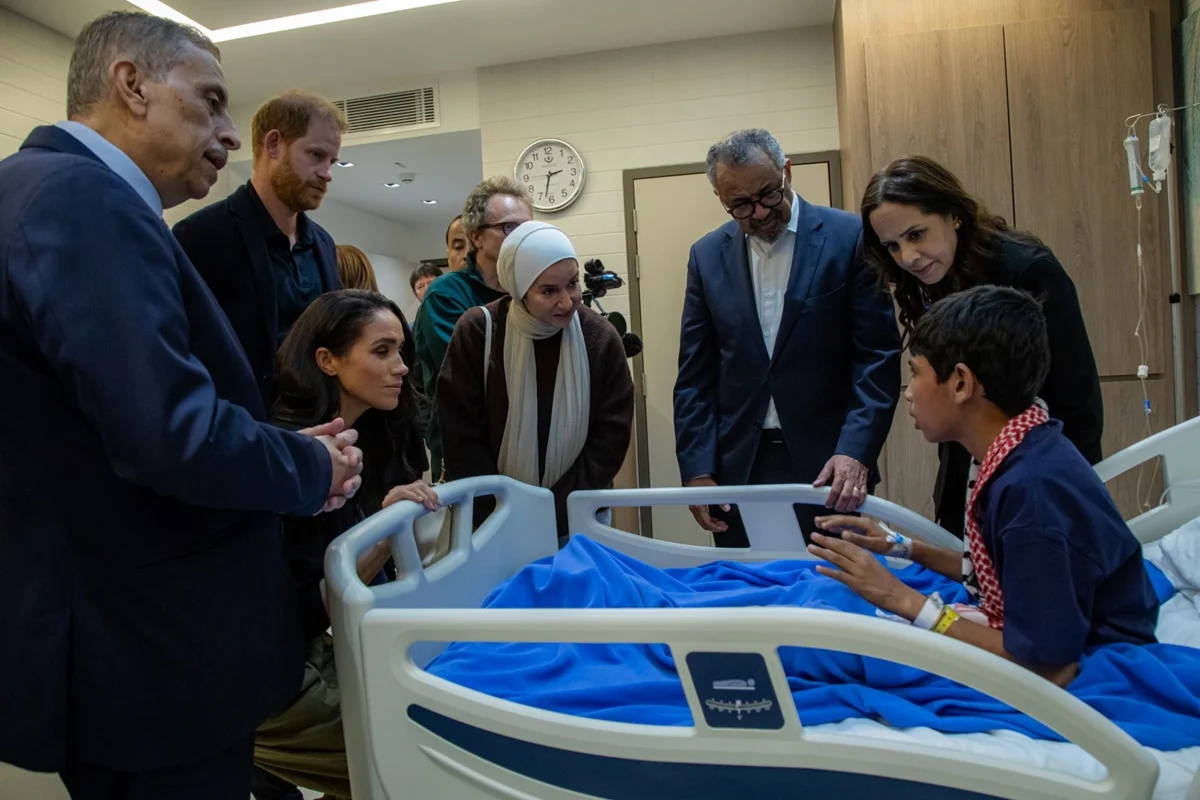
Moving beyond high-level diplomatic chambers, Dr. Tedros transitioned from the royal palace to the frontline of medical delivery, visiting a specialized, WHO-supported Jordanian hospital dedicated to treating pediatric patients evacuated from Gaza. During the tour, the WHO chief engaged directly with young patients, their families, and the multidisciplinary teams of doctors, nurses, and allied health professionals operating under extreme emotional and professional pressures.
The facility provides rigorous, life-saving interventions for children presenting with complex trauma injuries, pediatric cancers, and chronic illnesses exacerbated by displacement and the breakdown of sanitation and nutritional infrastructure in their home territories. This field engagement highlighted the operational realities of the medical evacuation corridor. Healthcare workers briefed the delegation on the acute challenges of treating trauma victims, noting that physical recovery is frequently compounded by profound psychological distress, loss of immediate family members, and the trauma of sustained bombardment.
Dr. Tedros reiterated that these medical evacuation channels represent literal lifelines and must be protected, expanded, and fully funded by the international community. He warned that without sustained, predictable international financial support and guaranteed safe passage corridors, regional hospitals risk becoming overwhelmed, threatening the continuity of care for both the host population and incoming refugees alike.
Mobilizing Resources: High-Level Partner and Donor Roundtables
Recognizing that humanitarian goodwill must be matched by robust, long-term financial commitments, Dr. Tedros convened an exclusive high-level consultation later in the day. The gathering brought together key international health partners, donor governments, United Nations agencies, and prominent philanthropic organizations to evaluate financing priorities for Jordan’s health sector and broader regional emergency operations.
The agenda focused heavily on two critical financing gaps: sustaining the operational capacity of health systems in refugee-hosting nations, and scaling up integrated mental health services for populations traumatized by conflict. Participants analyzed current funding deficits across regional appeals and strategized on innovative financing mechanisms to ensure that the burden of protracted displacement does not destabilize the national health budgets of host countries like Jordan.
Representatives from donor nations and UN bodies praised Jordan’s open-door policy regarding refugees, acknowledging that the kingdom absorbs immense socio-economic and infrastructural costs on behalf of the global community. The roundtable concluded with renewed pledges from several philanthropic partners and donor governments to support WHO-led regional health initiatives, ensuring that essential medicines, medical equipment, and specialized personnel remain available where the need is most acute.
Advancing Primary Healthcare and Mental Health Integration
In addition to emergency responses, the Director-General engaged in extensive bilateral talks with Jordan’s Minister of Health, focusing on structural reforms designed to institutionalize universal health coverage. Jordan has increasingly emerged as a global frontrunner in adopting a primary healthcare-oriented approach to national health system strengthening.
A key achievement highlighted during these talks is Jordan’s pioneering integration of mental health services into routine primary care facilities. Historically, mental health support in the Middle East has been heavily stigmatized and siloed within specialized, often inaccessible psychiatric institutions. Through a collaborative roadmap supported by the WHO Director-General’s Special Initiative for Mental Health, Jordan has decentralized psychological services, enabling patients to access mental healthcare seamlessly during routine visits to local community health centers.
This integration is viewed by public health experts as essential for addressing the invisible wounds of war and displacement. By training general practitioners and community nurses to recognize and treat common psychological disorders—such as depression, anxiety, and post-traumatic stress disorder (PTSD)—the Jordanian health system is actively mitigating the long-term societal costs of untreated trauma among both its national citizens and refugee communities.
The Role of Philanthropic Allies: Prince Harry and Meghan, Duchess of Sussex
A notable dimension of the WHO delegation’s engagements in Amman was the participation of Prince Harry, Duke of Sussex, and Meghan, Duchess of Sussex, in their capacities as founders of Archewell Philanthropies. The Duke and Duchess have maintained a multi-year partnership with the WHO, lending their global platform and philanthropic resources to critical public health campaigns, ranging from vaccine equity initiatives during the COVID-19 pandemic to targeted mental health advocacy and emergency medical support.
Throughout the day’s engagements, Prince Harry participated actively as an outspoken ally of the WHO’s mental health mandate. In discussions with health workers and community leaders, he emphasized the vital necessity of prioritizing psychological resilience in emergency settings, drawing specific attention to the vulnerability of men, adolescents, and children who frequently internalize the trauma of conflict without adequate support structures.
Reflecting on the joint mission, Dr. Tedros expressed deep gratitude to the Duke and Duchess for their unwavering dedication. He noted that their advocacy helps elevate marginalized public health crises into the global consciousness, bringing much-needed visibility, resources, and psychological hope to vulnerable populations.
Echoing these sentiments, Prince Harry shared his reflections on the ground reality observed in Jordan:
"It is an honour to join the Director-General of the World Health Organization in Jordan, a country that is leading by example in compassion, resilience and innovation. Through our work with Archewell Philanthropies, my wife and I have seen first-hand the impact of WHO’s efforts to support mental health and deliver life-saving care in emergencies. We remain deeply committed to advancing awareness, reducing stigma and expanding access to mental health support for all those affected by conflict and crisis. Mental health is fundamental to recovery, dignity and long-term peace, and we are proud to stand with WHO and partners around the world to make it a global priority."
Chronology and Forward Look: Day Two Itinerary
The second and final day of Dr. Tedros’s State visit shifts focus toward specialized institutional rehabilitation, community-level resilience, and advanced oncology care within the kingdom.
The itinerary features a scheduled visit to Jordan’s National Center for Rehabilitation of Addicts, an advanced facility supported by the WHO that delivers integrated medical, psychological, and social rehabilitation services. This visit underscores the holistic definition of health embraced by Jordanian authorities, recognizing substance use disorders as medical conditions requiring evidence-based care rather than punitive measures.
Furthermore, Dr. Tedros is slated to meet with prominent community leaders and grassroots women’s organizations, including the Jordanian Hashemite Fund for Human Development (JOHUD). These sessions are designed to examine community-led health promotion, maternal and child welfare, and grassroots empowerment strategies that form the bedrock of public health resilience in rural and underserved urban enclaves across Jordan.
The mission will culminate with a high-profile visit to the globally renowned King Hussein Cancer Center (KHCC). Discussions at KHCC will center on cutting-edge advancements in regional cancer therapeutics, cross-border clinical training partnerships, and the integration of oncology care for patients evacuated from conflict zones where cancer treatment infrastructure has been entirely decimated.
Broader Implications and Strategic Analysis
The State visit of the WHO Director-General to Jordan transcends a routine diplomatic exchange; it serves as a crucial case study in contemporary global health diplomacy. As protracted conflicts continue to strain international humanitarian systems, traditional models of aid delivery are proving increasingly inadequate. Jordan’s integration of massive refugee populations into its national health insurance schemes and primary care networks offers a replicable, albeit financially demanding, blueprint for health resilience.
However, public health analysts caution that Jordan’s healthcare infrastructure operates under immense fiscal strain. The influx of over three million refugees from neighboring states, combined with the rolling demands of regional medical evacuations, places severe pressure on medical supply chains, specialized personnel, and national budgetary allocations. Without sustained, multi-year multilateral funding and predictable international burden-sharing, even the most resilient health systems risk operational fatigue.
Moreover, the emphasis placed during this visit on mental health integration marks a paradigm shift in humanitarian response. Historically, emergency aid has prioritized immediate physical triage—treating trauma wounds, halting infectious disease outbreaks, and providing acute nutritional support. By institutionalizing mental health as an equal pillar of emergency and primary healthcare, the WHO and the Jordanian government are establishing a new benchmark for comprehensive human recovery, recognizing that physical survival without psychological rehabilitation leaves communities fractured and vulnerable.
Ultimately, Dr. Tedros’s mission to Amman reinforces a central truth of modern public health: national security, regional stability, and human well-being are inextricably bound to universal health coverage. As Jordan continues to navigate the turbulent geopolitical realities of the Middle East, its partnership with the World Health Organization stands as a vital pillar ensuring that health remains a bridge for peace, dignity, and unwavering human solidarity.