The intersection of digital fashion culture and traditional apparel manufacturing has reached a new juncture, highlighted by the latest Spring 2027 Ready-to-Wear collection from premium denim brand 7 For All Mankind. Under the creative direction of Nicola Brognano, the label has introduced a line that bridges the gap between viral internet aesthetics—specifically the polarizing office siren and indie sleaze revivals currently dominating platforms like TikTok—and the realities of contemporary commercial fashion. The collection, which debuted to industry insiders and critics, seeks to answer a central question dividing digital commentators and working professionals: Can the high-concept, disheveled styling popularized by social media influencers translate into functional, high-end wardrobes?
The debate surrounding this aesthetic largely stems from online discourse. Content creators who have spent years outside traditional corporate environments frequently showcase office-inspired attire characterized by daring proportions and impractical styling. Common tropes include tailored suit vests worn without underlying shirts, layered costume pearls, heavily stuffed laptop bags, and towering, scuffed pumps. While comment sections on these videos are routinely populated by working professionals arguing that such ensembles are entirely unsuited for traditional corporate environments, designers like Brognano are betting that the underlying spirit of these trends holds significant commercial viability when refined through expert craftsmanship.
The Architecture of the Indie Sleaze Revival
At the core of 7 For All Mankind’s Spring 2027 lineup is a calculated exercise in styling rather than a mere repetition of vintage silhouettes. While denim remains the foundational anchor of the brand, the new collection treats the fabric not as a casual staple, but as a versatile canvas for elevated wardrobe integration. Brognano’s vision centers on an archetype that defies rigid categorization.
"She’s a party girl," Brognano remarked backstage regarding the muse of the collection. "She goes around the city, she goes around the world, she wants to wear denim, she wants to wear everything she likes, and put it together, mix it with a nice taste."
To ground this cosmopolitan attitude, the design team drew direct inspiration from the quintessential off-duty style of the early 2000s, most notably embodied by supermodel Kate Moss. This era, frequently labeled by fashion historians as the peak of indie sleaze, is characterized by a deliberate juxtaposition of luxury items and rugged, unpolished elements. Rather than adopting the exact silhouettes of two decades ago, the brand has recalibrated these proportions for a modern consumer base that demands both aesthetic edge and day-to-night versatility.
Key Garments and Styling Motifs
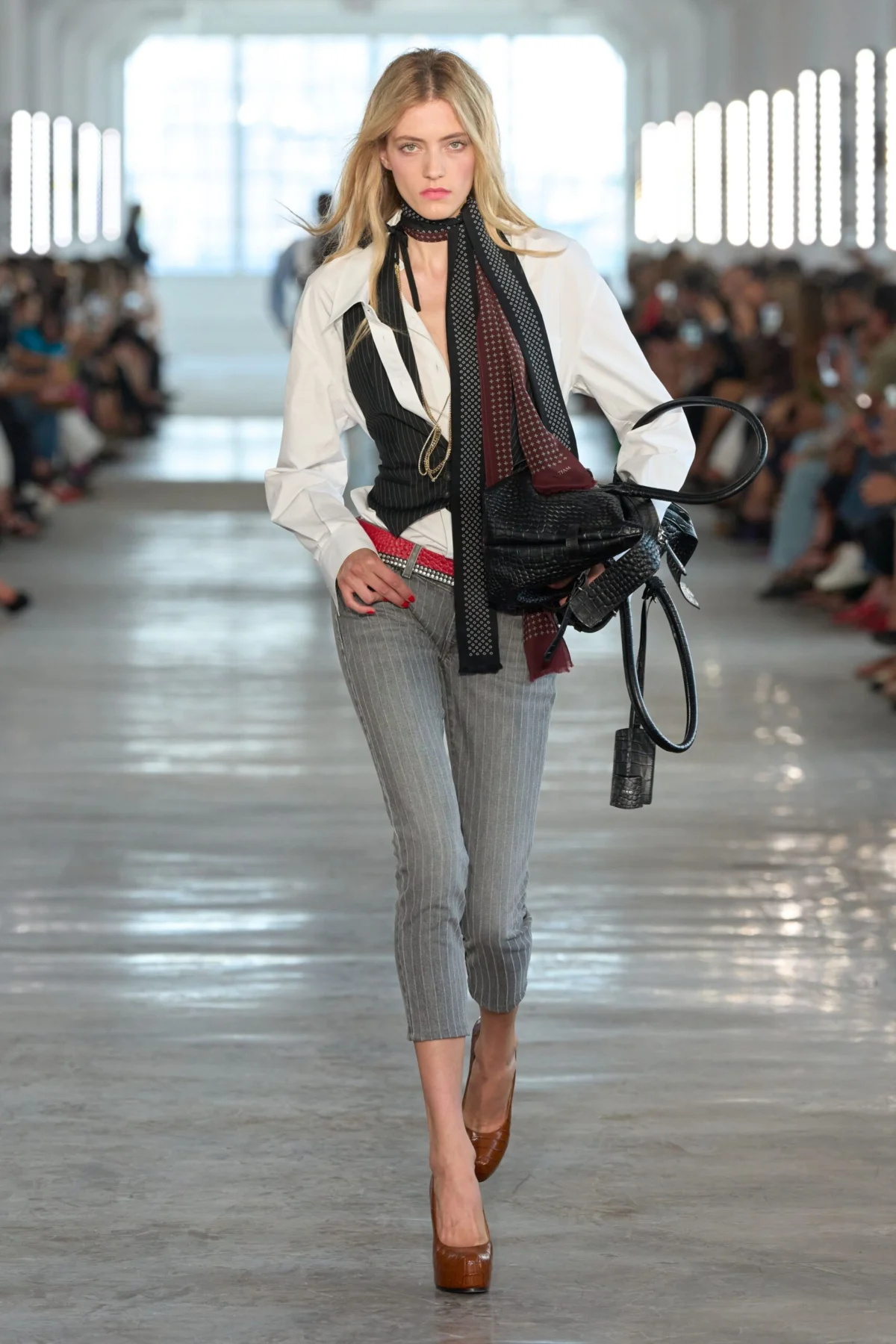
The runway presentation featured a meticulous curation of contrasting textures and silhouettes. Alongside ultra-tight, ultra-low-rise denim trousers and micro-shorts that nodded to early noughties club culture, the collection introduced sophisticated outerwear and accessories. Among the most notable revivals were menswear-inspired printed silk scarves, draped effortlessly to add an element of calculated nonchalance to otherwise structured outfits.
"The attitude is everything," Brognano emphasized, highlighting the philosophical approach behind the garments. "You can wear denim and a tank top, but the attitude is the thing that defines you."
This philosophy manifested in pairings such as cropped trench coats layered over ruffled slip dresses, creating a visual narrative that swung fluidly between refined tailoring and rock-and-roll rebellion. The overarching aesthetic was one of picture-perfect disheveled elegance—a look engineered to appear effortless despite rigorous tailoring and premium material selection. The thematic peak of the presentation occurred when a model discarded her footwear mid-runway, a symbolic gesture that encapsulated the anti-establishment ethos of the indie sleaze movement while injecting a dose of performance art into the traditional fashion show format.
Broader Economic and Cultural Implications
The strategic pivot toward early-2000s nostalgia and digital-first aesthetics by an established heritage denim brand reflects broader shifts within the global apparel market. According to recent retail data compiled by market research firms specializing in Gen Z and Millennial consumer habits, demand for Y2K-inspired apparel has surged by over 40% year-over-year across major e-commerce platforms. However, consumers are increasingly seeking elevated versions of these trends that utilize higher-quality materials and sustainable production methods.
7 For All Mankind, founded in Los Angeles in 2000, has historically positioned itself as a pioneer in premium denim. By embracing the stylistic complexities of indie sleaze, the brand is attempting to capture a younger demographic that values individual expression and historical fashion references over corporate uniformity. Industry analysts note that this approach allows legacy brands to remain relevant in an oversaturated market driven by viral micro-trends.
Furthermore, the collection addresses the evolving definition of modern workwear. As remote and hybrid work models continue to reshape professional dress codes, the boundaries between leisurewear, evening attire, and office clothing have dissolved. By reinterpreting the office siren trope through sophisticated tailoring, premium denim, and versatile layering pieces, 7 For All Mankind is offering a pragmatic solution for consumers navigating hybrid lifestyles.
Industry Reception and Future Outlook
Early critical reception of the Spring 2027 collection suggests that Brognano’s gamble on bridging internet culture with luxury denim is paying off. Retail buyers have praised the balance between daring runway statements—such as the low-rise silhouettes and minimalist layering—and highly wearable commercial pieces like the cropped trench coats and tailored denim jackets.
As fashion houses continue to grapple with the influence of digital platforms on consumer demand, the success of 7 For All Mankind’s latest collection serves as a case study in translation. By taking viral aesthetics born on short-form video applications and filtering them through decades of design expertise, the brand has demonstrated that digital-native trends can be successfully elevated into enduring commercial products. The Spring 2027 Ready-to-Wear line is scheduled to arrive in global flagship stores and select department stores in early 2027, accompanied by an extensive digital marketing campaign aimed at cementing the brand’s connection with a new generation of style-conscious consumers.