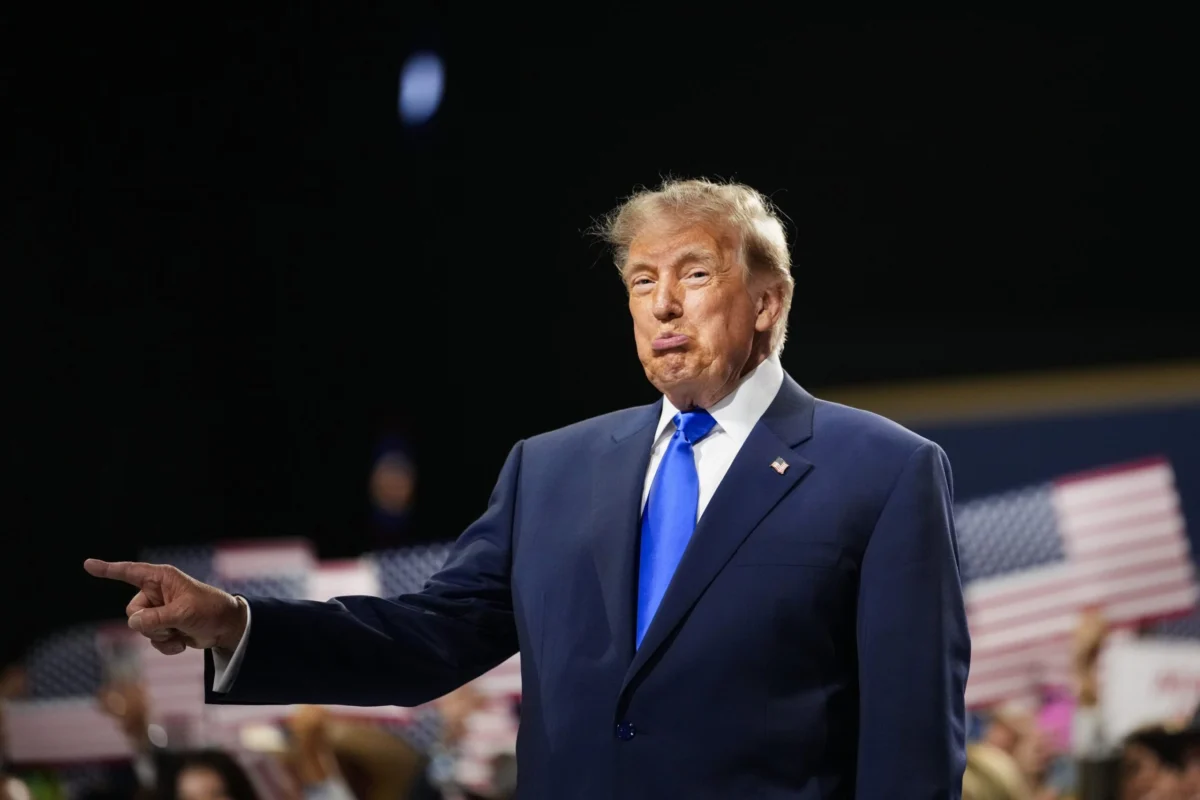
The current administration’s approach to artificial intelligence has crystallized into a high-stakes geopolitical and economic gamble, with President Donald Trump positioning American AI dominance as a national security imperative. In a series of recent statements on Truth Social, the President dismissed growing calls for aggressive AI regulation, arguing instead that the technology requires no external "guardrails" beyond the oversight of a "strong and smart" executive. This stance has placed the administration at odds with a significant portion of the electorate and leading voices within the tech industry, setting the stage for a contentious legislative season as the November midterms approach.
The President’s rhetoric, specifically his dismissal of safety concerns raised by figures like Anthropic CEO Dario Amodei, frames the regulation of AI as a "sick conspiracy" that could inadvertently cede global technological superiority to China. By characterizing AI data centers as the "Golden Goose" of the modern economy, the President is attempting to reframe the debate from one of safety and community impact to one of national survival and economic prosperity.
A Growing Divide: Public Sentiment vs. Policy Priorities
The administration’s aggressive push for AI infrastructure faces a significant hurdle: domestic opposition. According to recent polling from the Annenberg Public Policy Center at the University of Pennsylvania, approximately 61% of Americans—including 54% of Republicans—oppose the construction of new data centers in their immediate communities. This disconnect between administration policy and voter preference is not an isolated incident but part of a broader trend that threatens the Republican hold on Congress.
The electoral map for the upcoming midterms is tight, with Democrats needing only three seats in the House and four in the Senate to flip control. With the President’s approval ratings hovering near historic lows and consumer sentiment regarding the economy turning increasingly negative—even among the Republican base—the administration’s stance on AI, surveillance, and foreign conflict may be creating an "unpopularity trifecta."
For instance, the administration’s support for Flock-style automated license plate readers has faced stiff resistance, with 46% of Americans opposing the technology in their neighborhoods. Similarly, the ongoing conflict in Iran, which has been cited as a contributing factor to a 44% increase in gasoline prices since February, maintains the support of only one-quarter of the public. These policy positions are creating a political environment where the administration’s core initiatives are increasingly viewed as out of sync with the concerns of everyday voters.
The Chronology of the AI Safety Debate
The transition of AI safety from an academic concern to a front-page political issue has been rapid. In early 2024, the discourse was largely confined to niche forums, where experts debated the risks of large language models and the theoretical dangers of "frontier" AI. By mid-year, the narrative shifted toward concrete policy proposals.
- June 2024: The White House issued an executive order requiring national-security agencies to develop rigorous benchmarks for advanced AI models. This order defined "covered frontier models" and established a framework for developers to grant the government access to their systems prior to public release.
- August 2024: Tensions flared between the administration and Anthropic regarding access to advanced models, specifically Fable and Mythos 5, during negotiations involving the Department of War.
- September 2024: Industry leaders, including OpenAI’s Sam Altman and SpaceX’s Elon Musk, intensified their calls for national safety requirements. Anthropic’s Dario Amodei publicly urged the industry to "pace the frontier," suggesting a deliberate slowdown in development to ensure safety.
- October 2024: President Trump publicly rejected these calls, labeling them a potential "Trojan horse" for regulatory capture. This was followed by a market reaction on Wall Street, where chipmakers saw valuations fluctuate in response to the perceived threat of development slowdowns.
Economic Implications and the "Regulatory Moat"
The debate over AI safety is inherently tied to the economic interests of the companies building the models. Gil Luria, head of technology research at D.A. Davidson, has highlighted the risk that heavy-handed regulation could unintentionally entrench the market dominance of established tech giants. Because large labs possess the resources to maintain expensive safety teams, legal departments, and compliance divisions, smaller competitors may find it prohibitively expensive to enter the market.
"Regulation written with significant input from OpenAI and Anthropic could effectively turn safety rules into a moat," Luria noted. This perspective is echoed by Vice President JD Vance, who has characterized the industry’s self-regulation calls as a move to stifle competition through government intervention.
Wall Street’s reaction to this uncertainty has been nuanced. On a recent trading Monday, Nvidia and other major chip manufacturers experienced a 3% decline as investors digested the possibility that "frontier labs" might be forced to scale back infrastructure buildouts. Conversely, cybersecurity firms like CrowdStrike saw a 15% surge, reflecting an investor belief that regardless of who builds the AI, the need for security protocols will only increase.
Interventionism and the Future of the AI Supply Chain
The administration’s strategy extends beyond mere regulation; it involves direct intervention in the supply chain. Following the precedent set in industries such as steel and semiconductors, the President has signaled a willingness to take government stakes in AI companies. This interventionist approach was notably applied to the sale of advanced chips to China, where the federal government required a share of revenue as a condition for granting export permissions.
By tying government permission to economic participation, the administration is asserting that AI is a strategic asset on par with defense technology. This approach, however, complicates the relationship with tech companies that pride themselves on their autonomy. The administration’s assertion that it holds "tremendous criminal and regulatory power" over these entities serves as a warning to firms that they must align their development goals with the administration’s national security and economic objectives.
Analytical Outlook: The Path Ahead
The political stakes for the administration’s AI policy are profound. If the government proceeds with mandatory, capability-based safety requirements, it risks alienating a tech sector that is already wary of "regulatory capture." If it chooses to bypass these requirements in favor of unfettered growth, it risks a public backlash regarding safety, privacy, and the environmental impact of data centers—concerns that are currently held by a majority of voters.
Furthermore, the "AI arms race" narrative—the idea that the U.S. must prioritize speed over safety to outpace China—is becoming a cornerstone of the administration’s campaign strategy. Whether this narrative resonates with a public more concerned with inflation, local community disruption, and civil liberties remains to be seen in the upcoming midterm elections.
The administration’s challenge is to balance the need for rapid technological innovation with the reality of a skeptical electorate and an industry grappling with the ethical and security implications of its own creations. As November approaches, the "AI question" will likely remain a litmus test for the administration’s ability to navigate the complex intersection of global competition and domestic governance. The outcome of this struggle will not only shape the trajectory of artificial intelligence development in the United States but will also define the broader relationship between the federal government and the high-tech sector for the next decade.