A team of space-weather researchers engaged in meticulous historical detective work has corrected the chronology of what was long considered the earliest documented instance of solar-induced technological disruption on Earth. By cross-referencing digitized geomagnetic archives, nineteenth-century railway timetables, historical newspapers, and accounts of auroral activity, the scientists revealed that a famous telegraph outage in Exeter, Devon, actually occurred in 1848 rather than 1841—shifting its place in the historical record by seven full years.
The finding, which sheds new light on the vulnerability of early electrical infrastructure, demonstrates that modern society’s dependence on technological systems has been exposed to the unpredictable fury of space weather for nearly as long as humanity has harnessed electricity.
Unraveling a Victorian Railway Mystery
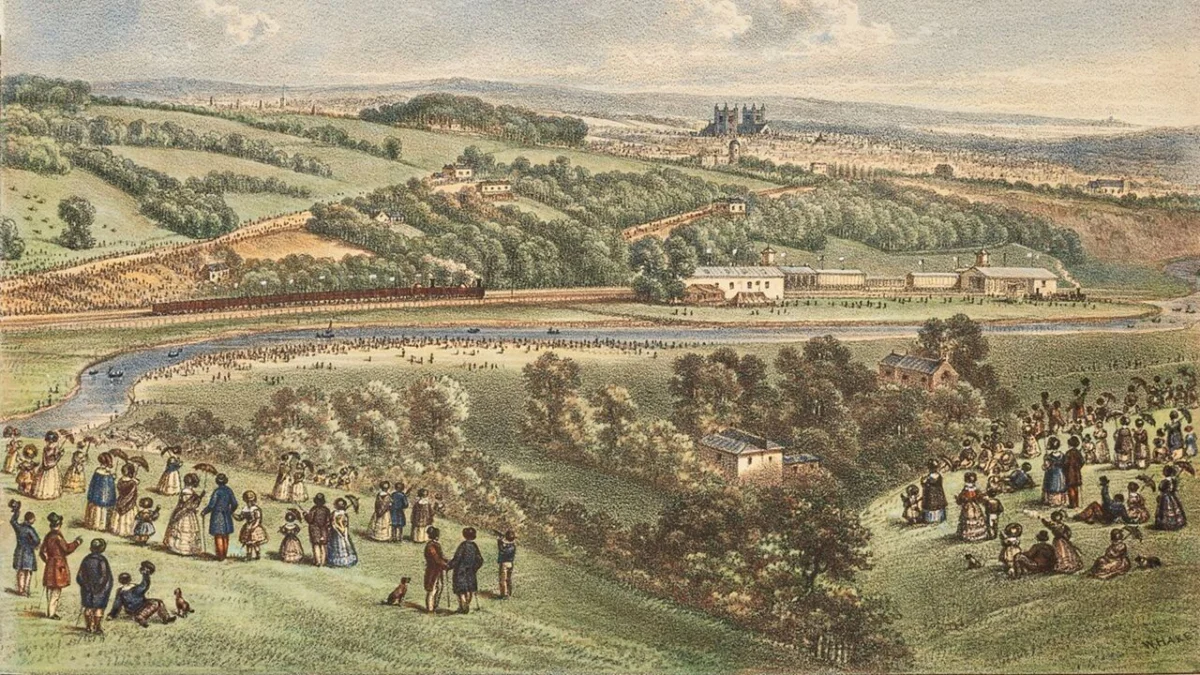
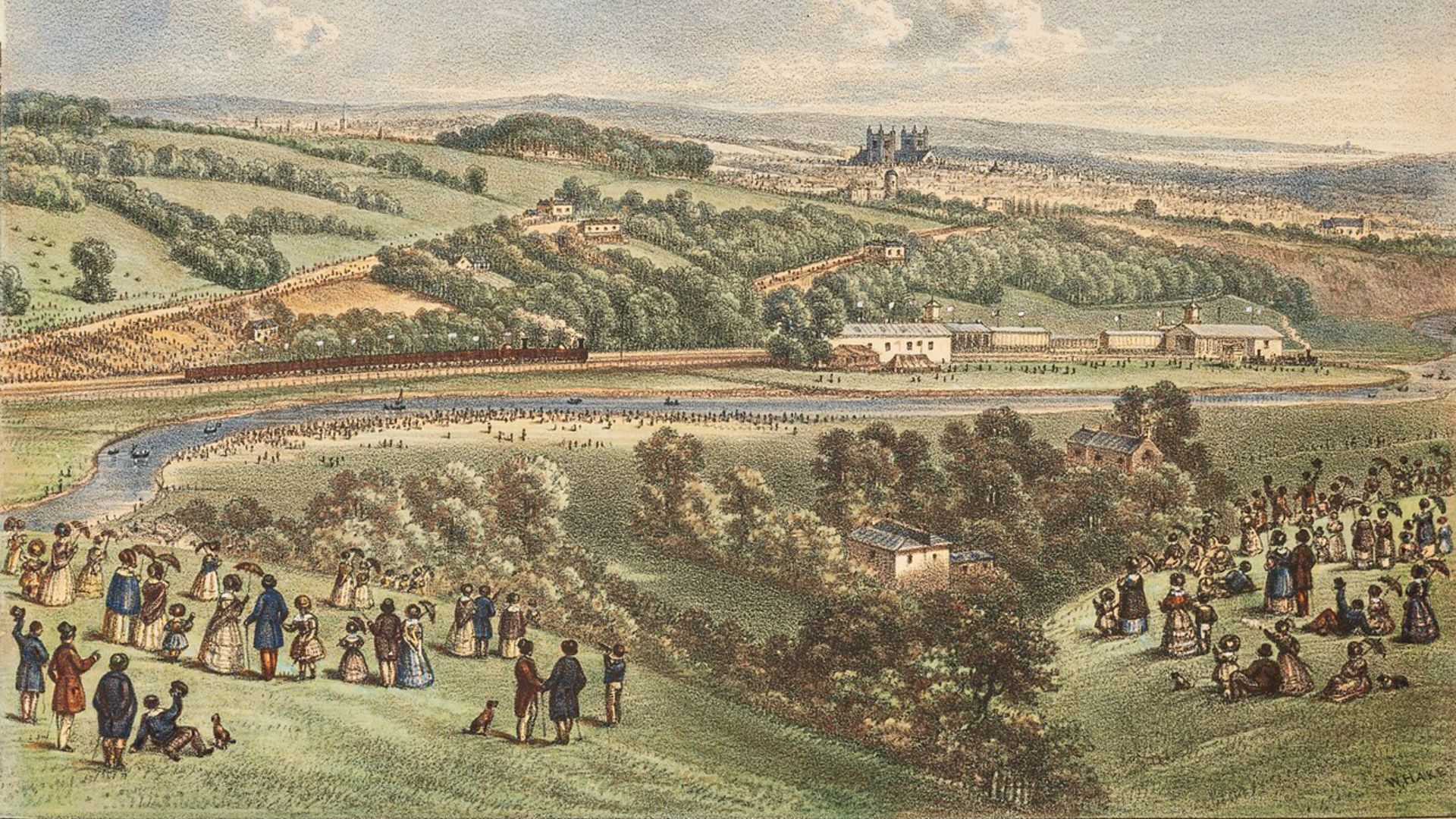
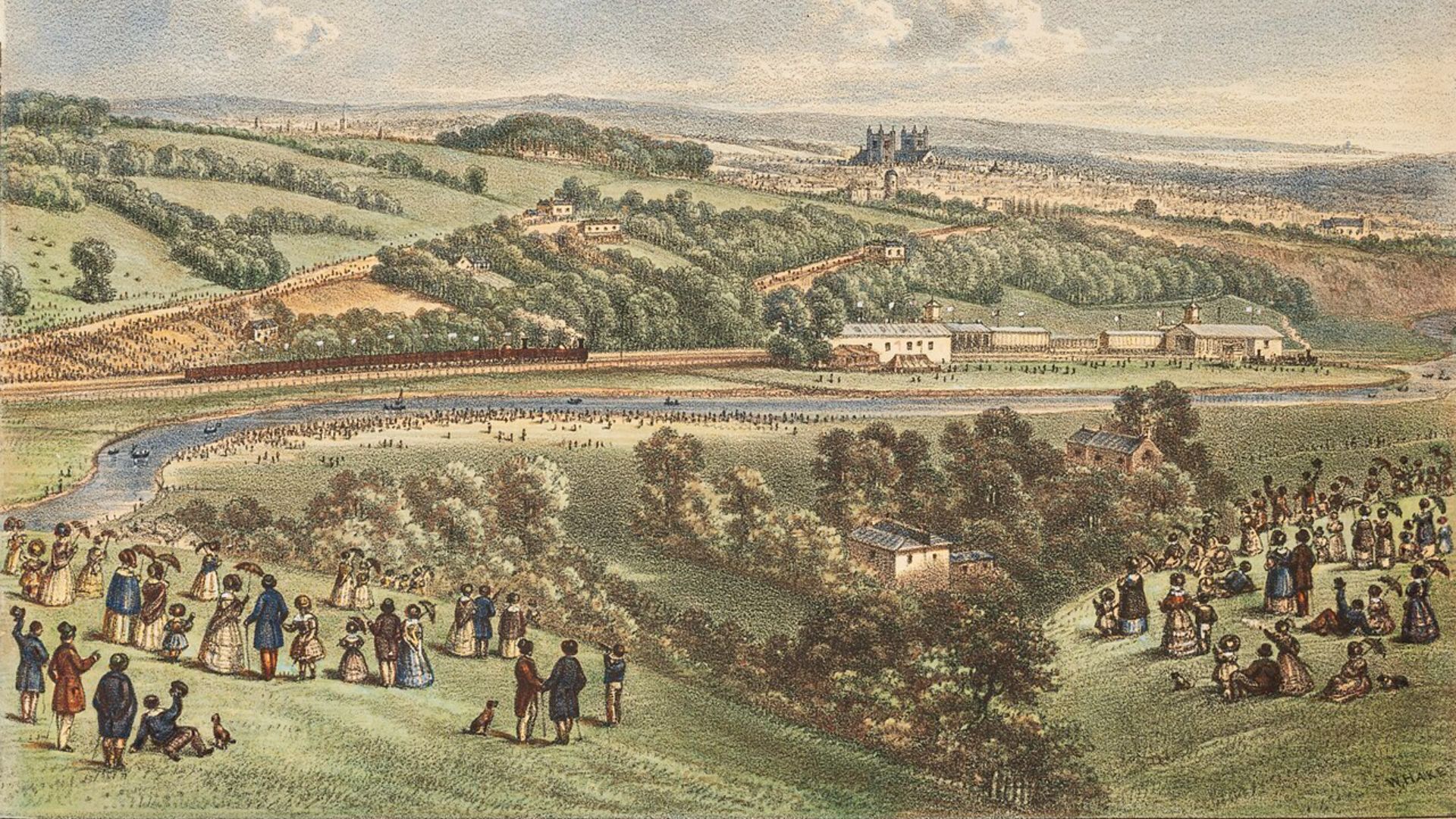
Long before the advent of microchips, power grids, and orbital satellites, the Victorian era introduced the world to rapid electrical communication and rail travel. In the autumn of 1871, the prestigious scientific journal Nature published a curious historical account involving a train departing from Exeter on the south-west coast of the United Kingdom. According to the report, a severe surge of electrical current flooded the railway’s signaling telegraph network, throwing operations into chaos and delaying a departing train by 16 minutes.
For generations, historians and space physicists cited this specific incident as the pioneering example of a geomagnetic storm interfering with terrestrial technology. However, when a research team led by Jim Wild, professor of space physics at Lancaster University and President of the Royal Astronomical Society, began inspecting the primary source material, fundamental discrepancies quickly emerged.
The Nature article explicitly dated the electromagnetic disturbance to 10:05 p.m. local time on October 18, 1841. Yet, structural and historical records of the British railway system indicated that the specific railway line running through Exeter did not even open until 1846—a chronological impossibility that prompted a deeper investigation into the archives.
"The Exeter train delay is a fascinating story because it sits right at the point where emerging technologies first began to encounter the realities of the space environment," Professor Wild explained in a statement detailing the study.
Recognizing the historical error, Wild joined forces with Mike Hapgood, a space weather expert at RAL Space—the United Kingdom’s National Space Laboratory located in Oxfordshire—along with other multidisciplinary researchers. Their mission: to reconstruct the true timeline of the event using archival forensics.
Piecing Together the Historical Puzzle
To solve the chronological discrepancy, the research team deployed a diverse array of nineteenth-century data sources. They scoured digitized nineteenth-century newspapers, historical railway schedules, archival logs of sunspot observations, accounts of northern lights (aurora borealis) sightings, and newly digitized historical geomagnetic measurements.
By synthesizing these disparate data points, the team successfully identified the true date of the electromagnetic disruption. The convergence of historical evidence pointed squarely to October 18, 1848—exactly seven years later than the date printed in the 1871 Nature article. This period coincided precisely with a known, highly energetic solar storm that battered Earth’s magnetic field, producing widespread auroras visible across unusual latitudes and injecting massive electrical currents into long-conductor systems like telegraph wires.
"Our research has a hint of a detective story—piecing together a wide range of archived records to better understand a historically severe space-weather event," said Mike Hapgood of RAL Space.
The correction demotes the Exeter incident from its long-held status as the absolute earliest recorded instance of space weather disrupting human technology. That historical distinction now officially belongs to a separate electrical disturbance recorded on the extensive Midland railway network in March 1847.
Nevertheless, researchers emphasize that the Exeter event remains one of the most vividly documented early interactions between solar activity and critical infrastructure.
"Although this means it is not the earliest recorded space weather impact, it remains one of the first clear examples of solar activity disrupting critical infrastructure," Wild noted. "It also demonstrates the value of combining scientific records with contemporary newspaper reports and archival documents when reconstructing historic space weather events."
The Expanding Timeline of Space Weather Vulnerability
The revelation underscores a vital reality of technological history: human infrastructure has been at the mercy of the sun’s temperamental moods almost since the dawn of the electrical age.
"Society has been experiencing the effects of space weather on technology for almost as long as electrical technologies have existed," Wild observed.
Just over a decade after the Exeter disruption came the most famous and violent space weather event in recorded history: the Carrington Event of September 1859. Triggered by a massive coronal mass ejection (CME) directed squarely at Earth, the Carrington Event caused unprecedented global chaos. Telegraph systems spontaneously operated without being connected to batteries; in some cases, telegraph operators received severe electrical shocks, and papers near telegraph equipment caught fire from the sudden surges. Auroras so bright that people could read newspapers by their light were observed as far south as the Caribbean and Hawaii.
While nineteenth-century operators eventually grew accustomed to minor auroral disruptions interfering with their telegraph relays, the sheer ferocity of the Carrington storm caught the Victorian scientific establishment entirely unprepared.
Modern Implications: Fragile Systems in a High-Tech Era
The historical detective work of Wild, Hapgood, and their colleagues is more than an exercise in historical housekeeping; it serves as a stark warning for the contemporary world. While nineteenth-century infrastructure was remarkably simple—consisting primarily of rudimentary copper wires strung across wooden poles—modern society depends on vast, highly interconnected electrical grids, fiber-optic networks, global positioning satellites, and sensitive microelectronics that operate on microscopic voltages.
"While today’s space weather monitoring capabilities are far more advanced than anything available in the 1800s, the modern technologies we depend on are also much more vulnerable to solar storms," Hapgood warned.
A recurrence of a solar storm on the scale of the 1859 Carrington Event today would carry catastrophic economic and societal consequences. Analysts project that a direct hit by an extreme geomagnetic storm could induce massive electrical currents in modern high-voltage transformers, triggering widespread, prolonged blackouts, crippling global satellite communications, disabling aviation navigation systems, and paralyzing financial markets.
The Current Solar Cycle and Future Risks
Earth’s exposure to solar storms is governed by the sun’s approximately 11-year activity cycle, driven by the twisting and restructuring of its internal magnetic field. The current cycle, Solar Cycle 25, officially peaked in October 2024, ushering in a prolonged period of elevated solar activity, frequent solar flares, and powerful geomagnetic storms.
Though solar activity is gradually transitioning out of its peak phase on the path toward the next solar minimum expected around 2030, the sun remains capable of producing extreme outbursts at any time. This was powerfully demonstrated in May 2024, when a series of intense solar storms slammed into Earth, producing some of the most vibrant and widespread auroral displays seen in over 500 years, while safely testing modern satellite and power grid resilience.
As researchers continue to analyze historical records to understand past solar extremes, their work provides crucial baselines for forecasting future space weather threats. By learning how nineteenth-century pioneers first encountered the invisible hazards of the solar wind, modern scientists hope to better fortify the complex technological web upon which global civilization relies.