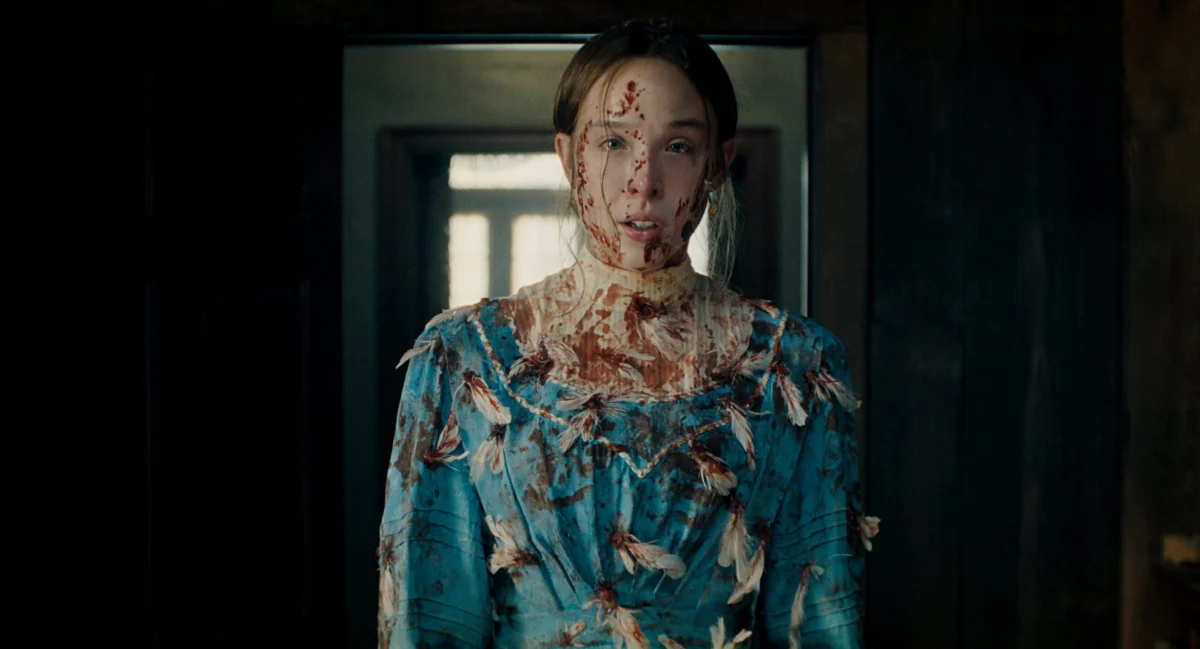
The release of Monster: The Lizzie Borden Story on September 17 marked a significant pivot for the Ryan Murphy and Ian Brennan-led anthology series. As the fourth installment of the franchise, this season departed from the focus on male serial killers that defined previous iterations, instead shifting the lens toward the 19th-century American folklore surrounding Lizzie Borden and the brutal 1892 axe murders of her parents in Fall River, Massachusetts. The production serves as a landmark moment for the series, introducing the first female protagonist into a narrative framework that has historically interrogated the psyche of men accused of horrific crimes.
With the latest season now available for global audiences, speculation has intensified regarding the future of the franchise. While Netflix has not yet issued a formal renewal for a fifth season, the creative team behind the project has expressed an ambitious long-term vision that could see the series extending for up to a decade.
The Evolution of the Monster Franchise
The Monster anthology series has become a cornerstone of Netflix’s true-crime slate, characterized by its deep-dive approach into the lives of infamous figures. The series debuted with a focus on Jeffrey Dahmer, followed by the Menendez brothers, and subsequently Ed Gein. Each season has followed a distinct production cadence, typically requiring a rigorous selection process to ensure that the chosen subject provides enough material for a multi-hour examination of societal failure, psychological pathology, and legal controversy.
The inclusion of Lizzie Borden represents a departure in historical scope. Unlike the contemporary figures previously featured, Borden’s case remains one of the most debated unsolved mysteries in American criminal history. By selecting a subject from the late Victorian era, Murphy and Brennan have signaled that the anthology is not limited to modern-day criminality, but is instead focused on exploring the "monstrous" nature of human behavior across different temporal contexts.
The Search for a Fifth Subject: Selection Criteria
The process of selecting a subject for a season of Monster is described by creators as both exhaustive and highly selective. According to Ian Brennan, the decision-making process involves a rigorous vetting of potential candidates. The primary challenge, Brennan noted in a September 2026 interview with The Hollywood Reporter, is finding a narrative that sustains the viewer’s attention across seven to ten hours of content.
The creators prioritize subjects who provide a "societal mirror." For a figure to be considered, they must possess a depth that allows for a broader critique of the environment in which their crimes occurred. This explains why some of the most famous serial killers in history—such as Ted Bundy—have been largely dismissed as potential subjects. Ryan Murphy has previously articulated that the series is not interested in merely recounting gruesome details; rather, it seeks to interrogate themes that force audiences to question the structures of society, justice, and media representation. In Murphy’s estimation, if a subject does not provide a platform for that level of social commentary, they are deemed unsuitable for the format.
The Case of Luigi Mangione
One name that has frequently surfaced in industry discussions regarding the series is Luigi Mangione. Mangione, whose recent legal troubles and public profile have made headlines, was reportedly a subject that Murphy and Brennan explored in the development phase. However, the creative team ultimately stepped back from the project.
Brennan acknowledged that while the story of Mangione was compelling, the complexity and the relative recency of the events made it a difficult narrative to "crack." The creators emphasize that the series functions best when the historical record has been established and when there is sufficient distance to analyze the implications of the crimes without the cloud of immediate, ongoing legal proceedings. For now, Mangione remains in what the production team refers to as a "maybe one day" file, though it is currently not the focus of active development.
Long-Term Vision and Production Strategy
The creators have made their intentions for the longevity of the series clear. In discussions regarding the future trajectory of the brand, Brennan indicated that both he and Murphy share a target of ten total seasons. This would establish Monster as one of the most substantial anthology projects in contemporary television history.
This long-term strategy is contingent upon a delicate balance between viewer demand and the maintenance of creative quality. Netflix’s standard operating procedure for original content typically involves a post-release analysis period, where the streamer evaluates completion rates, audience sentiment, and critical reception before greenlighting subsequent seasons. Given the high profile of the Monster franchise, expectations remain high, and the platform is likely to wait for the full performance data of the Lizzie Borden season before finalizing the roadmap for season five and beyond.
Societal Implications and Ethical Considerations
The Monster series has faced scrutiny for its dramatization of real-world trauma. The ethical implications of "re-victimization" and the commercialization of true crime have been constant themes in the critical discourse surrounding the series. By moving into the 19th century with the Borden story, the production team may be attempting to mitigate some of the ethical challenges associated with depicting more recent crimes where survivors or immediate descendants are still living.
The show’s success relies on a fundamental tension: the desire to tell a compelling, stylized narrative versus the responsibility to remain grounded in historical facts. Each season acts as a legal and cultural autopsy, forcing viewers to look at how the judicial system and the public treat those labeled as "monsters." Whether the show focuses on the socio-economic pressures of 1892 or the failures of the police in the 1990s, the goal remains the same—to contextualize the monster within the society that produced them.
Chronology of the Anthology
- September 2022: The debut season, focused on Jeffrey Dahmer, sets a new benchmark for true-crime viewership on Netflix, sparking a global conversation about the exploitation of victims’ stories.
- September 2024: The second installment explores the Menendez brothers, drawing renewed attention to the legal arguments surrounding child abuse and the defense of the accused.
- September 2025: The third season shifts focus to Ed Gein, with Charlie Hunnam cast in the lead role, further cementing the show’s reputation for high-profile casting and intense character studies.
- September 2026: The fourth season, The Lizzie Borden Story, is released, introducing the first female protagonist and expanding the timeline of the series into the 19th century.
- Late 2026 and Beyond: The production team enters a evaluation phase to determine the viability of future seasons, with an ultimate goal of reaching a ten-season run.
Analytical Outlook
As the industry looks toward the next potential installment, the primary indicator of the series’ direction will be the subjects that Murphy and Brennan determine possess the requisite "social weight." The move toward more obscure or historically distant figures, as seen in the transition from Dahmer to Borden, suggests that the series is maturing. It is less interested in the shock value of the "serial killer" trope and more invested in the psychological and historical factors that lead to such extreme deviations from social norms.
If the series continues to follow the "ten-season" plan, it will likely continue to shift between eras, perhaps moving away from the traditional "serial killer" definition to include other figures who have left a lasting, dark imprint on the cultural consciousness. For now, the audience remains in a period of anticipation, waiting to see which historical figure will next be placed under the investigative spotlight of the Monster franchise. Until a formal announcement is made, the creators continue to toggle between several potential candidates, ensuring that the next chapter of the anthology maintains the high standard of production value and thematic depth that has defined the previous four years of the series.