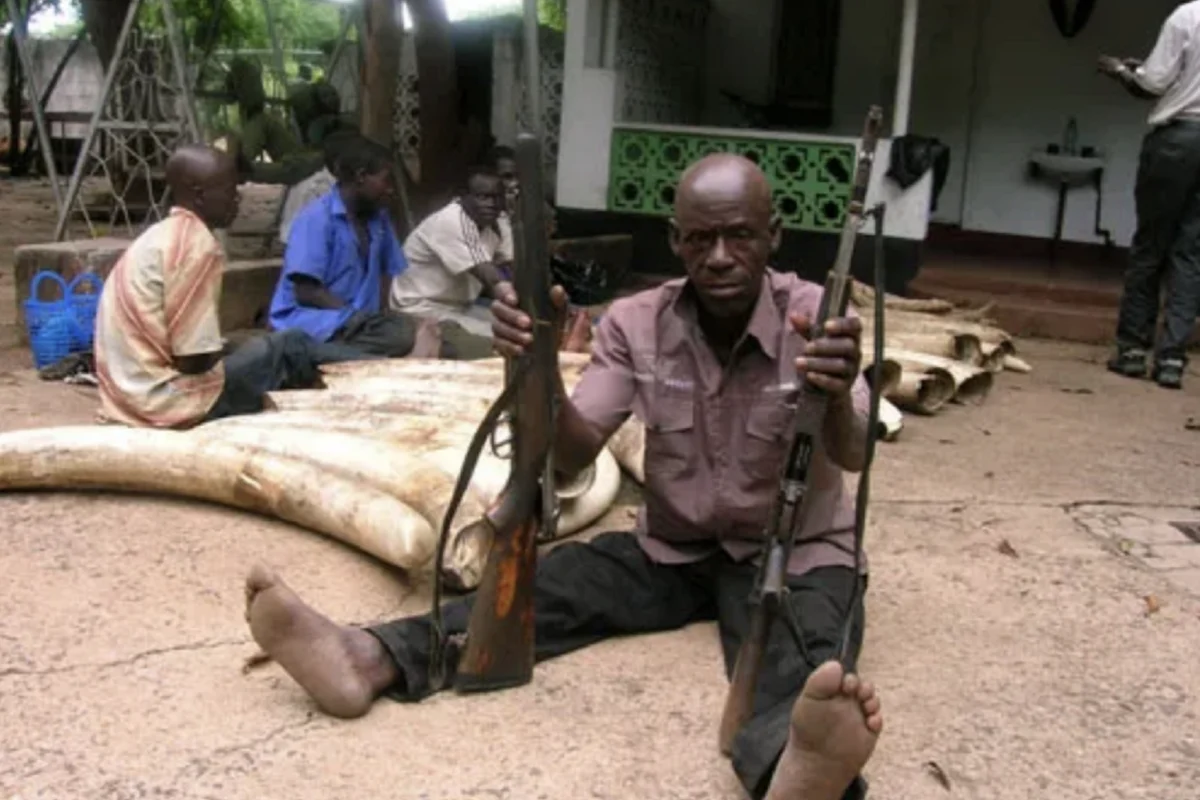
In the cramped confines of a Zambian correctional facility, an inmate sits reflecting on a decision that traded his freedom for the promise of a better life. He was not a kingpin of an international syndicate, nor a high-ranking mercenary of a poaching militia; he was a man struggling to provide for his family, approached by a stranger with a proposition: trade ivory and pangolin scales for the capital needed to build a home and educate his children. His story is far from unique, serving as a poignant microcosm of a broader, systemic issue that continues to plague Zambia’s conservation efforts.
New research conducted by Wildlife Crime Prevention (WCP) Zambia, in collaboration with the Copperbelt University, has shed critical light on the grassroots drivers of wildlife crime. By interviewing over 300 inmates across 32 of the nation’s correctional facilities, researchers have mapped the complex, often tragic, motivations of those on the lowest rungs of the illegal wildlife trade. The findings suggest that the current approach to curbing poaching—which relies heavily on the incarceration of low-level offenders—may be failing to address the fundamental economic and social pressures that fuel the industry.

The Anatomy of a Global Crisis
Zambia serves as both a primary source for wildlife products and a vital transit corridor for illicit contraband, a position exacerbated by its expansive borders, which touch eight neighboring countries. According to the study, individuals imprisoned for wildlife offenses constitute approximately 7% of the nation’s total prison population. The legal consequences for these actions are severe; under Zambian law, hunting in a protected area can result in a sentence of three to 10 years, while trafficking of high-value trophies from protected species like elephants and rhinos can lead to incarceration for upwards of 20 years.
Despite these harsh penalties, the illegal wildlife trade remains a persistent, multifaceted industry. The supply chain is hierarchical: at the top sit international syndicates and wealthy kingpins, followed by heavily armed poaching gangs, and finally, the local individuals who provide the labor. While law enforcement agencies frequently apprehend those at the bottom of this chain, the study suggests these individuals are easily replaced. Their incarceration does little to dismantle the syndicates, which continue to operate with near-total impunity while the grassroots workforce is cycled in and out of the prison system.
A Profile of the Offender
The research team, which included wildlife criminologist Emma Richards, conducted 302 in-depth interviews to understand the pathways into criminality. The resulting data presents a sobering portrait of the average offender. Roughly half of those surveyed were middle-aged, and an overwhelming majority were male. Notably, most were first-time offenders, though approximately one-third admitted to having engaged in illegal wildlife activities previously without detection.

The offenses were categorized into seven primary groups: bushmeat hunting; the poaching of elephants, rhinos, and pangolins; illegal fishing; and firearm-related wildlife crimes. Bushmeat-related offenses emerged as the most prevalent, highlighting the role of food insecurity in driving individuals toward illicit activities. However, the trade in protected species remains a significant driver for those seeking to escape acute poverty.
"We wanted to understand better the drivers of the more grassroots-level offenders and why they get involved—and how we might avoid them being involved again," said a study author who requested anonymity due to their ongoing investigative work. The data revealed that for 40% of the respondents, the primary driver was simple opportunity—the chance to make money when it was presented. For another 16%, the motivation was existential, rooted in a desperate need for food or medical care.
The Absence of a Safety Net
The study underscores a critical structural failure: the lack of a social safety net in many rural Zambian communities. For subsistence farmers whose livelihoods are perpetually at the mercy of unpredictable harvests and environmental shifts, an unexpected medical bill or funeral expense can become a life-altering crisis. In such environments, the illicit wildlife trade appears not as a moral failing, but as a survival strategy.

One inmate’s testimony captures this reality: "There’s no social safety net here. You can’t go to the bank and get a loan. People generally aren’t saving up. Unless you’ve got a wealthy relative in town, there’s really not many other opportunities." This lack of economic mobility forces many into the orbit of opportunistic middlemen who provide the tools and networks necessary to poach, effectively exploiting the vulnerability of the impoverished to sustain a lucrative, high-stakes market.
Challenges to Rehabilitation and Reintegration
A major point of concern for researchers is the lack of effective post-release support. When an offender finishes their sentence, they often return to the same economic conditions that pushed them toward crime in the first place. Without access to legal, sustainable income, the risk of recidivism is high.
WCP Zambia recently piloted a project designed to bridge this gap, facilitating communication between inmates and their families prior to release to prepare for their reintegration. The program has also explored providing equipment for farming or small business startups. However, as Emma Richards noted, the success of such initiatives depends on their specificity. "You can have somebody doing a carpentry project in prison, but if they get out and they’ve got no access to carpentry tools, what have you really achieved?" she asked.

The research also touched upon the social stigma associated with imprisonment for wildlife crime. Surprisingly, 80% of the male respondents did not express concern regarding community or family rejection upon their release. This lack of social deterrent, combined with the absence of economic alternatives, creates a dangerous cycle where the prison sentence acts more as a temporary pause in criminal activity rather than a corrective measure.
Implications for Future Policy
The study, published in the International Journal of Law, Crime and Justice, serves as a call for a paradigm shift in how wildlife crime is addressed. If the goal is to protect endangered species, the current model of punitive enforcement must be complemented by targeted, community-based development.
Dr. Meredith Gore, an environmental crime researcher at the University of Maryland, emphasized that wildlife crime in Zambia does not fit the standard criminological models used in the West. "Should we be using standard recidivism models to understand wildlife crime in the first place?" she asked. Gore believes that better economic reintegration, driven by the specific needs and desires of local communities, is essential to breaking the cycle.

Furthermore, the gender dimension of the crime remains an under-researched but vital area. While the current study focused primarily on men, the small sample of women interviewed indicated a higher level of fear and uncertainty regarding social reintegration. Future research will need to address these nuances to develop gender-sensitive programs that offer viable, legal alternatives for all demographics.
Moving Beyond Punishment
The researchers emphasized that those they interviewed should be viewed with humanity. "They’re not just a group of evil people who kill elephants," one researcher noted. By characterizing the offenders as desperate actors in a broader, systemic failure, the study encourages policymakers to look at the "push factors" of wildlife crime—poverty, lack of education, and the absence of infrastructure—rather than just the "pull factors" of international market demand.
As Zambia looks toward the future of its conservation strategy, the findings from this study provide a roadmap for more holistic intervention. Effective anti-poaching policy must be as much about economic development as it is about enforcement. Without providing the inhabitants of regions near protected areas with a means to achieve financial stability, the illicit wildlife trade will continue to find willing participants among those who feel they have no other choice.

Ultimately, the goal is to create a reality where the protection of a nation’s biodiversity is not in conflict with the survival of its most vulnerable citizens. As the study concludes, the first step is recognizing that for many, the path to the courtroom starts with a lack of options, and that path can only be blocked by creating new ones.