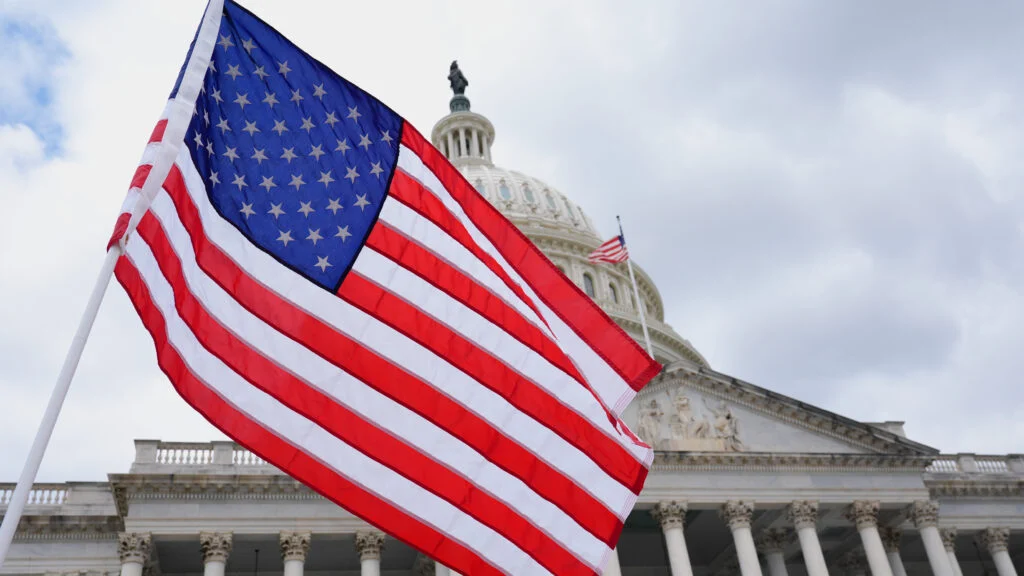
In a move that has reignited the long-standing constitutional debate over the separation of powers, the White House announced on Friday the cancellation of nearly $1 billion in federal spending previously authorized by Congress. The administration’s decision, which targets a diverse array of programs ranging from immigrant support services to social equity initiatives, utilizes a maneuver known as a “pocket rescission.” By bypassing the traditional legislative oversight process, the executive branch has effectively nullified funding streams for initiatives that the Office of Management and Budget (OMB) has categorized as “harmful” or “ideologically driven.”
The announcement, delivered with only five days remaining in the federal fiscal year, has triggered an immediate backlash from Capitol Hill. Legislative leaders from both parties have criticized the timing and the legal basis of the cuts, arguing that the administration is encroaching upon the “power of the purse,” a cornerstone of the legislative branch’s authority as established in Article I of the U.S. Constitution.
The Scope of the Rescissions
The bulk of the $1 billion in funding cuts is directed toward the Department of Health and Human Services (HHS), specifically targeting programs that provide assistance to refugees and unaccompanied minors. The administration justifies these specific cuts by citing a statistically significant decline in illegal border crossings, asserting that the resources allocated for processing and housing these populations are no longer required to meet current operational needs.
Beyond immigration services, the administration’s audit of federal spending has targeted several specific areas of public policy:
- Department of Education: Significant reductions in programs designated for migrant student support.
- Department of Justice: The closure or defunding of offices tasked with monitoring and reducing racial tensions within local communities.
- Housing and Urban Development (HUD): The elimination of federal funding for specific housing counseling services.
- Economic Development: Cuts to grants and initiatives aimed at supporting minority-owned business enterprises.
- International and Ideological Programs: A $70 million reduction in international education grants, which the White House characterized as promoting a “woke” agenda, alongside $9 million in debt relief programs linked to foreign climate change policy.
The White House press release accompanying the announcement explicitly noted that several of the organizations affected by these cuts are led by former officials from the Obama administration. This detail has fueled speculation that the move is as much a political purge as it is a fiscal consolidation effort.
Chronology of the Pocket Rescission
The term “pocket rescission” refers to a president’s refusal to spend funds appropriated by Congress by simply letting the time window for obligation expire. Under the Impoundment Control Act of 1974, the president is required to notify Congress of proposed rescissions, allowing for a 45-day review period. However, the Trump administration’s decision to initiate these cuts with less than a week remaining in the fiscal year—and with the House of Representatives currently in recess until after the November elections—effectively eliminates the possibility of a congressional override or a formal challenge before the funds expire.
This strategy mirrors a broader administration trend toward executive unilateralism:
- September 2025: President Trump utilizes a pocket rescission for the first time in nearly half a century, blocking $4.9 billion in foreign aid. The Supreme Court later declined to intervene, citing the president’s broad authority over foreign policy.
- Mid-2026: The administration increases pressure on federal agencies through a series of personnel changes and the implementation of significant tariff hikes.
- September 2026: The current announcement targeting domestic programs marks the first time the “pocket rescission” tactic has been applied to internal U.S. spending rather than foreign affairs.
Legislative and Institutional Reactions
The response from the Senate has been swift and largely bipartisan in its skepticism, though the intensity of the condemnation varies. Senator Susan Collins, a Republican from Maine and chair of the Senate Appropriations Committee, issued a blistering rebuke of the administration’s actions.
“Not only is the delay itself an impoundment that was not reported to Congress, but it is a usurpation of Congress’s appropriations powers,” Collins stated. “OMB is an agency of the executive branch. It does not get to decide which programs are worth funding.” Collins indicated that she is coordinating with her colleagues to develop a formal response, signaling that the move may face litigation or legislative counter-measures in the next session.
Senator Patty Murray, the lead Democrat on the Senate Appropriations Committee, echoed these concerns, characterizing the move as a betrayal of public trust. “These are funds Congress has delivered on a bipartisan basis and should be helping people—not cut off by a president more focused on building a ballroom than investing in families,” Murray said. She further criticized her Republican colleagues for failing to support legislative language in previous spending bills that would have specifically prohibited this type of executive impoundment.
The Government Accountability Office (GAO), the nonpartisan watchdog arm of Congress, has historically maintained that the “pocket rescission” maneuver is illegal. By failing to provide the required 45-day window for congressional review, the administration is arguably in direct violation of the Impoundment Control Act, setting the stage for a protracted legal battle.
Broader Implications and Constitutional Conflict
The administration’s decision to proceed with these cuts reflects a larger pattern of consolidating executive power. By unilaterally reallocating or withholding funds, the White House is testing the boundaries of the executive branch’s role in the federal budget process.
Legal analysts suggest that this event is part of a larger, systemic shift. Combined with the recent termination of various federal employees, the imposition of sweeping tariffs without explicit congressional approval, and military actions conducted without formal declarations of war, the current rescissions represent a challenge to the traditional balance of the three branches of government.
The judiciary is increasingly viewed as the ultimate arbiter of these disputes. However, previous rulings regarding foreign aid suggest that the courts may be hesitant to intervene in matters the administration defines as executive prerogative. If the courts maintain a hands-off approach, it could embolden the White House to further bypass Congress in future budgetary cycles, potentially ending the era of legislative supremacy in matters of federal expenditure.
Fiscal Impact and Future Outlook
While the $1 billion figure represents a small fraction of the total federal budget, the symbolic and procedural weight of the move is substantial. Proponents of the administration argue that the federal government is bloated and that these cuts are necessary to trim wasteful, ideological spending. They point to the administration’s commitment to “fiscal discipline” as a justification for overriding standard procedures.
Conversely, economists and policy analysts warn that the sudden cessation of funding for housing, minority business support, and migrant integration could have cascading effects on local economies and social stability. Many of the programs targeted have already entered into multi-year contracts or grant commitments, and the sudden withdrawal of support creates uncertainty for service providers and the communities they serve.
As the fiscal year concludes, the focus will shift to the legal and legislative response. Whether Congress can successfully reassert its authority—or whether this latest use of the “pocket rescission” establishes a new precedent for executive control—remains one of the most critical questions facing the U.S. political system. For now, the administration appears determined to continue its trajectory of assertive governance, leaving the legislative branch to grapple with the reality of a significantly diminished role in the allocation of the nation’s resources.