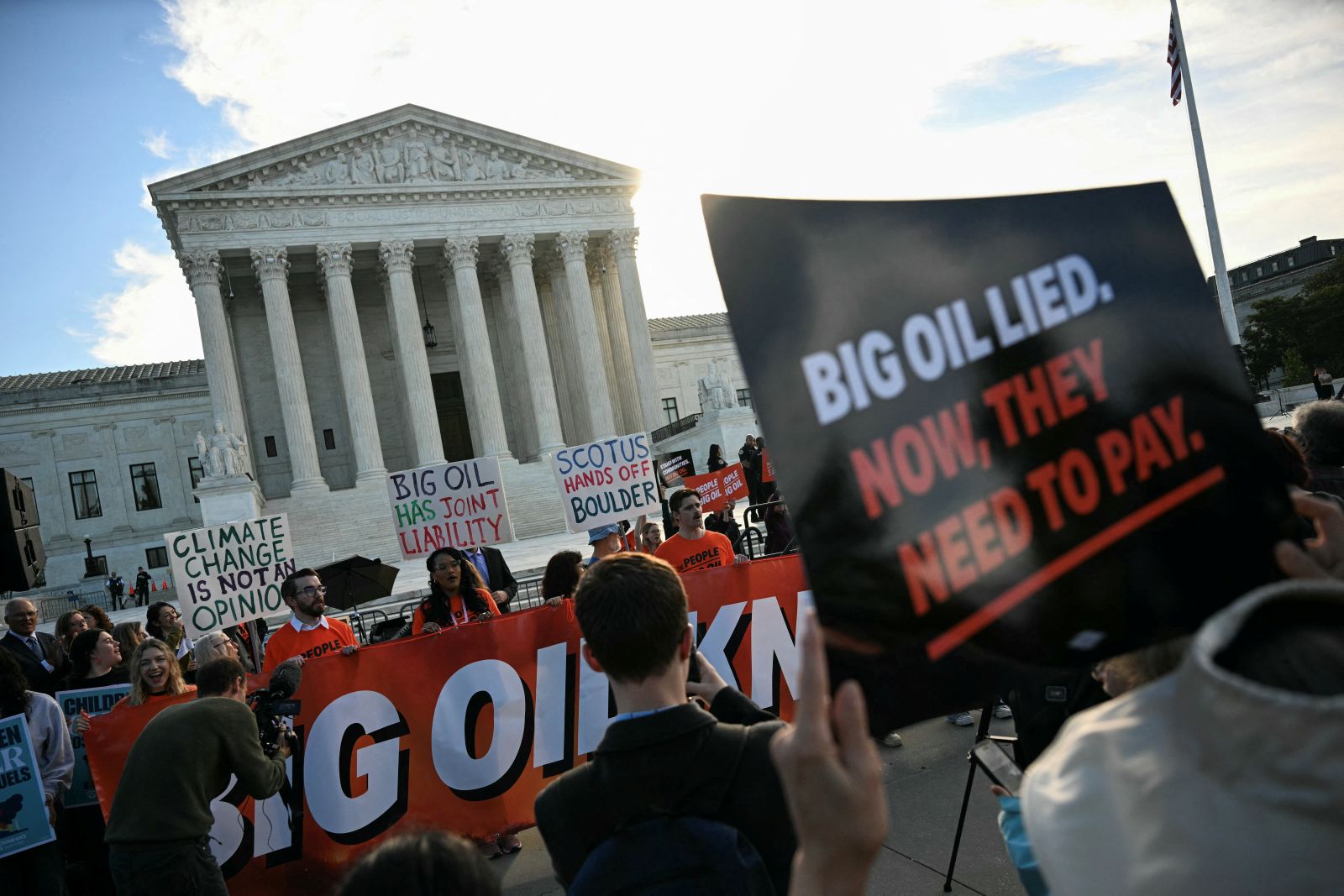
The United States Supreme Court convened for the opening session of its 2026-2027 term to hear oral arguments in a landmark climate change lawsuit that could permanently reshape the legal landscape of environmental liability in America. The case, originating from a legal challenge filed by Boulder, Colorado, against energy heavyweights ExxonMobil and Canadian petroleum firm Suncor, targets fossil fuel producers for the skyrocketing costs local municipalities face as they grapple with a warming planet. With dozens of similar municipal and state lawsuits pending across the country, the high court’s ultimate decision threatens to determine whether fossil fuel companies can be held financially responsible under state laws for the localized damages caused by global climate change.
During two hours of intense questioning on a Monday morning, the eight participating justices offered few definitive clues regarding their eventual ruling. However, the bench demonstrated a clear consensus on one fundamental challenge: identifying legal liability for the sprawling, cumulative impacts of global climate change is an exceedingly complex and consequential undertaking. As local governments increasingly turn to the judicial system to recoup billions of dollars spent on disaster recovery, infrastructure reinforcement, and climate adaptation, the nation’s highest court must decide whether these grievances belong in state courts or if they cross an unconstitutional boundary into federal regulatory terrain.
The Legal Battleground: State Court vs. Federal Authority
The procedural journey of the Boulder lawsuit highlights a fierce jurisdictional tug-of-war between local communities and multinational energy corporations. The litigation was initially filed by Boulder in the Colorado state court system, where local officials sought compensation based on consumer protection and public nuisance theories. Rather than allowing the case to proceed locally, ExxonMobil and Suncor petitioned the federal judiciary, urging the Supreme Court to intervene. The energy companies contend that climate change is an inherently interstate and international phenomenon that cannot be effectively or fairly regulated through piecemeal state-level litigation. According to the defendants, matters concerning greenhouse gas emissions and national energy policy fall exclusively under the purview of Congress and the executive branch.
Conversely, Boulder’s legal team wants the Supreme Court to reject the corporations’ federal preemption arguments and remand the case back to Colorado. If the high court rules in Boulder’s favor, the lawsuit can proceed toward trial in state court, potentially opening the floodgates for similar legal actions nationwide.
Throughout the oral arguments, eight justices—with Justice Samuel Alito recusing himself from the proceedings—repeatedly attempted to distill the hyper-technical legal arguments into simpler, more digestible terms. Justices from both the conservative and liberal wings of the court frequently pressed the attorneys with variations of the question, "Why make this argument so complex?" Yet, despite their shared desire for clarity, the bench struggled to find common ground on what a simplified version of the case would actually entail. While the potential catastrophic financial fallout for the oil and gas industry weighed heavily on the minds of several conservative jurists, the immediate, lived realities of communities struggling against rising temperatures, severe droughts, and destructive wildfires received comparatively less exploration during the questioning.
Framing the Debate: Emissions Regulation Versus Corporate Deception
A central point of contention during the arguments was how to properly characterize the legal nature of Boulder’s lawsuit. Attorneys for ExxonMobil and Suncor successfully steered portions of the discussion toward framing the litigation as an indirect attempt to regulate global greenhouse gas emissions. Defense counsel Kannon Shanmugam argued that allowing a single state court to penalize energy companies for supplying globally traded fossil fuels would establish an unprecedented and chaotic precedent.
"This case involves an unprecedented effort to use state law to regulate global conduct," Shanmugam told the justices, warning that a ruling against the energy companies would enable virtually any municipality to target energy producers. "Boulder could tag me when I am in Colorado in two weeks and sue me on a nuisance claim for refilling my car and thereby contributing to global climate change."
Justice Brett Kavanaugh appeared receptive to this line of reasoning, noting that he struggled to see a meaningful distinction between a state court ordering oil companies to pay billions in damages for climate-related harms and a state effectively imposing global regulatory standards on energy production. Kavanaugh cautioned Boulder’s attorney, Kevin Russell, that downplaying the financial risk to the industry was unrealistic, asserting that the cumulative liability could effectively bankrupt certain companies.
On the other side of the courtroom, Russell and several supportive justices pushed back against the emission-regulation framing, insisting that Boulder’s case is fundamentally about corporate accountability and consumer deception rather than capping carbon output. Russell likened the lawsuit to the historic Master Settlement Agreement of the 1990s, in which U.S. states successfully sued major tobacco companies to recover public healthcare costs associated with smoking-related illnesses. In those landmark cases, cigarette manufacturers were not ordered to shut down production; instead, they were forced to internalize the true costs of their products by funding public health awareness campaigns and paying financial restitution.
"This is not an effort to reduce emissions," Russell argued before the bench. "Under our deception theory, they can continue to produce as much fossil fuels as they like and contribute to as much air pollution and greenhouse gas emissions as the market will bear when consumers are properly informed about the consequences of that decision. It doesn’t prohibit them from engaging in the conduct. It requires them to internalize a portion of the cost of their activities by paying for some of the damage."
Justice Elena Kagan echoed these sentiments, suggesting structural parallels between tobacco litigation and modern climate accountability suits. Nonetheless, conservative justices remained skeptical, questioning whether financial penalties of this magnitude could functionally coerce companies into altering their global business models, thereby trespassing on federal regulatory authority.
A Growing Wave of Municipal Climate Litigation
The urgency surrounding the Supreme Court’s docket stems from an explosive proliferation of climate-related torts filed by state and local governments over the past decade. Municipalities from California to Rhode Island have filed dozens of similar lawsuits, alleging that major fossil fuel corporations engaged in decades of organized disinformation campaigns to conceal the known risks of their products while simultaneously reaping record profits.
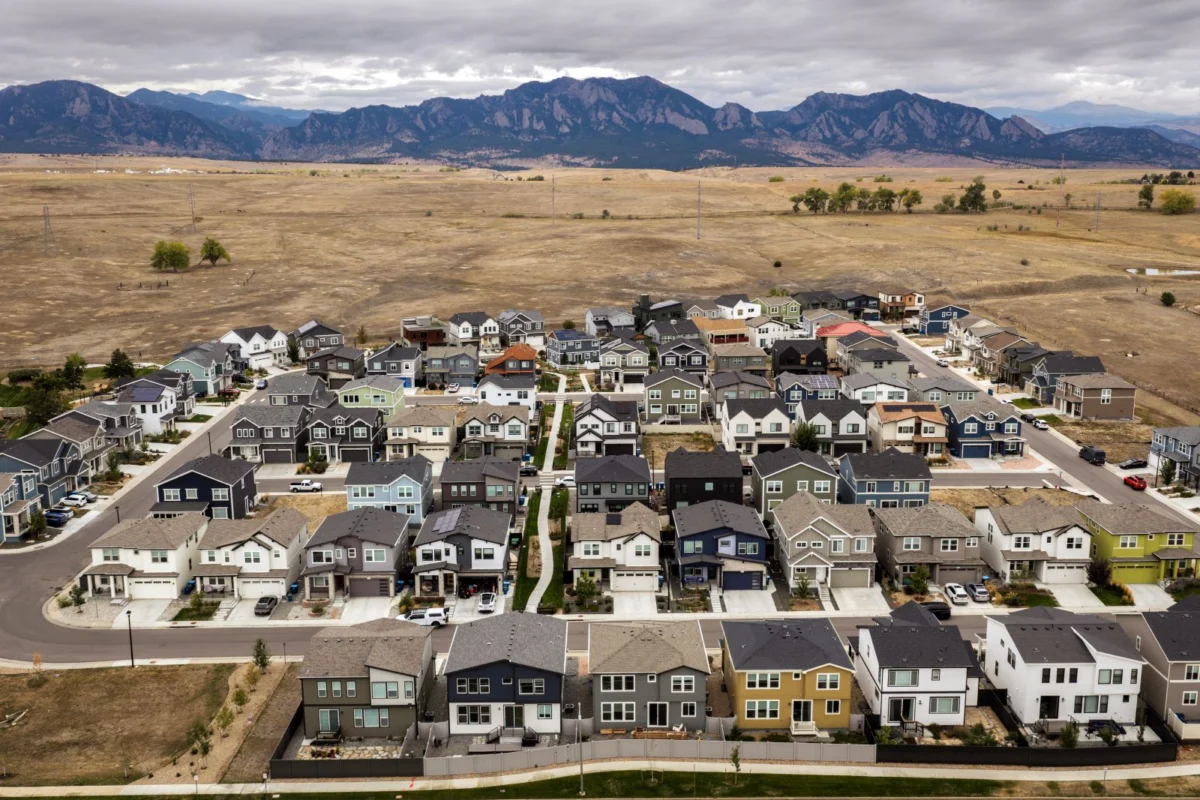
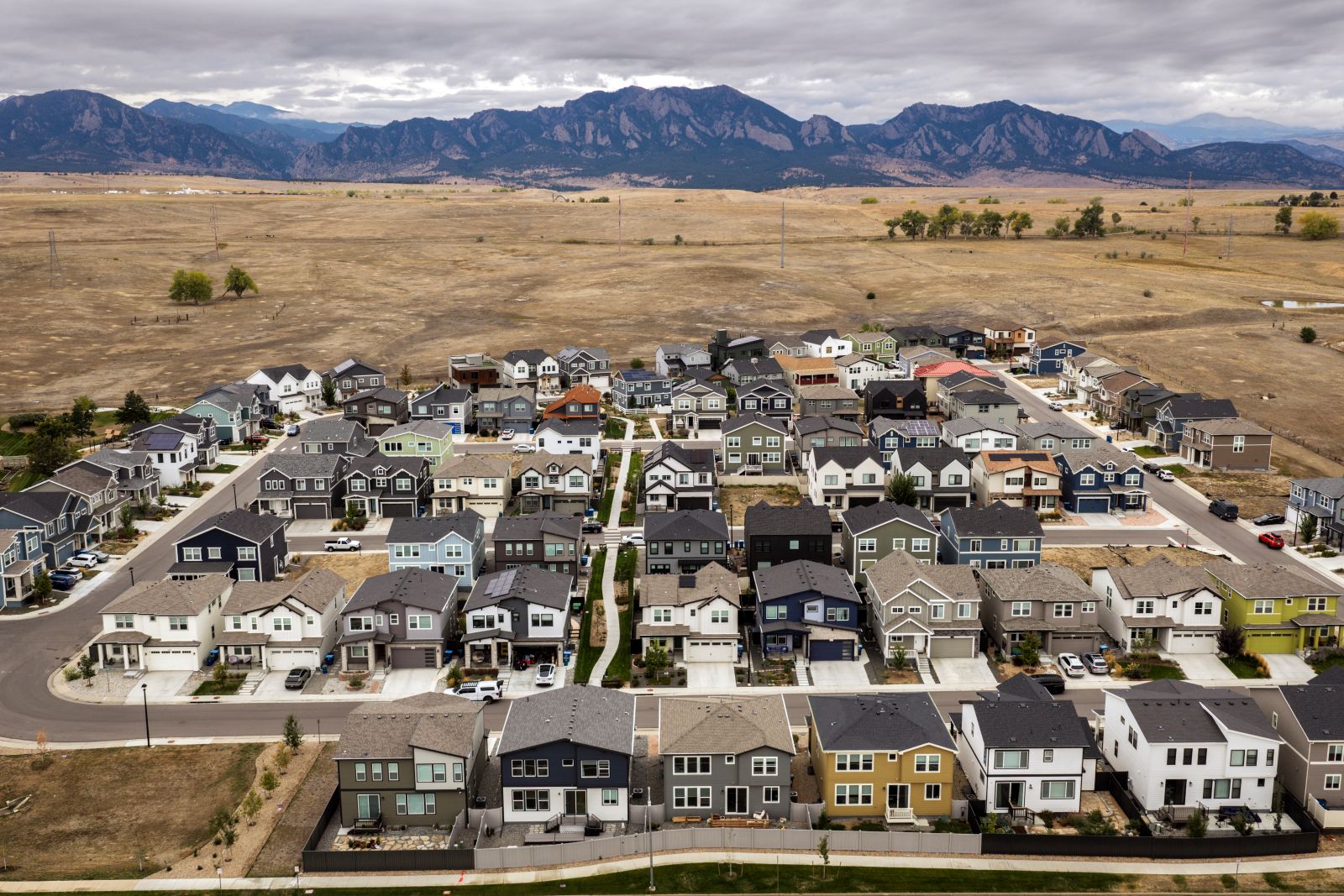
These local governments argue that they are left bearing the brunt of adaptation costs. For instance, Boulder County and neighboring communities have faced devastating natural disasters, including the catastrophic Marshall Fire—the most destructive wildfire in Colorado history—which decimated hundreds of homes and left lasting scars on the local landscape. Local leaders argue that taxpayers should not shoulder the entire financial burden of climate-proofing infrastructure, managing water shortages, and rebuilding after extreme weather events when fossil fuel companies allegedly misled the public about the environmental consequences of burning coal, oil, and natural gas.
The energy industry, supported by a network of corporate trade associations and conservative think tanks, has fought back aggressively. Corporate defense strategies have primarily focused on jurisdictional maneuvers, attempting to shift the battles out of friendly state courts and into federal courts, where judges have historically been more sympathetic to arguments that federal environmental statutes, such as the Clean Air Act, preempt state-level tort claims.
Broader Implications for the American Energy Sector
Legal scholars and environmental attorneys emphasize that the Supreme Court’s eventual ruling—expected several months from now—could profoundly alter the trajectory of environmental law in the United States.
"States and local governments are trying to recoup costs related to harms from climate change in a lot of different types of lawsuits," noted Erika Kranz, an attorney with Harvard Law School’s Environmental and Energy Law Program. "Whether these other cases run into trouble will depend on how justices write their decision."
Depending on the narrowness or breadth of the court’s rationale, the ruling could either grant a sweeping shield to the fossil fuel industry or greenlight a new era of high-stakes accountability litigation in state courts. Alternatively, a deadlocked 4-4 tie—potentially resulting from Justice Alito’s recusal amid ethical scrutiny over his personal investments—would leave the lower court’s refusal to dismiss the case intact, allowing Boulder’s lawsuit to proceed without setting a definitive nationwide Supreme Court precedent.
Observers note that Alito’s decision to step aside, while lacking a formal public explanation, follows persistent ethics questions regarding his financial holdings. Even without his vote, the ideological balance of the remaining eight justices leaves the outcome finely balanced.
Chronology of the Litigation and Path Forward
The legal battle over Boulder’s climate lawsuit follows a well-worn procedural timeline:
- 2018: Boulder County, along with the city of Boulder and San Miguel County, files a lawsuit in Colorado state court against ExxonMobil and Suncor Energy, alleging public nuisance, failure to warn, and consumer fraud.
- 2019-2021: ExxonMobil and Suncor successfully remove the case to federal district court, arguing that federal common law governs interstate emissions. Federal appeals courts repeatedly rule in favor of the municipalities, holding that federal courts lack jurisdiction and sending the cases back to state courts.
- 2024-2025: Energy companies petition the Supreme Court to review the jurisdictional and preemption questions, setting the stage for the high-profile 2026-2027 term arguments.
- October 2026: The Supreme Court hears oral arguments, focusing heavily on federal preemption, the extraterritorial reach of state laws, and the potential economic fallout for energy producers.
As the justices deliberate behind closed doors, legal analysts urge caution in predicting the final outcome. Chris Winter, executive director of the Getches-Wilkinson Center at the University of Colorado Law School, observed that the intense questioning directed at Boulder’s counsel reflects deep-seated anxieties within the corporate sector and among conservative members of the judiciary regarding the unbounded financial exposure climate litigation poses.
"There’s a lot of concern from the oil industry, from corporate actors, and from the conservative justices about the significant consequences of these cases," Winter said. "One way to get at that is to equate this case with previous cases, which were much more directly about regulation of pollution."
For Boulder’s legal team, the immediate task is bridging the gap between their narrow consumer deception theory and the justices’ macro-level fears of judicial overreach. Until the court publishes its opinion, communities on the front lines of climate change—and the multinational energy giants funding their defense—remain suspended in legal uncertainty, waiting for a decision that will echo far beyond the borders of Colorado.