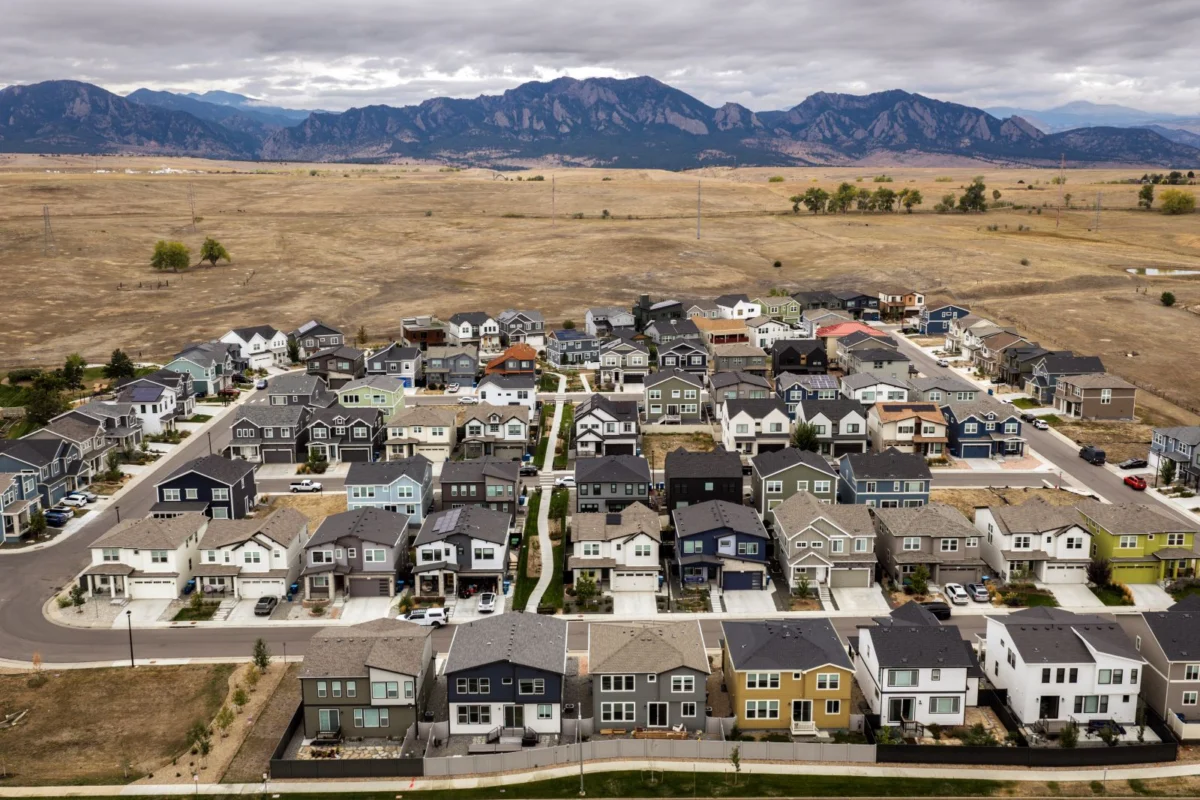
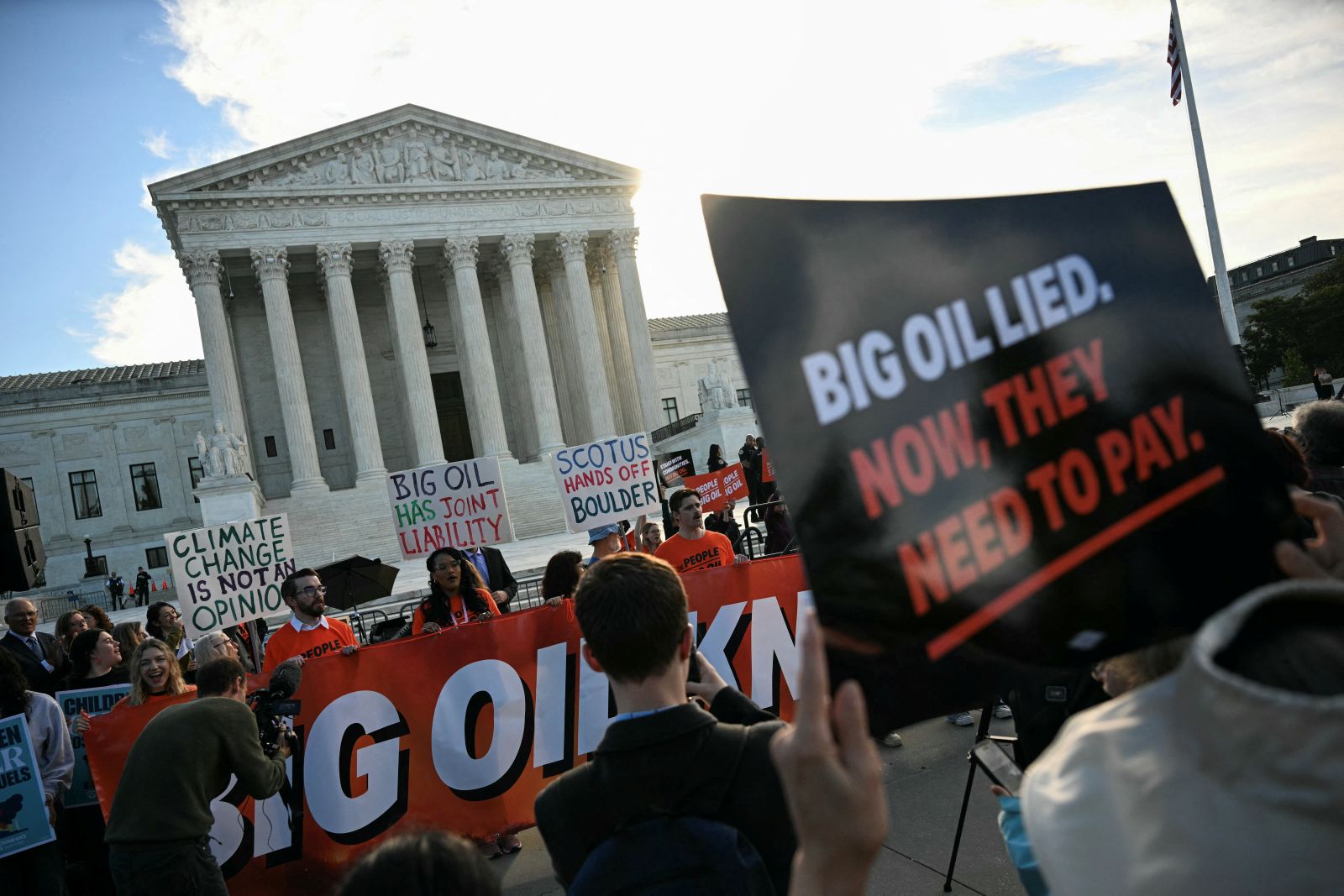
The United States Supreme Court convened for the opening session of its 2026–2027 term on Monday to hear oral arguments in a landmark climate change lawsuit that could reshape environmental litigation nationwide. The case, formally docketed as a legal battle between Boulder, Colorado, and energy giants ExxonMobil and Suncor Energy, centers on whether local and state governments can hold fossil fuel companies financially accountable for the mounting costs of managing a warming planet.
With dozens of similar municipal and state lawsuits pending across the United States, the high court’s impending decision carries profound implications. At its core, the litigation asks whether private energy companies must internalize the economic damages caused by their products, or if climate change regulation and liability remain exclusively within the purview of the federal government.
During the two-hour oral argument session, the eight participating justices offered few definitive indicators of how they intend to rule. However, they expressed near-unanimous agreement on one fundamental point: identifying legal liability for the broad, cumulative impacts of global climate change presents a uniquely difficult and consequential challenge for the American judicial system.
The Legal Battleground: State Court vs. Federal Authority
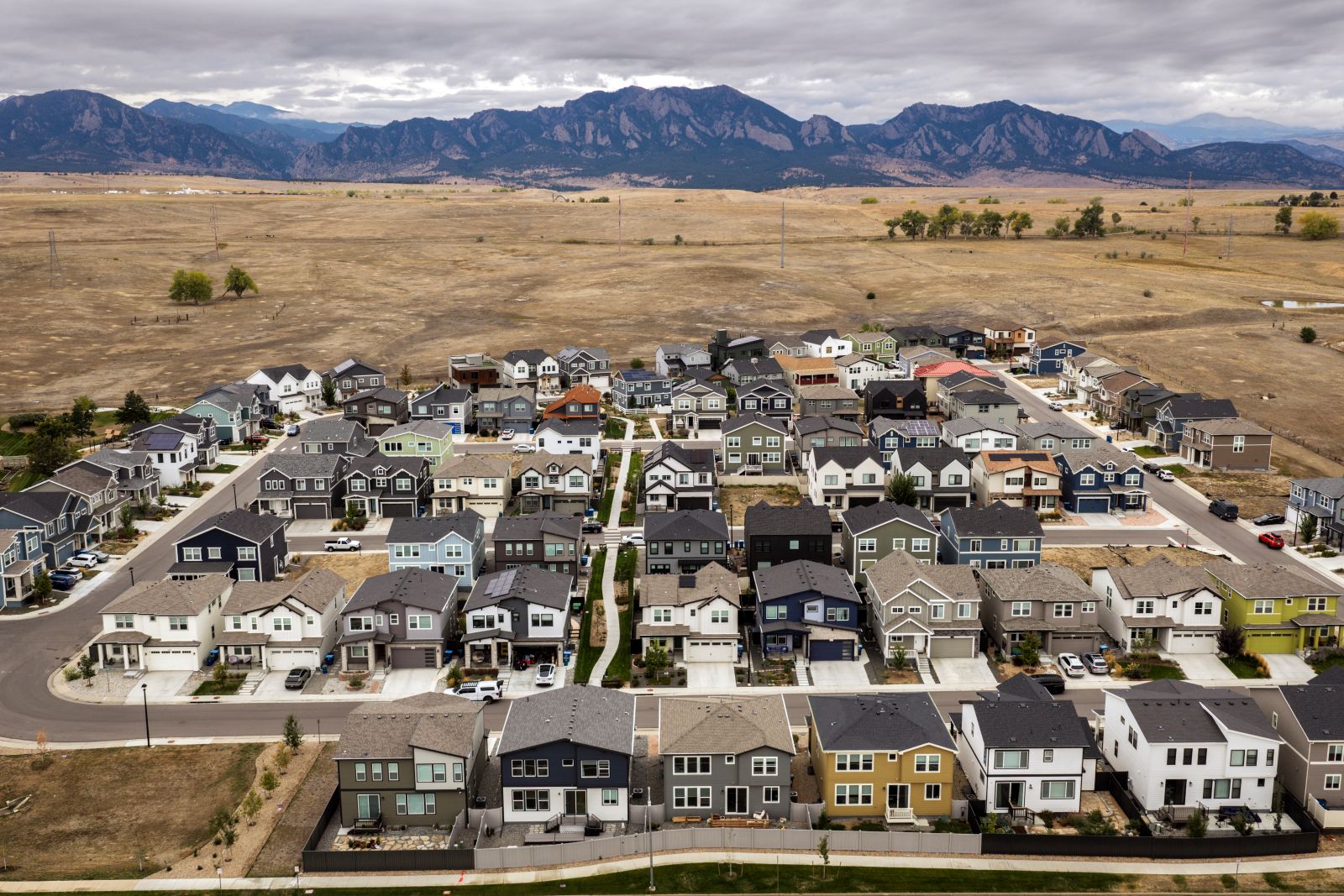
The origins of the dispute trace back to Colorado state courts, where Boulder and Boulder County filed their lawsuit seeking compensation for local climate-related expenses, such as disaster recovery and infrastructure fortification. Rather than fighting the merits of the case in local tribunals, ExxonMobil and Suncor petitioned the Supreme Court to intervene.
The energy companies argue that climate change is inherently global and national in scope, rendering state-level litigation an inappropriate and chaotic mechanism for addressing environmental policy. According to the defense, matters of greenhouse gas emissions and energy production belong strictly to the legislative and executive branches—specifically Congress and the White House. Boulder, conversely, is urging the high court to reject the companies’ petition and remand the case back to Colorado so that proceedings can continue locally.
Justice Samuel Alito recused himself from the proceedings, leaving an eight-member bench to parse the complex legal arguments. Throughout the session, multiple justices from across the ideological spectrum voiced frustration with the labyrinthine nature of the arguments. Justices repeatedly pressed attorneys from both sides to simplify their positions, asking variations of the question: "Why make this argument so complex?"
Despite these calls for simplicity, the bench remained deeply divided over the practical consequences of allowing the suit to proceed. While conservative and moderate justices heavily scrutinized the potential financial fallout for the energy sector, comparatively less judicial attention was devoted during the session to the immediate fiscal burdens carried by local communities grappling with extreme weather events.
Framing the Conflict: Regulation Versus Consumer Deception
A central point of contention during the arguments was the fundamental legal characterization of Boulder’s lawsuit. Attorneys for ExxonMobil and Suncor successfully steered portions of the discussion toward a familiar judicial framework: the regulation of greenhouse gas emissions.
Kannon Shanmugam, counsel for the oil companies, framed Boulder’s lawsuit as an unprecedented attempt to use state tort law to regulate global conduct. Shanmugam warned that a ruling in favor of Boulder would invite a domino effect of litigation, creating an unworkable patchwork of state laws aimed at policing worldwide emissions.
"This case involves an unprecedented effort to use state law to regulate global conduct," Shanmugam argued before the court, adding a hypothetical scenario to illustrate the slippery slope: "Boulder could tag me… when I am in Colorado in two weeks and sue me on a nuisance claim for refilling my car and thereby contributing to global climate change."
Justice Brett Kavanaugh echoed these concerns, stating he saw little functional difference between ordering oil companies to pay damages for climate harms and allowing an individual state to effectively regulate global greenhouse gas emissions. Kavanaugh cautioned Boulder’s attorney, Kevin Russell, that the financial exposure of the lawsuit could potentially "bankrupt" certain energy firms.
However, Boulder’s legal team pushed back strongly against the characterization that the city is seeking to cap energy production or dictate emissions standards. Russell clarified that the municipality is not asking the courts to halt fossil fuel extraction or penalize consumers for burning gas. Instead, Boulder’s claims are rooted in consumer protection and fraud—specifically, allegations that energy companies intentionally deceived the public for decades regarding the well-documented environmental risks of their products.
Drawing a parallel to historical litigation, Justice Elena Kagan compared Boulder’s strategy to the landmark lawsuits brought by U.S. states against major tobacco companies during the 1990s. In those historic settlements, tobacco firms were not prohibited from selling cigarettes, but were instead held financially accountable for healthcare costs linked to smoking and forced to fund public health education campaigns.
"This is not an effort to reduce emissions," Russell emphasized during his arguments. "Under our deception theory, they can continue to produce as much fossil fuels as they like and contribute to as much air pollution and greenhouse gas emissions as the market will bear when consumers are properly informed about the consequences of that decision. It doesn’t prohibit them from engaging in the conduct. It requires them to internalize a portion of the cost of their activities by paying for some of the damage."
Despite this framing, Justice Kavanaugh dismissed Russell’s explanation as "cavalier," emphasizing that the billions of dollars in potential damages sought by municipalities represent an existential threat to corporate bottom lines. Energy firms, including co-defendant Suncor, have repeatedly warned their shareholders that accumulating climate litigation poses a material risk to their financial viability.
Chronology and Background of Municipal Climate Litigation
The Boulder lawsuit is part of a broader, escalating wave of sub-federal climate litigation that has unfolded over the past decade. A brief chronology highlights the trajectory of these legal battles:
- Late 1990s to Early 2000s: State attorneys general successfully sue major tobacco manufacturers, establishing a precedent for public nuisance and consumer deception lawsuits aimed at recovering systemic societal costs.
- 2017–2020: Buoyed by advancing climate attribution science—which allows researchers to link specific extreme weather events and temperature anomalies directly to carbon emissions—municipalities and states in California, New York, Washington, and Colorado begin filing lawsuits against major investor-owned oil companies.
- 2020–2024: Fossil fuel companies wage a prolonged procedural battle to move these lawsuits from state courts to federal courts, where they believe they stand a better chance of dismissal. Federal appeals courts overwhelmingly rule that the cases belong in state courts, prompting the energy industry to petition the U.S. Supreme Court for review.
- 2025: Legal scholars and environmental law programs track a proliferation of municipal filings, with new damage-recovery suits introduced by local governments nearly every week.
- October 2026: The Supreme Court hears oral arguments in Boulder v. ExxonMobil/Suncor, marking the first time the high court directly confronts the core liability question underpinning this nationwide wave of litigation.
Broader Implications and Potential Judicial Outcomes
Legal analysts note that the Supreme Court’s eventual ruling, which is expected months from now following internal deliberations, could take several distinct forms, each carrying widely different consequences for the future of environmental law.
Erika Kranz, an attorney with Harvard Law School’s Environmental and Energy Law Program, noted that states and local governments are pursuing climate recovery through a diverse array of legal theories. Whether these auxiliary lawsuits survive judicial scrutiny will depend heavily on the narrowness or breadth of the reasoning deployed by the Supreme Court justices in their final opinion.
Options available to the court include:
- A Broad Ruling for Fossil Fuel Companies: The court could rule that federal statutes, such as the Clean Air Act, preempt state-level nuisance claims, effectively terminating Boulder’s lawsuit and throwing out dozens of parallel cases across the country.
- A Remand to State Courts: The court could determine that it lacks jurisdiction or that the case was prematurely elevated, sending the matter back to Colorado courts to proceed under state tort law.
- A Deadlocked 4-4 Decision: Due to Justice Alito’s recusal, a tie vote would automatically affirm the lower court’s decision allowing the Boulder lawsuit to proceed locally, though it would set no binding national precedent.
Chris Winter, executive director of the Getches-Wilkinson Center at the University of Colorado Law School, observed that the intense focus by conservative justices on the financial risks to corporations signals a deep skepticism toward local government intervention in global environmental matters.
"There’s a lot of concern from the oil industry, from corporate actors, and from the conservative justices about the significant consequences of these cases," Winter said. "One way to get at that is to equate this case with previous cases, which were much more directly about regulation of pollution."
For Boulder’s legal team, the immediate task is navigating this judicial skepticism and convincing the bench that the financial liabilities faced by oil companies are legally distinct from direct emissions caps. Until the court publishes its decision later in the term, the future of climate accountability litigation remains hanging in the balance, watched closely by municipal leaders, corporate boardrooms, and legal scholars alike.