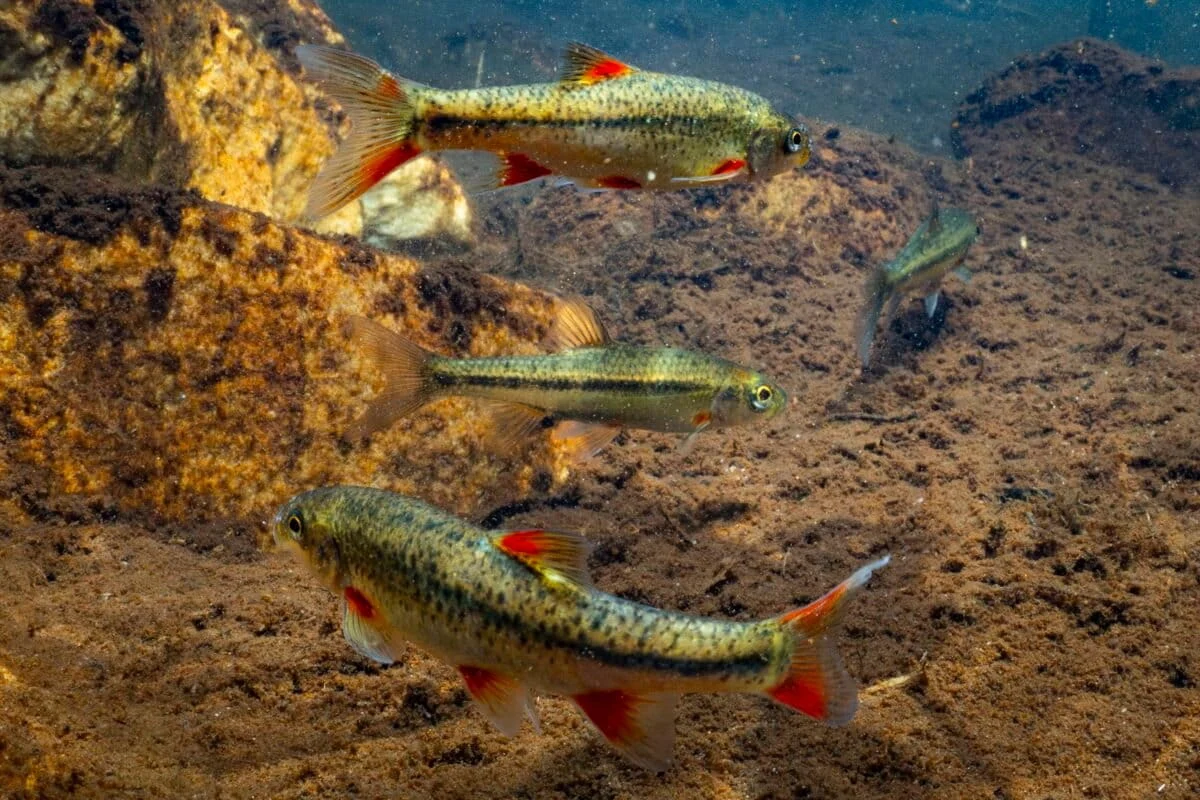
The Breekkrans River, a vital waterway located approximately two hours north of Cape Town, South Africa, has become the epicenter of a pioneering conservation effort aimed at reversing the catastrophic impact of invasive species on indigenous biodiversity. At the heart of this initiative is the critical rescue of the doring fiery redfin (Pseudobarbus doring), a critically endangered freshwater fish species that had been pushed to the brink of extinction by the presence of non-native spotted bass. Through a coordinated, multi-year mechanical eradication project, conservationists have successfully reclaimed eight kilometers of river habitat, providing a lifeline for one of South Africa’s most vulnerable aquatic species.
The Ecological Conflict: A Legacy of Misguided Introduction
The ecological crisis currently being addressed in the Breekkrans River dates back nearly a century. In the late 1930s, government authorities and angling enthusiasts introduced spotted bass (Micropterus punctulatus) into South African river systems. The objective was purely recreational: to establish a robust population of game fish that would satisfy the growing demand for sport fishing. At the time, the long-term ecological consequences of introducing an aggressive, apex predator into an ecosystem evolved for small-bodied fish were poorly understood.
Martine Jordaan, a faunal ecologist at Cape Nature, explains the fundamental incompatibility between the invasive bass and the local fauna. "What makes bass a good angling fish makes it a bad invader," she notes. "It is highly aggressive and opportunistic, specifically targeting small fish. The reality is that the vast majority of our native freshwater fish species are 12 centimeters or smaller. They simply have no evolutionary defense against a predator of this size and temperament."
As the spotted bass population proliferated, they moved systematically through the river systems, occupying every available niche until they encountered natural physical barriers, such as steep waterfalls, which they could not ascend. This led to a pattern where indigenous populations were forced into isolated, fragmented "refugia"—small, high-altitude stream segments that the bass could not reach. The doring fiery redfin, once widespread, found itself reduced to a precarious existence in a single two-kilometer stretch of the Breekkrans, with only a few hundred adults remaining in the wild.
Chronology of the Breekkrans River Restoration Project
The Breekkrans River Restoration Project, a collaborative endeavor between the Freshwater Research Centre (FRC), Cape Nature, and the Fynbos Fish Trust, represents a shift from passive observation to active intervention. The project gained significant momentum in 2023, formalizing a strategy to systematically remove invasive fish from the river.
The project timeline was structured around the Southern Hemisphere’s summer months, when water levels are lower and fish activity is more predictable. The intervention phase followed a rigorous methodology:
- 2023: Initial mapping of the bass population and the deployment of specialized mechanical removal teams.
- 2023-2024: The construction of a downstream fish barrier, a critical piece of infrastructure designed to prevent recolonization by bass from lower reaches of the river system.
- 2024: Completion of the primary eradication phase, covering an eight-kilometer stretch of the upper Breekkrans.
By employing a combination of electrofishing, netting, and targeted spearfishing, the teams were able to identify and remove invasive specimens while minimizing disruption to the sensitive native populations. This mechanical approach, while labor-intensive, avoids the use of chemical piscicides, which could have detrimental side effects on the broader ecosystem, including amphibians and aquatic invertebrates.
Supporting Data and Biodiversity Recovery
The immediate results of the intervention have been described by researchers as a "major breakthrough." Prior to the restoration efforts, the doring fiery redfin was confined to a mere 1.2-mile (2-kilometer) section of the river. Post-eradication, the available habitat for the species has expanded to 10 kilometers (6 miles).
Jeremy Shelton, a freshwater conservation ecologist at the FRC, emphasizes that the benefits are not limited to the redfin. "All native fish showed recovery," he notes. "All species experienced an increased range, and this was a direct result of removing the predatory impact of the spotted bass."

The data collected by the FRC team highlights a clear correlation between the removal of the predator and the immediate colonization of newly cleared habitats by native species. In ecological terms, the "release" of the native population from predatory pressure has allowed for improved recruitment rates, meaning more juveniles are surviving to adulthood. With the adult population of the doring fiery redfin estimated in the hundreds, every kilometer of restored habitat represents a significant increase in the species’ total carrying capacity and, by extension, its long-term viability.
Perspectives from the Field
The success of the Breekkrans project is being viewed as a blueprint for freshwater conservation across the Western Cape and beyond. The collaboration between government agencies like Cape Nature and non-governmental scientific organizations like the FRC has provided a robust framework that balances technical expertise with on-the-ground execution.
For conservationists, the project proves that invasive species, which are often viewed as a permanent feature of a landscape, can be managed if the geography is favorable and the effort is sustained. The use of physical barriers is particularly critical; it transforms the river from a porous, vulnerable system into a protected sanctuary. Experts suggest that while total global eradication of spotted bass is impossible, the "containment and recovery" model used at Breekkrans is the most pragmatic way to prevent the extinction of localized, endemic species.
Broader Implications for South African Conservation
The restoration of the Breekkrans River has implications that extend far beyond the recovery of the doring fiery redfin. It forces a public and scientific re-evaluation of the historical legacy of invasive species in South Africa. For decades, the economic value of angling tourism tied to species like bass, trout, and carp has often been weighed against the intrinsic value of native biodiversity. This project suggests that it is possible to create "native-only" zones within the river network, allowing for both the protection of heritage species and the continued enjoyment of other river segments for recreational purposes.
Furthermore, the project highlights the increasing importance of the Fynbos biome’s aquatic health. The rivers of the Western Cape are home to a disproportionately high number of endemic freshwater fish, many of which are listed as Critically Endangered on the IUCN Red List. The success in the Breekkrans provides a proven methodology for addressing threats in other sensitive catchments.
However, the project also serves as a warning about the fragility of these systems. Climate change, specifically altered rainfall patterns and increasing temperatures, adds an additional layer of stress to these river systems. Invasive species, if left unchecked, act as a force multiplier for these climate-related stressors. By restoring the native fish, the project essentially "re-wilds" the river, creating a more resilient ecosystem that is better equipped to handle the environmental challenges of the 21st century.
Future Outlook and Scientific Legacy
As the Breekkrans project enters its next phase—monitoring and long-term surveillance—the focus shifts to ensuring that no bass re-enter the protected zones. The physical barrier will require regular maintenance, and the monitoring of fish populations will continue to provide essential data for future conservation assessments.
Jeremy Shelton is optimistic about the wider applications of this work. "This demonstrates that invasive bass can be completely and permanently eradicated from entire stretches of river using mechanical methods," he says. "It opens the door to restoring other invaded rivers, provided we have the resources and the political will to do so."
The story of the Breekkrans River is a testament to the power of targeted, science-led intervention. It turns the tide on a nearly century-old ecological mistake, offering a rare success story in the fight against biodiversity loss. For the doring fiery redfin, the future is now significantly brighter, and for the conservation community, the Breekkrans project serves as a beacon of what can be achieved when specialized knowledge is applied to preserve the natural heritage of the Cape.
Ultimately, the lesson of the Breekkrans is that extinction is not inevitable. Even when a species is pushed to the edge, the combination of habitat restoration, predatory control, and dedicated monitoring can create the conditions necessary for a comeback. As the Breekkrans continues to flow, it does so with a reinvigorated native population, serving as a living laboratory for the future of freshwater conservation.