North Korea: The Hermit Kingdom’s Geopolitical Enigma and Nuclear Ambitions
The Democratic People’s Republic of Korea (DPRK), commonly known as North Korea, stands as one of the world’s most isolated and tightly controlled nations. Its opaque political system, state-controlled economy, and persistent pursuit of nuclear weapons have rendered it a persistent geopolitical enigma, a focal point of international concern, and a subject of intense scrutiny. Understanding North Korea requires delving into its historical origins, its unique Juche ideology, its complex relationship with regional powers, and the multifaceted challenges it presents to global security. The DPRK’s unwavering commitment to developing and diversifying its nuclear and missile capabilities continues to shape international diplomacy, driving sanctions, and fueling anxieties across East Asia and beyond. This article will explore these critical facets of the Hermit Kingdom, aiming to provide a comprehensive overview for those seeking to grasp the complexities of this reclusive state.
The genesis of North Korea can be traced to the post-World War II division of the Korean peninsula. Following Japan’s surrender, the Soviet Union occupied the North, while the United States administered the South. This division, intended to be temporary, solidified into two ideologically opposed states: the communist DPRK led by Kim Il-sung, and the capitalist Republic of Korea (ROK) in the South. The Korean War (1950-1953), a brutal conflict fueled by Cold War rivalries and an attempted unification by the North, resulted in an armistice but no formal peace treaty, leaving the peninsula technically still at war. This prolonged state of conflict has deeply ingrained a sense of existential threat within North Korea, a narrative that continues to justify its militaristic policies and its emphasis on self-reliance. Kim Il-sung’s vision of a self-sufficient socialist state, free from foreign influence, laid the groundwork for the unique political and economic system that characterizes the DPRK today. This ideology, known as Juche, translates roughly to "self-reliance" and has become the cornerstone of North Korean national identity and governance.
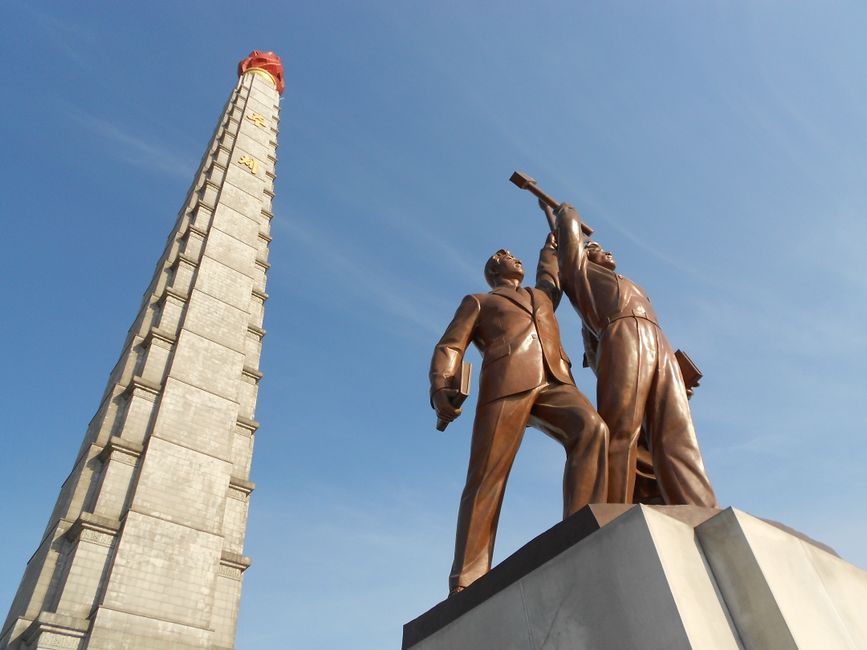
The Juche ideology, meticulously crafted by Kim Il-sung and his successors, permeates every aspect of North Korean society. It emphasizes the absolute leadership of the Korean Workers’ Party, the supreme importance of the Korean people, and the necessity of political and economic independence from external forces. Juche has evolved over decades, incorporating elements of Marxism-Leninism but ultimately prioritizing Korean nationalism and a cult of personality surrounding the Kim dynasty. The ideology serves as a powerful tool for political control, justifying the extensive surveillance, propaganda, and repression that define life for most North Koreans. It fosters a narrative of national unity against perceived external enemies, particularly the United States and South Korea, thereby legitimizing the state’s prioritization of military spending over the welfare of its citizens. The concept of "Songun" (military-first) politics, further enshrined by Kim Jong-il, solidified the military’s central role in national affairs, directly linking national security and economic development to the strength and advancement of the armed forces, especially its nuclear program.
North Korea’s nuclear ambitions represent its most significant and contentious foreign policy objective. Beginning its nuclear program in the late 1950s, the DPRK has consistently pursued the development of atomic weapons as a cornerstone of its national defense strategy and a means to deter perceived threats from the United States and its allies. Decades of clandestine development, punctuated by several declared nuclear tests and numerous ballistic missile launches, have resulted in a growing arsenal of nuclear weapons and a range of delivery systems capable of reaching regional targets and, potentially, the United States mainland. The DPRK’s rationale for its nuclear program is rooted in its perceived existential insecurity, its desire for international recognition as a nuclear power, and its belief that nuclear weapons are the ultimate guarantor of its regime’s survival. The international community, however, views North Korea’s nuclear activities as a direct threat to regional and global security, leading to a protracted period of sanctions and diplomatic isolation.
The international response to North Korea’s nuclear program has been characterized by a cycle of sanctions, diplomatic negotiations, and occasional provocations. The United Nations Security Council has imposed a stringent regime of sanctions, aiming to cut off funding for the DPRK’s weapons programs and pressure the regime to denuclearize. These sanctions, while inflicting economic hardship on the North Korean populace, have thus far failed to compel the regime to abandon its nuclear ambitions. Diplomatic efforts, including the Six-Party Talks (involving North Korea, South Korea, the United States, China, Japan, and Russia) and subsequent bilateral meetings, have yielded limited success, with periods of dialogue often collapsing due to Pyongyang’s intransigence or its pursuit of further weapons advancements. The United States, in particular, has maintained a policy of "maximum pressure and engagement," a strategy that seeks to isolate North Korea economically and diplomatically while keeping the door open for dialogue. However, the effectiveness of these approaches remains a subject of ongoing debate.
Regional powers play a crucial role in shaping the dynamics of the Korean peninsula. China, North Korea’s traditional ally and economic lifeline, holds significant influence. Beijing’s support, though increasingly strained by Pyongyang’s provocations, remains vital for the survival of the North Korean regime. China’s primary interests lie in maintaining stability on its border, preventing a collapse of the North Korean state that could lead to a refugee crisis and a unified, U.S.-aligned Korea, and discouraging further nuclear proliferation. South Korea, a democratic and prosperous nation, maintains a complex relationship with the North, oscillating between periods of engagement and heightened tensions. Seoul’s ultimate goal is the peaceful unification of the peninsula, but it is also deeply invested in deterring North Korean aggression. Japan, a close U.S. ally, views North Korea’s nuclear and missile programs as a direct threat to its national security and has actively participated in international efforts to impose sanctions and promote denuclearization. Russia, while having historical ties to North Korea, has also expressed concerns about Pyongyang’s nuclear activities and has supported UN sanctions.
The humanitarian situation within North Korea remains a significant concern for the international community. Decades of economic mismanagement, sanctions, and the prioritization of military spending have led to chronic food shortages, malnutrition, and a severely underfunded healthcare system. While the North Korean government denies widespread suffering and attributes its economic difficulties to external pressures, numerous reports from defectors and international organizations paint a grim picture of hardship for ordinary citizens. The regime’s tight control over information and its restrictions on humanitarian aid access complicate efforts to provide assistance and assess the true extent of the crisis. The well-being of the North Korean population is inextricably linked to the broader geopolitical issues, as any significant improvement in living standards would likely require a fundamental shift in the regime’s priorities and its engagement with the outside world.
North Korea’s persistent pursuit of advanced weaponry, including intercontinental ballistic missiles (ICBMs) capable of reaching the United States, has heightened global security concerns. The development and testing of these systems are seen by many as a clear indication of the regime’s intention to possess a credible nuclear deterrent and, potentially, the ability to project power. This proliferation of advanced weaponry fuels regional arms races and increases the risk of miscalculation and escalation. The international community faces the formidable challenge of managing this threat while avoiding direct military conflict, which would have catastrophic consequences for the Korean peninsula and beyond. The ongoing debate within the international community revolves around finding effective strategies to curb North Korea’s weapons programs without triggering a larger conflagration.
The future of North Korea remains highly uncertain. The succession of Kim Jong-un, the third leader of the Kim dynasty, has seen a continuation of the regime’s hardline policies, coupled with periods of intense diplomatic engagement followed by renewed provocations. The internal dynamics of the regime, including the loyalty of the elite and the potential for popular discontent, are difficult to assess due to the extreme secrecy surrounding the country. External factors, such as the geopolitical landscape in East Asia, the policies of major global powers, and the effectiveness of international sanctions, will continue to play a significant role in shaping North Korea’s trajectory. The prospect of denuclearization remains a distant goal, contingent upon a fundamental shift in the regime’s security calculus and a willingness to engage in genuine and verifiable disarmament.
In conclusion, North Korea represents a profound and persistent challenge to international peace and security. Its Juche ideology, its nuclear ambitions, its isolationist policies, and its complex relationships with regional powers create a volatile geopolitical environment. Understanding the nuances of this Hermit Kingdom, from its historical roots to its contemporary challenges, is crucial for navigating the complexities of global diplomacy and for working towards a more stable and secure future for the Korean peninsula and the wider international community. The ongoing interplay of sanctions, diplomacy, and the ever-present threat of nuclear escalation ensures that North Korea will remain a central focus of global attention for the foreseeable future.
