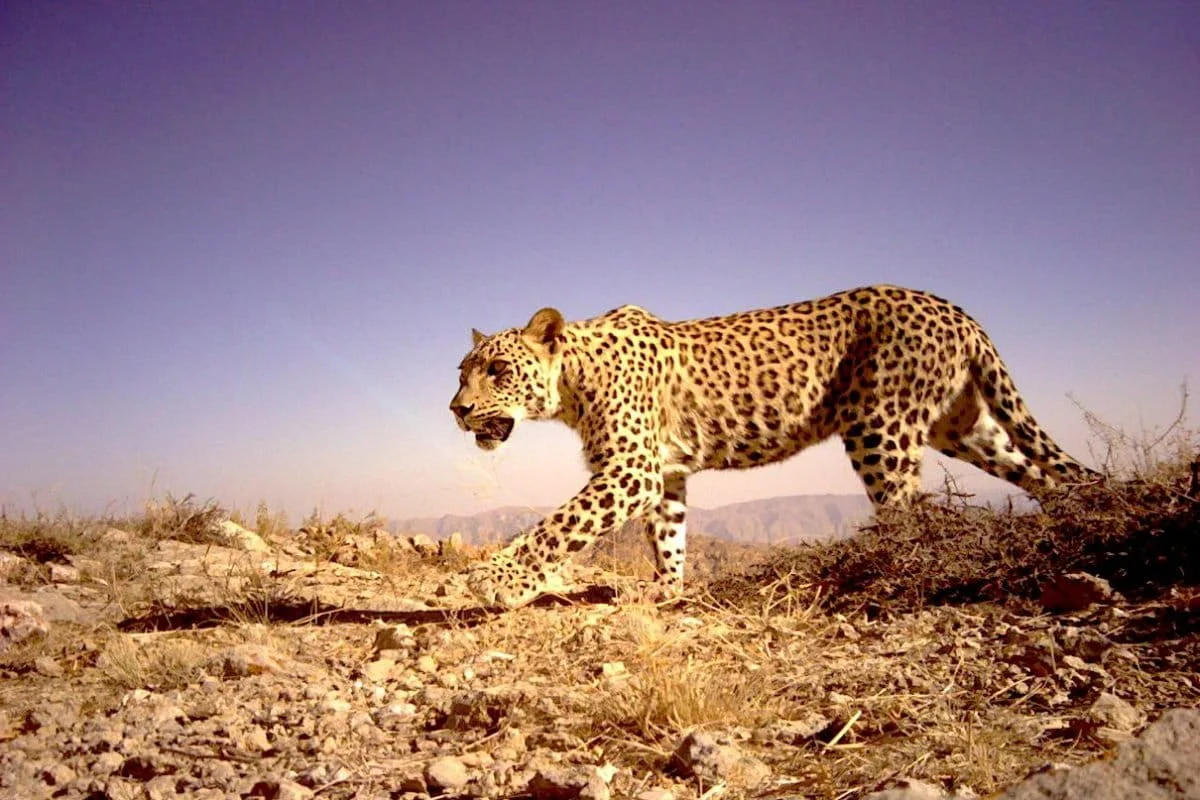
The Caucasus region, a critical biodiversity hotspot stretching between the Black and Caspian Seas, is currently witnessing a rare and harrowing story of survival. At the center of this narrative is Aren, a male Persian leopard (Panthera pardus tulliana), whose 240-kilometer journey across fractured, conflict-ridden terrain has provided scientists with unprecedented insights into the struggles of this endangered subspecies. Over the past two decades, sightings of the Persian leopard in the Caucasus have been extraordinarily scarce—just three documented in Georgia and ten in Armenia—making the tracking of this particular individual a significant milestone for regional conservationists.
The Geopolitical Landscape and the Cost of Conflict
The Caucasus is characterized not only by its rugged, high-altitude mountain ranges but also by a complex web of geopolitical borders. These boundaries are frequently defined by historical and contemporary conflicts between nations, including Armenia, Azerbaijan, and Georgia. A grim legacy of these tensions is the presence of thousands of hectares of landmines and remnants of Soviet-era infrastructure.
For wildlife, these borders are invisible, yet the physical manifestations of human conflict are lethal. It is widely presumed by experts that Aren, who was initially observed as a healthy, four-limbed adult in Armenia’s Vayots Dzor Province, lost a limb due to an encounter with a landmine. His subsequent migration—a trek of approximately 150 miles across dangerous, snowy, and mountainous terrain—is a testament to the instinctual drive of a species struggling to find viable, connected habitats in a landscape increasingly fragmented by barbed wire and military zones.
A Chronology of Survival
The story of Aren begins in the ARPA Protected Landscape in South Central Armenia. Rangers first identified him as a healthy young male, likely having migrated from the Azerbaijani exclave of Nakhchivan. This region is a vital, albeit high-risk, corridor for leopard movement.
- Initial Identification: Rangers at the ARPA Protected Landscape documented the leopard, who was named "Aren" after the nearby village of Areni, famous for its viticulture.
- The Injury: Following a period of absence, Aren reappeared on camera traps with a missing limb. Scientists attribute this injury to the extensive minefields bordering the Nakhchivan territory.
- The Migration: Despite his physical impairment, Aren undertook an arduous journey northward. He traversed the Ijevan Forest in Armenia, crossed the border into Georgia, and eventually reached the Algeti National Park.
- Current Status: His presence in Algeti was confirmed via a chance capture on a CCTV camera installed for a Caucasian deer reintroduction project, marking one of only three documented sightings in Georgia in the last 20 years.
The Role of Conservation NGOs in Resource-Scarce Environments
The monitoring of these elusive predators falls to small, dedicated NGOs operating under immense financial strain. One such organization, the Centre for Biodiversity Conservation & Research (NACRES), founded in 1991 as the Noah’s Ark Centre for the Recovery of Endangered Species, has been at the forefront of this effort in Georgia.
Led by zoologist Bejan Lortkipanidze, the NACRES team operates with a staff of only three, relying on limited resources and a deep commitment to field research. The difficulty of their work is compounded by a global tightening of conservation funding and the recent withdrawal of major international support structures, such as USAID, which previously provided essential infrastructure for regional conservation programs.
Lortkipanidze notes that if resources were unlimited, his priority would be to establish a comprehensive monitoring center combined with aggressive education and outreach programs. By engaging with remote villages in regions like Tusheti, conservationists hope to implement mitigation strategies that prevent retaliatory killings—a common phenomenon where farmers, fearing for their livestock, may use poison or traps that inadvertently claim the lives of leopards.
Scientific Implications of the Three-Legged Predator
The fact that Aren successfully hunted prey while missing a limb has surprised many in the zoological community. Camera trap footage shows the leopard utilizing his environment, specifically caves, to compensate for his limited mobility. By launching from elevated positions or utilizing narrow cave mouths as natural chokepoints, Aren has managed to survive in an ecosystem where he is physically disadvantaged.
This behavior highlights a broader scientific question: Are these leopards moving because of habitat loss, or are they following the natural pulse of prey populations? Experts suggest that while Aren’s journey is extraordinary, it is consistent with the dispersal patterns of young male leopards seeking new territories. The primary issue is that the landscape they enter is no longer a natural corridor but a death trap of fences and mines.
The Human-Wildlife Coexistence Paradigm
The Persian leopard, also known as the Caucasian or Anatolian leopard depending on the region, is the largest leopard subspecies in the world. With fewer than 1,100 individuals estimated to remain in the wild, their survival is inextricably linked to the restoration of habitat connectivity.
Journalist Kayleigh Long, who has documented these conservation efforts, argues that the story of the leopard is a metaphor for the human condition in the Caucasus. "When you look at things like borders, they can reflect the very worst of our instincts," Long stated in a recent interview. "But if people are able to cooperate and recognize that we are a part of nature… we all have to get along."
The implications of this study are clear: conservation in conflict zones cannot be separated from political stability. De-mining operations, which are often discussed in the context of human safety, have secondary, critical benefits for biodiversity. When hunters or landmines are removed from a territory, prey species like the Bezoar goat often recover, which in turn creates a more sustainable food chain for apex predators.
Future Prospects and Moral Imperatives
Despite the bleak statistics and the persistent threat of landmines, the presence of leopards like Aren offers a flicker of hope. For conservationists, the "umbrella" effect of the leopard is significant; by protecting the habitat of the leopard, NGOs are effectively safeguarding entire ecosystems that support a wide array of other flora and fauna.
The persistence of the NACRES team and the survival of Aren serve as a reminder that nature is often more resilient than human systems. However, resilience is not a substitute for active conservation management. The future of the Persian leopard in the Caucasus will likely depend on three factors:
- Increased Transboundary Cooperation: Developing formal agreements between Armenia, Georgia, and Azerbaijan to manage shared habitats as a single ecological unit.
- Targeted Funding: Redirecting resources to local organizations that have the local expertise and "boots on the ground" to manage monitoring and conflict mitigation.
- Human-Wildlife Conflict Resolution: Investing in infrastructure—such as predator-proof enclosures and compensation programs for farmers—to ensure that the presence of a leopard is seen as an ecological asset rather than an economic threat.
As researchers continue to monitor the movements of the few remaining leopards in the region, the story of Aren remains a poignant, if stark, reminder of the fragility of our natural world. In an era where political lines are drawn with barbed wire and landmines, the journey of a three-legged leopard through the heart of the Caucasus serves as both a scientific anomaly and a call for a more unified approach to environmental stewardship. Hope, in this context, is not merely an optimistic sentiment; it is a moral imperative for those tasked with preserving the planet’s remaining wild spaces.