The escalating frequency and intensity of extreme weather events driven by climate change have outpaced traditional emergency management structures, creating an unprecedented information crisis. As supercharged wildfires, rapidly intensifying hurricanes, severe droughts, and sudden floods displace communities with devastating speed, emergency managers are finding themselves locked in an unequal battle against a digital ecosystem overrun by misinformation, rapid-fire social media conspiracies, and generative artificial intelligence. This modern information chaos is not merely a nuisance; it is actively slowing disaster relief operations, compromising public safety, eroding institutional trust, and placing vulnerable lives at severe risk.
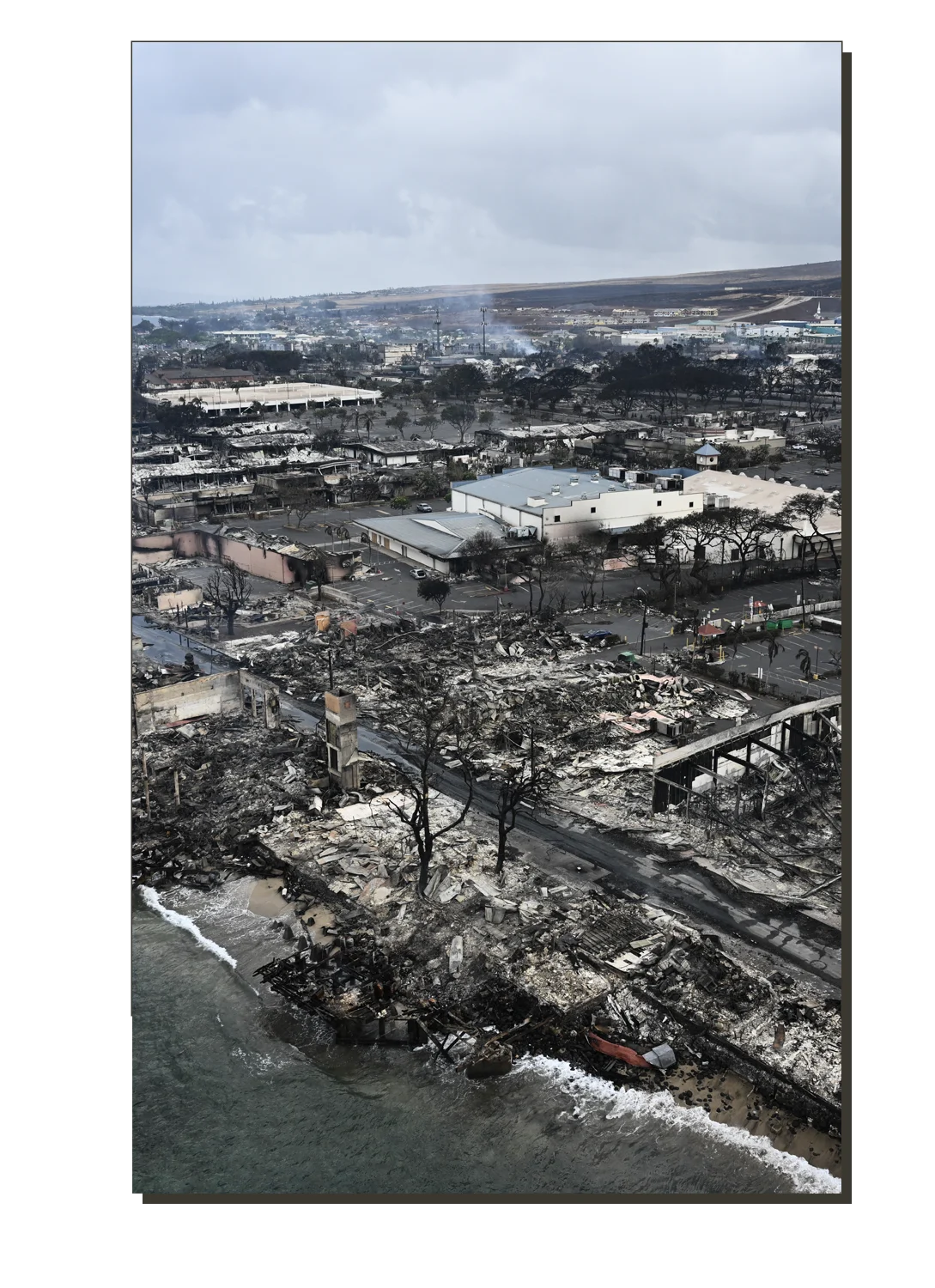
The modern anatomy of disaster misinformation was starkly illustrated in the aftermath of the August 2023 Maui wildfires. The tragedy, which ultimately claimed more than 100 lives, destroyed nearly 2,000 homes, and caused over $5.5 billion in damages, began when a broken power pole owned by a local electric utility sparked against dry vegetation on a high-wind day. Yet, within hours of the flames engulfing the historic town of Lahaina, millions of social media users across major platforms including TikTok, Instagram, and X were exposed to a radically different narrative.
A persistent rumor alleged that the disaster was not the result of a climate-fueled brush fire, but rather an intentional attack using a government-operated "directed energy weapon" or laser. Proponents of this conspiracy claimed the disaster was orchestrated to clear land for a high-speed rail line or a high-tech "smart city." These unfounded claims were rapidly amplified by prominent right-wing social media personalities and foreign state-backed networks, notably including accounts linked to China observed by the Federal Emergency Management Agency (FEMA) circulating "weather weapon" rumors. Additional false claims alleged that FEMA intended to seize the properties of residents applying for emergency aid, deeply compounding historical and cultural traumas within the Indigenous community.
The Chronology of a Digital Conspiracy
To understand how rapidly modern misinformation metastasizes, researchers have mapped the trajectory of the visual "evidence" used to substantiate the Maui energy weapon conspiracy. The genesis of the narrative relied on entirely unrelated, historical imagery pulled from disparate global events:
January 16, 2018: The Marathon Petroleum Refinery in Canton, Ohio, conducts a routine flare release due to a mechanical issue. A local resident captures a blurry photograph containing a natural upward-pointing lens flare and posts it to Facebook.
May 2018: SpaceX publishes an Instagram photograph of a Falcon 9 rocket launch from the Vandenberg Space Force Base in California.
May 2023: A severe windstorm in Santiago, Chile, causes an electrical transformer to explode. A local resident films the bright explosion, which naturally includes an optical lens flare, and uploads the video to TikTok.
August 2023: Destructive brush fires tear through Lahaina, Maui.
Post-Disaster Amplification: Shortly after the Maui fires ignite, social media accounts on Instagram, TikTok, and X resurface the 2018 Ohio refinery flare, the 2018 California rocket launch, and the 2003 Chile transformer explosion. These unrelated images are falsely recontextualized as visual proof of energy weapons targeting Hawaii.
Viral Spread and Irreparable Retractions: A Hawaii-based Instagram user initially posts the old refinery photo, suggesting an attack occurred, but retracts it days later, apologizing for spreading unverified information. However, the retraction is vastly outperformed by downstream accounts, such as a health-food entrepreneur’s profile with hundreds of thousands of followers, which repackages the image alongside claims of visible laser beams. The sensationalized video accumulates hundreds of thousands of views—dwarfing the original correction—and sets off an irreversible cascade of algorithmic amplification.
The Vectors of Communication Collapse
Emergency management and communication experts have identified several critical structural vulnerabilities that allow misinformation to paralyze disaster response systems.
First, a deep and historically unprecedented mistrust in public institutions severely undermines official communication channels. According to recent public opinion polling from the Pew Research Center, fewer than 20 percent of Americans state that they trust the federal government to do the right thing most of the time, marking record lows. Because federal agencies like FEMA serve as the primary financial and logistical backstop during major disasters, they frequently become the primary target for conspiracy theories.
These information vacuums carry severe real-world consequences. During the immediate aftermath of Hurricane Helene in late 2024, misinformation reached dangerous physical thresholds. A viral rumor regarding armed individuals targeting emergency personnel forced FEMA officials to temporarily suspend field operations in North Carolina. Concurrently, top agency leadership faced targeted "swatting" attacks—where anonymous actors placed fraudulent emergency calls to dispatch heavily armed SWAT teams to their personal residences—diverting critical resources and distracting officials from active rescue operations. Furthermore, political figures and high-profile commentators frequently amplify unverified claims regarding resource allocation, creating lasting skepticism among populations desperately needing assistance.
Second, the structural architecture of modern social media platforms encourages the frictionless global circulation of unverified claims. Unlike traditional broadcast mediums, decentralized networks make tracking the lineage of a rumor nearly impossible without extensive academic network analysis. Studies consistently demonstrate that misleading content consistently outpaces official corrections in speed and engagement, triggering heightened anxiety, stress, and behavioral anomalies among affected populations. For instance, research examining past natural disasters—such as earthquakes in Japan, Mexico, and Turkey—reveals that communities with low institutional trust frequently exhibit erratic evacuation behaviors, either delaying necessary departures or unnecessarily clogging evacuation routes based on false geographical data.
The Emerging Frontier of Generative AI
As emergency managers grapple with social media loops, the proliferation of generative artificial intelligence and large language models (LLMs) introduces an entirely new dimension to disaster communication. With a significant portion of the adult population relying on AI chatbots for daily information searches, these systems increasingly serve as frontline arbiters of reality during crises.
While major commercial chatbots generally pull from verified journalistic and governmental databases to debunk prominent conspiracy theories—such as explicitly refuting claims of directed energy weapons in Maui—the dynamic nature of live disasters introduces severe systemic vulnerabilities. A chatbot processing outdated scraped material regarding evacuation orders or eligibility guidelines for federal relief could inadvertently misinform users during a critical operational window. Conversely, specialized disaster-relief chatbots deployed by organizations like the American Red Cross and academic institutions aim to streamline aid delivery, yet comprehensive empirical studies regarding public trust in automated crisis-response tools remain in their infancy. Communication experts emphasize that objective accuracy matters little if the public does not inherently trust the delivery mechanism, regardless of whether that mechanism is a federal agency or an artificial intelligence model.
Implications and the Path Forward
Mitigating the corrosive effects of misinformation during extreme weather events requires a fundamental paradigm shift in how public safety agencies approach community engagement. Because fact-checking initiatives and debunking websites are inherently reactive, slower, and structurally incapable of matching the viral velocity of social networks, experts argue that traditional top-down communication models are obsolete.
Instead, contemporary emergency management strategy increasingly points toward preemptive trust-building through grassroots partnerships. Rather than relying solely on institutional press releases, forward-thinking agencies are embedding trusted community messengers—such as local health aides, cultural leaders, and respected municipal workers—into official communication frameworks before a disaster strikes. By establishing credible, localized channels of communication ahead of time, emergency managers can better pierce the noise of digital disinformation.
Ultimately, combating the modern information crisis resembles a war of attrition rather than a decisive victory. As climate change continues to supercharge extreme weather events, safeguarding public health and ensuring rapid disaster recovery will depend as much on securing the information landscape as it does on reinforcing physical infrastructure.