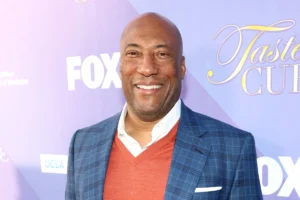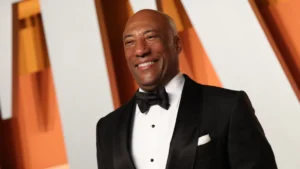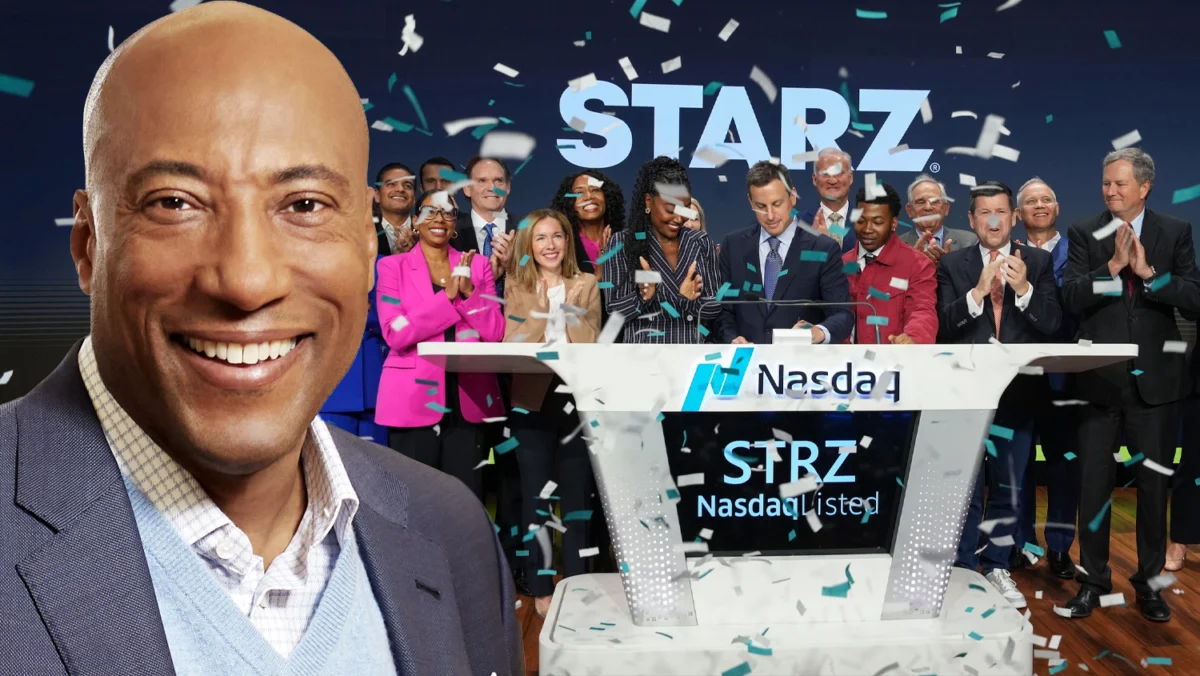
Byron Allen’s investment vehicle, Allen Family Capital, has officially completely liquidated its holdings in Starz Entertainment, bringing a dramatic conclusion to what had initially appeared to be a formidable acquisition campaign by the media mogul. According to regulatory disclosures filed with the U.S. Securities and Exchange Commission (SEC), the Beverly Hills-based family office disposed of its entire equity position in the premium cable and streaming network across multiple open-market transactions executed between August 9 and September 29. The stock was systematically unloaded in structured tranches at prices fluctuating between approximately $21 and $26 per share.
The complete divestment marks a swift and lucrative exit for the founder and Chief Executive Officer of Allen Media Group, who generated just under $45 million in gross proceeds from the sell-off. Given that Allen had initially accumulated his substantial position when shares were trading at lower valuations, market analysts estimate that the enterprise netted millions of dollars in capital gains from the strategic short-term play. The revelation regarding the complete sell-off came to light during an earnings-related conference call featuring Starz Chief Executive Officer Jeff Hirsch and a panel of financial analysts, catching various industry observers by surprise as they parsed the company’s latest quarterly fiscal performance.
Chronology of the Investment and Corporate Friction
The narrative surrounding Allen’s foray into Starz dates back to early March, when public filings revealed that the media entrepreneur had quietly amassed a massive 10.7% stake in the network, instantly positioning himself as one of the single largest outside shareholders in the enterprise. The aggressive accumulation of shares immediately sent ripples through the entertainment sector, triggering corporate defensive mechanisms reminiscent of classic media takeover battles.
Fearing an opportunistic hostile takeover or an unwelcome activist campaign from Allen—who has a history of building expansive media portfolios and challenging legacy broadcast structures—the executive leadership and Board of Directors at Starz reacted with swift defensive maneuvers. Barely days after Allen’s significant position became public knowledge, Starz officially adopted a shareholder rights plan, widely referred to in corporate finance as a "poison pill."
Designed to deter any single investor from acquiring a controlling interest without the explicit approval and negotiation of the board, the poison pill mechanism diluted the value of existing shares for any entity attempting to cross specific ownership thresholds. This defensive corporate shield effectively halted any immediate aspirations Allen might have harbored regarding a larger takeover or operational integration of Starz into the broader Allen Media Group ecosystem. Facing a fortified board and an entrenched executive team protected by structural deterrents, Allen Family Capital appears to have recalibrated its strategy, transitioning from a prospective long-term strategic stakeholder to an opportunistic investor looking to capitalize on favorable market conditions and an appreciating stock price.
Market Dynamics and Financial Implications

The decision by Allen Family Capital to liquidate its entire stake highlights the dynamic and often volatile nature of media stock valuations in the contemporary streaming era. During the weeks spanning from Allen’s initial disclosure in March through the late-September completion of the sell-off, Starz shares experienced a relatively robust market run. This upward trajectory provided an ideal window of liquidity for the family office to exit its position at premium pricing levels, averaging between $21 and $26 per share.
For Starz, the complete departure of such a prominent and potentially disruptive investor removes a significant source of corporate tension. Throughout the spring and summer months, executive leadership had been forced to navigate the dual pressures of executing an independent turnaround and growth strategy while managing the looming presence of an activist shareholder at the corporate gates. With Allen now fully divested and his capital returned to the open market, CEO Jeff Hirsch and his executive team can refocus their undivided attention on navigating the fiercely competitive landscape of subscription video-on-demand (SVOD) platforms and traditional linear television distribution.
Broader Industry Context and the Rise of Defensive Corporate Strategy
The episode involving Byron Allen and Starz serves as a textbook contemporary case study in corporate governance, shareholder activism, and the defensive posture of legacy media companies navigating post-cable industry realignments. As traditional entertainment networks contend with cord-cutting, subscriber saturation, and the staggering capital expenditures required to compete in the streaming economy, valuations for individual assets have fluctuated wildly. These fluctuations frequently attract high-profile independent entrepreneurs and private equity firms seeking undervalued assets ripe for consolidation, restructuring, or strategic acquisition.
The deployment of poison pills in response to unsolicited stakeholder accumulation has become an increasingly common mechanism in corporate boardrooms. While defended by executives as a necessary tool to protect long-term corporate strategy and ensure that all shareholders are treated equitably in the event of a buyout attempt, critics and activist investors often argue that such measures entrench management and insulate them from necessary external accountability. In Allen’s specific case, the presence of the poison pill effectively rendered further escalation impractical or economically inefficient, steering his family office toward a clean exit that maximized short-term profitability over prolonged boardroom conflict.
Looking Ahead for Starz
As Starz moves past this chapter of shareholder turbulence, the network faces a critical period of operational execution. During the quarterly conference call where the divestment news was disclosed, leadership emphasized ongoing efforts to optimize content spending, expand digital partnerships, and secure sustainable profitability in an era where consumers are increasingly selective about their digital subscriptions.
While the sudden entry and subsequent exit of Byron Allen provided months of speculative fodder for Wall Street and Hollywood trade publications, the ultimate resolution underscores the pragmatic reality of modern media investing. For Allen Media Group and Allen Family Capital, the Starz venture stands as a textbook example of identifying an undervalued media equity, executing a high-visibility stake, and successfully monetizing the position amidst defensive corporate maneuvering. Meanwhile, Starz remains fiercely independent, turning its focus back to the core operational challenges of thriving in an unforgiving and rapidly evolving entertainment ecosystem.