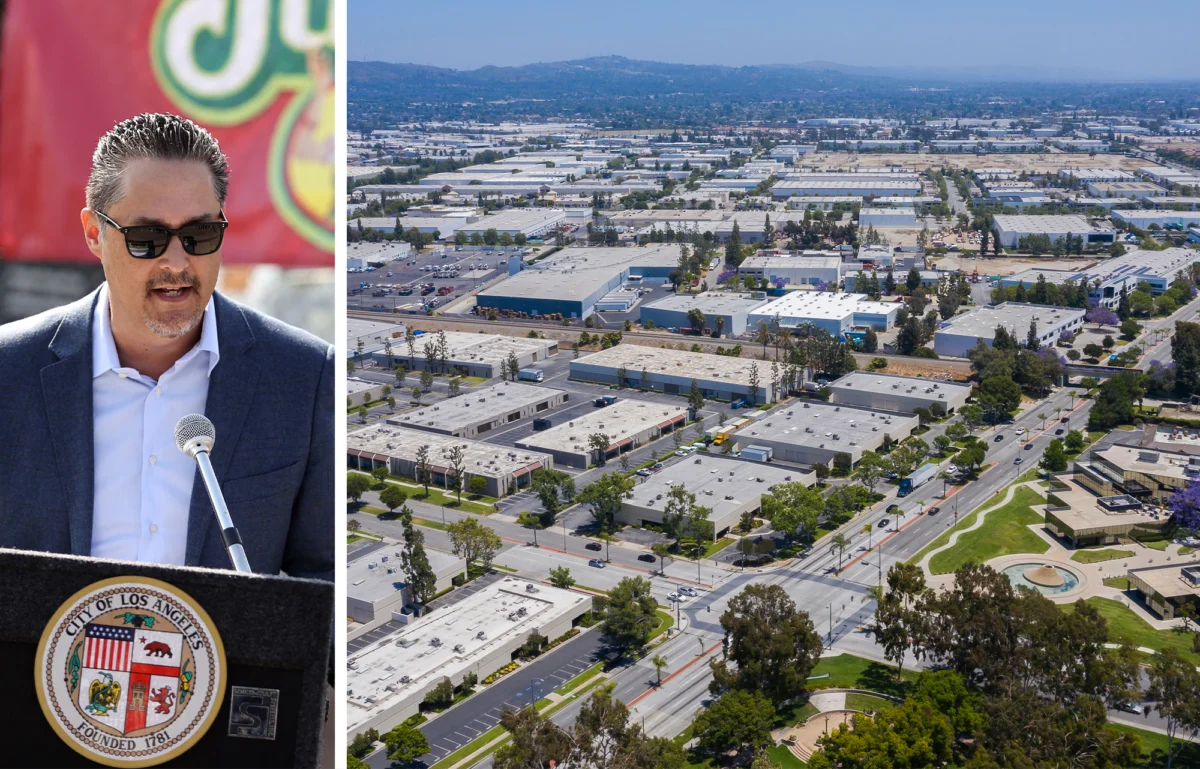
The Southern California industrial landscape is undergoing a significant transformation, marked by the recent decision of the long-standing heritage brand Juanita’s Foods to consolidate its operations into a state-of-the-art facility in Santa Fe Springs. The 120,000-square-foot expansion at 13100 Arctic Circle represents more than just a corporate relocation; it serves as the inaugural transaction backed by the "Big 4," a strategic alliance formed by the cities of Commerce, Santa Fe Springs, Vernon, and the City of Industry. By choosing to relocate from its legacy Wilmington plant to this modern industrial hub, Juanita’s Foods has underscored the efficacy of regional cooperation in retaining major manufacturing employers who might otherwise look toward more affordable states or regions.
A Legacy Brand Charts a New Course
Founded eight decades ago, Juanita’s Foods has remained a cornerstone of the regional food manufacturing sector. Known primarily for its authentic Mexican-style canned soups and hominy, the company has maintained a deep-rooted presence in Southern California throughout its history. However, as the company looked toward its future, it faced the same pressures as many mid-market manufacturers: aging infrastructure, increasing logistics costs, and the need for greater operational efficiency.
The transition to the Santa Fe Springs facility, which was acquired by LBA Logistics in December 2019, represents a critical pivot. Modern industrial real estate, such as the Arctic Circle location, provides the high-clearance ceilings, advanced loading dock configurations, and streamlined supply chain access required to compete in the current food production market. According to company leadership, the decision was not made in isolation. Juanita’s Foods conducted an exhaustive, multi-year nationwide search for a site that could accommodate its expansion, evaluating locations in various states known for lower tax burdens and more favorable regulatory environments.
The selection of Santa Fe Springs was ultimately driven by a combination of the facility’s strategic location and a robust incentive package negotiated through the collaborative efforts of the Big 4 partnership. This deal serves as a blueprint for how Southern California municipalities can leverage their collective assets to compete with states traditionally viewed as more business-friendly.
The Big 4: A Paradigm Shift in Regional Governance
The emergence of the Big 4 partnership in October 2025 represents a departure from the historical trend of "hyper-localism," where municipalities often engaged in bidding wars, offering aggressive tax incentives that occasionally eroded the local tax base for the sake of landing a single tenant. The Big 4—comprising the industrial heavyweights of Commerce, Santa Fe Springs, Vernon, and the City of Industry—represents a combined industrial footprint of roughly 250 million square feet.
This coalition was designed to function as an economic-development powerhouse. By coordinating their efforts, these four cities now present a unified front to industrial employers. Instead of competing for the same business, they operate as a regional entity that offers a spectrum of solutions tailored to different stages of business growth, from startup warehousing to large-scale, automated manufacturing. The Big 4 collectively support over 5,000 businesses and sustain a workforce of approximately 200,000 individuals, generating an estimated $33 billion in economic activity annually.
Santa Fe Springs City Manager René Bobadilla noted that the Juanita’s Foods deal is the proof of concept the partnership needed. "This is what becomes possible when cities stop looking at economic development as a competition and start looking at it as a regional opportunity," Bobadilla stated. The expedited permitting process afforded to Juanita’s Foods was a direct result of this inter-city collaboration, allowing the company to bypass the bureaucratic gridlock that often plagues large-scale industrial transitions.
Corporate Evolution and Ownership Dynamics
The relocation coincides with a significant period of corporate restructuring for Juanita’s Foods. In May 2025, the company underwent a major ownership transition, selling a majority stake to Apex Capital, a Miami-based private equity firm. This transaction was part of a broader estate planning strategy initiated by the founding De La Torre family.
While the shift to private equity ownership often signals a move toward aggressive growth and modernization, the De La Torre family has maintained a minority stake and remains actively involved in the company’s operational trajectory. This continuity is vital for a brand that relies heavily on family recipes and a legacy of authenticity. The investment from Apex Capital provided the necessary liquidity to fund the capital-intensive move to Santa Fe Springs, effectively marrying institutional capital with historical brand equity.
Economic Implications for Southern California
The retention of Juanita’s Foods is a signal to other manufacturers that Southern California remains a viable base for production, provided that municipalities continue to modernize their economic development strategies. For years, the "California exit" narrative has been dominated by reports of companies relocating to Texas, Arizona, or the Southeast to capitalize on lower labor costs and less restrictive regulatory climates.
However, the Big 4’s success highlights the inherent advantages of the Southern California market: proximity to the ports of Los Angeles and Long Beach, a deep pool of skilled labor, and access to a massive consumer market. By reducing the "friction" of doing business—through expedited permitting and collaborative incentives—cities can effectively neutralize the cost advantages offered by other regions.
Furthermore, the concentration of industrial activity in areas like Santa Fe Springs creates a "clustering effect." When companies like Juanita’s Foods relocate to these hubs, they draw in specialized support services, from food-grade packaging providers to logistics and cold-chain distribution firms. This ecosystem reinforces the region’s competitiveness, making it increasingly difficult for firms to leave without losing access to the specialized infrastructure that supports their day-to-day operations.
Looking Ahead: The Future of the Big 4
As the Big 4 moves beyond its first successful deal, industry observers are closely watching how the coalition will scale its efforts. The partnership faces several long-term challenges, including the scarcity of developable land and the pressure to meet increasingly stringent environmental and sustainability standards mandated by the state.
The facility at 13100 Arctic Circle is expected to set a new standard for the coalition. With modern energy-efficient systems and optimized floor plans, the site reflects the type of infrastructure that state policymakers hope will define the future of California manufacturing. If the Big 4 can maintain its momentum, it is likely that more manufacturers—perhaps even those that had previously considered leaving—will reconsider the benefits of remaining within the coalition’s jurisdiction.
The Juanita’s Foods relocation serves as a milestone in the ongoing effort to sustain the Southern California industrial base. It highlights a critical intersection of private equity strategy, inter-municipal cooperation, and the preservation of long-standing regional brands. As the company prepares to shift production to its new Santa Fe Springs home, the success of this deal will undoubtedly serve as a case study for economic development professionals across the United States. It confirms that even in a highly competitive and expensive market, strategic regional alignment can provide the leverage necessary to secure a prosperous and stable future for both the municipality and the employer.