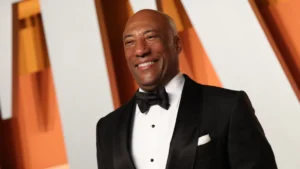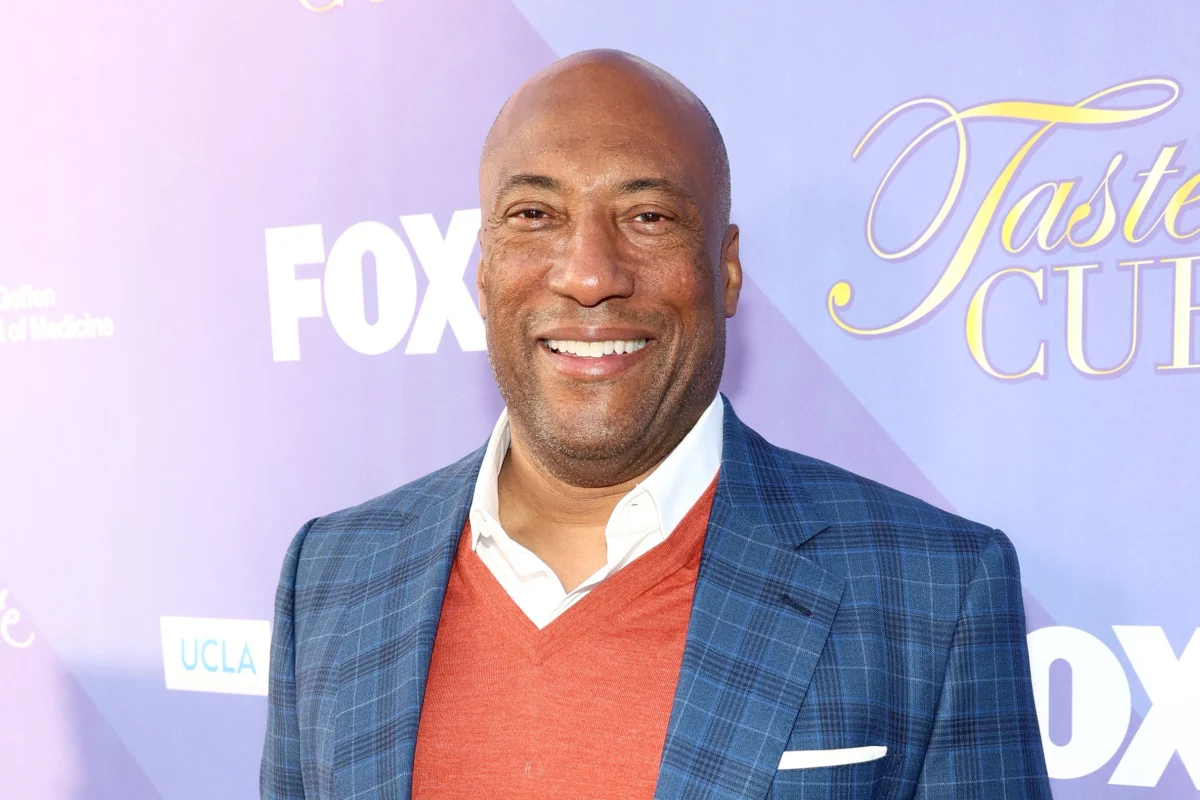
Media entrepreneur and investor Byron Allen has officially completed a highly lucrative divestment, selling his entire equity stake in the premium television and streaming network Starz. According to regulatory disclosures filed with the U.S. Securities and Exchange Commission (SEC) on Thursday, Allen offloaded his remaining holdings over a two-month period encompassing August and September 2026. The transaction netted a total of approximately $44.9 million, translating to a gross profit of nearly $20 million on an initial investment made just months prior.
The successful exit underscores a classic execution of the foundational market principle to buy low and sell high. Allen’s investment vehicle, Allen Family Capital, originally acquired the 1.8 million shares in March 2026 through a private transaction with Liberty 77 Capital, an investment firm managed by former U.S. Treasury Secretary and Hollywood producer Steve Mnuchin. That initial Spring purchase secured a 10.7% stake in Starz for a total consideration of $25 million. By timing his exit to capitalize on market conditions during late summer, Allen has realized an impressive return on investment of roughly 80% in less than half a year.
The liquidation of Allen’s holdings coincided with the release of Starz’s financial report for the third quarter of 2026, which was published on Thursday. The coincidence of the SEC filing and the earnings report has drawn considerable attention from media analysts and institutional investors tracking the ongoing consolidation, restructuring, and financial rehabilitation of legacy entertainment assets in the digital era. While Allen has cleanly severed his equity connection to the company, Starz continues to navigate a complex macroeconomic landscape following its corporate separation from Lionsgate.
A Chronological Timeline of the Investment and Divestment
To fully understand the trajectory of Byron Allen’s short-term venture with Starz, it is necessary to examine the sequence of corporate maneuvers and financial disclosures that defined the transaction timeline throughout 2026.
The sequence began in March 2026, when Allen Family Capital entered into negotiations with Steve Mnuchin’s Liberty 77 Capital. Mnuchin, who served as Treasury Secretary during President Donald Trump’s first term and possesses a long-standing Hollywood production background (having backed films such as American Sniper and Wonder Woman), was looking to rebalance his investment portfolio. Allen stepped in to acquire a significant block of shares, taking a 10.7% ownership position in Starz for $25 million. At the time, industry insiders viewed the move as a calculated bet by Allen on the undervalued nature of standalone premium cable and streaming entities, especially following structural transformations in the broader media ecosystem.
For several months, Allen maintained his position, serving as a notable institutional presence on the company’s shareholder roster. However, market dynamics shifted during the summer months. Between August and September 2026, Allen Family Capital methodically liquidated the entire holding of 1.8 million shares through open-market and private transactions.
The culmination of this sell-off was formalized in Thursday’s SEC filing, which confirmed that the divestment campaign had brought in a cumulative $44.9 million. On the exact same day the filing became public, Starz released its financial results for the third quarter of 2026, providing a clear window into the operational health of the company at the very moment Allen chose to close his ledger.
Financial Performance and Q3 2026 Earnings Breakdown
The release of Starz’s third-quarter 2026 financial report offers vital context regarding the operational realities facing the network, shedding light on the underlying fundamentals that may have influenced both Allen’s decision to exit and the broader market valuation of the stock.
Starz, which formally completed its corporate separation from studio giant Lionsgate in the preceding year to operate as an independent publicly traded entity, reported a narrowed net loss for the quarter ending in September 2026. The company posted a net loss of $34.8 million, representing a notable improvement compared to the net loss of $52.6 million recorded during the corresponding period in the previous year. This reduction in losses suggests that management’s ongoing cost-containment measures and operational streamlining efforts are beginning to take effect.
Top-line revenue for the quarter remained relatively flat, holding steady at $322.4 million. Within this overall revenue figure, the company’s digital streaming division demonstrated resilience and modest growth. Streaming revenue reached $226.6 million, marking a 1.7% increase on a year-over-year basis. While a 1.7% growth rate is modest in the context of hyper-growth tech companies, it indicates stability in a fiercely competitive streaming marketplace where subscriber acquisition costs remain high and consumer churn is a constant industry-wide challenge.
Executives at Starz have frequently emphasized their strategic pivot toward disciplined subscriber acquisition, focusing on profitability and high-value niche content rather than unsustainable, volume-driven subscriber expansion. The Q3 metrics suggest that while top-line revenue growth is currently sluggish, the company is succeeding in reining in overhead expenses to stabilize its bottom line.
Market Context and Industry Implications
Byron Allen’s rapid capital allocation and subsequent withdrawal from Starz highlight a broader trend of opportunistic investing within the media and entertainment sector. As traditional media companies grapple with the ongoing transition from linear television to direct-to-consumer streaming models, asset valuations have experienced dramatic fluctuations.
Independent networks and mid-tier streaming services often find themselves vulnerable to market volatility, making them prime targets for opportunistic investors who identify valuation disconnects. Allen, the founder and CEO of Entertainment Studios (operating as Allen Media Group), oversees a vast empire encompassing broadcast television stations, theatrical film distribution, and multiple cable networks. His ability to identify an undervalued asset from a high-profile seller like Steve Mnuchin and extract a $20 million profit within six months demonstrates acute financial acumen and a keen sense of market timing.
For Starz, the complete exit of a prominent media entrepreneur like Allen carries symbolic and practical implications. On one hand, the departure of a major investor who commands significant influence in the broadcasting industry might be interpreted by some retail investors as a loss of high-level strategic backing. Conversely, the orderly liquidation of 1.8 million shares without causing a catastrophic collapse in the company’s share price indicates that market liquidity was sufficient to absorb the sell-off.
Furthermore, the transaction highlights the fluidity of ownership among independent media firms. As private equity, institutional funds, and independent entrepreneurs continually reassess their portfolios in response to shifting interest rates, advertising market conditions, and streaming consolidation waves, secondary share transactions of this scale are likely to become increasingly common.
Strategic Outlook for Starz Post-Lionsgate
As Starz navigates its post-separation chapter, the company faces the ongoing challenge of establishing an independent identity and financial trajectory free from the balance sheet of its former parent, Lionsgate. The separation was designed to give both entities greater operational flexibility, allowing Starz to tailor its programming and distribution strategies specifically to premium scripted drama and targeted demographics.
The latest quarterly earnings report demonstrates that while the road to sustained profitability is gradual, management is making measurable progress in narrowing net losses. However, the flat overall revenue of $322.4 million underscores the reality that top-line acceleration remains elusive in the current economic climate. To drive future growth, Starz will need to leverage its intellectual property effectively, optimize its bundle partnerships with major telecommunications and streaming aggregators, and maintain strict discipline in content spending.
The successful exit by Allen Family Capital brings closure to a brief but profitable chapter in the ownership history of Starz. While Mnuchin’s Liberty 77 Capital and subsequent investors like Allen navigate their respective financial strategies, Starz management remains laser-focused on executing its turnaround plan, proving to Wall Street that an independent premium network can achieve sustainable financial health in an increasingly crowded digital landscape.