Voter turnout surged dramatically in the lead-up to and during the 2026 U.S. midterm elections, with early balloting figures vastly outstripping the totals recorded during the previous midterms in 2022. Millions of Americans headed to the polls to decide the balance of power in Congress, serving as a high-stakes national referendum on the second administration of President Donald Trump. Across major battleground states including North Carolina, Georgia, Michigan, and Florida, election workers reported robust turnout in the opening hours. By midday, the Florida Division of Elections registered more than 1.86 million votes cast on election day alone, bringing total participation—including early voting—past 7.22 million. Meanwhile, Georgia Secretary of State Brad Raffensperger reported 775,000 votes cast by afternoon, with expectations of reaching 1.4 million by the close of polling. Despite the enthusiasm driving voters to the ballot boxes, the electoral process faced widespread logistical hurdles, mechanical malfunctions, and aggressive federal interventions that threatened to overshadow the democratic exercise.

A Chronology of the 2026 Midterm Landscape
The path to the November 3, 2026, midterms was defined by compounding national crises, intense legislative maneuvering, and legal confrontations.
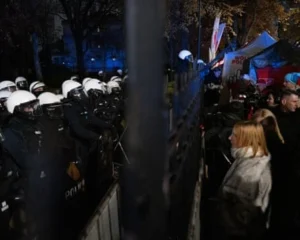
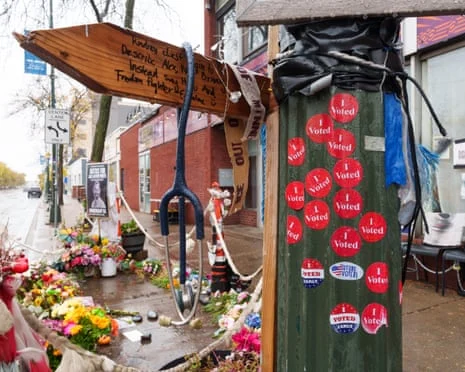
Early in the year, the political climate shifted significantly due to aggressive federal immigration enforcement operations in regions such as Minneapolis, which resulted in the high-profile deaths of U.S. citizens, igniting national outrage and drawing deep civil society resistance. Simultaneously, the Trump administration engaged in a military conflict alongside Israel against Iran, leading to retaliatory closures of the strategic Strait of Hormuz. This geopolitical escalation triggered a global energy crisis, pushing U.S. gasoline prices past $4 a gallon and exacerbating an already painful inflation and cost-of-living crisis driven by sweeping tariff policies.

By mid-October, tensions reached a boiling point over voter rolls. The U.S. Department of Justice (DoJ) delivered lists claiming that tens of thousands of non-citizens were registered to vote in states like California, threatening lawsuits if ballots were not sequestered. State election officials fiercely resisted what they termed federal overreach. Just days before the election, the legal battle escalated into a Supreme Court showdown. On November 2, the Supreme Court ruled against the Trump administration’s bid to force California to segregate contested ballots. However, lower appellate rulings simultaneously allowed federal authorities to maintain pressure on local election administration.
As election day dawned, early returns arrived from the Pacific island territory of Guam, where unofficial results indicated a major Republican pickup in the governorship alongside a Democratic flip of the territory’s non-voting congressional delegate seat. As polling stations opened across the eastern seaboard and rolled westward, reports of operational disruptions quickly mounted, setting the stage for a tense, protracted count.
Technical Failures, Long Lines, and Voter Disillusionment
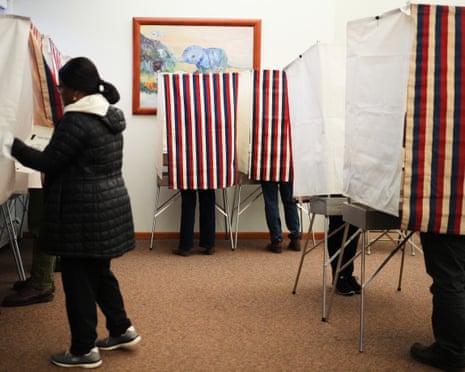
While high turnout reflected intense public engagement, widespread mechanical and logistical failures marred the voting process across multiple jurisdictions, frustrating voters and election integrity advocates.
In Westchester County, New York, county executive Kenneth Jenkins announced during a press conference that voting machines had failed to scan as many as 250,000 ballots across 332 polling locations spanning more than 40 municipalities. Voters were forced to cast emergency ballots using orange provisional bags, though officials reassured the public that every vote would eventually be counted. Bipartisan figures, including Republican Representative Mike Lawler and Democratic challenger Cait Conley, alongside New York Attorney General Letitia James, rushed to social media to urge voters to stay in line.

Similar logistical breakdowns plagued Mississippi, where the Mississippi Voters Action Fund (Msvaf) highlighted severe issues in Jackson, Hinds, and DeSoto counties. Lily Moens, policy and research director at Msvaf, reported that entire banks of machines were down in Jackson County due to internet connectivity failures. Voters in Ocean Springs faced agonizingly slow lines, with machines breaking down and temporary shortages of paper ballots forcing dozens of potential voters—many attempting to vote before work—to abandon the queues entirely. In DeSoto County, precincts reportedly ran out of pre-printed ballots entirely, forcing reliance on blank emergency ballots and reigniting partisan accusations of administrative negligence.
In Florida’s Broward County, the state’s largest Democratic stronghold, supervisor of elections Joe Scott confirmed that ballot-scanning equipment falsely flagged correct ballots as incorrect upon opening. Although the software glitches were swiftly resolved, the delays caused frustrated voters to leave without casting ballots. Furthermore, heavy overnight flooding forced the emergency relocation of at least one polling precinct in the county.
Federal Observers and Heightened Tensions
The Department of Justice deployed what officials described as the largest monitoring effort in its history, sending roughly 1,000 election monitors and observers nationwide. While federal officials framed the deployment as a routine measure to protect voting rights, civil rights advocates and local officials viewed the heavy federal footprint as an overt intimidation tactic.
In Lewiston, Maine, DoJ monitors spent hours observing proceedings at the Memorial Armory polling station—a primary venue for the city’s sizeable Somali, Angolan, and Eritrean immigrant communities. Accompanied by the presence of armed police officers inside and outside the venue, the federal presence followed weeks of vitriolic rhetoric from the White House targeting immigrant populations and a controversial October FBI raid on Democratic Representative Ilhan Omar’s home over disputed citizenship paperwork. Local election wardens noted that while the monitors were unobtrusive in their questioning regarding training procedures, the scale of the federal deployment was unprecedented compared to previous cycles.
Broader Political Implications and the Balance of Power
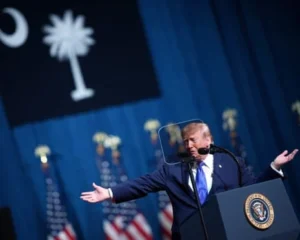
The 2026 midterms carry profound structural implications for the remainder of Donald Trump’s second presidential term. Historically, midterm elections heavily punish the incumbent executive; over the past eight decades, the president’s party has lost seats in the House of Representatives in 90% of midterm contests.
Republicans entered the election defending a razor-thin majority in the House and a 53-47 edge in the Senate. Democrats required a net gain of just four seats in both chambers to seize control of Capitol Hill, a shift that would effectively halt the administration’s legislative agenda and open the floodgates to aggressive congressional investigations into executive overreach, immigration enforcement, and the costly military campaign in the Middle East.

Conversely, a resilient Republican performance would solidify executive power, validating the administration’s hardline border policies, economic restructuring, and muscular foreign policy. However, deep divisions within the conservative coalition—highlighted by outgoing Florida Governor Ron DeSantis openly criticizing the administration’s handling of the Iran war and rising fuel prices—suggest that governance following the midterms will remain fraught regardless of the legislative tally.
As polls closed across the eastern time zones, election experts warned that tight margins, state-specific rules governing the processing of mail-in ballots, and anticipated legal challenges mean the final composition of the 119th Congress may not be known for days. With the nation deeply polarized, the aftermath of the vote promises an immediate pivot toward the 2028 presidential campaign cycle, ensuring that the turbulence of American politics will find no respite.