As conservation leaders, policymakers, and environmental scientists convene in Yerevan, Armenia, for the COP17 biodiversity summit, the atmosphere is charged with the urgent necessity of the Kunming-Montreal Global Biodiversity Framework (KMGBF). Central to these discussions is the "30×30" goal—a mandate to effectively and equitably conserve 30% of the Earth’s land and marine territories by 2030. However, beneath the veneer of high-level pledges and multi-billion-dollar financing commitments lies a glaring oversight: the fundamental human workforce required to implement these ambitious goals on the ground. Recent research published in the journal Ambio reveals that while the global community fixates on hectares and financial portfolios, it has systematically ignored the rangers, forest guards, and community wardens who serve as the primary custodians of the world’s biodiversity.
The Anatomy of a Conservation Crisis
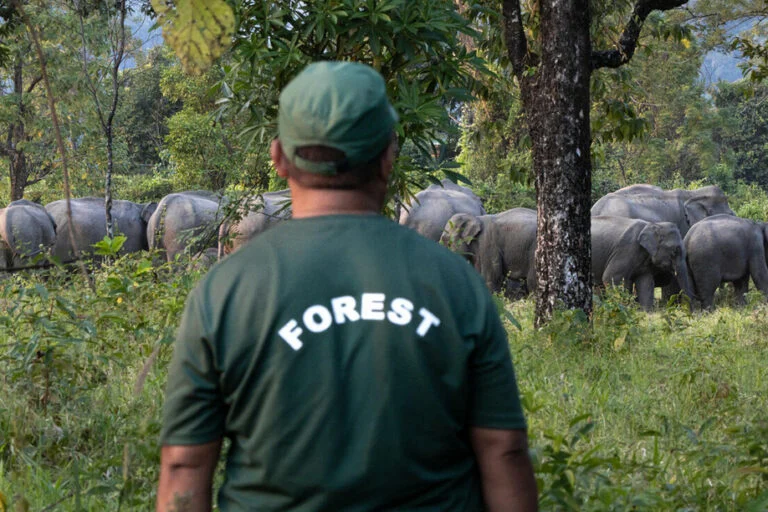
The concept of a "protected area" has evolved significantly since the early 20th century. Today, the International Ranger Federation (IRF) defines the ranger profession broadly, encompassing wildlife wardens, forest guards, game scouts, and marine rangers. These individuals operate across a diverse spectrum of governance, ranging from state-run park authorities to decentralized, community-led conservation initiatives managed by Indigenous Peoples and Local Communities (IPLCs).

Despite their pivotal role, the profession is plagued by systemic neglect. A seminal 2019 global survey, "Life on the Frontline," highlighted that nearly 36% of rangers are drawn from local populations within a 20-kilometer radius of their duty stations. These individuals are not merely security personnel; they are ecosystem monitors, conflict mediators, and first responders to climate-induced natural disasters. Yet, their professional reality is often characterized by extreme danger and lack of basic infrastructure. Data indicates that approximately two rangers lose their lives in the line of duty every week globally, often due to confrontations with organized wildlife crime syndicates or environmental hazards. Shockingly, less than half of the global ranger workforce—only 47%—possesses basic life or health insurance, creating a fragile foundation for the future of global conservation.
Chronology of the 30×30 Framework and the Workforce Gap
The origins of the current disconnect can be traced back to the adoption of the Kunming-Montreal Global Biodiversity Framework in December 2022. This landmark agreement set forth 23 targets, with Target 3 acting as the cornerstone for spatial protection.
- 2022 (COP15): Nations formally adopt the KMGBF, committing to the 30×30 target. Initial focus is placed on resource mobilization and geographical mapping of priority areas.
- 2023-2025: A period of rapid policy formulation occurs, where national governments draft their National Biodiversity Strategies and Action Plans (NBSAPs). Research shows that while financial mechanisms are heavily emphasized, workforce infrastructure remains largely absent from these texts.
- 2026 (COP17, Yerevan): The first formal global review of progress is conducted. Independent researchers, supported by the Universal Ranger Support Alliance (URSA) and the IRF, release findings that quantify the "ranger blind spot," noting that policy documents refer to "area" and "finance" significantly more often than the people tasked with management.
Data-Driven Analysis: The Policy Disparity
To quantify the extent of this oversight, researchers analyzed 45 global and national conservation policy documents, including 21 NBSAPs. The results revealed a stark imbalance: references to protected "area" appeared approximately 70 times more frequently than references to "rangers." Even more alarming was the emphasis on capital; "finance" was mentioned 80 times as often as the workforce.

This oversight is particularly striking when compared to global public health. The World Health Organization (WHO) and UNICEF’s "Operational Framework for Primary Health Care" explicitly integrates the health workforce—doctors, nurses, and midwives—as a central pillar of success. In those health documents, the workforce is mentioned 48 times as often as rangers are in conservation policy. This comparison serves as a diagnostic tool for the conservation sector: the industry understands how to build a "hospital" (a protected area), but it has failed to recognize the necessity of the "medical staff" (the rangers) to operate it.
The Risk of "Paper Parks"
The term "effectively" in the 30×30 target is the most critical component, yet it remains the most vulnerable to failure. The history of conservation is littered with "paper parks"—territories designated as protected by governments on maps, but which lack the staffing, training, and operational capacity to provide actual protection.
Without a professionalized, well-equipped, and fairly compensated ranger force, the expansion of protected areas is merely a symbolic exercise. If the global community continues to treat biodiversity loss as purely a financing challenge, it will ignore the labor reality. Conservation is, at its core, a labor-intensive enterprise. By decoupling spatial protection from the human workforce, international bodies risk creating vast, ungoverned zones that are susceptible to poaching, illegal logging, and habitat degradation.

Official Perspectives and Calls for Reform
Madhu Rao, Chair of the IUCN World Commission on Protected Areas (WCPA), and Nik Sekhran, a veteran of sustainable development at the UNDP, have been vocal in their critique of the current status quo. Their argument is straightforward: if the policy does not name the ranger, it cannot fund the ranger.
"Imagine a hospital with the latest diagnostic technology but no doctors or nurses," says an advocate familiar with the URSA research. "That is the current state of our global protected area system. We are investing in the infrastructure, but we are failing to invest in the people who turn those protected zones into living, functioning ecosystems."
The implications for policymakers in Yerevan are clear. Future negotiations must move beyond the current focus on hectares and financial credits. Experts argue that the following steps are non-negotiable for the success of the 30×30 agenda:

- Formal Inclusion: Explicitly include ranger workforce capacity as a metric for success in future biodiversity conventions.
- Standardization: Adopt international standards for ranger training, professional conduct, and working conditions that adhere to human rights and gender equality.
- Institutional Integration: Ensure that innovative finance mechanisms, such as carbon and biodiversity credits, specifically earmark funding for the recruitment, retention, and safety of field personnel.
- Community Recognition: Acknowledge and protect the rights and labor of rangers employed by Indigenous and local community organizations, who often work with fewer resources than state employees.
Future Implications for Global Biodiversity
The urgency of the situation cannot be overstated. As the planet faces unprecedented rates of species extinction and climate volatility, the pressure on the world’s remaining wilderness areas is increasing. If the "ranger blind spot" is not addressed immediately, the international community will likely reach 2030 with a statistically impressive number of hectares under "protection," but with little actual improvement in biodiversity integrity.
The path forward requires a paradigm shift: viewing the ranger not as an auxiliary security guard, but as an essential civil servant of the planet. Just as public health systems rely on the expertise of medical professionals, the survival of our ecosystems depends on the expertise, boots-on-the-ground presence, and professional support of the ranger force. As delegates at COP17 move toward their final sessions, the success of their collective legacy will depend on whether they recognize that a policy is only as effective as the people who enforce it. Without a commitment to the workforce, the promise of 30×30 remains an ambitious, yet hollow, aspiration.