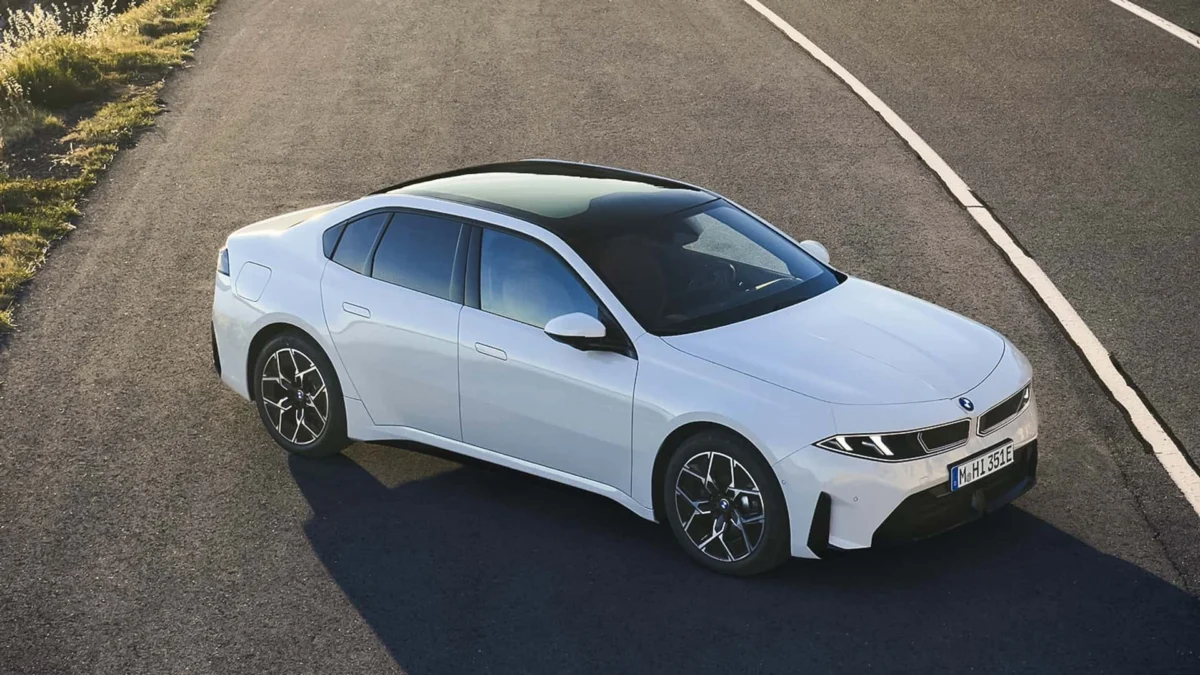
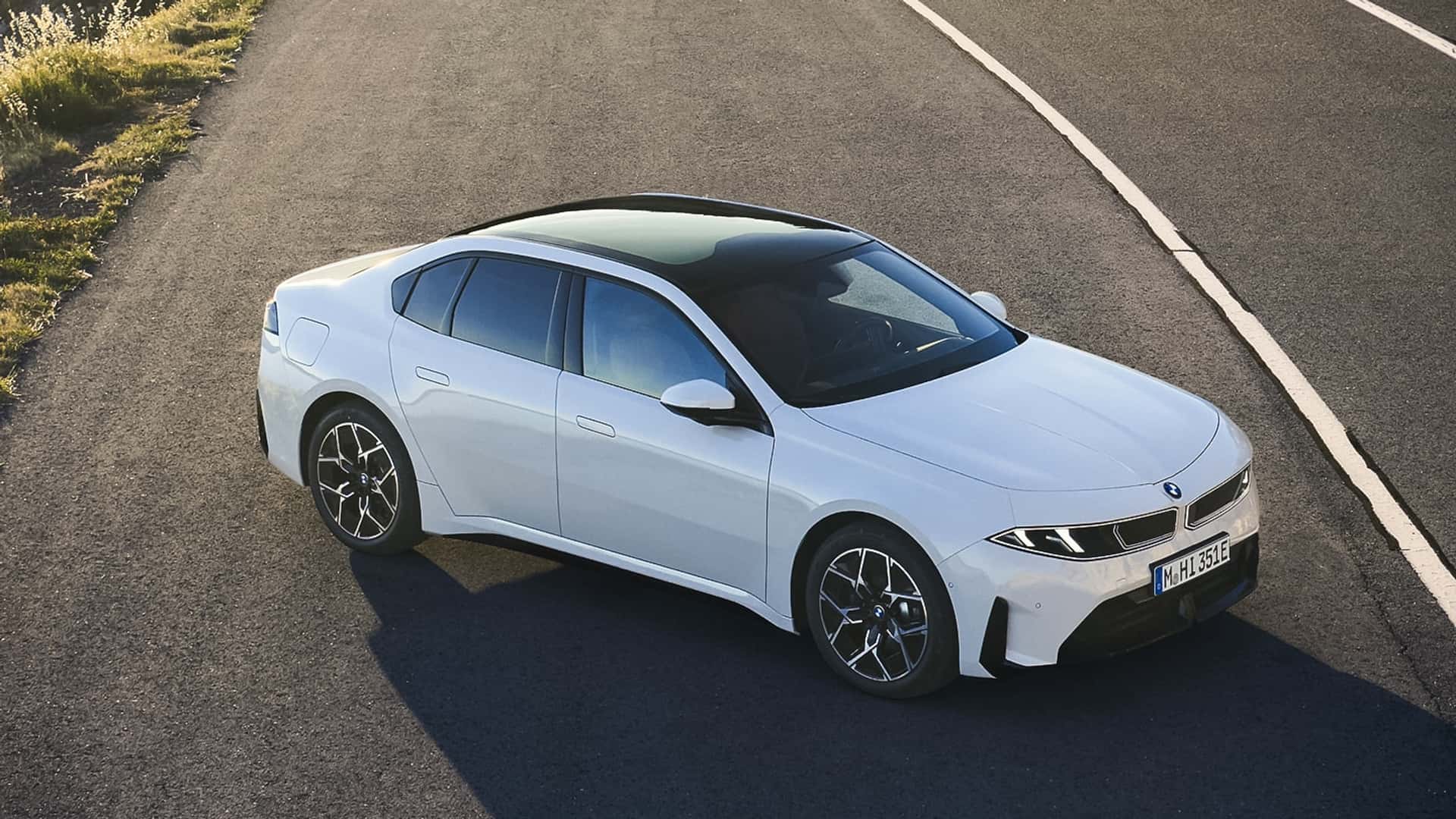
The Nürburgring Nordschleife, colloquially known as the "Green Hell," remains the definitive proving ground for automotive engineering. Spanning over 12.9 miles of treacherous, undulating asphalt in the Eifel mountains of Germany, the track demands a precise balance of power, handling, and thermal management. While the automotive industry has long focused on the upcoming electric M3 as the future of high-performance driving, recent testing has revealed that the standard BMW i3 50 xDrive is already capable of navigating this world-class circuit with remarkable composure and speed. In a recent demonstration captured by automotive commentator Misha Charoudin, the standard-production i3 demonstrated that the gap between dedicated performance vehicles and modern, high-efficiency electric platforms is narrowing at an unprecedented rate.
The Technical Foundation of the i3 50 xDrive
The BMW i3 50 xDrive sits as the sole variant currently available to the public, and it serves as a testament to the maturation of BMW’s electric powertrain technology. The vehicle is equipped with a dual-motor configuration that generates a combined output of 463 horsepower and 476 pound-feet of torque. These figures are notable not only for their immediate delivery—a hallmark of electric motors—but for how they compare to the historical lineage of the BMW M3, a benchmark for sports sedans. The i3 50 xDrive offers a level of raw output that exceeds several generations of the iconic M3, providing a glimpse into how electrification is redefining the term "performance" for the mass-market consumer.
Powering these motors is a 109 kWh lithium-ion battery pack. In the context of the current electric vehicle market, this capacity is substantial, significantly larger than the packs found in many competing electric sedans of similar dimensions. While skeptics often argue that the additional weight of a high-capacity battery is detrimental to track performance, the Nürburgring trial suggested that the mass is well-distributed, contributing to a planted, stable feel during high-speed cornering.
Chronology of the Nürburgring Trial
The testing session provided a clear look at how the vehicle manages its energy and thermal load under extreme duress. At the commencement of the lap, the vehicle displayed a 79% state-of-charge (SoC). The driving style was aggressive, pushing the vehicle to its mechanical limits across the varied elevation changes and technical corners of the circuit.
Upon completing the 12.9-mile circuit, the battery showed a 14% depletion, leaving the vehicle at 65% SoC. This level of efficiency is particularly noteworthy given that the lap was conducted under "hard driving" conditions—the most demanding scenario for an electric powertrain. The vehicle’s resilience was further highlighted by the fact that it completed three additional laps with another driver at the helm, finishing the total session with 20% of its battery remaining. This data suggests that the i3 50 xDrive is not merely a "one-lap wonder" but possesses the thermal and electrical overhead required for sustained track use.
Performance and Track Dynamics
Beyond the raw statistics of battery life and motor output, the driving experience on the track revealed the sophistication of the i3 50 xDrive’s chassis. During the video footage, the vehicle exhibited precise turn-in characteristics, indicating that the steering rack and suspension geometry have been tuned to favor agility despite the inherent curb weight of the battery pack.
Furthermore, the braking system performed reliably throughout the session. The transition between regenerative braking—which recaptures kinetic energy to feed the battery—and the mechanical friction brakes was seamless, allowing the driver to maintain confidence under heavy deceleration. An interesting variable noted during the test was the environmental conditions; the lap was completed in cold weather, and the vehicle was fitted with standard, eco-oriented tires rather than high-performance track compounds. Despite these limitations, the vehicle successfully navigated heavy traffic on the circuit, overtaking several dedicated performance vehicles with apparent ease.
Regarding thermal management, the vehicle’s onboard diagnostics remained in the "OK" range for the duration of the intense driving. It was only in the final moments of the extended session that the battery temperature began to approach its upper threshold. This indicates that BMW’s engineers have successfully optimized the active liquid-cooling systems to handle the high current discharge required for continuous, high-load operations.
Broader Implications for the BMW EV Portfolio
The performance of the i3 50 xDrive at the Nürburgring serves as a significant proof-of-concept for the brand’s electrification strategy. With an EPA-rated range of 468 miles, the i3 has already demonstrated its capability for long-distance grand touring, as evidenced by a recent journey from Norway to Spain that required less than three hours of total charging time across over 3,600 miles.

By demonstrating that the same platform—built for efficiency and long-range utility—can also perform in a high-intensity track environment, BMW is shifting the narrative around electric vehicles. The transition from "range-focused" to "performance-capable" is no longer a dichotomy; it is an integrated feature set.
Industry analysts suggest that the success of the i3 on the track sets a high bar for the forthcoming dedicated M-series electric vehicles. If the "standard" i3 can navigate the Green Hell with this level of competency, the performance ceiling for a vehicle specifically engineered for track duty, potentially featuring torque vectoring, advanced active aerodynamics, and track-specific chassis bracing, is significantly higher than previously projected.
The Evolution of the "Performance" Segment
The ability of a production-spec electric sedan to outperform dedicated performance combustion vehicles on a world-class track is a watershed moment. It highlights how the integration of high-density battery technology and sophisticated power electronics has democratized speed. Where once, professional-grade track performance was reserved for vehicles with complex, high-maintenance internal combustion engines and specialized gearboxes, the i3 50 xDrive suggests that such performance is becoming a core component of the modern electric vehicle experience.
As BMW continues to develop its "Neue Klasse" and future M-branded EVs, the data harvested from these unofficial testing sessions will be invaluable. The combination of high-efficiency cruising and track-ready performance provides a blueprint for a future where enthusiasts do not have to choose between a daily driver and a weekend track toy.
The Nürburgring trial of the i3 50 xDrive serves as a reminder that the automotive landscape is undergoing a fundamental shift. While the brand’s heritage is rooted in the "Ultimate Driving Machine" philosophy, the transition to electrification is not diminishing this identity, but rather evolving it. With consistent battery performance, rapid energy recuperation, and a chassis that responds to the demands of the world’s most difficult circuit, the i3 50 xDrive has made a compelling case for the future of the electric performance sedan. Whether on a cross-continental road trip or the twists of the Eifel mountains, the vehicle has demonstrated that it possesses the versatility to excel in almost any driving environment, setting a standard for its competitors to follow.